
Superconducting Quantum Computer Noise Reduction Guide
2026.06.18 · Blog superconducting quantum computer noise reduction
Building Low‑Noise Superconducting Quantum Computers That Actually Scale
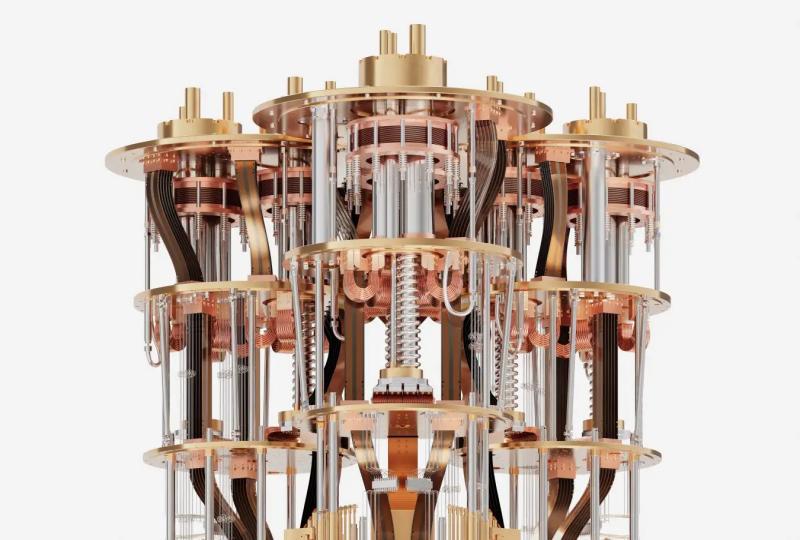
Noise is the fundamental obstacle between today’s superconducting quantum computers and tomorrow’s fault‑tolerant systems. Even with long coherence times and high‑fidelity gates, uncontrolled noise quickly erodes quantum states and limits circuit depth. At SpinQ, we treat superconducting quantum computer noise reduction as a full‑stack engineering discipline—from quantum chip design and fabrication to cryogenics, control electronics, calibration, and software.
For research labs and industry teams, the goal is not just to demonstrate a few high‑fidelity gates, but to operate a stable, low‑noise superconducting quantum computer that supports repeatable experiments, algorithm development, and quantum error correction research. This article explains how noise enters superconducting systems, outlines practical reduction strategies at every layer, and illustrates how SpinQ’s SQC superconducting quantum computer series is engineered from the ground up for low‑noise performance.
You can explore SpinQ’s full superconducting quantum computer portfolio in the SPINQ SQC Superconducting Quantum Computer overview and the SPINQ QPU C Series superconducting quantum chip page for hardware‑level details.
.jpg)
Where Noise Comes From in Superconducting Quantum Computers
A useful way to think about superconducting quantum computer noise reduction is to map the major noise sources before choosing mitigation strategies. In practice, dominant contributors include:
-
Environmental decoherence from electromagnetic fields, vibrations, and residual thermal photons.
-
Material‑ and interface‑related loss, such as two‑level system (TLS) defects in dielectrics and surfaces.
-
Control‑line and readout noise, including phase and amplitude instability in microwave electronics.
-
Crosstalk between neighboring qubits and control lines in dense 2D lattices.
-
Calibration drift over time, which slowly degrades gate quality even in otherwise well‑engineered systems.
Because these mechanisms interact, effective noise reduction requires a coordinated design rather than isolated fixes. SpinQ’s approach integrates low‑noise chip topology, industrial‑grade fabrication, carefully engineered cryogenic packaging, and a dedicated quantum control and measurement system (QCM) tuned for superconducting qubits.
For a deeper look at how coherence time relates to different qubit technologies and operating environments, see our overview on qubit coherence and practical measurement techniques.
SpinQ’s approach integrates low‑noise chip topology, industrial‑grade fabrication, carefully engineered cryogenic packaging, and a dedicated quantum control and measurement system tuned for superconducting qubits.
Chip‑Level Design: Starting Noise Reduction at the Source
Noise reduction starts on the superconducting quantum chip itself. Modern designs leverage Josephson‑junction‑based qubits such as transmons in enhanced 2D lattices to balance connectivity, coherence, and control. Key chip‑level strategies include:
-
Optimized qubit geometry – By tailoring capacitor pads, junction sizes, and operating frequencies, designers reduce sensitivity to charge noise and dielectric loss while preserving strong anharmonicity.
-
Engineered coupling networks – Fixed or tunable couplers allow precise control over interaction strengths, suppressing unwanted residual coupling that would otherwise introduce correlated noise and crosstalk.
-
Structured 2D lattices – Regular 2D grids (for example 5×5 layouts) support scalable wiring, algorithmic workloads, and surface‑code‑ready connectivity.
The SpinQ QPU C Series adopts an enhanced 2D lattice topology to achieve high connectivity and support up to 103 superconducting qubits, while maintaining strong noise performance and quantum error correction readiness. Each chip is delivered with factory‑characterized parameters such as qubit frequencies and decoherence times, giving users a solid baseline for further noise‑aware calibration.
To see how these chips integrate into full systems, you can review the SPINQ SQC Superconducting Quantum Computer architecture, which combines QPUs, cryogenics, and control electronics in a single platform.
.jpg)
Fabrication, Packaging, and Materials: Protecting Coherence
Even the best chip design can underperform if fabrication and packaging introduce excess defects or uncontrolled environments. Industrial‑grade superconducting quantum chip noise reduction focuses heavily on:
-
Material purity and surface treatment – High‑purity metals and substrates, combined with optimized etching and cleaning flows, reduce TLS defects that limit T₁ and T₂ times.
-
Low‑loss dielectrics and interfaces – Careful stack engineering minimizes participation of lossy materials in the qubit’s electromagnetic field, improving energy relaxation.
-
Robust packaging and shielding – Well‑designed chip carriers provide strong thermal anchoring, RF shielding, and clean interfaces to cryogenic wiring to keep environmental noise out.
SpinQ’s superconducting quantum processors are produced using standardized, repeatable manufacturing flows that mirror advanced semiconductor processes, and each QPU ships with test reports that summarize its coherence and noise‑related characteristics. This consistency lets research teams focus on algorithm development and system‑level optimization instead of fighting unpredictable device variability.
Cryogenics and Physical Isolation: Keeping the Environment Quiet
Superconducting quantum computers operate at millikelvin temperatures to suppress thermal noise and preserve quantum coherence. Noise reduction at this layer addresses:
-
Deep cryogenic cooling – Dilution refrigerators maintain operating temperatures on the order of tens of millikelvin, dramatically reducing thermal photon populations that drive decoherence.
-
Multi‑stage filtering and shielding – Microwave and DC lines pass through attenuators, filters, and electromagnetic shields to block room‑temperature noise and external RF interference before reaching the chip.
-
Mechanical stability – Vibration isolation prevents small fluctuations from modulating qubit frequencies or coupler strengths, which would show up as dephasing or fluctuating gate performance.
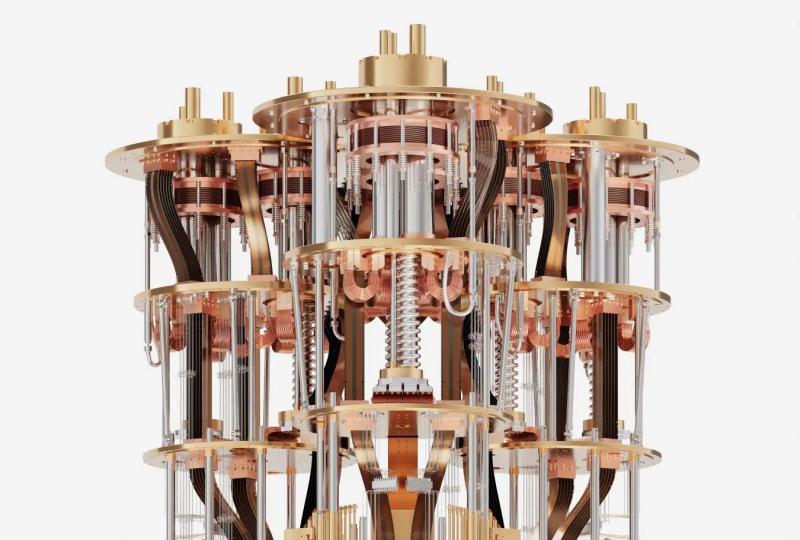
SpinQ’s SQC series tightly integrates the QPU C Series chips with cryogenic hardware and wiring designed specifically for low‑noise operation, turning what is typically a multi‑vendor integration project into a ready‑to‑use platform. This is especially valuable for laboratories that want to accelerate from device evaluation to algorithm execution on a stable superconducting quantum computer.
Low‑Noise Quantum Control and Measurement Electronics
Even with a clean cryogenic environment, quantum computers remain sensitive to imperfections in control pulses and readout chains. High‑quality control and measurement electronics are therefore central to superconducting quantum computer noise reduction.
Practical best practices include:
-
High‑stability sources and AWGs – Low‑phase‑noise microwave sources and arbitrary waveform generators with fine timing and amplitude resolution ensure that control pulses closely match intended profiles.
-
Low‑noise readout chains – Carefully designed amplification stages, often including cryogenic amplifiers, protect signal‑to‑noise ratio during state measurement.
-
Tight timing synchronization – Sub‑nanosecond synchronization across channels reduces waveform skew that would otherwise introduce correlated errors.
SpinQ’s QCM System is engineered as a dedicated quantum control and measurement platform, matching the requirements of superconducting qubits while supporting other modalities such as trapped ions. The system combines RF generation, pulse shaping, synchronization, and readout in a single architecture that is co‑designed with SpinQ’s SQC hardware to minimize noise from the control stack.
Calibration and Software‑Level Noise Management
Hardware design and engineering set the stage, but day‑to‑day noise performance depends on how well the system is calibrated and monitored. Effective calibration strategies for superconducting quantum computer noise reduction include:
-
Regular characterization of qubit properties – Measuring qubit frequencies, T₁, and T₂ via well‑known protocols helps track environmental changes and device aging.
-
Pulse‑level calibration – Adjusting pulse amplitudes, durations, and shapes (for example DRAG‑style pulses) to minimize leakage and phase errors.
-
Crosstalk mapping – Systematically characterizing how operations on one qubit affect others and compensating via pulse scheduling or optimized coupler configurations.
-
Automated drift tracking – Periodically re‑running calibration routines or leveraging closed‑loop control to keep gate performance within specification over long experiments.
SpinQ’s superconducting quantum computers combine these techniques with software‑level error‑mitigation tools, allowing users to analyze and reduce the impact of residual noise at the output level. This makes it easier to bridge from raw hardware runs to reliable scientific or industrial results.
If you are already working with smaller‑scale or educational platforms, SpinQ’s NMR quantum products provide a complementary, room‑temperature environment for exploring calibration and noise concepts before scaling them to superconducting hardware.
Quantum Error Correction and Noise‑Aware Architectures
As systems grow, quantum error correction becomes central to long‑term noise reduction. Rather than treating error correction as an afterthought, next‑generation superconducting quantum computers are architected from the beginning to support surface codes and other QEC schemes.
SpinQ’s QPU C Series is designed with topologies that can support surface‑code distances up to d = 7, a key milestone on the path from noisy intermediate‑scale quantum devices to fault‑tolerant architectures. The SQC S25 and S25 Pro systems provide a full‑stack environment in which researchers can prototype QEC routines, test noise‑aware compilation strategies, and explore error‑mitigation techniques using real hardware rather than purely simulated models.
How SpinQ Helps You Build a Low‑Noise Quantum Lab
Superconducting quantum computer noise reduction is not a single feature—it is the outcome of an integrated, end‑to‑end design philosophy. SpinQ brings this philosophy to life through:
-
Next‑generation QPU C Series superconducting quantum chips with enhanced 2D lattice topologies and QEC‑ready connectivity.
-
SQC superconducting quantum computers that combine QPUs, cryogenics, control electronics, and software in turnkey systems.
-
The QCM System, designed to deliver low‑noise quantum control and measurement for demanding superconducting workloads.
-
Complementary NMR‑based educational platforms that make it easy to teach noise, coherence, and calibration concepts in classroom environments.
If you are planning a superconducting quantum computer lab or exploring how to reduce noise in existing systems, you can start by reviewing SpinQ’s superconducting quantum products and contacting our team for a technical consultation tailored to your research roadmap.
Featured Content