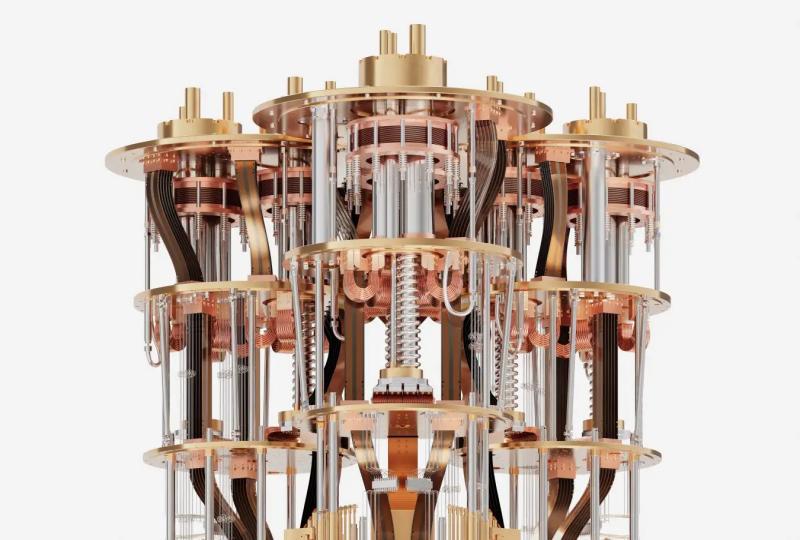

Hybrid Superconducting Quantum Computer Roadmap
2026.06.17 · Blog hybrid superconducting quantum computer
As quantum research advances, few experts expect a single hardware or software paradigm to dominate all applications. Instead, the future will likely be hybrid, combining superconducting quantum processors with powerful classical resources and, in some cases, other quantum technologies. A hybrid superconducting quantum computer is not just a chip, but a system that tightly integrates multiple layers of computation to deliver practical benefits.
SpinQ’s superconducting platforms and integrated system design approach are aligned with this vision. By paying attention to chip performance, cryogenic packaging, control electronics, and software together, we create systems that can act as quantum accelerators within larger hybrid infrastructures.
What “hybrid” means in practice
In current usage, “hybrid” often refers to classical‑quantum workflows where a classical computer manages a quantum processor, sending circuits, collecting results, and iteratively refining parameters. Variational quantum algorithms, which alternate between quantum state preparation and classical optimization, are a prime example. Superconducting quantum processors are well suited for these schemes because they can execute many short circuits quickly, making iterative loops practical.
Looking ahead, hybrid architectures may also connect multiple quantum subsystems: for instance, superconducting qubits for fast logic, other qubit types for memory or communication, and specialized control hardware linking them together. This kind of hybridization leverages the strengths of each technology while mitigating their limitations.
Superconducting processors at the core
Superconducting quantum computers have emerged as one of the most advanced platforms for implementing gate‑based quantum logic at scale. With carefully engineered qubits, high‑fidelity gates, and sophisticated calibration routines, recent devices have demonstrated record‑breaking performance on benchmark tasks that exceed classical simulation capabilities. Their relatively fast gate times also make them ideal candidates for role as quantum accelerators in hybrid workflows.
At the same time, researchers are working on improving coherence, reducing crosstalk, and scaling connectivity to enable more complex algorithms and error‑correcting codes. Progress in these areas will directly enhance the usefulness of hybrid superconducting systems, allowing them to handle larger problem instances and deliver more stable results.
SpinQ’s integrated system approach
SpinQ’s superconducting quantum products are built around an integrated view of the system: quantum chips, cryogenic deployment, control and measurement electronics, and software are co‑designed to work together. Our superconducting quantum chips emphasize standardized design, long coherence times, and high gate fidelity, providing a strong foundation for hybrid applications.
On the system side, SpinQ offers complete solutions that include dilution refrigerators, microwave control, readout hardware, and orchestration software. This full‑stack approach enables users to connect our superconducting processors into larger classical infrastructures and to develop hybrid algorithms without needing to assemble their own hardware stack from multiple vendors.
For an overview of these capabilities, you can refer to the superconducting quantum computer introduction on SpinQ’s official site, where system‑level advantages and application scenarios are described.
Hybrid use cases: from research to industry
Early hybrid superconducting quantum computers are particularly promising for tasks where quantum circuits can deliver better approximations or insights than classical heuristics alone. Examples include quantum‑assisted simulation of molecules and materials, where quantum processors can naturally encode quantum states that are costly to represent classically. Hybrid workflows allow classical HPC to handle data management and optimization, while superconducting hardware focuses on the quantum‑hard core of the computation.
In industry, organizations are beginning to explore hybrid approaches for optimization, machine learning, and finance‑related applications, often starting with proof‑of‑concept studies. SpinQ’s combination of education‑grade systems and advanced superconducting platforms helps teams move along this path: they can train with desktop devices, then transition to more powerful superconducting systems as their needs and expertise grow.
Preparing for the next generation of hybrid systems
The roadmap for hybrid superconducting quantum computers will be shaped by ongoing advances in hardware, software, and benchmarking. Transparent performance metrics, shared benchmarks, and open interfaces will make it easier to integrate different technologies and to evaluate the benefit of adding quantum accelerators to existing workflows.
SpinQ is committed to supporting this transition by offering systems that are not only technically sophisticated, but also accessible and well‑documented. By investing in both user‑friendly desktop devices and high‑performance superconducting platforms, we help institutions build a realistic, step‑by‑step journey into hybrid quantum computing, turning long‑term vision into practical experimentation today.
Featured Content