
Superconducting Quantum Computer Cost: 5 Major Factors & New Solutions
2026.02.11 · Blog superconducting quantum computer cost
The race to build a practical quantum computer is often headlined by staggering figures. News of hundred-million-dollar government grants and corporate investments is common. But for a research institution or a forward-looking enterprise, the pressing question is more direct: What does a superconducting quantum computer actually cost, and why is the price so high? While precise figures are often confidential, it’s widely understood that a full-scale, commercial superconducting system can command a price tag ranging from several million to well over ten million dollars.
This cost isn't arbitrary; it's the sum of some of the most complex engineering and physics challenges of our time. Understanding these cost drivers is the first step for any organization considering this transformative investment. Furthermore, the market is evolving. Beyond the well-publicized giants, new players are entering the field with different approaches that are beginning to influence the economic landscape. In this article, we will dissect the five primary factors that dictate the cost of a superconducting quantum computer and explore how innovative companies, like the integrated quantum solutions provider SpinQ, are introducing new dynamics into the equation.
The Million-Dollar Deep Freeze: Cryogenic Infrastructure & Dilution Refrigerators
At the heart of every superconducting quantum computer's cost structure is an extreme and non-negotiable requirement: a temperature colder than the void of deep space.
The Absolute Zero Requirement
Superconducting qubits—the basic units of quantum information—operate based on the flow of electrical current in loops without resistance. This superconducting state, and the delicate quantum coherence of the qubits, is only maintained at temperatures vanishingly close to absolute zero (0 Kelvin or -273.15°C), typically below 0.01 Kelvin. Any significant thermal energy introduces noise, causing qubits to lose their quantum state (decohere) and rendering computation impossible. This isn't a matter of improved performance; it's a fundamental prerequisite for operation.
The Heart of the System: Dilution Refrigerators
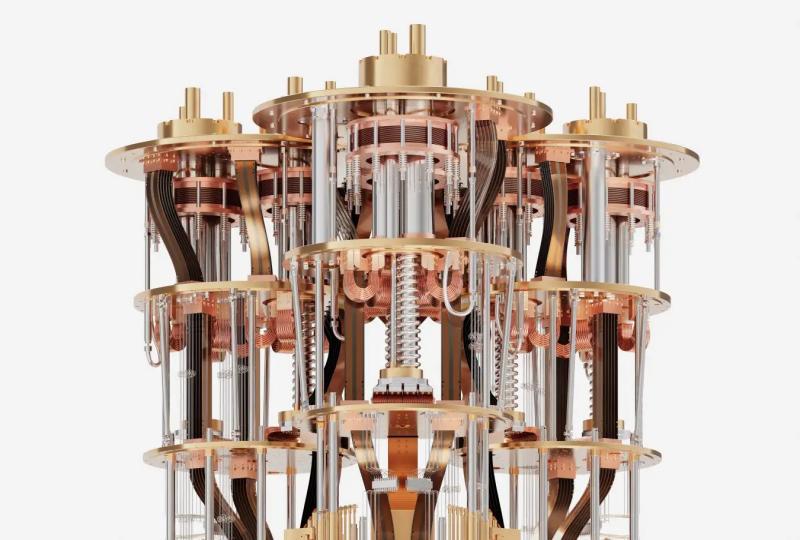
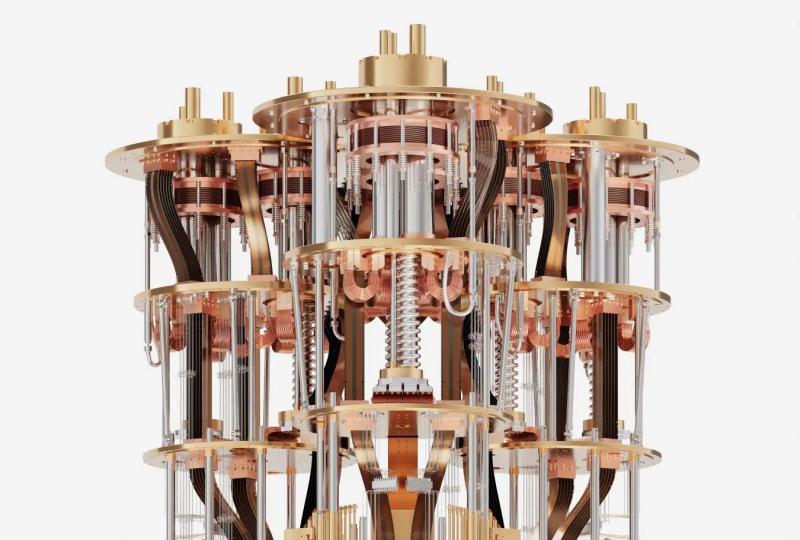
Achieving and maintaining such temperatures requires a dilution refrigerator. This is not a simple freezer. It is a multi-stage, highly complex apparatus that uses a mixture of helium isotopes (He-3 and He-4) in a closed cycle to pump heat away from the quantum processor. These systems are:
-
Extremely Specialized: Produced by only a handful of companies worldwide.
-
Expensive: The refrigerator itself can represent a significant portion of the total system cost, often running into the millions.
-
Logistically Intensive: They require expert installation, a constant supply of cryogens (like liquid helium), and substantial electrical power to run the compressors 24/7.
The SpinQ Factor: Integrated Cryogenic Deployment
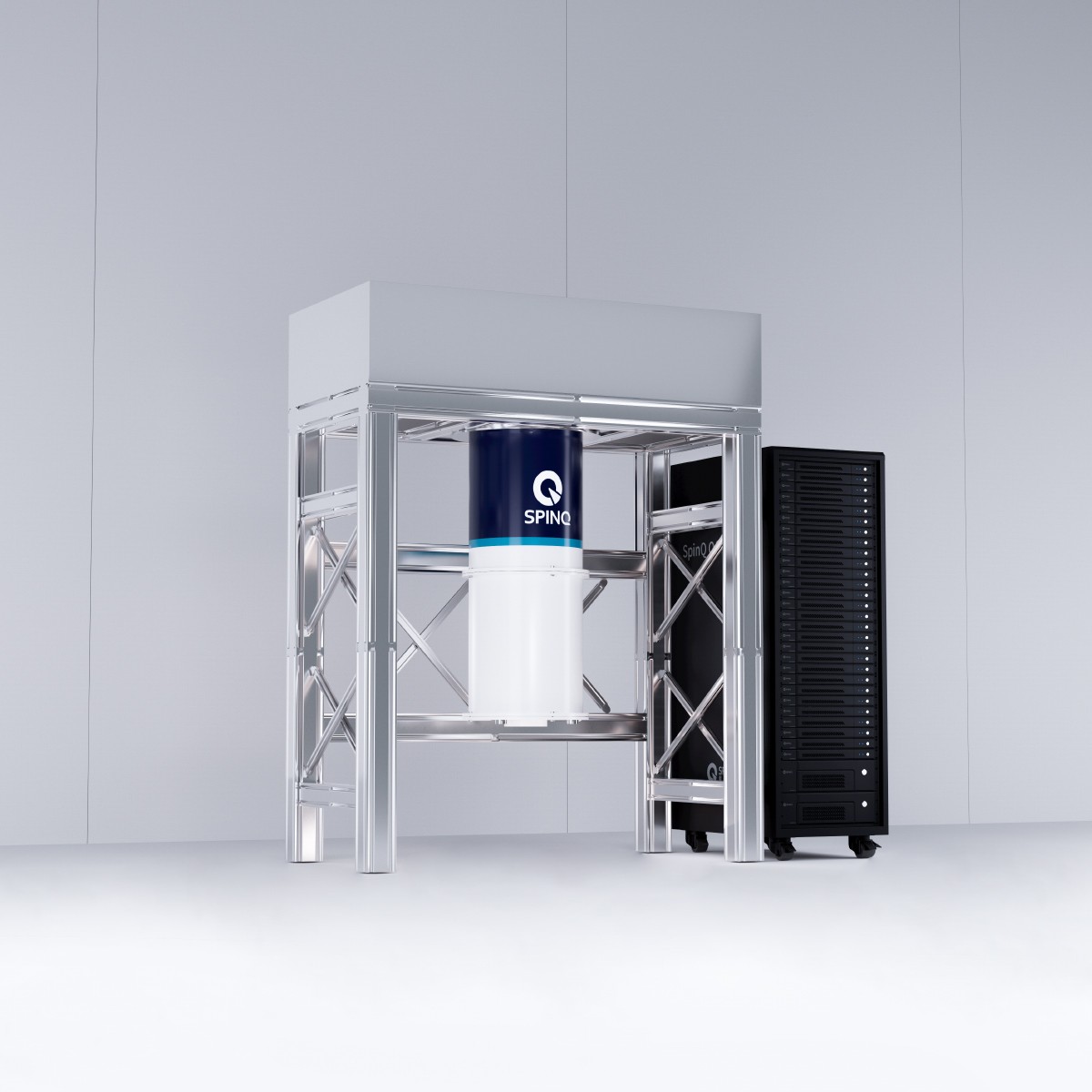
Recognizing this as a major barrier, some full-stack providers are working to simplify this bottleneck. For instance, SpinQ addresses this directly by offering comprehensive cryogenic environment deployment services. For clients investing in their Ursa Major superconducting quantum computer or standalone quantum processing units (QPUs), SpinQ can provide a complete solution—from the dilution refrigerator selection and unified supply to installation, maintenance, and ongoing technical support. This integrated approach reduces the procurement complexity and hidden costs associated with sourcing and managing this critical infrastructure separately, allowing research and enterprise teams to focus on their core computational work rather than ultra-low-temperature engineering.
The Core of Computation: Quantum Chip (QPU) Fabrication & Materials
The quantum processing unit (QPU), or the chip housing the qubits, is the brain of the computer. Its fabrication is a feat of precision engineering that pushes the boundaries of modern nanofabrication.
Nanoscale Precision in a Hostile Environment
Superconducting qubits are typically made from thin films of metals like niobium or aluminum deposited on silicon or sapphire wafers. These structures must be patterned with nanoscale precision to create Josephson junctions—the non-linear circuit elements that define the qubit's quantum properties. This process requires facilities with capabilities rivaling the most advanced semiconductor fabs, including electron-beam lithography and molecular beam epitaxy, all conducted in ultra-high vacuum environments to prevent contamination.
Yield and Consistency Challenges
Unlike classical computer chips where billions of identical transistors are the goal, fabricating a multi-qubit chip with uniform, high-performance qubits is extraordinarily difficult. Coherence times (how long a qubit holds information) and gate fidelities (the accuracy of operations) can vary significantly across a single chip. Low yields and the painstaking process of testing and characterizing each qubit drive up the cost per functional QPU exponentially as the qubit count increases.
The SpinQ Advantage: Vertical Integration & "Shao Wei" Chip
A key differentiator emerging in the industry is vertical integration. Some companies are building control over the entire chip supply chain. SpinQ, for example, has invested in its own dedicated quantum chip production line. This allows them complete control over the design, fabrication, and testing process for their "Shao Wei" series of superconducting quantum chips. This in-house capability is designed to ensure consistent quality, protect intellectual property, and—critically—mitigate supply chain risks. By avoiding reliance on external foundries and potential cross-contamination, they aim to produce standardized, higher-yield chips. This model of integrated manufacturing presents an alternative to the costly, low-yield paradigms of the past, potentially offering a more predictable and scalable cost structure for the core quantum hardware.
The Unsung Hero: Quantum Control and Readout Electronics (QCM)
A superconducting qubit chip sitting in a dilution refrigerator is inert. To bring it to life requires a sophisticated electronic nervous system: the Quantum Control Module (QCM) or measurement system.
More Than Just a Chip
The QCM is a rack of highly specialized electronics that performs two vital functions: control and readout. It must generate precisely shaped microwave and radio-frequency pulses (with picosecond timing) to manipulate the quantum states of the qubits. Simultaneously, it must amplify and digitize the vanishingly weak microwave signals emitted by the qubits to read their final state. This requires ultra-low-noise amplifiers, fast digital-to-analog and analog-to-digital converters, and complex field-programmable gate arrays (FPGAs) for real-time processing.
Scaling = Exponential Complexity
The cost and complexity of this system do not scale linearly. Controlling 50 qubits is not simply twice as hard as controlling 25; the need for synchronization, signal integrity, and crosstalk mitigation grows dramatically. Each additional qubit requires its own set of control lines, and the supporting infrastructure for calibration and signal routing becomes a massive engineering challenge. This makes the control electronics a dominant and often underestimated portion of the total system cost.
SpinQ's Integrated Stack: From Pulse to Cloud
To tackle this complexity, an integrated hardware-software approach is essential. Providers like SpinQ develop their QCM as a core, optimized component of a full-stack solution. Their self-developed quantum control system is engineered to work seamlessly with their "Shao Wei" QPU within the Ursa Major superconducting quantum computer. This tight integration, from the pulse-level control software up through the SpinQit programming framework, is designed to reduce the "integration tax" that institutions pay when trying to piece together hardware and software from multiple vendors. By offering a coherent, tested stack, they aim to deliver a system where the control electronics are not a separate cost center but a optimized part of a functional whole, reducing time-to-science and operational overhead.
The Brains and The Team: Specialized Software & Scarce Talent
The hardware is only part of the story. To make it useful requires layers of advanced software and, most expensively, the rare human expertise to wield it.
The Cost of the Full Software Stack
A usable quantum computing system requires a comprehensive software ecosystem:
-
Low-level firmware and pulse control (e.g., SpinQ's pulse-layer software) to interface directly with the QCM.
-
Middleware to calibrate the qubits and optimize gate performance.
-
Compilers and programming frameworks (like SpinQ's SpinQit, based on Python) to translate high-level algorithms into hardware-executable instructions.
-
Algorithm libraries and application software for specific use cases in chemistry, finance, or optimization. Developing, maintaining, and supporting this entire stack represents a massive, ongoing R&D investment that is factored into the cost of the system or service.
The Human Capital Premium
The global pool of talent with the cross-disciplinary skills in quantum physics, microwave engineering, cryogenics, and software development is vanishingly small. Attracting and retaining these experts commands premium salaries, often competitive with top tech giants and financial firms. For an end-user, the cost doesn't end with purchase; operating the system requires either hiring this scarce (and expensive) talent internally or paying significant fees for ongoing vendor support and consulting.
Mitigating Talent Cost Through Partnership & Tools
Forward-thinking quantum companies are building their offerings to help customers bridge this talent gap. SpinQ, aligning with its mission of "industrialization and democratization," provides extensive one-on-one technical support and training. Their Tianyi quantum chip EDA design software and user-friendly SpinQit framework are tools designed to lower the barrier to entry. By transferring knowledge and providing robust tools, they enable client teams to become proficient more quickly, reducing long-term dependency on a deep bench of ultra-specialized—and ultra-expensive—internal quantum experts. This partnership model can significantly alter the total cost of human capital associated with a quantum program.
Beyond Purchase Price: The Total Cost of Ownership (TCO)
The sticker price of the quantum computer itself is just the beginning. Institutions must plan for the Total Cost of Ownership (TCO), which includes substantial ongoing expenses.
Facility and Utility Costs
Housing a superconducting quantum computer isn't like installing a server rack. It requires:
-
Specialized Lab Space: With vibration damping, electromagnetic shielding, and sufficient structural support for heavy cryogenic equipment.
-
Substantial Power: Dilution refrigerators, their compressors, and the control electronics consume significant electricity, around the clock.
-
Cooling Infrastructure: The heat output from the system's electronics requires robust facility cooling.
Continuous Maintenance and Upgrades
This is not a "set it and forget it" machine. It requires:
-
Constant Calibration: Qubit parameters drift, requiring daily or weekly recalibration by skilled personnel.
-
Technical Support: Access to expert vendor support for troubleshooting is essential and often comes with an annual fee.
-
Upgrades: The field is moving rapidly. Hardware and software upgrades may be necessary every few years to stay current, representing a recurring capital outlay.
SpinQ's TCO Proposition: From Chip to Cloud Support
The most compelling value proposition in the market is aimed at reducing this TCO through integration and support. SpinQ's "one-stop" quantum solution paradigm—encompassing the Ursa Major hardware, the SpinQ Cloud platform, SpinQit software, and comprehensive deployment and support services—is designed to provide a cohesive ecosystem. The goal is to minimize integration headaches, reduce unplanned downtime, and offer a clear path for upgrades and support. For an enterprise or national lab, this can translate into lower lifecycle costs, more predictable budgeting, and a faster path to achieving research or development milestones compared to a multi-vendor, DIY integration approach.
Conclusion: The Cost Trajectory and New Market Entrants
The immense cost of superconducting quantum computers is firmly rooted in five areas: the cryogenic imperative, the nanofabrication challenge of the QPU, the complexity of control electronics, the expense of software and scarce talent, and the significant total cost of ownership.
However, this cost structure is not static. The landscape is shifting with the entry of integrated, vertically-focused providers like SpinQ. By offering engineering-grade hardware at a competitive price point, controlling the full stack from chip to cloud, and providing exportable technology (as China's first company to export superconducting quantum chips), these new entrants are introducing alternative models. They are particularly focused on serving markets like the Asia-Pacific region and providing solutions for national quantum sovereignty and education.
For any organization evaluating this frontier technology, a deep understanding of these cost drivers is the essential first step. The second, and equally critical, step is to evaluate potential partners not solely on headline qubit counts, but on their holistic approach to managing the total cost, complexity, and long-term support of quantum computing. The journey to quantum advantage is as much an economic and strategic challenge as it is a technical one.
Featured Content