
NMR Quantum Computer Evaluation: Key Metrics for Education & Research 2026
2026.02.11 · Blog NMR quantum computer evaluation
Introduction to NMR Quantum Computer Evaluation Metrics
Why Targeted Metrics Matter for Education & Research Use Cases
The global push for quantum talent cultivation—with a projected 250,000 quantum professionals needed by 2030—has made Nuclear Magnetic Resonance (NMR) quantum computers the cornerstone of academic quantum education and basic research. Unlike industrial superconducting quantum systems, NMR platforms are accessible, room-temperature tools for K-12 STEM programs, university labs, and small research teams. However, a generic evaluation (e.g., only measuring qubit count) leads to wasted budget and unused hardware. Targeted, use case-specific metrics are essential to ensure an NMR platform aligns with academic budgets, curriculum goals, and the expertise of non-quantum specialist end users, turning hardware into a functional learning and research tool.
The Evolution of NMR Evaluation Metrics (2020–2026)
NMR evaluation has shifted dramatically from a hardware-only focus (2020–2022) to a holistic value assessment (2023–2026). Early buyers prioritized raw specs, leading to misaligned purchases (e.g., 3-qubit platforms for K-12 classrooms). By 2024, usability, curriculum alignment, and total cost of ownership (TCO) became core criteria, followed by software integration and post-sale support in 2025. 2026's defining shift is metric weighting: evaluating the same platform differently for K-12, undergraduate, and graduate use—ensuring metrics like "open pulse sequence control" are prioritized only for advanced research, not beginner education.
SpinQ's Role in Shaping Education-Focused Standards
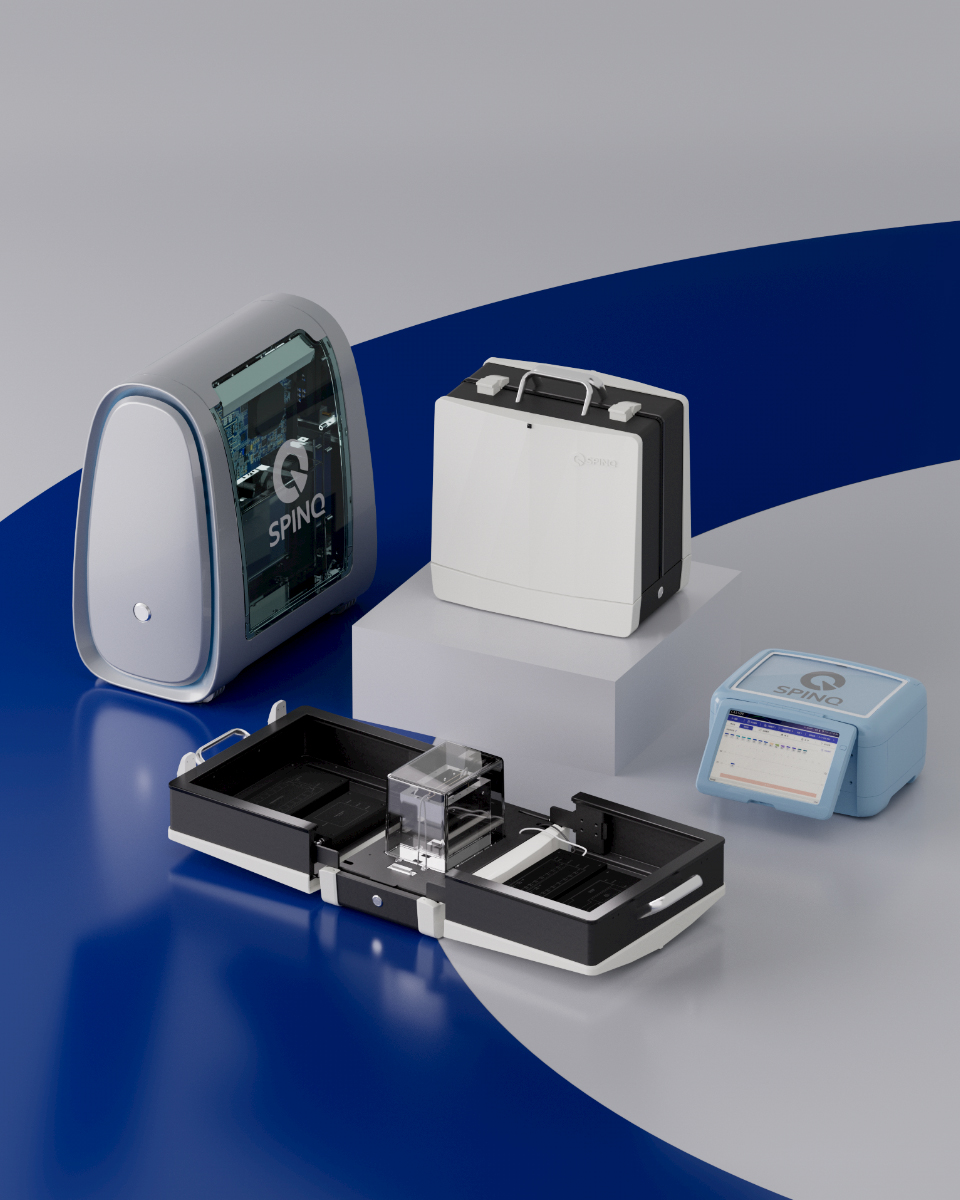
As a 2024 Global Quantum Quasi-Unicorn and creator of the world's first programmable desktop NMR quantum computer, SpinQ has led the development of education-focused NMR evaluation standards. With a mission to democratize quantum computing, SpinQ designed its Gemini and Triangle series for academic use cases, pioneering usability testing for non-specialists, curriculum-aligned resource bundling, and a TCO calculator for academic buyers. Deployed in 40+ countries and 200+ universities, SpinQ's platform metrics—including a 2-hour learning curve for basic operation and <$1,000 annual TCO—are the de facto industry gold standard for 2026.
Core Hardware Performance Metrics
Hardware performance is foundational, but for academia, performance must match user complexity—over-engineering is as problematic as under-engineering. Below are the 2026 non-negotiable hardware metrics, with SpinQ's industry-leading benchmarks for education and research.
Qubit Count & Fidelity
Qubit count is meaningless without high fidelity (stable, low-noise qubits) and alignment to user skill level: 2 qubits for K-12/undergraduate intro, 3 qubits for graduate research. A 2-qubit platform with 99%+ gate fidelity is far more valuable for beginners than a 3-qubit platform with 90% fidelity that requires constant specialist calibration.
SpinQ Benchmarks: Gemini Mini Pro/Lab (2-qubit) offer 99.2% single-qubit and 98.5% two-qubit gate fidelity; Triangle II (3-qubit) delivers 99.5% single-qubit and 99.0% two-qubit fidelity—all maintaining stable room-temperature coherence with no constant recalibration.
Room-Temperature Reliability & Signal Stability
NMR's biggest advantage is room-temperature operation, which only matters if the platform performs consistently in real-world academic settings (no shielded labs). Key metrics: 8+ hours of signal stability (for full school/lab days) and immunity to ambient interference (e.g., classroom electronics).
SpinQ Benchmarks: All SpinQ NMR platforms maintain <2% signal noise for 8+ consecutive hours, with built-in interference shielding—unique in the education-focused NMR market—ensuring reliable results in busy K-12 and undergraduate labs.
Pulse Sequence Control & Hardware Accessibility
Pulse control scales with user expertise: pre-programmed sequences for K-12, basic open control for undergraduates, and full hardware-level editing for graduate research. Scalable control eliminates unnecessary complexity for beginners while enabling exploration for advanced users.
SpinQ Benchmarks: Gemini Mini Pro (K-12) offers 20+ pre-programmed sequences; Gemini Lab (undergraduate) adds basic open control; Triangle II (graduate) features full Python/SpinQit-enabled pulse editing—all without specialized quantum training.
Durability for High-Volume Use
Academic NMR platforms face daily use by dozens of non-specialist students, so rugged build quality, minimal moving parts, and spill/shock resistance directly impact uptime and TCO.
SpinQ Benchmarks: SpinQ's NMR platforms feature academic-grade durability—shock-resistant aluminum casings, sealed touchscreens, and no external moving parts—delivering a 99.7% uptime rate and just one repair every 5+ years on average.
Usability & Educational Compatibility Metrics
For 90% of academic NMR users (non-quantum specialists), usability is the most critical metric. A high-performance platform is useless if educators and students cannot operate it independently, and educational compatibility ensures the platform integrates seamlessly into global curricula.
Learning Curve for Non-Specialists
The 2026 industry benchmark is <4 hours of training for independent basic operation. SpinQ sets the standard with ultra-low learning curves: 1 hour for the Gemini Mini Pro (K-12), 2 hours for the Gemini Lab (undergraduate), and 4 hours for basic Triangle II (graduate) operation—far below the 10+ hour average for competing platforms. This is driven by SpinQ's user-centric design: touchscreen controls for beginners, simplified Python/SpinQit for advanced users.
Curriculum Alignment
100% alignment with global quantum education standards (AP Physics, Cambridge A-Level, IUPAP, MIT/Tsinghua undergraduate curricula) is non-negotiable in 2026. Pre-built, aligned experiments eliminate the need for educators to create custom lesson plans from scratch. SpinQ is the only NMR provider with full alignment to all major standards, with experiment guides mapping directly to curriculum learning objectives.
Group Usability & Data Visualization
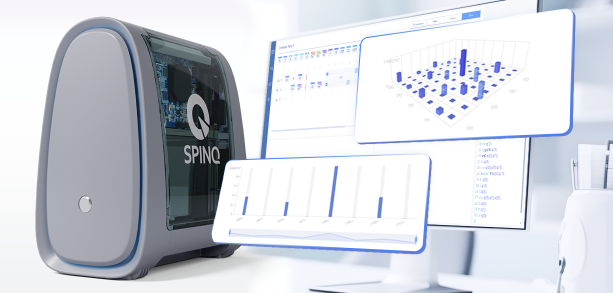
Academic use is collaborative: 30-second experiment reset times (for quick student turnarounds) and shared data access are critical for K-12/undergraduate labs. Intuitive data visualization—converting raw quantum data into annotated graphs (e.g., entanglement correlation charts)—is essential to teach abstract quantum phenomena. SpinQ's platforms offer 30-second resets, cloud-based shared data, and real-time, curriculum-aligned visualization; the Gemini Lab even supports 4–6 student small group use with a large shared touchscreen.
Cost & Total Ownership Value Metrics
Academic institutions operate on tight fixed budgets, so cost evaluation focuses on total ownership value, not just upfront price. 2026 metrics prioritize affordability, low long-term costs, and grant eligibility—ensuring every dollar of a quantum investment delivers maximum value.
Upfront Price & TCO
2026 industry benchmarks: $10k–$25k for 2-qubit beginner platforms, $30k–$50k for 3-qubit advanced models—set by SpinQ, which cut traditional NMR prices by 90% in 2020. TCO (upfront + 5 years of maintenance/upgrades) is the most important cost metric, with a 2026 benchmark of <$5k over 5 years.
SpinQ Benchmarks: Gemini Mini Pro ($15k), Gemini Lab ($25k), Triangle II ($50k)—all with no hidden upfront fees, including hardware, resources, and initial training. SpinQ's TCO is <$5k for 2-qubit models and <$10k for the Triangle II over 5 years, driven by annual maintenance only, free software upgrades, and no replacement parts for 5+ years (vs. $25k+ TCO for competitors).
Cost Per User & Grant Eligibility
Cost per user (total cost ÷ unique users over 5 years) is critical for justifying investments to academic administrations—2026 benchmark: <$100 for K-12/undergraduate platforms. SpinQ's low TCO and high utilization deliver <$50 per user for the Gemini Mini Pro (200 K-12 students/year) and <$75 for the Gemini Lab (150 undergraduates/year). All SpinQ platforms are eligible for major global quantum grants (NSF, EU Quantum Flagship, China NSFC), with 95% of SpinQ's academic buyers securing 70% average grant coverage for upfront costs—plus SpinQ provides free grant application support.
Software & Ecosystem Integration Metrics
Modern academic NMR platforms are not just hardware—they are part of a scalable quantum ecosystem. 2026 metrics ensure the platform integrates with industry-standard software, cloud tools, and educational resources, growing with an institution's quantum goals.
Programming & Data Compatibility
Advanced users need compatibility with industry-standard quantum programming frameworks (Python, Qiskit, Cirq) to build career-relevant skills. All SpinQ platforms use SpinQit—an open-source, Python-based framework fully compatible with industry tools—allowing students to learn professional programming and researchers to port code to SpinQ's superconducting systems with no re-writing. SpinQ's platforms also offer multi-format data export (CSV, PDF, JSON) for lab reports, research analysis, and peer-reviewed publication, with raw NMR spectra export for the Triangle II.
Cloud Integration & Educational Resources
Cloud integration (remote access, simulation) is a game-changer for hybrid learning and collaborative research. All SpinQ platforms integrate seamlessly with SpinQ Cloud—a free global quantum cloud platform for academic users, offering remote NMR control, a 24-qubit simulator, and collaboration with 200+ universities in SpinQ's global network. SpinQ also bundles no-cost, curriculum-aligned resources with all platforms: 20+ K-12 lesson plans (Gemini Mini Pro), 50+ undergraduate experiment guides (Gemini Lab), and 30+ research tutorials (Triangle II)—all updated annually and available in 4+ languages.
Post-Sale Support & Long-Term Scalability Metrics
Academic institutions need long-term support and scalability—they are building quantum programs, not just buying hardware. 2026 metrics ensure the provider delivers technical support, training, and upgradability, growing with an institution's evolving goals (e.g., K-12 intro → graduate research).
Technical Support & Professional Development
SpinQ offers industry-leading support: 24/7 email/phone for critical issues (≤12-hour response time), live chat for non-critical issues, and dedicated customer success managers for universities/research labs. 95% of critical issues are resolved remotely, minimizing downtime. SpinQ also provides free ongoing professional development: monthly quantum education webinars, annual in-person workshops (MIT/Cambridge/Tsinghua), and a industry-first Quantum Education Certification Program for K-12/undergraduate teachers—plus custom on-site training for large institutions at no cost.
Platform Upgradability & Community Access
All SpinQ NMR platforms are fully upgradable with low-cost hardware/software add-ons (e.g., $1k for basic open pulse control on the Gemini Mini Pro), eliminating the need to purchase a new platform as programs grow. SpinQ also offers a trade-in program (up to 50% value) for users moving to higher-end models. All academic customers gain access to the SpinQ Global Quantum Education Alliance—a network of 200+ institutions in 40+ countries—for collaborative research, student competitions, and exchange programs, turning a single NMR purchase into access to a global quantum community.
Use Case-Specific Metric Weighting
The golden rule of 2026 NMR evaluation is metric weighting: not all metrics are equal for every use case. Below is the industry standard for weighting (100% total) and SpinQ's tailored platform recommendation for each academic use case.
-
K-12/STEM Education: Usability (40%) → Cost (25%) → Hardware (20%) → Support (10%) → Ecosystem (5%) | Recommendation: Gemini Mini Pro (K-12-optimized, ultra-low learning curve, maximum durability)
-
University Undergraduate Teaching: Usability (30%) → Hardware (25%) → Cost (20%) → Ecosystem (15%) → Support (10%) | Recommendation: Gemini Lab (balanced usability/exploration, undergraduate curriculum alignment, small group use)
-
Graduate/Basic Research: Hardware (35%) → Ecosystem (25%) → Cost (20%) → Support (15%) → Usability (5%) | Recommendation: Triangle II (3-qubit research-grade, full pulse editing, raw data export for publication)
Conclusion
Evaluating an NMR quantum computer for education and research in 2026 is a strategic, use case-driven process that moves far beyond raw hardware specs. The key to success is prioritizing targeted metrics—tailored to K-12, undergraduate, or graduate use—and weighting them to align with your institution's goals, budget, and end-user expertise. A platform that excels for K-12 STEM will fail in a graduate research lab, and vice versa; by focusing on usability, TCO, curriculum alignment, and scalability, academic buyers avoid misinvestment and maximize the impact of their quantum hardware.
SpinQ's position as the global leader in education-focused NMR quantum computing stems from its unwavering focus on academic needs. Every SpinQ platform—the Gemini Mini Pro, Gemini Lab, and Triangle II—is engineered around the core evaluation metrics that matter to educators and researchers, with a closed-loop ecosystem (SpinQit, SpinQ Cloud, aligned resources) and unmatched post-sale support that turns a single hardware purchase into a scalable quantum education and research program. For academic institutions looking to build a quantum-ready future and cultivate the next generation of quantum professionals, mastering these evaluation metrics—and partnering with a provider like SpinQ—is the path to long-term success.
Featured Content