
Principles of Superconducting Quantum Computers: From Physics to Full-Stack Hardware
2026.05.21 · Blog principles of superconducting quantum computers
Quantum computing is undergoing one of the most rapid engineering transitions in the history of technology. Among all competing hardware platforms — trapped ions, photonics, neutral atoms, and spin qubits — superconducting quantum computers have consistently led in qubit count, gate fidelity, and commercial deployment. SpinQ, IBM, and Google have all staked their quantum roadmaps on this architecture. Yet the question that engineers, researchers, and enterprise decision-makers most frequently ask remains: what are the actual principles of superconducting quantum computers, and how does each layer of the system work?
.jpg)
This guide provides a rigorous, end-to-end answer — from the quantum mechanical foundations and Josephson junction physics, through qubit architectures and gate operations, to the precision control electronics that translate software commands into quantum operations.
The Quantum Mechanical Foundations
Every superconducting quantum computer is built on three foundational quantum mechanical phenomena, and understanding them is the prerequisite for understanding everything else.
-
Superposition allows a quantum bit (qubit) to exist as a coherent linear combination of |0⟩ and |1⟩ simultaneously, described mathematically as ∣ψ⟩=α∣0⟩+β∣1⟩∣ψ⟩=α∣0⟩+β∣1⟩ where αα and ββ are complex amplitudes satisfying ∣α∣2+∣β∣2=1∣α∣2+∣β∣2=1. A register of nn qubits spans 2n2n states simultaneously, giving a 100-qubit processor access to a state space of 10301030 — far beyond any classical simulation.
-
Entanglement creates non-classical correlations between qubits that cannot be described by independent local states. When two qubits are entangled, measuring one instantly defines the other's state regardless of physical separation. Quantum algorithms exploit entanglement to perform coordinated operations across the entire qubit register, enabling computations with no classical parallel.
-
Quantum interference is the mechanism that makes quantum algorithms useful rather than merely interesting. Well-designed quantum gate sequences ensure that probability amplitudes for correct answers constructively reinforce, while amplitudes for incorrect answers destructively cancel — amplifying the probability of measuring the desired solution. Shor's factoring algorithm and Grover's search algorithm both depend on this principle to achieve their speedups over classical methods.
Superconductivity: The Physical Prerequisite
The term "superconducting" describes a specific phase of matter. When metals such as aluminum (Al) or niobium (Nb) are cooled below their material-specific critical temperature, electrical resistance drops to exactly zero. More importantly for quantum computing, electrons form Cooper pairs — bound pairs held together by phonon-mediated interactions, described by Bardeen-Cooper-Schrieffer (BCS) theory.
Cooper pairs condense into a single macroscopic quantum ground state described by a coherent wave function Ψ=∣Ψ0∣eiθΨ=∣Ψ0∣eiθ, where θθ is the macroscopic quantum phase. The consequence is extraordinary: an entire superconducting circuit containing trillions of electrons behaves as a single quantum object with a well-defined global phase. This macroscopic quantum coherence is the physical foundation on which superconducting qubits are engineered.
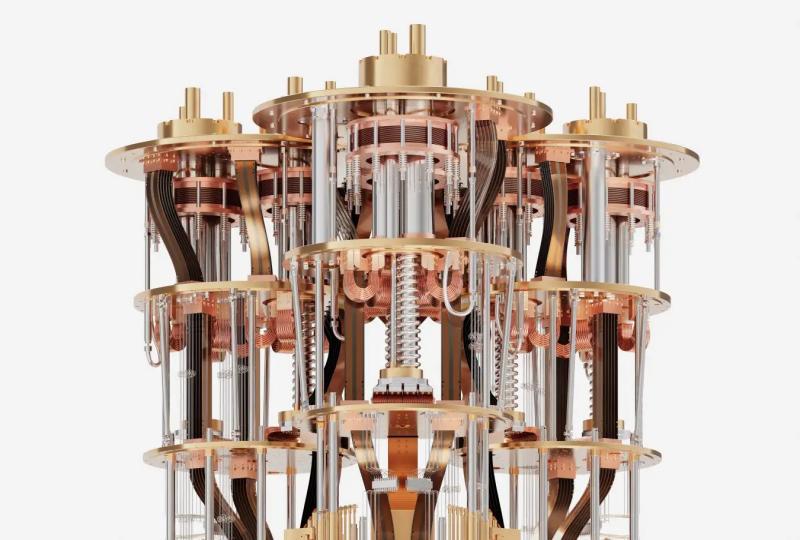
To maintain this coherence, superconducting qubits must operate at 10–20 millikelvin — colder than the surface of deep space — inside dilution refrigerators. At these temperatures, thermal photon populations that would otherwise drive unwanted qubit transitions are effectively eliminated. This cryogenic requirement is one of the most significant engineering challenges of the superconducting approach, but it is non-negotiable: even small thermal fluctuations destroy the quantum coherence on which computation depends.
The Josephson Junction: The Heart of Every Superconducting Qubit
The Josephson junction is the critical non-linear element that transforms a superconducting circuit into a functional qubit. First theoretically predicted by Brian D. Josephson in 1962 and confirmed experimentally shortly after, it consists of two superconducting electrodes separated by an ultra-thin insulating barrier — typically 1–3 nanometers of aluminum oxide. Despite this barrier, Cooper pairs tunnel through it quantum mechanically, producing a supercurrent governed by the DC Josephson relation:
I=Icsin(δ)I=Icsin(δ)
where IcIc is the junction's critical current and δδ is the quantum phase difference between the two superconductors. This phase difference is a continuously variable quantum degree of freedom — and it is this degree of freedom that serves as the computational variable in superconducting qubits.
Non-Linear Inductance: Why the Junction Enables Qubits
The Josephson junction's defining property is its non-linear inductance LJ=Φ0/(2πIccosδ)LJ=Φ0/(2πIccosδ), where Φ0=h/(2e)Φ0=h/(2e) is the superconducting flux quantum. Without this non-linearity, a superconducting LC resonator would have harmonically spaced energy levels — making it impossible to selectively address only the |0⟩ ↔ |1⟩ transition without also driving higher transitions. The Josephson junction breaks this harmonic degeneracy, creating an anharmonic energy spectrum with unequally spaced levels, allowing microwave pulses to selectively drive the qubit transition alone.
This is why the Josephson junction is described as the "artificial atom" at the heart of every superconducting quantum computer — it provides the discrete, addressable energy structure of a real atom, but in a macroscopic circuit that can be engineered, fabricated, and scaled. The 2025 Nobel Prize in Physics recognized this insight explicitly, awarded for "the discovery of macroscopic quantum mechanical tunneling and energy quantization in an electric circuit."
Superconducting Qubit Architectures
The Transmon: Industry Standard
The dominant qubit design in contemporary superconducting quantum computers is the transmon qubit. The transmon shunts the Josephson junction with a large parallel capacitor CBCB, raising the ratio EJ/ECEJ/EC (Josephson energy to charging energy) to values of 50–100. At this ratio, sensitivity to charge noise — historically the dominant decoherence mechanism — is exponentially suppressed, extending coherence times from microseconds in earlier designs to hundreds of microseconds in modern implementations. The transmon's reproducibility and compatibility with microwave readout resonators make it the qubit of choice for IBM, Google, and SpinQ's superconducting quantum processors.
.jpg)
Other Architectures
Alongside the transmon, several other designs address specific engineering trade-offs: flux qubits offer higher anharmonicity for faster gates; fluxonium qubits use a Josephson junction array superinductance for record coherence times; Xmon qubits are cross-shaped transmons optimized for 2D grid layouts, used by Google in its Willow and Sycamore chips; and parametrically modulated qubits enable high-fidelity two-qubit gates through controlled frequency interactions. SpinQ's QPU C Series chips support 1D and 2D qubit topologies with high Qi factors and extended coherence optimized for minimal error rates.
Quantum Gate Operations
Single-Qubit Gates
Qubit operations are implemented by applying microwave pulses at the qubit's resonant frequency (typically 4–8 GHz). A pulse with calibrated amplitude, duration, and phase rotates the qubit's state on the Bloch sphere:
-
An X gate (π-pulse) flips |0⟩ to |1⟩ via a 180° rotation around the X-axis.
-
A Y gate applies the same rotation with the microwave carrier phase-shifted by 90°.
-
Arbitrary single-qubit rotations use DRAG (Derivative Removal by Adiabatic Gate) pulse shaping to suppress leakage to higher energy levels.
Achieving gate fidelities above 99% requires timing precision below 100 picoseconds and phase stability at the sub-millidegree level — demanding specifications that flow directly into the requirements for control electronics.
Two-Qubit Gates and Readout
Two-qubit entangling gates — CZ, iSWAP, cross-resonance, and parametric gates — modulate the coupling between neighboring qubits to create entanglement. SpinQ's SQC superconducting quantum computer supports parametric gate operations, which use modulated qubit parameters to activate resonant exchanges between qubits with improved fidelity and flexibility.
Qubit readout is performed via dispersive measurement: the qubit's state shifts the resonant frequency of a coupled microwave resonator. A probe tone acquires a state-dependent phase shift — detected and digitized by the control electronics to determine the qubit state without directly disturbing it. High-fidelity readout, completed in under 500 nanoseconds, is a key requirement for quantum error correction.
The SPINQ QCM System: Precision Control for Superconducting Qubits
Understanding the principles of superconducting quantum computers is incomplete without understanding the role of classical control electronics. The Quantum Control and Measurement (QCM) system is the interface layer that generates, delivers, and processes every microwave signal entering and exiting the cryostat. Its quality directly determines gate fidelity, coherence, and the feasibility of error correction — it is not a peripheral component but a core determinant of overall system performance.
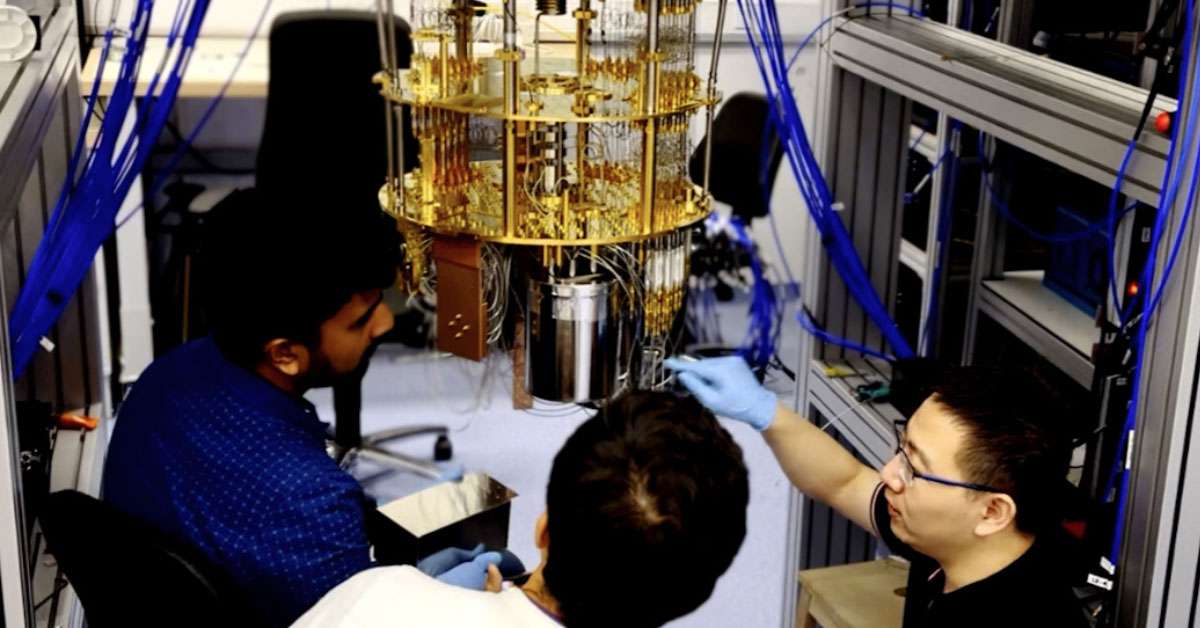
SpinQ Technology's SPINQ QCM System , is purpose-engineered for superconducting and other quantum computing platforms, with three defining engineering advantages:
Faster — FPGA-Based Distributed Edge Computing
The SPINQ QCM System features built-in hardware acceleration components. By utilizing FPGAs for distributed edge computing, it calculates and generates waveform files directly from pulse sequences at the hardware level. The system also performs real-time initial processing of collected signals and provides immediate feedback on qubit states to the host computer. This architecture reduces data transmission between the system and the host computer, significantly decreasing experiment cycle time — and critically, enabling the sub-microsecond feedback latency that active quantum error correction protocols require.
More Accurate — Sub-Nanosecond Synchronization and 16-Bit Resolution
The SPINQ QCM System offers exceptional stability in frequency, power, and phase, with extremely low noise levels. It achieves sub-nanosecond synchronization accuracy and provides up to 16-bit vertical resolution. At 16-bit precision, the amplitude of every pulse is controlled to one part in 65,536 — the calibration accuracy that separates 99% gate fidelity from 99.9%. These features ensure highly precise and reliable qubit control and measurement across all channels simultaneously.
More Convenient — Modular, Scalable, Automated
The SPINQ QCM System features a modular design that enables scalability, allowing users to easily expand control capabilities by adding identical or similar units for up to hundreds of qubits. It integrates built-in network analyzer functions and spectrum analysis functions essential for qubit characterization. The system supports remote FPGA program upgrades and includes automated qubit characterization and calibration functions, together with a comprehensive set of code examples. This dramatically reduces the time from system installation to first productive experiment.
Hardware Configuration
| Module | Channels | Frequency Range | Vertical Resolution | Sampling Rate | SFDR |
| QCM-AWG-1804 | 4 | 4.0–8.5 GHz | 16 bits | 2 GSa/s | < −45 dBc @ 5 GHz |
| QCM-RFAWG-3A0Q | 24 | 3.0–9.8 GHz | 14 bits | Up to 10 GSa/s | ≤ −60 dBc (3–6 GHz) |
The QCM-RFAWG-3A0Q's 24-channel single-module configuration is particularly significant for scaling: one unit simultaneously addresses 24 qubit XY control lines across the full superconducting qubit frequency band, making large processor deployments practical without proportional growth in rack space and cabling infrastructure.
Application Scope
Beyond superconducting qubits, the SPINQ QCM System is designed to meet the RF control electronic needs of trapped ions, neutral atoms, semiconductor qubits, and NMR quantum computers. Its enhanced speed, accuracy, and convenience also make it applicable to broader scientific research fields including radar technology, general RF electronics, and electron paramagnetic resonance — providing versatility beyond the quantum computing domain.
Decoherence and Quantum Error Correction
Decoherence: The Central Challenge
Decoherence — the loss of quantum information through environmental interaction — remains the fundamental engineering adversary of superconducting quantum computers. Two time constants quantify it: T₁ (energy relaxation time, measuring how long an excited qubit holds its state) and T₂ (dephasing time, measuring phase coherence lifetime). The primary physical sources are two-level system defects at material interfaces, magnetic flux noise, and quasiparticle tunneling across Josephson junctions.
The noise floor and phase stability of the QCM system directly contribute to the effective dephasing rate — making the connection between control hardware quality and qubit coherence concrete and measurable. Low-noise control electronics are therefore not a luxury but a prerequisite for high-performance quantum computation.
Quantum Error Correction
Quantum error correction (QEC) addresses decoherence algorithmically by encoding one logical qubit across many physical qubits. The surface code — the leading QEC scheme for superconducting hardware — continuously measures error syndromes on a 2D qubit grid to detect and correct errors without collapsing the logical state. Its hardware requirements directly constrain the QCM system: gate fidelities above 99%, readout completion in under 500 nanoseconds, and real-time classical decoding within the qubit coherence window. All of these requirements translate into QCM specifications — sub-nanosecond synchronization, high-fidelity pulse generation, and the FPGA-based real-time feedback that SpinQ's QCM system delivers.
Scalability: The Path to Fault-Tolerant Quantum Computing
Scaling superconducting systems from tens to hundreds to thousands of fault-tolerant qubits requires simultaneous progress at every layer: chip fabrication yield and uniformity, 3D packaging integration to increase qubit density, cryogenic thermal budget management, and most critically — scalable control electronics.
SpinQ's modular QCM architecture, which scales to hundreds of qubits by adding identical units without redesign, is purpose-built for this reality. Combined with the QPU C Series chips (C10, C25, C103) offering 1D and 2D qubit topologies, and the SQC superconducting quantum computer's support for parametric gates and quantum error correction, SpinQ's product stack is engineered to grow alongside the quantum computing roadmap rather than require replacement at each scale milestone.
SpinQ's Full Superconducting Quantum Portfolio
For organizations ready to translate the principles of superconducting quantum computers into deployed hardware, SpinQ provides every layer of the stack:
-
SPINQ SQC Superconducting Quantum Computer — up to 103 superconducting qubits, parametric gate support, quantum error correction capability
-
SPINQ QPU C Series — standalone superconducting chips (C10, C25, C103) operating at ~20 mK with high Qi factor and extended coherence times
-
SPINQ QCM Quantum Control & Measurement System — FPGA-accelerated, sub-nanosecond synchronization, up to 16-bit resolution, scalable to hundreds of qubits. Full product specifications, configuration options, and demo requests: https://www.spinquanta.com/products-services/quantum-control-and-measurement-system
-
Cryogenic Environment Deployment Services — end-to-end support for ~10 mK dilution refrigerator environments
-
QPU Foundry Services — professional superconducting chip design, fabrication, and characterization
The principles of superconducting quantum computers — macroscopic quantum coherence, Josephson junction non-linearity, microwave qubit control, and precision classical electronics — form a complete, coherent engineering framework. With a full-stack partner like SpinQ, these principles become deployable hardware today.
Featured Content