
Superconducting Quantum Computer Price: The Complete 2025–2026 Buyer's Guide
2026.05.21 · Blog superconducting quantum computer price
The question every CTO, research director, and procurement officer asks before entering the quantum era is always the same: how much does a superconducting quantum computer actually cost? The answer is more nuanced than a single figure, because superconducting quantum computer price is shaped by qubit count, cryogenic infrastructure, error-correction capability, and ongoing operational expenses. This guide breaks down every pricing tier, explains the hidden costs that most buyers overlook, and shows how SpinQ's end-to-end superconducting quantum product portfolio delivers the most transparent and accessible path to quantum ownership. 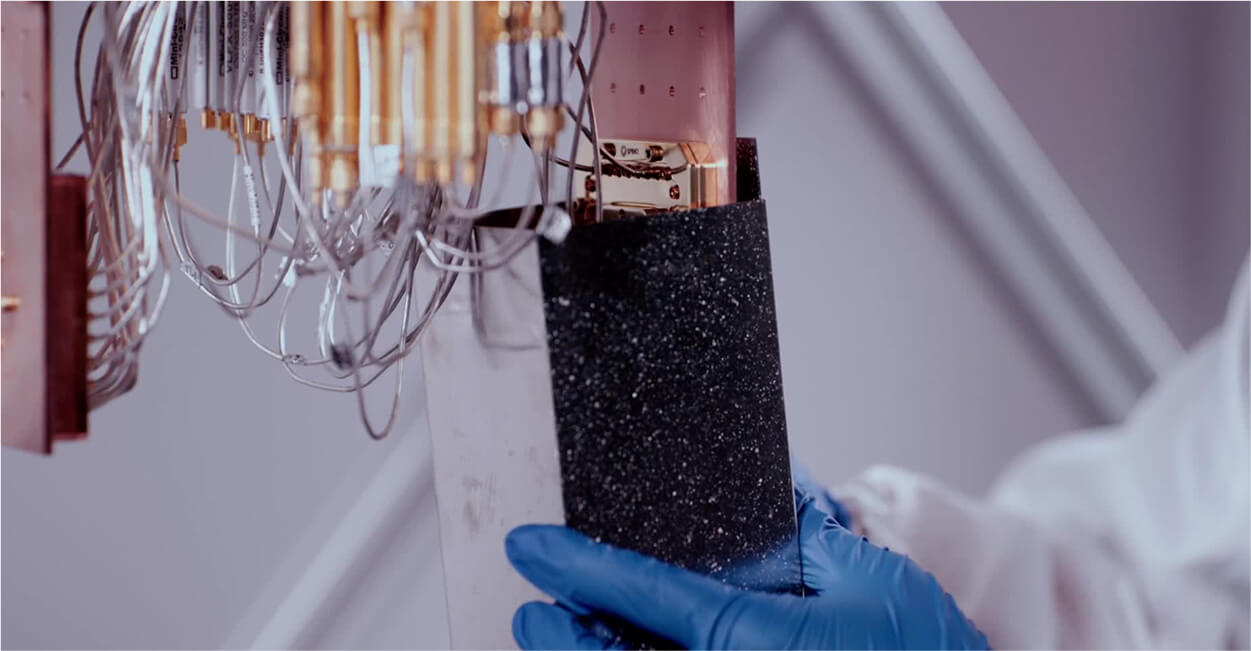
What Is a Superconducting Quantum Computer?
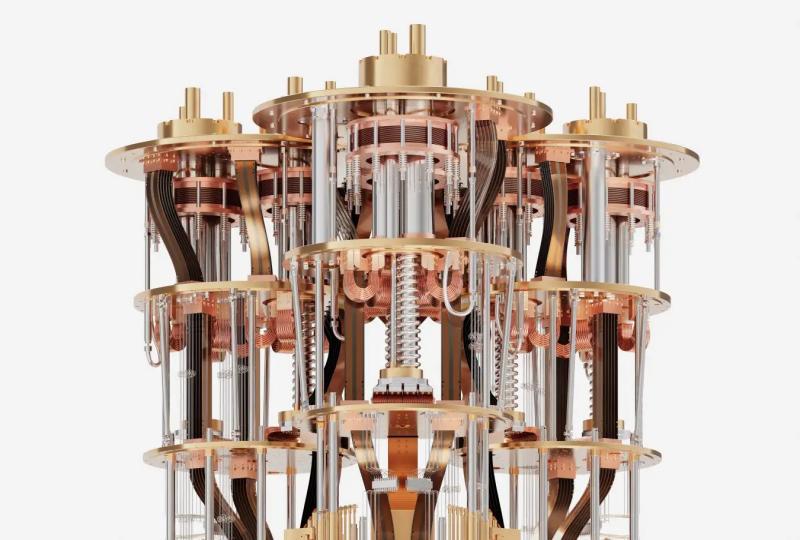
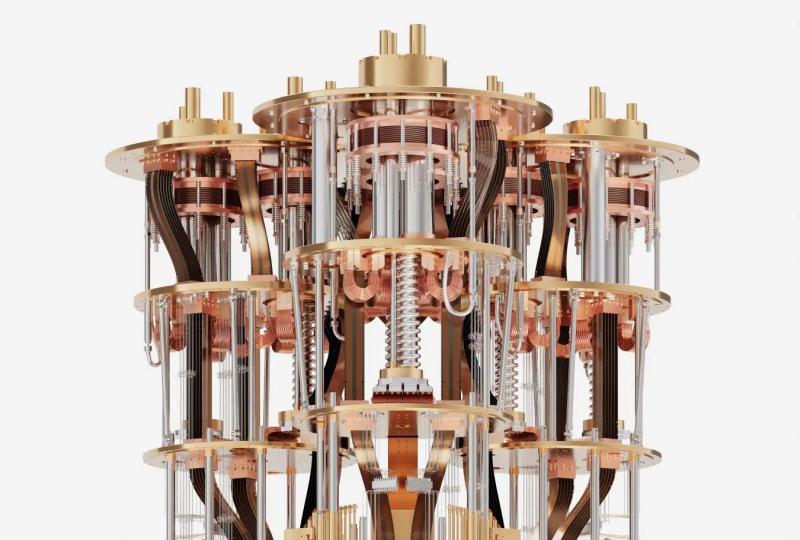
A superconducting quantum computer uses circuits built around Josephson junctions, where qubits are formed by macroscopic quantum effects at temperatures near absolute zero — typically around 10–20 millikelvin. This architecture offers three decisive advantages over competing modalities:
-
Scalable qubit numbers — chip fabrication techniques familiar from classical semiconductors allow rapid qubit count increases.
-
High gate fidelity — precise microwave-pulse control enables accurate two-qubit operations.
-
Controllable multi-qubit coupling — engineered coupling buses let designers tune qubit interactions programmatically.
These properties make superconducting technology the most rapidly advancing and most widely industrialized quantum computing approach on the planet, a position maintained by leaders such as IBM, Google, and SpinQ Technology. Understanding superconducting quantum computer price therefore means understanding both the hardware breakthroughs driving value and the engineering complexity driving cost.
The 2025–2026 Superconducting Quantum Computer Price Landscape
The global quantum computing market is on a powerful growth trajectory, expanding at a compound annual growth rate exceeding 40% through 2030. Within this broader market, the superconducting segment is among the fastest-growing subsectors, reflecting strong enterprise demand and rapid technology maturation. These trends confirm that superconducting quantum computing is no longer an experimental curiosity — it is a commercial market with real procurement decisions happening at enterprise scale.
Against this backdrop, superconducting quantum computer prices span four distinct tiers in 2025–2026.
Entry-Level Research Systems
Entry-level superconducting systems are positioned at the most accessible point on the pricing spectrum, targeting academic research institutions, government laboratories, and early-stage corporate R&D teams. These systems typically feature a modest qubit count designed for quantum algorithm exploration, foundational physics experiments, and hands-on education. SpinQ's superconducting line at this tier provides high-fidelity qubits in a compact, deployable form factor — an ideal platform for quantum chemistry, materials science, and financial algorithm development before scaling to larger hardware.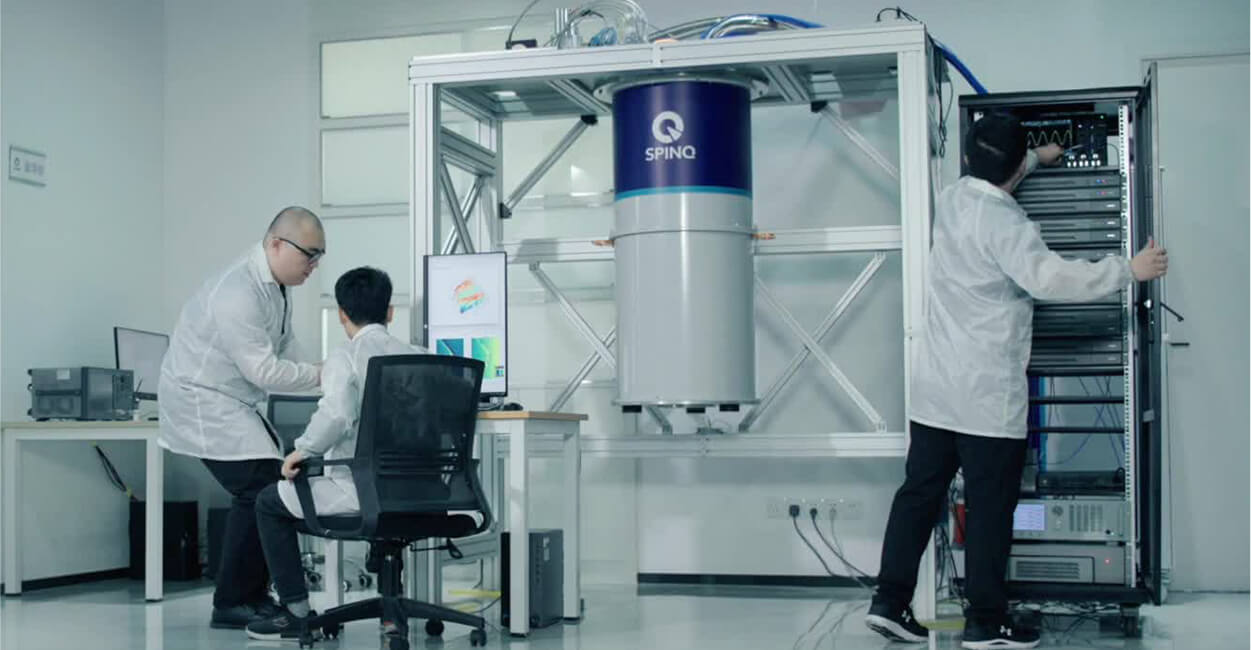
Mid-Range Industrial Systems
Mid-range superconducting systems offer significantly expanded qubit counts and improved coherence, delivering the reliability and stability required for industrial research pilots and early-stage commercial deployments. Organizations in this tier are typically running quantum advantage proofs-of-concept in pharmaceuticals, materials discovery, and portfolio optimization. The added investment buys dedicated hardware, direct vendor engineering support, and the ability to run proprietary quantum circuits without the scheduling constraints of cloud-shared hardware.
High-End Enterprise Systems
Advanced superconducting systems in the highest performance category — Google's Willow chip — represent the cutting edge of on-premises quantum deployment. These systems are positioned for national laboratories, large pharmaceutical companies, and financial institutions pursuing genuine quantum advantage in complex simulation and optimization tasks. SpinQ's SQC S Series sits at this tier with its 103-qubit architecture featuring long coherence times, high gate fidelity, parametric gate support, and full quantum error correction capability.
Key Factors That Determine Superconducting Quantum Computer Price
Understanding the total cost of a superconducting quantum computer requires looking beyond the hardware list price. Industry data consistently shows that the qubit chip itself represents only a fraction of total cost of ownership.
Qubit Count and Qubit Quality
More qubits mean exponentially more computational power, but also exponentially more engineering complexity. The precision required for qubit uniformity, coupling control, and isolation rises sharply with scale. Gate fidelity and coherence time are equally critical: a smaller array with superior coherence can outperform a much larger system with poor coherence, meaning buyers should evaluate qubit quality metrics alongside raw count when assessing value.
Cryogenic Infrastructure
Superconducting quantum computers require dilution refrigerators operating at approximately 15–20 millikelvin. These highly specialized cryogenic systems carry significant purchase costs and substantial ongoing maintenance expenses. Unexpected downtime from refrigerator failures can generate serious financial impact for organizations that depend on consistent quantum compute access. Control electronics — microwave signal generators, DACs, and ADCs — add a further substantial layer to total system cost.
SpinQ addresses these infrastructure challenges directly through its Cryogenic Environment Deployment Services, covering selection, consulting, supply, maintenance, and upgrading of dilution refrigerators — delivering turnkey milli-kelvin environments (~10 mK) that eliminate procurement complexity and ensure operational stability from day one.
Quantum Control and Measurement Electronics
Controlling qubits precisely demands purpose-built electronics capable of generating high-fidelity microwave pulses synchronized across all qubits simultaneously. SpinQ's QCM (Quantum Control & Measurement) System is engineered specifically for this challenge. Built on a modular, high-precision RF architecture with FPGA hardware-level acceleration, it supports superconducting QPUs and can scale to manage the measurement and control of hundreds of qubits. Its included tutorial code libraries for qubit characterization and calibration significantly reduce the time and cost of bringing a new system online.
QPU Chip Design and Fabrication
The quantum processing unit itself involves substantial R&D, precision fabrication, and characterization costs that vary by vendor and application. SpinQ's QPU C Series superconducting quantum chips — including the C103, C25, and C10 models — are designed and fabricated in-house for high-coherence, high-stability applications. Operating at ultra-low temperatures around 20 mK, each chip features a high Qi factor, extended coherence times, and excellent circuit uniformity.
For organizations without their own fabrication capabilities, SpinQ also offers QPU Foundry and Characterization Services — supporting companies and institutions that lack the necessary cleanroom equipment or expertise in quantum chip development and characterization.
Software, Integration, and Ongoing Operations
Annual operational costs for a quantum computer extend well beyond hardware, encompassing software maintenance, calibration services, and the specialized engineering talent required to keep systems running at peak performance. SpinQ bundles software and integration support into its product packages, helping customers accelerate time-to-value and reduce the total cost of quantum ownership over the system lifecycle.
SpinQ's Full Superconducting Quantum Product Portfolio
SpinQ Technology offers the most comprehensive superconducting quantum product ecosystem available from a single vendor. Rather than purchasing isolated hardware, customers access an integrated stack covering every layer of the quantum computing value chain. Explore the complete lineup at SpinQ Superconducting Quantum Products.
SPINQ SQC Superconducting Quantum Computer — The flagship SQC S Series supports up to 103 superconducting qubits on its next-generation architecture, with parametric gate support and quantum error correction. With long coherence times and high gate fidelity, the SQC delivers a scalable and reliable foundation for advanced research and industrial applications across biopharmaceuticals, materials science, FinTech, and AI. It is designed for both academic innovation and industrial deployment, accelerating the path toward practical quantum advantage.
SPINQ QPU C Series — The C103, C25, and C10 superconducting quantum chips are designed and fabricated by SpinQ for high-coherence, high-stability applications. Each operates at ~20 mK, features a high Qi factor, and delivers excellent circuit uniformity. They are available as standalone components for customers building custom quantum systems or as the integrated core of SpinQ's full quantum computer stack.
.jpg)
SPINQ QCM Quantum Control & Measurement System — A modular, FPGA-accelerated RF control platform offering high compatibility with superconducting QPUs. It scales to manage hundreds of qubits with high vertical resolution, making it suitable for both research groups and enterprise quantum labs. Included tutorial codes for qubit characterization and calibration reduce time-to-operation significantly.
QPU Foundry & Characterization Services — Professional QPU design, fabrication, and characterization support for organizations without cleanroom infrastructure. SpinQ notably delivered China's first independently developed superconducting quantum chip to a research institution in the Middle East, demonstrating both technical capability and global reach.
Cryogenic Environment Deployment Services — End-to-end support for milli-kelvin cryogenic environments, covering all aspects of dilution refrigerator procurement, installation, and lifecycle management. This service de-risks one of the most complex and expensive aspects of superconducting quantum computer deployment.
Industry Trends Reshaping Superconducting Quantum Computer Pricing
The superconducting quantum computer price trajectory is being reshaped by several converging trends in 2025–2026:
Rapid qubit scaling. Google's Willow chip achieved a benchmark calculation that would require a classical supercomputer an astronomically long time to complete. Fujitsu and RIKEN unveiled a 256-qubit superconducting system in 2025, with roadmaps pointing toward systems of thousands of qubits within this decade. As qubit counts rise and manufacturing processes mature, per-qubit costs will decline, gradually reducing entry prices for capable systems.
Quantum error correction maturity. Error correction is transitioning from theory to practice — a milestone that will dramatically expand the range of commercially useful applications. As logical qubits replace physical qubits as the primary capability metric, pricing models across the industry will shift to reflect error-corrected performance.
Competitive market dynamics. The emergence of multiple credible vendors — including SpinQ — has introduced pricing pressure that did not exist when only a handful of major players dominated the market. SpinQ's QPU C Series and SQC systems offer research-grade to enterprise-grade superconducting capabilities at competitive price points designed for a broader range of institutional budgets.
Cloud access democratization. QCaaS platforms continuously lower the experimental cost of quantum computing, accelerating the talent pipeline and driving demand for on-premises hardware as organizations mature in their quantum journey. The availability of cloud-based superconducting access reduces the risk of hardware investment by allowing teams to validate algorithms before committing to capital expenditure.
How to Choose the Right Investment Tier
Given the wide range of superconducting quantum computer prices, the right investment level depends on your organization's quantum maturity, application requirements, and infrastructure capacity:
-
Academic research and quantum education: Start with SpinQ's C10 or C25 QPU chips or SpinQ Cloud access — providing hands-on qubit experience without major infrastructure investment.
-
Corporate R&D and early quantum advantage pilots: Mid-range systems from SpinQ's QPU C Series, combined with the QCM system and cryogenic deployment services, provide a complete on-premises platform for proprietary research.
-
Industrial quantum computing: The SQC S Series 103-qubit system delivers the qubit count, error correction, and coherence required for real-world computational advantages in drug discovery, materials simulation, and financial modeling.
-
Organizations not ready for capital expenditure: SpinQ Cloud delivers access to superconducting and NMR platforms with Python and graphical interfaces, enabling algorithm development at operational cost with no upfront hardware commitment.
Invest in the Future of Computing
The superconducting quantum computer price spans a wide spectrum — from accessible entry-level QPU chips for research teams to full industrial quantum computing systems for enterprise deployment. What remains constant across all tiers is the transformative potential: simulating molecular interactions that unlock new drugs, optimizing logistics networks, accelerating materials discovery, and enabling AI breakthroughs at scale.
SpinQ Technology offers the most complete superconducting quantum product portfolio available today, from individual QPU chips through full-stack 103-qubit quantum computers, professional foundry services, precision control electronics, and turnkey cryogenic deployment. For organizations ready to move from quantum curiosity to quantum capability, SpinQ is the partner that makes the journey both technically sound and commercially viable.
Ready to explore SpinQ's superconducting quantum products? Visit the full product lineup at https://www.spinquanta.com/products/superconducting-quantum-products and
contact the SpinQ team to discuss the configuration that best fits your research objectives and budget.
Featured Content