
Superconducting Qubit Systems and Cryogenic Deployment
2026.05.21 · Blog superconducting qubit
Why superconducting qubits need cryogenic systems
A superconducting qubit must operate at temperatures of only a few milli‑Kelvin to maintain superconductivity and long coherence times. At these temperatures, electrical resistance vanishes and environmental noise is suppressed, allowing delicate quantum states to survive long enough for useful algorithms.
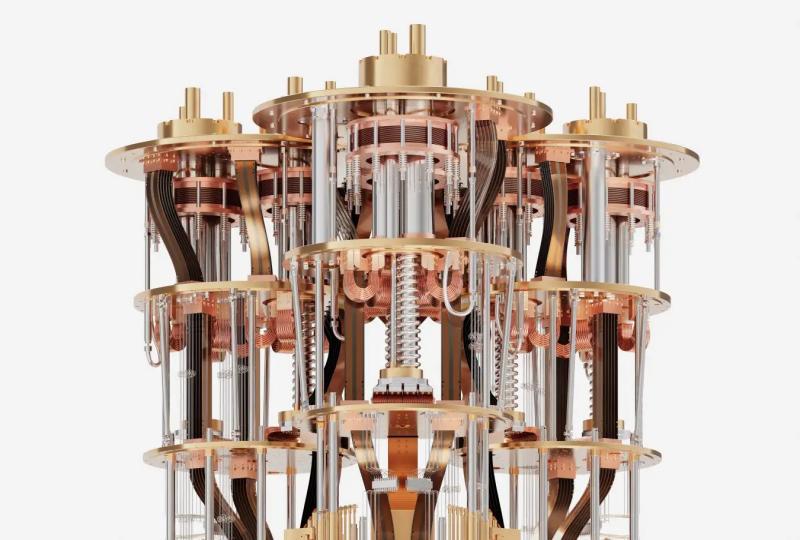
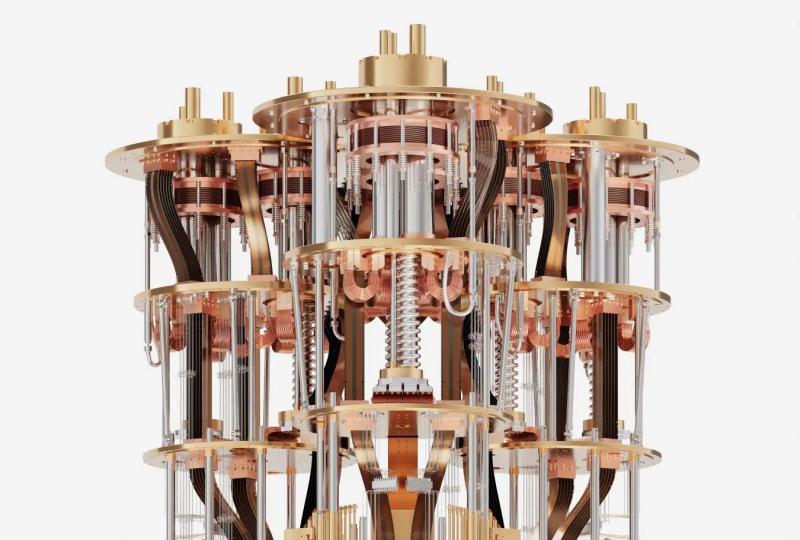
For this reason, every serious superconducting qubit platform is paired with a high‑performance cryogenic stack, dominated by a dilution refrigerator that cools the quantum processor to around 10 mK. Without this milli‑Kelvin environment, decoherence from thermal photons and vibrations quickly destroys the information stored in each superconducting qubit.
Dilution refrigerators for superconducting qubit hardware
At the heart of a modern superconducting qubit quantum computer is a dilution refrigerator that provides a milli‑Kelvin environment of roughly 10 mK. SpinQ’s cryogenic deployment service supplies such refrigerators equipped with high‑performance, low‑vibration pulse‑tube cryocoolers to minimize mechanical noise that could disturb qubit operations.
These refrigerators support fully automated operation, including automatic temperature ramping, which is critical for safely cooling sensitive superconducting qubit chips and the surrounding RF hardware. Automated control shortens system bring‑up time and reduces the risk of thermal cycling damage, helping labs reach stable base temperature for experiments more reliably.
Cryogenic RF components around the superconducting qubit
A superconducting qubit is controlled and read out through microwave lines that must traverse large temperature gradients from room temperature down to the quantum chip. To keep heat loads low and signal integrity high, SpinQ provides guidance and supply for cryogenic RF devices such as HEMT amplifiers, RF coax cables, superconducting coax cables, and RF connectors optimized for low‑temperature operation.
These cryogenic components are complemented by customized magnetic shielding and thermal mounting solutions to protect the superconducting qubit from stray fields and thermal fluctuations. Properly engineered wiring, shielding, and thermal anchoring are essential to preserve gate fidelity and readout visibility as systems scale to tens or hundreds of superconducting qubits.
Lab deployment and supporting infrastructure
Building a reliable superconducting qubit lab requires much more than buying a fridge and a chip. SpinQ offers superconducting quantum computing lab assessment and cryogenic device installation services, covering power distribution schemes, site and space layout, grounding, vibration‑reduction strategies, lab renovation guidance, and on‑site installation or relocation of dilution refrigerators.
Around the core cryostat, the company also supplies supporting equipment such as water chillers, vacuum pumps, and other auxiliary devices, along with maintenance and repair services to keep the cryogenic stack running continuously. This end‑to‑end support helps research and industry teams focus on algorithms and applications while SpinQ handles the engineering complexity of hosting a large‑scale superconducting qubit system.
End‑to‑end superconducting qubit solutions with SpinQ
For organizations moving from theory to deployment, an integrated superconducting qubit platform plus cryogenic environment is the fastest route to practical quantum advantage. SpinQ aligns its cryogenic environment deployment services with its superconducting quantum computers and chips, so customers can move from chip selection to milli‑Kelvin installation, tuning, and long‑term operation inside a single ecosystem.
From pre‑sales consultation through post‑sale technical support, SpinQ’s team helps define requirements, choose the right dilution refrigerator, select cryogenic RF components, and commission the lab for stable superconducting qubit experiments. With this comprehensive approach, researchers and enterprises can scale from first‑time experiments to multi‑qubit superconducting qubit processors ready for advanced quantum algorithms.
Featured Content