
Superconducting Chip Price: 2026 Cost Guide
2026.05.28 · Blog price Superconducting chip
The price of a superconducting quantum chip is one of the biggest barriers between a promising lab design and a scalable quantum computing product. From small-batch prototypes to industrial-grade QPUs, costs can range from tens of thousands to millions of U.S. dollars depending on qubit count, fabrication complexity, and service models. Understanding how these prices are structured is essential for R&D labs, startups, and enterprises planning their quantum roadmaps.
What Is a Superconducting Quantum Chip?
A superconducting quantum chip is a specialized processor that uses superconducting qubits—usually based on Josephson junction circuits—to perform quantum computations. Unlike traditional chips that manipulate bits as 0 or 1, superconducting chips operate on qubits that can exist in superposition and become entangled, enabling certain computations far faster than classical processors.
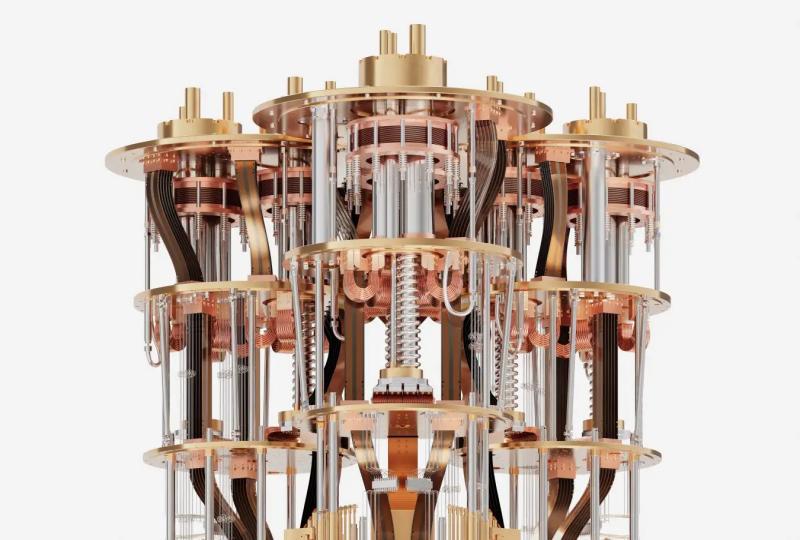
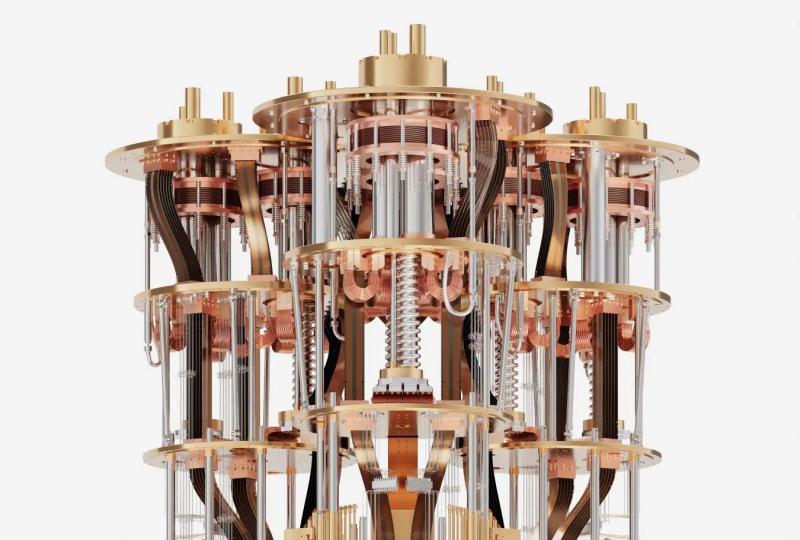
These chips typically operate at ultra-low temperatures, often around 10–20 millikelvin, inside dilution refrigerators, and form the heart of modern superconducting quantum computers. Our SpinQ superconducting QPU series, for example, adopts 1D or 2D qubit chain topologies with high-quality factors, long qubit lifetimes, and robust stability to support more complex quantum circuits.
Typical Price Ranges for Superconducting Quantum Chips
Superconducting chip pricing is highly stratified across the industry. Based on our manufacturing experience and market observations from 2025–2026, we can provide concrete benchmarks across different QPU categories.
-
Per-Qubit Economics
Industry analysis indicates that superconducting qubits in commercial systems typically cost between $10,000 and $50,000 per qubit when accounting for advanced materials, nanofabrication infrastructure, and yield constraints. According to our internal production data and market research published in our Quantum Chip Price Guide 2025, a 400-qubit superconducting chip can reach approximately $800,000, while chips approaching the 1,000-qubit threshold can exceed $10 million.
-
Research-Grade Prototype Chips
For custom or small-batch fabrication runs, research-grade prototype chips typically fall between $50,000 and $500,000 per chip. This price range reflects the overhead of specialized foundry operations and the lower yields characteristic of early-stage designs, as detailed in our Superconducting Quantum Computer Cost analysis.
-
Commercial QPU Price Bands
Our SpinQ quantum chip lineup is priced in the range of $28,000 to $280,000 per chip, depending on qubit count, performance specifications, and bundled service packages. For market context, competitor offerings include:
-
QuantWare's SOPRANO-D and CONTRALTO-D processors: mid five-figure to low six-figure range
-
Rigetti's ANKAA-9Q-1 chip: high six-figure bracket
These figures are based on publicly available vendor pricing and our competitive market analysis conducted in Q1 2026.
According to the Global Market Insights report from April 2025, the global superconducting quantum chip market was valued at $512.4 million in 2024 and is projected to grow at a 17.2% CAGR from 2025 to 2034, reflecting the expanding commercial demand driving these price structures.
Why Are Superconducting Chips So Expensive?
Several structural factors drive the price of superconducting quantum chips far beyond typical semiconductor devices.
-
Advanced fabrication infrastructure Building and operating a superconducting quantum chip fabrication line is capital intensive. A dedicated quantum chip foundry can require investments on the order of 200 million to 500 million U.S. dollars, depending on capacity and process sophistication. These costs are ultimately reflected in per-chip pricing, especially in small volumes.
-
Complex materials and processes Superconducting chips use materials such as niobium and aluminum, carefully layered and patterned into Josephson junctions with nanometer precision. Maintaining cleanliness, controlling defects, and achieving reproducible junction characteristics significantly increase process costs compared with conventional CMOS.
-
Low initial yields Because the field is still emerging, yields for large, high-qubit-count superconducting chips can be relatively low. Dead qubits, frequency collisions, and packaging issues mean that only a subset of produced chips meet full performance specifications, raising the effective cost per good device.
-
Intensive characterization Quantum chips require deep, cryogenic-level characterization—including coherence measurements, gate benchmarking, and stability tests—to verify performance. This adds significant engineering labor and cryogenic infrastructure overhead to each chip’s effective cost.
Chip Price vs Full Superconducting System Cost
It is important to distinguish between the price of the superconducting chip itself and the total cost of a complete superconducting quantum computer. While a high-end chip might cost several hundred thousand to more than ten million U.S. dollars, the full system—including cryogenics, control electronics, infrastructure, and software—can be substantially higher.
Full quantum computer solutions span a wide spectrum: entry research systems can start from tens of thousands of U.S. dollars, mid-range superconducting platforms range from hundreds of thousands to many millions, and large enterprise on-premises systems can become multi-million-dollar investments. Entry-level systems roughly around the low seven-figure range and high-end industrial platforms in the mid to high tens of millions of U.S. dollars.
This means the superconducting chip may represent a sizable but not exclusive portion of the total expenditure. Cryogenic deployment, quantum control hardware, facility modifications, and software development are all major contributors to total cost of ownership.
Our Approach to Superconducting Chip Pricing
We serve as both a superconducting QPU manufacturer and a provider of end-to-end quantum solutions, including QPU foundry services and complete superconducting quantum computer systems. Our pricing strategy emphasizes accessible tiers and transparent contract structures designed specifically for research institutions and early commercial adopters.
-
Transparent QPU Pricing Structure
Our superconducting QPU product line ranges from the high tens of thousands to low hundreds of thousands of U.S. dollars per chip, depending on qubit count, performance class, and service level. Detailed pricing information is available in our Quantum Chip Price Guide 2025.
-
Performance-Based Contract Models
To address the industry-wide challenge of yield and performance uncertainty, we offer innovative contract models that link payment to the number of functioning qubits after a defined operation period—typically measured at 15–30 days post-delivery. This approach significantly reduces the financial risk of "dead inventory."
As documented in our Quantum Chip Procurement Guide, for a 100-qubit system, our performance-based pricing can save hundreds of thousands of dollars by eliminating payment for non-functional qubits. This model contrasts sharply with traditional fixed-price contracts that leave buyers paying full price regardless of actual qubit performance.
-
Integrated Manufacturing Advantage
By combining in-house chip fabrication at our dedicated quantum foundry, strict ISO-certified process control, and standardized QPU product lines, we deliver industrial-grade superconducting quantum chips at more predictable and competitive price points. Our vertical integration strategy is detailed in our QPU Foundry Service overview, which outlines how we maintain quality control from wafer fabrication through final system integration.
How Pricing Scales with Qubit Count and Performance
Superconducting chip prices generally scale with both qubit count and quality metrics such as coherence time, gate fidelity, and connectivity. A low-qubit-count device with modest coherence might be sufficient for basic research and education, and thus positioned in the lower tens of thousands of dollars. In contrast, a cutting-edge 400-qubit chip with high coherence and tight calibration can approach or exceed the upper six-figure to low seven-figure range.
As designs reach the 1,000-qubit level and beyond, individual chip prices can cross into eight-figure territory, especially when integrated into large-scale commercial systems. At that point, advanced packaging, 3D integration, and multi-chip modules further increase costs but are necessary for practical scaling.
Market Trends in Superconducting Chip Pricing
Market reports and vendor roadmaps suggest that while individual superconducting qubits and chips remain expensive, overall price trends will gradually decline as volumes increase and fabrication techniques mature. Industry analyses project the global superconducting quantum chip market to grow from roughly the half-billion-dollar level in the mid-2020s to close to or exceeding two billion U.S. dollars by 2030, driven by R&D demand and early commercial deployments.
At the same time, vendor competition and standardization of QPU form factors may lead to more transparent and modular pricing.
Strategies to Manage Superconducting Chip Costs
Given the high price of superconducting chips, organizations are adopting several strategies to control costs while moving forward with quantum initiatives.
-
Start with smaller QPUs or shared systems Organizations can begin with lower-qubit-count chips or shared access platforms before committing to large on-premises installations.
-
Use cloud-based access Instead of purchasing chips outright, many teams access superconducting QPUs through cloud services, paying for usage rather than hardware ownership. This allows experimentation with state-of-the-art devices without the full capital outlay.
-
Combine educational and superconducting platforms Institutions often use educational quantum computers—such as SpinQ’s NMR-based desktop systems—for teaching and early prototyping, and rely on remote superconducting QPUs for scaling up experiments. This blended strategy controls hardware costs while building internal expertise.
-
Work with full-stack providers Choosing a vendor that offers chips, cryogenic deployment, control systems, and software as part of an integrated solution can optimize overall TCO and reduce hidden integration costs.
When Does Buying a Superconducting Chip Make Sense?
Directly purchasing superconducting chips is most appropriate for organizations that plan to build or operate their own quantum systems and have the expertise to integrate QPUs into cryogenic and control environments. This includes advanced research labs, quantum hardware startups, and enterprises pursuing sovereign quantum capabilities.
For many other users—especially those focused primarily on algorithms, applications, or education—leveraging desktop educational quantum computers and cloud-based superconducting platforms often delivers better value.
Artner for Superconducting Chip Buyers
SpinQ’s role as both a quantum chip manufacturer. We offers:
-
Standardized superconducting QPU product lines with clear price ranges and documented performance targets.
-
Custom foundry and chip design services for organizations that need application-specific architectures.
-
Flexible contract structures, including performance-based models that reduce the risk of paying for underperforming qubits.
-
Integrated solutions that combine chips with cryogenic deployment, quantum control and measurement systems, and software, supported by expert engineering teams.
By working with SpinQ, you can align technical requirements, budget constraints, and long-term roadmaps instead of viewing the superconducting chip as an isolated, one-off purchase.
Featured Content