
Building a in China Superconducting Quantum Computing System
2026.08.27 · Blog in China Superconducting Quantum Computing System
A superconducting quantum computing system in China is more than a quantum chip placed inside a cryogenic refrigerator. It is a coordinated engineering environment that combines a quantum processing unit, low-temperature infrastructure, microwave control electronics, measurement hardware, calibration workflows, software, and professional deployment support.
For research institutions, enterprises, and public-sector organizations, this full-stack perspective is essential. Quantum computing projects often begin with a question about qubit count or processor performance, but the long-term value of a system depends on whether every layer can work together reliably in a real laboratory environment.
SpinQ develops superconducting quantum computing systems around this integrated principle. From quantum chip design and measurement-control hardware to cryogenic deployment and software tools, our solutions help organizations establish a practical foundation for quantum research, system development, and application exploration.
What Is a Superconducting Quantum Computing System?
A superconducting quantum computing system uses superconducting circuits to create and control quantum bits, or qubits. These circuits usually include Josephson junctions, which provide the nonlinear quantum behavior needed to form controllable qubit states.
The qubits are operated with microwave pulses. A carefully calibrated pulse can prepare a quantum state, apply a quantum gate, or support a measurement sequence. In principle, this process connects a quantum algorithm written in software to a physical operation performed on the quantum processor.
In practice, the process is much more demanding. The quantum processor must operate at extremely low temperatures. Its control signals must arrive with the correct timing, phase, amplitude, and frequency. Its readout signals must be amplified and digitized with minimal additional noise. The software must understand the current properties of the hardware so that circuits can be compiled and executed appropriately.
This is why a superconducting quantum computer should be understood as a system, not as a single device. The quantum chip is central, but it cannot operate productively without the cryogenic, electronic, software, and operational layers around it.
Why Full-Stack Integration Matters
Superconducting qubits are highly sensitive to their physical environment. Noise, unwanted heat, electromagnetic interference, timing errors, material defects, and crosstalk can all affect quantum operations.
A system built from independently selected modules may face integration challenges. For example, the control electronics must be compatible with the chip’s operating frequencies and readout architecture. Cryogenic cabling must preserve signal quality while limiting heat flow into colder stages. Software must be configured to match the qubit topology and calibrated pulse parameters.
Full-stack integration helps address these interdependencies from the beginning. It establishes clear interfaces among hardware modules while allowing them to be optimized as part of one system.
For a superconducting quantum computing system in China, the ability to coordinate local engineering, laboratory preparation, deployment, testing, operator training, and ongoing technical support can also be important. A quantum system is not fully ready when its equipment arrives. It becomes operational after the installation environment, hardware configuration, calibration workflow, and user access model have been carefully prepared.
SpinQ’s approach connects these stages through a portfolio that spans superconducting QPUs, control and measurement systems, cryogenic deployment services, and quantum software tools.
The Quantum Processing Unit
The quantum processing unit, commonly called a QPU, is the computing core of a superconducting quantum system. It contains the qubits and supporting structures required for quantum operations, including couplers, resonators, control lines, readout elements, and packaging interfaces.
When evaluating a QPU, organizations should consider more than the number of available qubits. Important factors include topology, coherence behavior, gate performance, readout performance, fabrication quality, packaging, calibration accessibility, and potential for system expansion.
Qubit topology describes how qubits interact with one another. Connectivity matters because quantum algorithms may require information to be exchanged between qubits. If two required qubits are not directly connected, additional operations may be needed to route quantum information. These extra operations can increase circuit complexity and introduce more opportunities for error.
Coherence describes the useful time during which a qubit can preserve quantum information. Gate performance relates to how closely a physical operation matches its intended quantum operation. Both are fundamental to the type of experiments and circuit depths that a research team can realistically investigate.
SpinQ’s QPU product line is designed for superconducting quantum computing research, experimental development, and integrated system deployment. Supports professional services including customization, foundry services, design support, installation, training, and technical assistance. Its QPU series supports one-dimensional and two-dimensional topologies and operates at approximately 20 millikelvin.Learn more about SpinQ superconducting quantum chips.
.png)
Cryogenic Infrastructure and Laboratory Readiness
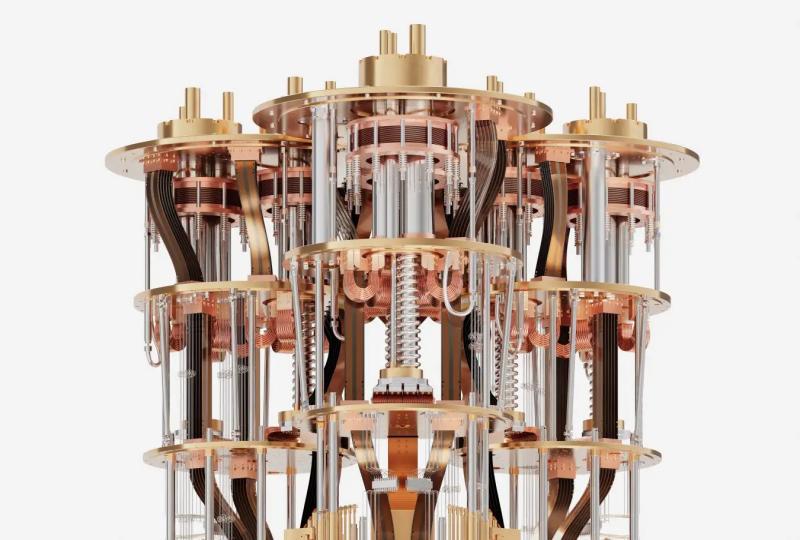
A superconducting quantum processor requires a stable milli-kelvin environment. This is usually provided by a dilution refrigerator, which creates multiple temperature stages and supports the thermal conditions required by the quantum chip.
However, a cryogenic system is not simply a cooling appliance. It is part of the quantum computer’s signal, thermal, and noise-control architecture.
Microwave control signals must travel from room-temperature electronics to the quantum chip. Along this path, cables, attenuators, filters, connectors, and thermal anchoring structures must be selected and configured carefully. The system must reduce heat transfer toward the coldest stages while preserving the control signal required for reliable gate operations.
Readout signals travel from the quantum chip toward room-temperature measurement equipment. Because these signals can be weak, the system commonly uses low-noise cryogenic amplification and carefully designed signal chains. The goal is to preserve useful measurement information while controlling noise introduced during transmission and amplification.
Laboratory readiness also affects the deployment process. Electrical supply, grounding, cooling requirements, floor layout, vibration conditions, cable routing, electromagnetic surroundings, and operator access can influence installation planning and daily operation.
For this reason, organizations planning a superconducting quantum computing system in China should assess laboratory infrastructure early. Early assessment can reduce avoidable installation delays and help ensure that the system configuration reflects actual site conditions.
SpinQ offers cryogenic deployment support that covers key infrastructure and commissioning needs for superconducting quantum computing environments.
.jpg)
Quantum Control and Measurement
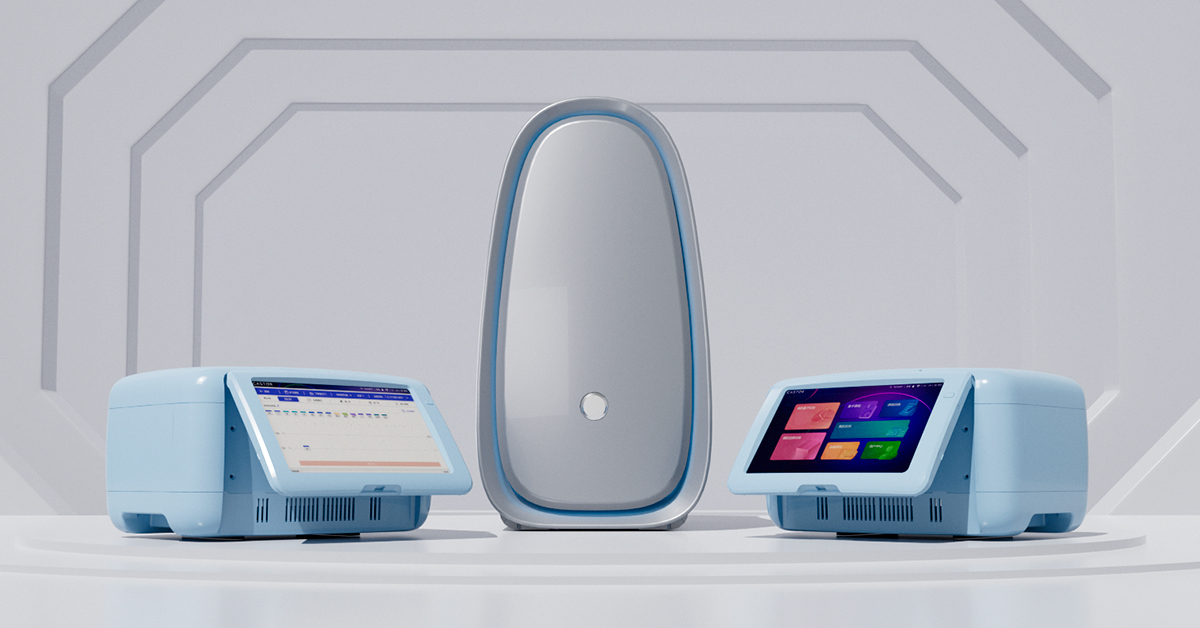
The quantum control and measurement system, or QCM, is the bridge between the classical computing environment and the superconducting processor. It creates the microwave and DC signals used to control qubits, manages timing and synchronization, acquires measurement signals, and supports feedback workflows.
The quality of this layer has a direct impact on system performance.
A microwave pulse must have a specific waveform and timing relationship to the target qubit. Even a small deviation in phase, amplitude, frequency, or duration can produce an unintended operation. This is why waveform generation, synchronization, clock distribution, and signal integrity are central concerns in superconducting quantum control.
Measurement also requires precision. The QCM system must help distinguish between qubit states based on readout signals generated by the processor. Reliable readout is important for algorithm execution, device characterization, calibration, benchmarking, and quantum error-correction research.
As a system grows, the control challenge becomes more complex. More qubits require more channels, more timing relationships, and more calibration parameters. A modular control architecture can help research teams expand system capability in a structured way rather than redesigning the entire electronics layer for every change in scale.
SpinQ’s quantum control and measurement system is purpose-built for superconducting qubit manipulation and readout. It is designed to support the waveform generation, synchronization, signal processing, and control functions needed to connect software instructions with physical quantum operations.
Calibration as an Operating Capability
Calibration is not a one-time task completed during installation. It is an ongoing operational process that helps maintain useful quantum performance.
A superconducting quantum system contains physical parameters that can vary over time. Qubit frequencies can drift. Pulse responses can change. Readout conditions can shift. Crosstalk behavior may evolve as system settings are adjusted. Environmental conditions and component characteristics can also affect the experimental state of the machine.
A calibration workflow may include qubit spectroscopy, pulse-amplitude tuning, gate optimization, readout classification, crosstalk characterization, and performance monitoring. These routines help establish the current operating configuration of the processor.
For small research systems, manual calibration can be a valuable learning tool. It helps researchers understand the relationship between physical parameters and quantum behavior. For larger systems, automation becomes increasingly important because the number of parameters and interdependencies grows rapidly.
Effective calibration depends on cooperation between hardware and software. The hardware must provide stable and controllable signals. The software must store, update, and apply calibration information when compiling and executing quantum circuits.
SpinQ’s hardware-software approach supports this type of integrated workflow. By linking quantum processors, control systems, and the SpinQit programming framework, the platform can support users who need to work across circuit design, experiment execution, system characterization, and data analysis.
Software for Quantum Experimentation
The software layer turns quantum hardware into a usable computing resource. It enables researchers, developers, and students to write circuits, configure experiments, compile instructions, execute tasks, and analyze results.
In a superconducting quantum computing system, software may include several functional layers:
-
High-level circuit development for algorithms and experiments
-
Hardware-aware compilation and gate mapping
-
Pulse scheduling and experiment configuration
-
Calibration and characterization workflows
-
Data acquisition and result visualization
-
Error-mitigation and benchmarking tools
-
Interfaces for hybrid quantum-classical workflows
A useful quantum software environment should allow users to begin with accessible programming concepts while retaining a path toward deeper hardware interaction. This is particularly important for research groups that want to investigate both algorithms and quantum-device behavior.
SpinQit is SpinQ’s Python-based quantum programming framework. It provides tools for quantum programming and supports connections across quantum hardware, simulators, and cloud environments. This can help users prototype algorithms, study hardware constraints, and develop experiments within a more unified workflow.
Deployment Scenarios in China
The demand for superconducting quantum systems can come from several types of organizations in China.
National and regional research institutions may require a platform for quantum information science, quantum error correction, hardware characterization, or cross-disciplinary quantum research. Universities may use a superconducting system to support graduate research, advanced laboratory courses, and talent development in physics, electronics, materials science, and computer science.
High-technology enterprises may explore superconducting quantum computing in relation to quantum simulation, optimization research, materials discovery, secure computing research, or hybrid quantum-classical development. In these cases, a private or institutionally managed system can support internal experimentation and sensitive research workflows.
Each scenario has different operational priorities. A university may place more emphasis on teaching access, experimental openness, and training. A research institute may focus on control precision, chip-level development, and custom experimental workflows. An enterprise may prioritize integration planning, project support, data governance, and the ability to align quantum research with existing computing infrastructure.
A flexible system architecture can serve these different requirements more effectively than a one-size-fits-all deployment model.
Choosing the Right System Scope
A complete superconducting quantum computing project can start at different levels.
Some organizations require an integrated quantum computer platform that includes the QPU, cryogenic environment, control electronics, software, installation, and system commissioning. This can be suitable for teams seeking a coordinated route to system deployment.
Others may begin with a quantum chip, a QCM platform, cryogenic infrastructure, or an individual research module. This can be suitable for laboratories that already have part of the required equipment and want to expand specific research capabilities.
Before selecting a system scope, organizations should define their expected use cases. They should consider whether the primary goal is education, device research, quantum algorithm development, quantum error correction, industry-focused exploration, or building a longer-term quantum computing center.
They should also evaluate available laboratory space, technical personnel, support requirements, software needs, and plans for future upgrades. A clear deployment plan helps ensure that the quantum system supports sustained research rather than becoming an isolated equipment purchase.
SpinQ’s Integrated Approach
SpinQ provides superconducting quantum computing solutions that connect key layers of the quantum technology stack. This includes superconducting quantum chips, quantum control and measurement systems, cryogenic deployment services, programming tools, and integrated quantum computer platforms.
This vertical approach helps align component interfaces and project responsibilities. It also provides organizations with a clearer path from initial laboratory planning to installation, calibration, user enablement, and long-term system development.
China’s superconducting quantum computing ecosystem continues to create opportunities for research, education, and industrial exploration. The organizations best positioned to benefit are those that approach quantum computing as a coordinated capability: one that combines hardware, software, experimental skill, and application-focused planning.
A superconducting quantum computing system in China can provide that foundation when it is designed around integration, operational readiness, and the real needs of its users.
Featured Content