
Implementing a Compact NMR Quantum Computer: A Practical Guide for Educators & Institutions
2026.02.10 · Blog compact nmr quantum computer
The quantum revolution is not just happening in research labs shielded by cryogenics and lasers; it is making its way into the classroom. As industries from finance to pharmaceuticals signal a growing demand for quantum-literate talent, academic institutions face a pressing challenge: moving beyond purely theoretical instruction to provide hands-on, experiential quantum education. Compact Nuclear Magnetic Resonance (NMR) quantum computers have emerged as the definitive solution to this access problem. Unlike their multimillion-dollar superconducting counterparts, these desktop-sized devices offer a practical, affordable, and pedagogically powerful gateway to the quantum world.
However, acquiring the hardware is only the first step. True success lies in thoughtful implementation—seamlessly integrating the technology into your curriculum, preparing your physical space, and adopting best practices that maximize educational impact. This guide provides a comprehensive framework for educators and institutional leaders to successfully deploy a compact NMR quantum computer, such as the innovative systems developed by SpinQ, and build a cutting-edge quantum lab that prepares students for the future.
Defining Your Educational Objectives: Before You Buy
The journey begins not with a purchase order, but with a clear pedagogical strategy. A compact NMR quantum computer is a versatile tool, but its utility depends entirely on your defined learning outcomes.
Identifying Your Target Learner
The device's application varies dramatically across educational tiers:
-
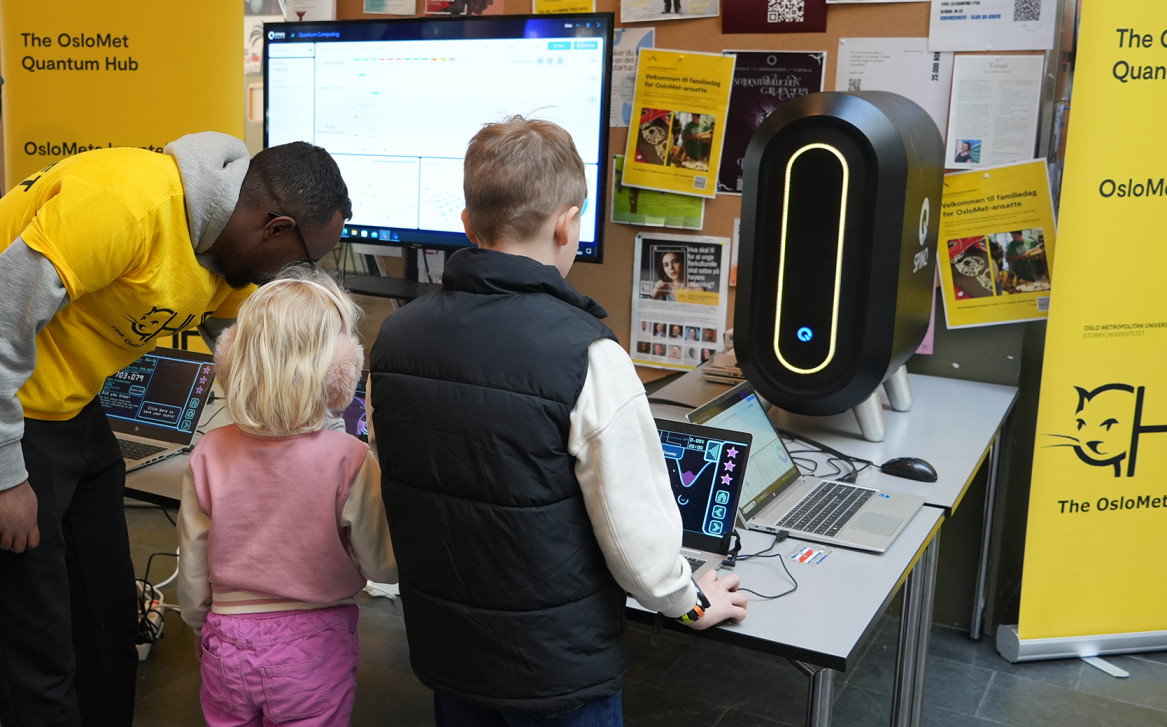
K-12 & STEM Outreach: The goal is inspiration and demystification. Focus is on tangible demonstrations of quantum superposition and entanglement, using intuitive graphical interfaces to spark curiosity.
-
Undergraduate Labs (Physics, CS, Engineering): Here, the objective shifts to foundational skill-building. Students should transition from theory to practice, learning to program basic quantum circuits, run canonical algorithms, and analyze real quantum data with its inherent noise.
-
Graduate Research & Advanced Projects: For this group, the device becomes a platform for exploration. Advanced access to pulse-level control allows for research into quantum control techniques, custom sequence design, and algorithm benchmarking in a fully accessible environment.
Mapping Objectives to Hardware Specs
Not all compact NMR systems are identical, and specifications should align with your goals. Consider the tiered approach exemplified by SpinQ's product line:
-
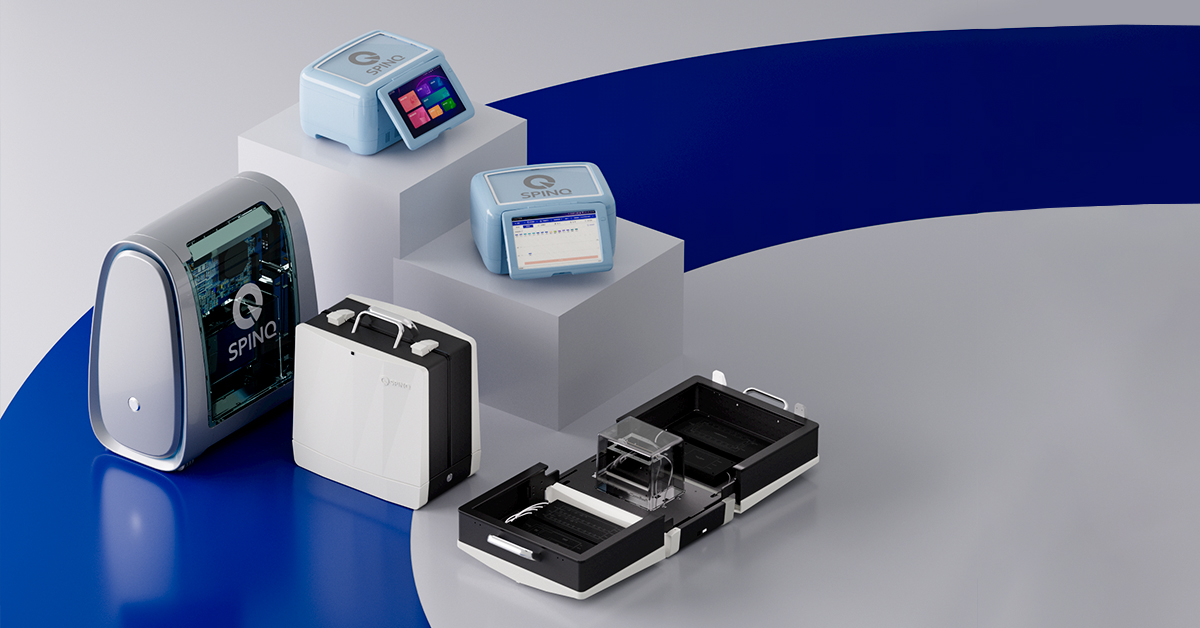
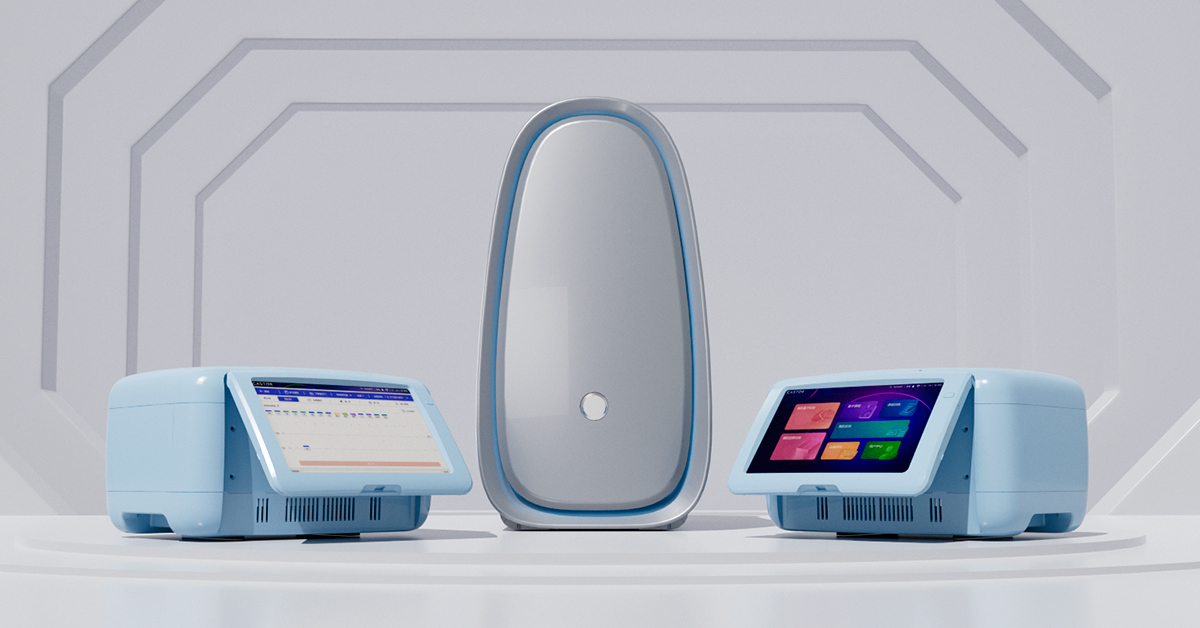
For Introduction & Demos: The SpinQ Gemini Mini/Mini Pro, a 2-bit portable device with a built-in touchscreen and pre-loaded courses, is ideal for mobile demonstrations, introductory modules, and intuitive first interactions.
-
For Undergraduate Lab Courses: The SpinQ Gemini Lab is designed as a full-stack experimental platform. Its open architecture and focus on visualization support structured labs where students engage in the complete workflow—from hardware control to data analysis—mirroring real research practices.
-
For Advanced Projects & Research: The SpinQ Taurus II, a 3-bit desktop computer, offers greater computational space and, critically, open physical hardware-level pulse sequence editing. This allows graduate students and researchers to probe deeper into quantum mechanics and develop specialized control protocols.
Budgeting for the Total Package
While the upfront cost of a compact NMR system (ranging from tens to low hundreds of thousands) is a fraction of other technologies, consider the total investment. Factor in the vendor's curriculum materials, experiment handbooks, and instructor training programs. Allocating budget for professional development ensures your faculty are confident and capable, transforming the device from a shelf exhibit into a central teaching tool.
Lab Setup & Technical Requirements: The Physical Space
One of the most compelling advantages of compact NMR technology is its minimal infrastructure demand, removing the largest barriers to entry.
The "Plug-and-Play" Advantage of NMR
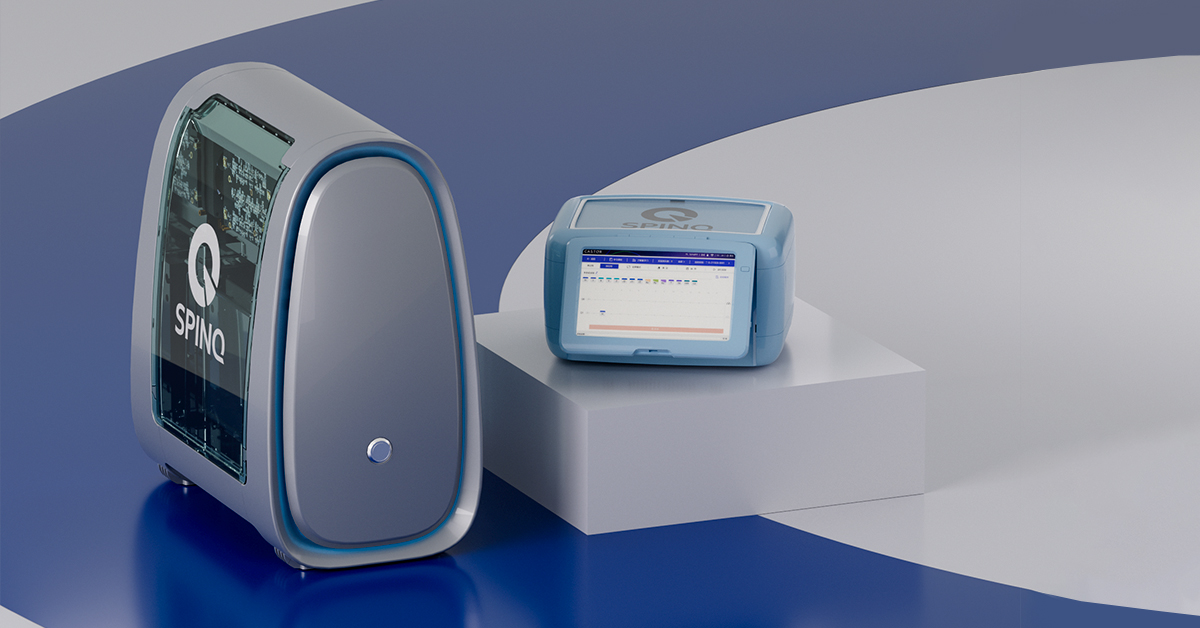
Forget dilution refrigerators, laser tables, or ultra-high vacuum chambers. A compact NMR quantum computer operates at room temperature. Its core requirement is a stable table and a standard electrical outlet. This starkly contrasts with the multi-million-dollar infrastructure needed for superconducting or trapped-ion systems, making quantum labs feasible even for teaching-focused colleges and high schools.
Ideal Environment and Safety
The setup is straightforward but intentional:
-
Stable, Level Surface: Use a solid, low-vibration table to protect the sensitive NMR detection system. A standard optical bench or heavy-duty lab table is sufficient.
-
Ambient Conditions: Avoid direct sunlight, excessive dust, and major sources of electromagnetic interference (like large motors or transformers) for optimal performance.
-
Safety: Safety protocols are similar to standard electronics labs. The primary concerns are general electrical safety and ensuring proper handling of the device itself, a far simpler regimen than managing cryogens or high-power lasers.
Networking and Software Installation
Most systems connect to a control PC or campus network. Coordinate with your IT department to ensure compatibility. Software installation for programming interfaces (like SpinQ's SpinQit framework) is typically simple, but verifying permissions and firewall settings beforehand prevents first-day hiccups. Some systems, like the Gemini Mini, have fully integrated touchscreen controls, simplifying this step even further.
Integrating the Hardware into Your Curriculum: A Step-by-Step Framework
Effective integration follows a scaffolded approach, building student competence from observation to creation.
Phase 1: Foundational Demos & Visualization (First Weeks)
Begin by making the abstract tangible. Use the device's built-in demonstrations to visualize phenomena impossible to see on a chalkboard.
-
Quantum State Tomography: Directly measure and display a qubit's state vector on the Bloch sphere, providing a visual intuition of superposition.
-
Superposition & Entanglement Creation: Run simple circuits to create and measure Bell states, showing the correlations that define entanglement.
-
Tools: Leverage the interactive, graphical software provided by vendors. SpinQ's platforms, for example, are designed to make these fundamental experiments intuitive and visually engaging, cementing core concepts before a single line of code is written.
Phase 2: Core Algorithm Implementation (Mid-Term)
With foundational understanding, students progress to executing and analyzing key quantum algorithms.
-
Structured Lab Sessions: Design labs centered on algorithms like the Quantum Fourier Transform (QFT), Grover's Search, and Variational Quantum Eigensolver (VQE) for simple molecules.
-
Theory-to-Practice Link: Students first simulate the algorithm classically, then run it on the real hardware. The critical learning moment comes from comparing ideal results with the noisy, real-world output, introducing the crucial concepts of gate fidelity, decoherence, and error.
-
Analysis: Teach students to calibrate expectations, analyze error sources, and present data as a practicing quantum scientist would.
Phase 3: Open-Ended Projects & Research (Final Project/Semester)
Empower students to become explorers. This is where advanced systems like the SpinQ Taurus II shine.
-
Pulse-Level Programming: Moving beyond abstract quantum gates, students can design custom microwave pulse sequences to manipulate nuclear spins directly. This deepens understanding of the physical layer of quantum computing.
-
Capstone Projects: Students can investigate optimal control techniques (like GRAPE algorithms), benchmark error mitigation strategies, or attempt to implement a novel small-scale algorithm.
-
Undergraduate Research: The device becomes a dedicated platform for summer research projects, providing invaluable hands-on experience that makes students highly competitive for graduate programs or quantum industry roles.
Developing Effective Lesson Plans & Learning Modules
A robust curriculum is the backbone of a successful quantum lab program. Fortunately, you don't have to start from scratch.
Leveraging Vendor-Provided Resources
Leading manufacturers invest heavily in educational support. SpinQ, for instance, provides a complete suite of teaching resources: detailed experiment manuals, lecture slide decks, textbook references, and structured lab assignments. These materials are developed in partnership with educators and are invaluable for accelerating course development. They can be adopted directly or adapted to fit specific course syllabi and learning objectives.
Cross-Disciplinary Module Examples
The versatility of a quantum computer allows it to enrich multiple departments:
-
For Physics: Modules on spin physics, NMR fundamentals, and time-dependent Hamiltonian simulation.
-
For Computer Science: Labs on quantum circuit compilation, algorithm complexity analysis, and comparing classical vs. quantum solutions to oracle-based problems.
-
For Chemistry: Introducing quantum computational chemistry through the Hartree-Fock method and VQE for molecular ground-state energy calculation, bridging quantum information and physical chemistry.
Assessment Strategies
Move assessment beyond traditional exams. Develop rubrics that evaluate:
-
Experimental Design: Can the student set up a valid quantum circuit to answer a posed question?
-
Code & Implementation: Is their quantum program efficient and correctly structured?
-
Data Analysis & Troubleshooting: Can they interpret noisy results, identify potential error sources, and suggest improvements?
-
Scientific Communication: Require lab reports or presentations that contextualize findings within broader quantum theory and applications.
Operational Best Practices for Instructors and Technicians
Smooth daily operation requires preparation and clear protocols.
.jpg)
Pre-Semester Faculty Training
This is the single most important investment for success. Instructor “boot camps”—often offered by the vendor—are essential. These sessions should cover hardware operation, software navigation, core experiments, and basic troubleshooting. A confident instructor creates an engaging and effective learning environment. SpinQ's model of providing one-on-one technical support and training ensures educators have direct access to experts.
Daily Operation and Student-Led Usage
Establish clear lab protocols:
-
Check-in/Check-out System: For shared resources, a simple booking system manages access.
-
Startup and Calibration Checklist: Provide students with a standard procedure to initialize the system, run a quick baseline test (e.g., a simple entanglement circuit), and verify functionality.
-
Data Management: Instruct students on how to save, label, and export their data for analysis in external tools like Python or MATLAB.
Basic Maintenance and Troubleshooting
Compact NMR systems are renowned for stability and require minimal maintenance. Key points include:
-
Calibration: Periodic calibration (e.g., tuning pulse amplitudes) may be needed, often guided by vendor software.
-
Common Issues: Most problems are software-related: a disconnected cable, an incorrect software setting, or a bug in student code. Build a troubleshooting flowchart that starts with “reboot the software” and “check all connections.”
-
Vendor Support: Know when to escalate. A strong vendor relationship with reliable technical support is crucial for resolving rare hardware or complex software issues promptly.
Measuring Success and Demonstrating ROI
To secure ongoing support and expand your program, you must demonstrate its value.
Quantitative & Qualitative Metrics
Track data that tells your program's story:
-
Enrollment: Increases in quantum-related courses or minors.
-
Student Performance: Improved scores on quantum concept inventories or advanced project outcomes.
-
Feedback: Student satisfaction surveys highlighting the value of hands-on experience.
-
Advanced Outcomes: Usage in honors theses, summer research projects, or even undergraduate publications.
Promoting Your Program
Your quantum lab is a powerful asset for institutional promotion. Use it in:
-
Recruitment: Showcase the lab to prospective STEM students.
-
Development: Highlight the program in grant applications for educational innovation or equipment funding.
-
Outreach: Host demo days for local high schools or public lectures, solidifying your institution's role as a leader in next-generation STEM education.
The Long-Term View
The ultimate return on investment is a quantum-ready workforce. Students who have programmed a real quantum computer possess a profound advantage. They understand the bridge between theory and imperfect hardware, a perspective that is incredibly valuable to both academic research groups and pioneering quantum industries. By successfully implementing a compact NMR quantum computer today, you are not just setting up a lab—you are building a foundational pillar for your institution's relevance in the technology landscape of tomorrow.
In conclusion, the path to a successful quantum computing lab is defined by strategic planning, pedagogical integration, and operational clarity. By aligning your goals with the right hardware, leveraging comprehensive educational resources, and empowering your instructors, you can transform a compact NMR quantum computer from a novel piece of equipment into a transformative educational engine. It is through this practical, accessible exposure that the next generation of quantum scientists, engineers, and innovators will be built.
Featured Content