
How Does a Qubit Work? A Beginner’s Guide to Quantum Computing’s Building Block
2026.04.03 · Blog how does a qubit work
If you’ve ever wondered how quantum computers can solve problems classical computers can’t—from breaking complex encryption to simulating molecular structures for drug discovery—the answer starts with the qubit. Short for “quantum bit,” the qubit is the fundamental unit of information in quantum computing, and it behaves unlike anything you’ve encountered in traditional computing. In this guide, we’ll break down how qubits work, their core quantum properties, and why they’re the key to the next era of computing power.
We’ll keep things simple (no advanced physics degree required!) while diving into the science that makes qubits unique. By the end, you’ll understand how these tiny quantum particles are reshaping technology—and what that means for industries from cybersecurity to healthcare.
First: What’s the Difference Between a Qubit and a Classical Bit?
To understand qubits, let’s start with what you already know: classical bits. Every device you use—your phone, laptop, and even your smartwatch—relies on classical bits to store and process information. A classical bit has only two possible states: 0 or 1. Think of it like a light switch: it’s either off (0) or on (1), with no in-between.
Qubits, on the other hand, are quantum particles that leverage the weird and wonderful rules of quantum mechanics to do something classical bits can’t: exist in multiple states at once. This isn’t just a “maybe 0, maybe 1” scenario—it’s a fundamental property of quantum systems that unlocks exponential computing power.
The Core Properties of Qubits: Superposition, Entanglement, and Interference
Qubits work because of three key quantum properties: superposition, entanglement, and interference. These properties are what separate quantum computing from classical computing—and they’re the reason qubits can solve problems that would take classical computers billions of years.

Superposition: A Qubit Can Be 0, 1, or Both at the Same Time
Superposition is the defining feature of qubits. Unlike a classical bit, which is fixed as 0 or 1, a qubit can exist in a weighted combination of both states simultaneously. This parallel processing potential is what gives quantum systems their massive computational advantage—but it also demands ultra‑precise control and measurement to harness reliably.
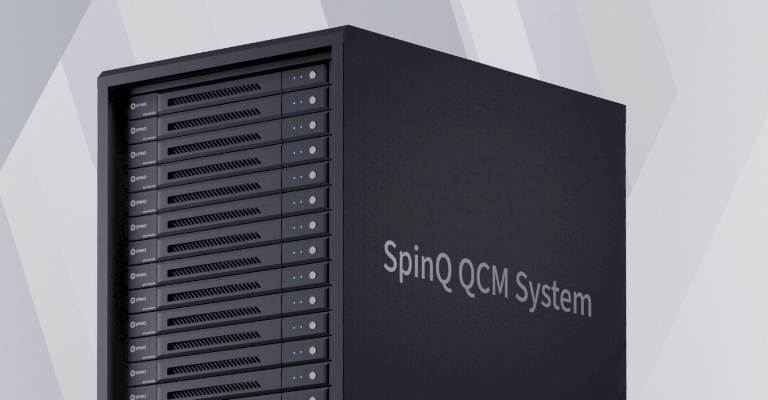
Precision control is non‑negotiable for stabilizing superposition, minimizing noise, and capturing accurate qubit state data. For researchers and engineers building superconducting and other quantum platforms, the SPINQ QCM System delivers the high‑performance control infrastructure needed to unlock superposition at scale. This modular, FPGA‑accelerated system offers sub‑nanosecond synchronization, ultra‑low noise, and 16‑bit vertical resolution, enabling stable, high‑fidelity manipulation and readout for hundreds of qubits.
Learn more about how it supports superconducting QPUs and multiple quantum architectures:
SPINQ QCM System: Quantum Control & Measurement System
Entanglement: Qubits That Share a Quantum Connection
When qubits become entangled, their states become linked regardless of distance—measuring one instantly reveals information about the other. This correlation lets quantum computers process interconnected variables far more efficiently than classical systems. Reliable entanglement relies on tightly synchronized control signals, which systems like the SPINQ QCM System deliver through hardware‑accelerated pulse generation and real‑time signal processing.
Quantum Interference: Steering Qubits Toward the Right Answer
Interference amplifies correct computational paths and cancels out errors, guiding qubits toward accurate results. Consistent, low‑noise waveform generation is critical here. The SPINQ QCM System’s integrated arbitrary waveform generation and real‑time feedback help fine‑tune interference patterns, improving gate fidelity and measurement reliability.
Why Qubit Control Technology Matters for Real‑World Quantum Computing
Understanding how qubits work is only the first step—turning quantum physics into useful applications requires robust, scalable control hardware. Whether you’re characterizing single qubits or calibrating large multi‑qubit processors, you need tools that combine speed, accuracy, and flexibility.
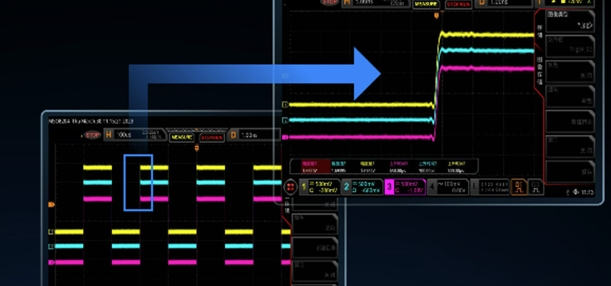
The SPINQ QCM System is built for exactly this challenge: it supports superconducting qubits, trapped ions, neutral atoms, semiconductor qubits, and NMR quantum computers, with modular expansion to hundreds of qubits. Its built‑in automation and analysis tools streamline characterization and calibration, so you can focus on advancing research instead of troubleshooting instrumentation.
Wrapping Up
Qubits work by harnessing superposition, entanglement, and interference—quantum phenomena that let them process information in ways classical bits never can. Mastering these effects requires more than theoretical knowledge; it takes precision control systems that turn quantum potential into measurable progress.

As quantum computing moves from labs to real‑world use cases, reliable qubit control and measurement will define which teams turn breakthroughs into impact. With the right hardware like the SPINQ QCM System, you can build, test, and scale quantum processors with confidence.
Featured Content