
Qubit Quantum Computing: What It Is, 2026 Breakthroughs, and Why It Matters for Business
2026.04.03 · Blog qubit quantum computing
In the race to redefine the future of computing, quantum bits—known as qubits—are the unsung heroes driving the next technological revolution. Unlike classical computers that rely on binary bits (limited to 0 or 1), qubits leverage the weird and wonderful laws of quantum mechanics to process information in ways that were once thought impossible. For businesses, researchers, and tech innovators, understanding qubits isn’t just a matter of scientific curiosity—it’s the key to unlocking solutions to problems that classical supercomputers can’t touch. In this blog, we’ll break down what qubits are, explore the latest 2026 breakthroughs shaping the industry, and explain why qubit quantum computing is no longer a distant dream but a tangible force for innovation.
What Is a Qubit? The Foundation of Quantum Computing
To grasp quantum computing, you first need to understand its building block: the qubit. A qubit (quantum bit) is the basic unit of quantum information, analogous to the classical bit in traditional computing—but with a game-changing twist. While classical bits are deterministic, existing in one of two fixed states (0 or 1) at any given time, qubits harness two core quantum properties: superposition and entanglement—the forces that make quantum computing exponentially powerful.
Superposition: Qubits Can Be “Both 0 and 1” Simultaneously
Superposition is the quantum phenomenon that allows a qubit to exist in a coherent blend of 0 and 1 states at the same time, rather than being restricted to one or the other. Think of a classical bit as a coin that’s either heads (0) or tails (1)—it lands in one fixed state when observed. A qubit, by contrast, is like a coin spinning in the air: it’s neither strictly heads nor tails, but a combination of both, until it’s measured. This means a single qubit can process multiple possibilities in parallel, and a system of n qubits can handle 2ⁿ possible states at once—something no classical computer can match. For example, 20 qubits can process over a million states simultaneously, while 30 qubits can handle over a billion.
Entanglement: Qubits That “Communicate” Instantly
Entanglement is another quantum property that sets qubits apart. When two or more qubits become entangled, their quantum states become correlated in such a way that the state of one qubit cannot be described independently of the others—even if they’re separated by vast distances. Change the state of one entangled qubit, and the other(s) will instantly reflect that change, regardless of how far apart they are. This instant correlation is what enables quantum computers to solve complex problems—like optimizing global supply chains or simulating molecular structures—far faster than classical systems.
Qubits vs. Classical Bits: Key Differences
The gap between qubits and classical bits goes beyond their ability to process information. Here’s a quick breakdown of their core differences, which highlight why quantum computing is a paradigm shift rather than an incremental upgrade:
States: Classical bits = 0 or 1 (binary, fixed). Qubits = superposition of 0 and 1 (multiple states at once).
Stability: Classical bits are stable and deterministic—their state doesn’t change unless intentionally altered. Qubits are fragile and probabilistic, susceptible to decoherence (loss of quantum state) from environmental interference (heat, vibration, electromagnetic noise).
Operations: Classical bits use boolean logic gates (AND, OR, NOT). Qubits use quantum logic gates (Hadamard, CNOT, Toffoli) to manipulate superposition and entanglement.
Copying: Classical bits can be copied perfectly. Qubits cannot be copied due to the no-cloning theorem, a fundamental principle of quantum mechanics.
Implementation: Classical bits use electronic/optical devices. Qubits use quantum systems like atoms, ions, superconductors, or neutral atoms.
2026 Qubit Breakthroughs: Quantum Computing Enters the “Fault-Tolerant Foundation Era”
For years, quantum computing was stuck in the “almost there” zone—promising but not yet practical. That changed in 2026, as the industry entered what researchers call the fault-tolerant foundation era: a phase where adding more qubits reduces error rates rather than amplifying noise. This shift is the result of breakthroughs in hardware, error correction, and materials science—making qubit quantum computing more accessible and powerful than ever before.
Microsoft’s Majorana 1: A New Kind of Qubit
One of the most significant 2026 breakthroughs came from Microsoft, which introduced the Majorana 1— the world’s first quantum chip powered by a topological core architecture. This revolutionary design leverages a new material called a topo conductor to observe and control Majorana particles, creating qubits that are far more reliable and scalable than traditional alternatives. The Majorana 1 addresses the biggest challenge in quantum computing—qubit fragility—by reducing decoherence and enabling more stable quantum states, bringing industrial-scale quantum computing closer to reality.
Qubit Scaling Wars: IBM, Google, and Atom Computing Lead the Charge
2026 is also the year of the “qubit scaling wars,” with tech giants and startups racing to build systems with more qubits—and better quality. Here’s how the landscape is shaping up:
Google’s Willow: A 1000-qubit system that demonstrated quantum advantage in optimization tasks, solving problems in minutes that would take classical supercomputers years.
IBM’s Condor: A 433-qubit processor deployed in production environments, with error rates reduced by 40% compared to 2024 systems.
Atom Computing’s Neutral-Atom Qubits: A 1225-qubit system using optical tweezers to arrange atoms in 3D lattices, with plans to reach 5000 qubits by 2027. Notably, new research from Caltech suggests that useful quantum computers could be built with as few as 10,000–20,000 qubits (down from previous estimates of millions) thanks to more efficient error correction.
Error Correction: The Key to Practical Qubits
Qubit fragility has long been a barrier to progress, but 2026 breakthroughs in error correction are changing that. Researchers have developed new quantum error-correction codes that use redundant qubits to fix faults, enabling fault-tolerant quantum computing.
Why Qubit Quantum Computing Matters for Businesses
Qubits aren’t just a scientific novelty—they’re a tool that will transform industries. While quantum computing won’t replace classical computers (which excel at general-purpose tasks like browsing the web or storing data), it will solve problems that are currently impossible or impractical for classical systems. Here are the key areas where qubit quantum computing is set to make an impact:
1. Drug Discovery and Materials Science
Qubits can simulate the quantum behavior of molecules and atoms with unprecedented accuracy—something classical computers struggle with. This will accelerate drug discovery by allowing researchers to model complex molecular interactions, design new medications (e.g., for cancer or rare diseases), and optimize drug delivery systems.
2. Cryptography and Cybersecurity
Qubits will revolutionize cybersecurity—for better and worse. Quantum algorithms like Shor’s algorithm can crack current encryption methods (e.g., RSA) that would take classical computers billions of years to break. On the flip side, quantum key distribution (QKD) using entangled qubits can create unhackable communication channels, as any attempt to intercept the key would disturb the quantum state, alerting users to the breach. Businesses in finance, healthcare, and government are already preparing for the “quantum-safe” era.
3. Optimization and Logistics
Complex optimization problems—like routing delivery fleets, managing supply chains, or scheduling energy grids—require evaluating millions of possibilities. Qubits, with their ability to process multiple states in parallel, can solve these problems in minutes, reducing costs and improving efficiency.
4. Artificial Intelligence and Machine Learning
Quantum machine learning (QML) leverages qubits to process large datasets and train AI models faster than classical systems. Qubits can identify patterns in data that classical AI misses, enabling more accurate predictions in fields like climate modeling, fraud detection, and personalized medicine.
The Future of Qubits: What to Expect in the Next 5 Years
2026 is a turning point for qubit quantum computing, but the journey is just beginning. Here’s what we can expect in the coming years:
More Fault-Tolerant Qubits: Error correction will continue to improve, making qubits more stable and reliable. This will enable larger quantum systems that can run complex algorithms without decoherence.
Hybrid Quantum-Classical Systems: Most businesses will adopt hybrid models, using classical computers for everyday tasks and quantum computers for specialized problems. This approach will make quantum computing accessible to more organizations.
Industry-Specific Applications: We’ll see quantum computing tailored to specific industries—from healthcare (personalized medicine) to finance (risk analysis) to manufacturing (supply chain optimization).
Wider Accessibility: Cloud-based quantum computing will make qubits available to businesses of all sizes, not just tech giants and research labs. This democratization will drive innovation across sectors.
Ready to Leverage Qubit Quantum Computing?
Qubit quantum computing is no longer a distant future—it’s here, and it’s transforming how we solve the world’s hardest problems. Whether you’re a business looking to gain a competitive edge, a researcher pushing the boundaries of science, or an innovator curious about the next technological frontier, understanding qubits is the first step.
Stay tuned for more insights on quantum computing, qubits, and the latest breakthroughs. And if you’re ready to take the next step, contact our team today to learn how we can help you harness the power of qubits for your business.
Frequently Asked Questions (FAQs) About Qubits
Q: How many qubits do we need for a useful quantum computer?
A: New research from Caltech suggests that useful quantum computers could be built with as few as 10,000–20,000 qubits, thanks to more efficient error correction. Previously, estimates ranged from millions of qubits. Today’s most advanced systems (e.g., Atom Computing’s 1225-qubit system) are already moving toward this goal.
Q: Are qubits fragile?
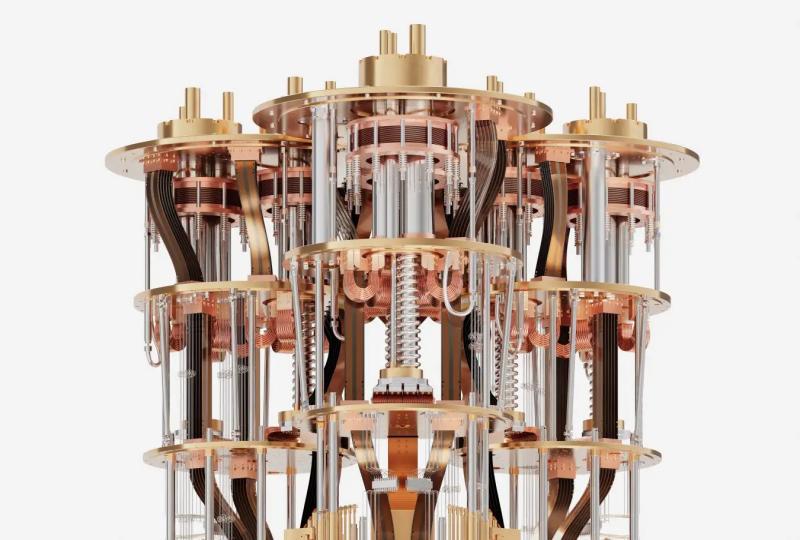
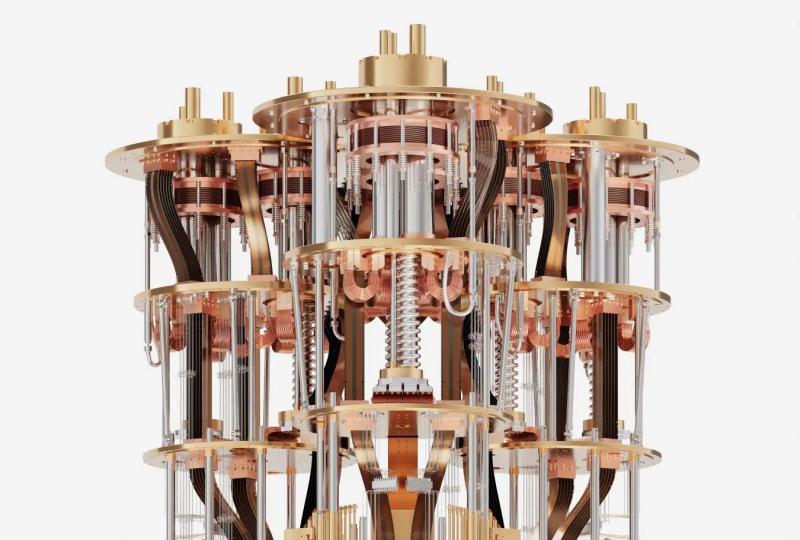
A: Yes, qubits are extremely fragile. They can lose their quantum state (decoherence) from the slightest environmental interference—heat, vibration, or electromagnetic noise. That’s why quantum computers are kept in super-cold environments (close to -273°C, colder than outer space) and require advanced error correction to maintain their state.
Q: What’s the difference between a physical qubit and a logical qubit?
A: Physical qubits are the actual quantum systems (atoms, ions, superconductors) used to store quantum information. Logical qubits are “virtual” qubits created by combining multiple physical qubits with error correction, designed to be more stable and reliable. In 2026, Microsoft and Quantinuum created 12 highly accurate logical qubits, a major breakthrough for fault-tolerant computing.
Q: Will qubits replace classical bits?
A: No. Classical bits are stable, reliable, and perfect for general-purpose computing (e.g., smartphones, laptops, the internet). Qubits are specialized tools for solving complex problems that classical bits can’t handle—they’ll work alongside classical systems, not replace them.
Featured Content