
How Commercial Superconducting Quantum Computers Are Disrupting Six Industries
2026.05.22 · Blog commercial superconducting quantum computer
Every decade or so, a technology arrives that doesn't just improve existing industries — it redraws the competitive map entirely. The transistor did it to electronics. The internet did it to commerce. Commercial superconducting quantum computers are doing it now, and the disruption is not spread evenly. Some industries are already deploying quantum hardware. Others are racing to get quantum-ready before their competitors do.
This guide examines six industries where commercial superconducting quantum computers are creating the sharpest divergence between early movers and those still waiting. For each sector, we examine the classical bottleneck that creates the opportunity, the quantum mechanism that addresses it, and the real-world deployments already underway — including how SpinQ Technology's hardware is accelerating the transition.
The Classical Wall: Why Industries Are Turning to Quantum
Before mapping quantum's industry impact, it's worth understanding the common thread: every sector on this list is hitting the same fundamental limitation of classical computing.
Classical computers process information sequentially, in binary. When a problem's solution space grows exponentially with its inputs — routing a fleet of vehicles, simulating a molecule's electron interactions, optimizing a portfolio of thousands of assets — classical systems face a hard ceiling. Throwing more processors at the problem only delays the inevitable.
Superconducting quantum computers attack this ceiling at the physics level. Through superposition, a 100-qubit processor explores 21002100 states simultaneously. Through entanglement, qubits act as a unified computational unit rather than independent processors. Through quantum interference, algorithms amplify correct answers and suppress incorrect ones — extracting solutions from an exponentially vast search space.
This is not a marginal improvement. For specific problem classes, it is a categorical shift — and six industries are already experiencing it.
Pharmaceutical and Life Sciences — From Years to Months in Drug Discovery
The classical bottleneck: Drug development takes an average of 10–15 years and costs over a billion dollars to bring a single new drug to market. A substantial share of this cost stems from the trial-and-error nature of molecular simulation: classical computers cannot accurately model the quantum behavior of electrons in large molecules, forcing researchers to rely on approximations that generate false positives and costly late-stage failures.
Where quantum changes the equation: A quantum computer naturally simulates quantum systems — because it is a quantum system. It can model molecular interactions, electron configurations, and protein-drug binding affinities at a level of accuracy that no classical supercomputer can match. This opens the possibility of computationally designing drug candidates before any laboratory synthesis, dramatically compressing the discovery timeline.
Real-world deployments:
-
Google, in collaboration with pharmaceutical company Boehringer Ingelheim, has demonstrated quantum simulation of Cytochrome P450 — a crucial enzyme in drug metabolism — with greater precision than classical methods, directly relevant to predicting drug interactions.
-
SpinQ and BGI-Research have an active partnership applying quantum computing to genomics, using variational quantum algorithms to optimize genome assembly — improving efficiency and reducing resource consumption in biomedical research.
-
Google and IBM are simulating protein folding and molecular interactions at quantum accuracy, with research groups targeting Alzheimer's, cancer, and viral infection pathways.
The competitive reality: Pharmaceutical companies that integrate quantum simulation tools into their R&D pipelines will compress development timelines, reduce late-stage trial failures, and build proprietary computational advantages that classical competitors cannot replicate.
Financial Services — Outcomputing the Market
The classical bottleneck: Modern financial models involve thousands of correlated assets, nonlinear risk relationships, and real-time optimization constraints. Classical Monte Carlo simulations — the industry standard for option pricing and risk analysis — grow computationally expensive with every additional variable. Portfolio optimization at scale requires approximations that introduce systematic errors in risk estimates.
Where quantum changes the equation: Quantum algorithms can explore vast combinations of portfolio weightings and risk scenarios simultaneously. The Quantum Approximate Optimization Algorithm (QAOA) and quantum-enhanced Monte Carlo methods offer speedups for exactly the class of high-dimensional optimization problems that dominate quantitative finance. Quantum machine learning models can detect market patterns in data dimensionalities that classical neural networks cannot efficiently process.
Real-world deployments:
-
JPMorgan Chase is actively exploring quantum algorithms for option pricing and risk analysis, with early results showing quantum models outperforming classical Monte Carlo simulations in both speed and scalability.
-
SpinQ partnered with Longying Zhida, a subsidiary of Huaxia Bank, to develop a quantum neural network model that aids in ATM removal decisions — directly supporting the digital transformation of commercial banking operations and management.
The competitive reality: In financial services, speed and precision are competitive moats. The first institutions to achieve quantum-enhanced risk modeling and trading strategy optimization will gain structural advantages in pricing accuracy and capital efficiency that are difficult for classical competitors to match.
Cybersecurity — The Most Urgent Disruption
The classical bottleneck — and the quantum threat: This sector is unique because quantum computing poses an offensive disruption before it enables a defensive one. RSA and elliptic-curve cryptography — the foundation of internet security — rely on the classical difficulty of factoring large numbers. Shor's algorithm, running on a sufficiently powerful fault-tolerant quantum computer, solves this problem exponentially faster than any classical method.
Security agencies worldwide have concluded that cryptographically relevant quantum computers could arrive within a decade, meaning that adversaries are already harvesting encrypted data today for decryption later — a threat known as "harvest now, decrypt later." The U.S. NIST completed its first post-quantum cryptography standards in 2024, and organizations that haven't begun migration planning are already behind.
Where quantum changes the equation (defensively): Quantum computers also enable Quantum Key Distribution (QKD) — encryption secured by the laws of physics rather than computational hardness. Any interception of a QKD-secured channel disturbs the quantum state and is instantly detectable, making eavesdropping physically impossible rather than computationally expensive.
Real-world deployments:
-
China's Micius satellite demonstrated QKD over thousands of kilometers, establishing quantum-secured satellite communication between ground stations on opposite sides of the Earth.
-
IBM, Microsoft, and other major tech companies are actively integrating quantum-resistant cryptographic solutions into their infrastructure, anticipating the eventual deployment of cryptographically relevant quantum systems.
The competitive reality: Every organization that stores sensitive long-term data — governments, banks, healthcare systems, defense contractors — faces an existential security risk if it fails to transition to post-quantum cryptography before fault-tolerant quantum computers arrive.
Logistics and Manufacturing — Optimizing the Unoptimizable
The classical bottleneck: Routing 1,000 vehicles, scheduling a global supply chain, or optimizing an aircraft wing design involves combinatorial search spaces so vast that even the world's fastest classical supercomputers must rely on heuristic approximations rather than true optima. As systems grow in complexity — more vehicles, more delivery windows, more constraints — classical optimization methods degrade rapidly.
Where quantum changes the equation: Quantum computers do not search solution spaces sequentially. Through superposition, they evaluate many possibilities simultaneously; through quantum interference, they amplify near-optimal solutions. For combinatorial optimization problems — the core of logistics, manufacturing scheduling, and engineering design — quantum algorithms offer pathways to solutions that classical methods structurally cannot find.
Real-world deployments:
-
Volkswagen deployed quantum algorithms to optimize taxi dispatch routes in Beijing, reducing travel times and decreasing congestion — a direct demonstration of quantum optimization improving real urban mobility systems.
-
DHL has experimented with quantum computing for warehouse picking routes and logistics scheduling, achieving measurable improvements in delivery speed and operational costs.
-
Airbus is researching quantum optimization for aircraft wing design, targeting improvements in fuel efficiency and aerodynamic performance that classical design methods cannot efficiently reach.
-
Ford has investigated quantum algorithms for assembly line scheduling, reducing production cycle times and improving resource allocation in automotive manufacturing.
The competitive reality: Companies in logistics-intensive industries — retail, automotive, aerospace, shipping — are running pilot programs today. Those that mature quantum optimization capabilities first will gain cost structures and delivery performance metrics that create durable competitive advantages.
Energy and Materials Science — Designing the Future at the Atomic Level
The classical bottleneck: Discovering new materials — better batteries for electric vehicles, more efficient catalysts for green hydrogen production, advanced superconductors for lossless power transmission — requires accurate simulation of quantum mechanical interactions between atoms. Classical computers fail at this task for any system beyond modest size: the computational cost scales exponentially with the number of electrons involved, making the simulation of real-world materials practically impossible without severe approximations.
Where quantum changes the equation: A quantum computer can simulate quantum systems — molecules, catalysts, lattice structures — at a level of accuracy that reflects the underlying physics. This eliminates the approximation layers that cause classical materials simulations to miss critical behaviors, enabling computational discovery of materials with specified properties before any laboratory synthesis.
Real-world deployments:
-
Google and BASF studied quantum simulation of Lithium Nickel Oxide (LNO) — a promising lower-environmental-impact battery material — exploring how quantum algorithms could enable more precise modeling of its complex quantum properties.
-
Microsoft is using quantum computing to explore new battery materials and optimize renewable energy systems, targeting reductions in fossil fuel dependence.
-
1QBit and British Columbia's utility provider partnered to apply quantum-enhanced approaches to load balancing and energy distribution in smart grids.
-
Researchers from Microsoft and ETH Zurich explored quantum simulation of nitrogen fixation, with results suggesting that hybrid quantum-classical approaches could enable low-energy, localized ammonia production — with direct implications for global food security.
The competitive reality: Energy transition industries — battery manufacturers, green hydrogen producers, grid operators, clean materials companies — will be directly shaped by which players achieve quantum-accelerated materials discovery first.
Artificial Intelligence — Quantum Advantage at the Frontier of Learning
The classical bottleneck: Modern AI models require enormous computational resources for training, and classical hardware scaling has a well-documented ceiling: as model complexity increases, training cost and energy consumption grow superlinearly. The data dimensionalities involved in genomics, multi-modal medical diagnostics, and molecular property prediction push the limits of what classical machine learning can efficiently process.
Where quantum changes the equation: Quantum machine learning exploits quantum Hilbert space to represent and manipulate high-dimensional data in ways that have no efficient classical encoding. Quantum-enhanced algorithms for pattern recognition, classification in exponentially large feature spaces, and generative modeling offer potential speedups for specific AI workloads — particularly those involving the kinds of high-dimensional, correlated datasets that dominate life sciences, materials science, and financial intelligence.
Real-world deployments:
-
Companies including SpinQ are actively exploring how quantum computing can improve AI models, targeting applications from autonomous systems to healthcare diagnostics.
-
IBM is exploring quantum-classical hybrid approaches to climate model simulation, focusing on cloud microphysics — a domain where the nonlinear complexity overwhelms classical ML models.
-
The convergence of quantum computing and AI is reflected in the investment landscape: quantum computing companies and AI hyperscalers are increasingly pursuing joint research agendas, recognizing that the long-term trajectory of both fields is intertwined.
The competitive reality: As quantum hardware scales toward hundreds of error-corrected logical qubits, the intersection of quantum computing and AI will expand rapidly. Organizations that build hybrid quantum-AI capabilities now — even at the pilot stage — will be positioned to exploit this convergence as hardware matures.
The Hardware That Enables the Transition: SpinQ's Commercial Platform
All six of these industry disruptions depend on access to capable, deployable quantum hardware. SpinQ Technology's commercial superconducting quantum product portfolio is designed precisely for this transition:
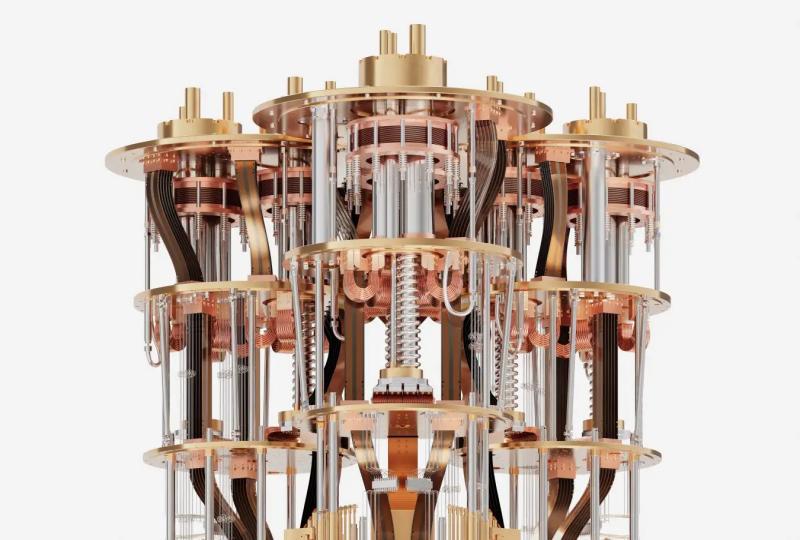
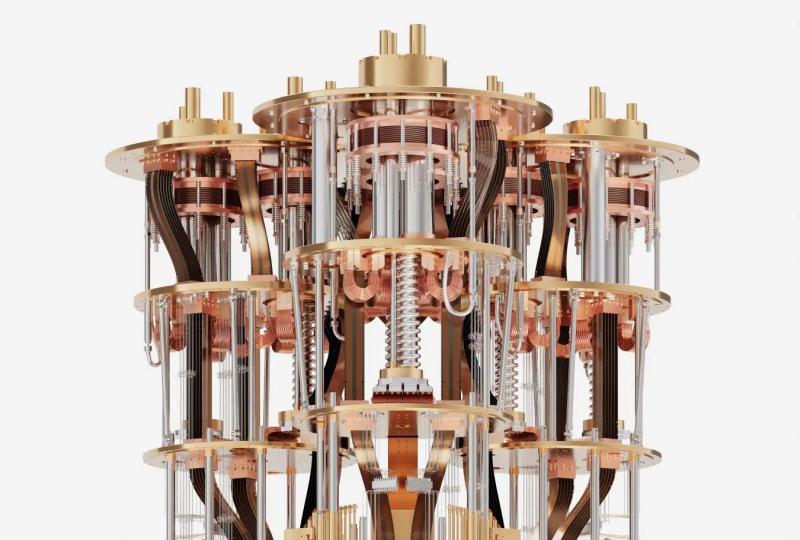
SPINQ SQC Superconducting Quantum Computer — up to 103 superconducting qubits with parametric gate support and quantum error correction, designed for industrial deployment in biopharmaceuticals, materials science, FinTech, and AI applications. Available for on-premises deployment or cloud access.
SPINQ QPU C Series — standalone superconducting quantum chips (C10, C25, C103) designed and fabricated by SpinQ for high-coherence, high-stability applications. Operating at ~20 mK with a high Qi factor and extended coherence times, they serve as the foundation for custom quantum system builds.
SPINQ QCM Quantum Control & Measurement System — purpose-built control electronics with FPGA-based edge computing, sub-nanosecond synchronization, and up to 16-bit resolution — the precision layer that determines whether quantum hardware achieves research-grade or industrial-grade gate fidelity. Scalable to hundreds of qubits. Full specifications at https://www.spinquanta.com/products-services/quantum-control-and-measurement-system.
Cryogenic Environment Deployment Services — turnkey ~10 mK cryogenic environments including dilution refrigerator selection, supply, installation, and lifecycle maintenance.
QPU Foundry Services — professional superconducting chip design, fabrication, and characterization for organizations building custom quantum infrastructure, with a track record including China's first independently developed superconducting quantum chip delivered to a research institution in the Middle East.
The Window Is Open — But Not Forever
The six industries above share a common pattern: early movers are already deploying quantum capabilities, validating approaches, and building institutional knowledge. Late movers will face a compounding disadvantage — not just the technology gap, but the talent gap, the workflow integration gap, and the data flywheel advantage that quantum-native competitors will have accumulated.
Commercial superconducting quantum computers are not a 2030 problem. They are a 2025–2026 deployment decision. The organizations that begin the journey now — even at the pilot and research stage — will be the ones that shape their industries when fault-tolerant quantum advantage becomes the norm.
The question is not whether quantum computing will disrupt your industry. The question is whether your organization will be among the disruptors or the disrupted.
Featured Content