
103‑Qubit Super Quantum Computer Power
2026.05.22 · Blog super quantum computer
Super Quantum Computer: Why Long Coherence Time Is the Real Game‑Changer
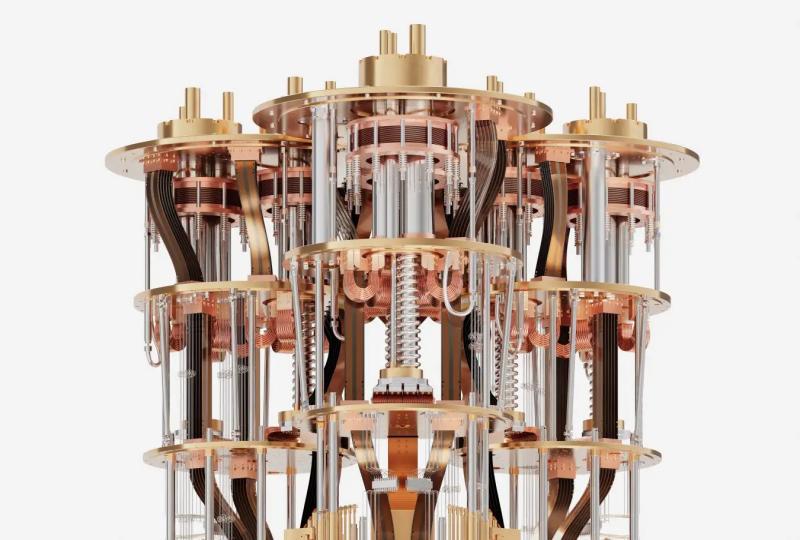
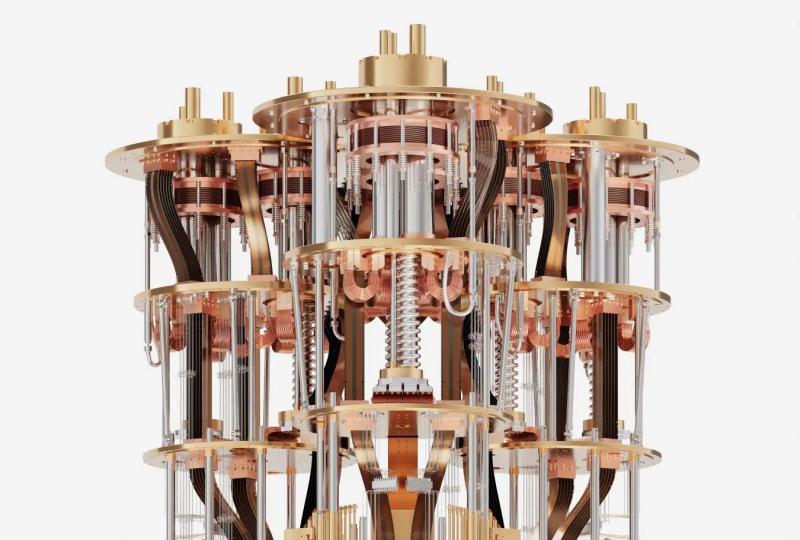
When enterprises and research institutes search for a super quantum computer, they are not just looking for more qubits—they are looking for qubits that stay quantum long enough to do real work. SpinQ’s SQC S Series superconducting quantum computer is built around this idea, with long coherence times at the center of its design. By focusing on stable, long‑lived quantum states, the SQC S Series turns the concept of a super quantum computer into a practical tool for advanced research and industrial applications.
In superconducting platforms, coherence time defines how long a qubit can reliably hold information in superposition and entanglement before noise takes over. SpinQ explicitly develops the SQC S Series with long coherence times, creating the conditions required for deep quantum circuits, complex algorithms, and meaningful results. For users comparing options, this makes the system stand out as a super quantum computer designed for serious, real‑world workloads rather than just small‑scale demonstrations.
Long Coherence Time: The Core Metric Behind Useful Qubits
Every super quantum computer is built on qubits, but not all qubits are equally useful. If coherence time is too short, quantum states decay before an algorithm can complete, no matter how impressive the qubit count looks on paper. That is why the SQC S Series places long coherence times at the core of its superconducting design, ensuring that each qubit can participate in many gate operations before decoherence.
With longer coherence, developers can run deeper circuits, chain more two‑qubit operations, and explore more complex quantum phenomena on a single device. This is exactly what users expect when they search for a super quantum computer: not just a headline number, but qubits that remain stable long enough to execute demanding algorithms. By engineering for long coherence, SpinQ turns qubit count into truly usable quantum processing power.
103 Superconducting Qubits That Stay Coherent Longer
The SQC S Series supports up to 103 superconducting qubits, giving users a sizable computational space to work with. However, it is the combination of this 103‑qubit scale with long coherence times that makes the system behave like a genuine super quantum computer in practice. Each qubit has more “time budget” to participate in multi‑step circuits, making it possible to explore algorithms in biopharmaceuticals, materials science, FinTech, and AI on a single platform.
When 103 qubits maintain coherence for longer durations, the total number of reliable gate layers increases significantly. This extended logical depth is what allows sophisticated simulations, optimization routines, and quantum‑enhanced models to move beyond toy examples. For organizations, this means the SQC S Series does not just look like a super quantum computer—it behaves like one in real workflows.
How Long Coherence Enables Deeper Circuits and Better Results
In any superconducting quantum system, each algorithm can be viewed as a sequence of gates applied over time. Long coherence times allow more of these gates to be executed before quantum information is lost, directly increasing the maximum useful circuit depth. For a super quantum computer like the SQC S Series, this means more layers of operations, more entangling gates, and more opportunities to harness quantum parallelism.
This capability is crucial in domains such as biopharmaceuticals and materials science, where meaningful problems often require many time steps to simulate interactions accurately. In financial optimization or AI‑related tasks, deeper circuits allow richer state preparation and more expressive models, improving the quality of the solutions a super quantum computer can deliver. Long coherence time is therefore not just a hardware spec; it is a direct driver of algorithmic performance and practical value.
Long Coherence Time and High Fidelity: A Powerful Combination
Long coherence time becomes far more powerful when combined with high‑fidelity gate operations. SpinQ’s SQC S Series is developed with both of these attributes in mind, creating a superconducting platform where qubits not only live longer, but are also manipulated more accurately. In a super quantum computer, this pairing slows the rate at which errors accumulate, even as circuit depth increases.
For users, this translates to more reliable outcomes from complex experiments and applications. Instead of hitting a sharp performance wall as more gates are added, the system can sustain deeper circuits before noise overwhelms the computation. This is a key reason why long coherence time is highlighted as a defining feature of the SQC S Series super quantum computer.
Enabling Quantum Error Correction with Longer Coherence
Quantum error correction is widely recognized as the path to fully fault‑tolerant quantum computing. However, error correction itself requires time: encoding information into logical qubits, performing repeated checks, and applying corrections all demand multiple rounds of operations. Long coherence times make these cycles more feasible, giving physical qubits enough lifetime to support the extra overhead.
The SQC S Series is designed with support for quantum error correction, positioning it as a platform where users can begin experimenting with these techniques today. By pairing error‑correction readiness with long coherence times, SpinQ provides a super quantum computer that looks ahead to the next generation of quantum systems, not just the current one. For strategic buyers, this future‑proofing is a major reason to prioritize coherence‑optimized hardware in their quantum roadmap.
Why Long Coherence Time Matters for Real‑World Applications
In marketing materials, many systems are labeled as a super quantum computer—but real users judge these platforms by what they can actually do. Long coherence time translates directly into higher‑value use cases in biopharmaceuticals, materials science, FinTech, and AI. For example, longer‑lived qubits make it possible to run more detailed molecular simulations, more accurate materials models, and more nuanced financial risk and portfolio analyses.
In AI and machine learning scenarios, deeper parameterized circuits become possible when qubits remain coherent for longer intervals. This allows quantum models to represent more complex decision boundaries and data structures, leveraging the full potential of a super quantum computer. In every case, long coherence time is the silent enabler that turns theoretical algorithms into practical tools.
Long Coherence Time as a Buying Criterion for a Super Quantum Computer
For CTOs, lab directors, and innovation leaders evaluating quantum hardware, long coherence time should be treated as a primary buying criterion, not an afterthought. SpinQ’s SQC S Series makes this easy by clearly emphasizing long coherence times, high fidelity, and error‑correction support in a 103‑qubit superconducting design. This clarity helps decision‑makers quickly understand why the system qualifies as a super quantum computer in practical, not just theoretical, terms.
By focusing on coherence, organizations can align their hardware choices with their application roadmaps. If the goal is to move from demos to real pilots and, eventually, production‑grade quantum services, investing in a platform where qubits stay coherent longer is essential. The SQC S Series offers exactly this: a super quantum computer where long coherence times are engineered into the foundation.
Super Quantum Computer Redefined by Coherence‑First Design
In a market filled with big promises, long coherence time is a concrete, measurable feature that directly impacts performance. SpinQ’s SQC S Series shows how a coherence‑first design can redefine what users expect from a super quantum computer, combining 103 superconducting qubits with long‑lived quantum states, high fidelity, and support for quantum error correction and parametric gates. For organizations and researchers ready to advance beyond small experiments, this platform provides a stable and scalable foundation for real quantum progress.
By choosing a system that prioritizes long coherence times, users position themselves to unlock deeper circuits, more powerful algorithms, and more meaningful results across biopharmaceuticals, materials science, FinTech, and AI. In this way, the SPINQ SQC Superconducting Quantum Computer turns the promise of a super quantum computer into a practical reality grounded in the physics of coherence.
Featured Content