
What Is a Superconducting Quantum Computer and How Does It Work?
2026.05.22 · Blog superconducting quantum computer
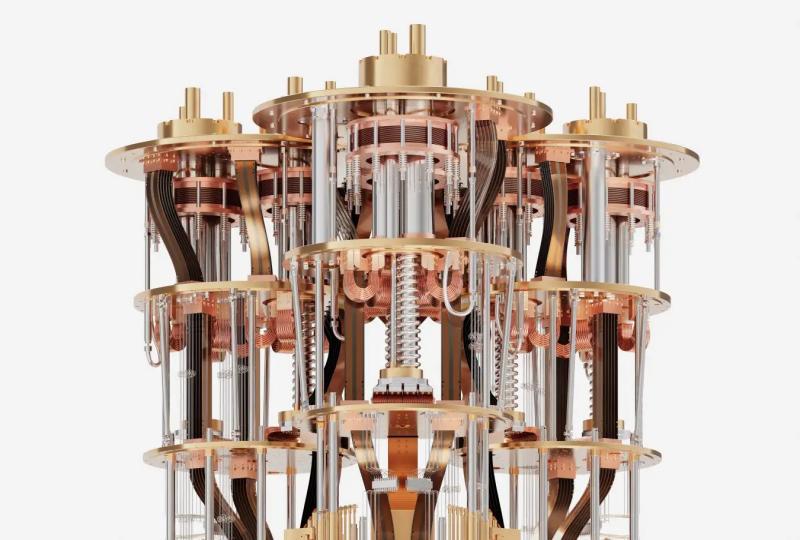
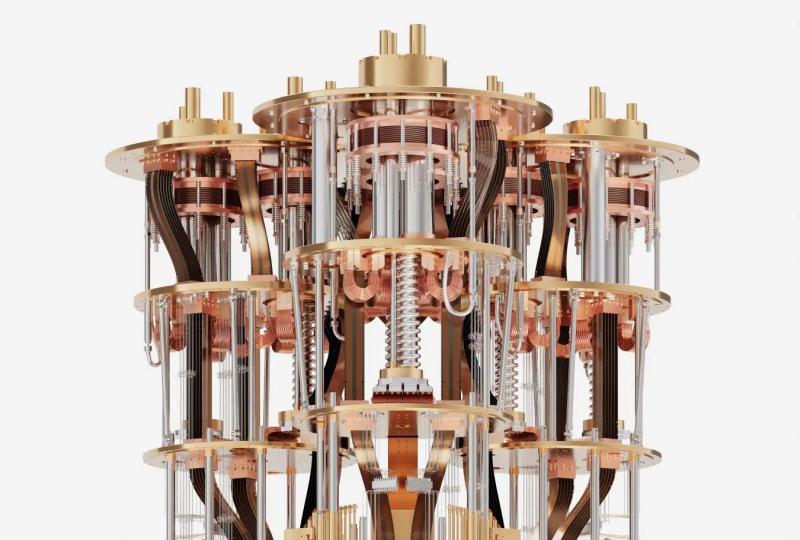
A superconducting quantum computer is one of the most advanced forms of quantum computing hardware available today. It uses superconducting circuits—materials that can conduct electricity with zero resistance at extremely low temperatures—to build and control quantum bits, or qubits. These systems are the backbone of many leading quantum computing platforms developed by companies such as IBM, Google, and others.
Unlike classical computers that use bits (0 or 1), superconducting quantum computers use qubits that can exist in multiple states at once due to the principles of quantum mechanics, especially superposition and entanglement.
Understanding the Basics of Superconductivity
To understand how superconducting quantum computers work, we first need to understand superconductivity itself.
Superconductivity occurs when certain materials are cooled to extremely low temperatures (close to absolute zero). At this point, they exhibit two important properties:
-
Zero electrical resistance
-
Expulsion of magnetic fields (Meissner effect)
This allows electrical current to flow without energy loss, making superconductors ideal for sensitive quantum systems.
In quantum computing, this “lossless” environment is crucial because quantum states are extremely fragile and can easily be disturbed by heat or noise.
The Building Block: The Qubit
A qubit is the fundamental unit of quantum information. In superconducting systems, qubits are not physical particles like electrons or photons. Instead, they are engineered circuits that behave quantum mechanically.
Each superconducting qubit acts like an artificial atom, where information is stored in discrete energy levels.
The two most important states are:
-
|0⟩ (ground state)
-
|1⟩ (excited state)
However, unlike classical bits, qubits can exist in a combination of both states at the same time, known as superposition.
The Key Component: Josephson Junction
At the heart of every superconducting quantum computer is a device called the Josephson junction.
A Josephson junction consists of:
-
Two superconductors
-
A very thin insulating barrier between them
This structure allows Cooper pairs (pairs of electrons in a superconducting state) to tunnel through the barrier without resistance.
According to quantum physics principles, this tunneling creates a nonlinear behavior in the circuit, which is essential for quantum computing.
Why is this important?
In a normal electrical circuit (like an LC oscillator), energy levels are evenly spaced, making it impossible to isolate a stable two-level system.
But a Josephson junction introduces nonlinearity, creating uneven energy spacing. This allows engineers to isolate just two usable energy levels—perfect for defining a qubit.
How Superconducting Qubits Work
Superconducting quantum computers operate using a combination of physics, microwave engineering, and cryogenic technology.
Here’s a step-by-step breakdown:
1. Cooling the System to Near Absolute Zero
The system is cooled to temperatures around 10–20 millikelvin using dilution refrigerators.
At this temperature:
-
Electrical resistance disappears
-
Thermal noise is minimized
-
Quantum behavior becomes observable
This is necessary because quantum states collapse easily when exposed to heat or vibration.
2. Creating Qubits Using Superconducting Circuits
Each qubit is built using:
-
Superconducting wires (usually aluminum)
-
Capacitors
-
Josephson junctions
Together, these elements form a nonlinear LC circuit that behaves like a quantum oscillator.
These circuits act like “artificial atoms” whose energy states can be precisely controlled.
3. Encoding Information in Quantum States
Information is stored in the lowest two energy states:
-
Ground state → |0⟩
-
Excited state → |1⟩
But unlike classical bits, qubits can also exist in a superposition:
-
A mix of |0⟩ and |1⟩ simultaneously
This is what gives quantum computers their exponential computational potential.
4. Controlling Qubits with Microwave Pulses
Instead of electrical signals like in classical computers, superconducting qubits are controlled using microwave pulses.
These pulses:
-
Change the energy state of qubits
-
Rotate their quantum state
-
Perform quantum logic operations (quantum gates)
By carefully tuning pulse frequency and duration, engineers manipulate qubits with high precision.
5. Entanglement Between Qubits
Multiple qubits can be connected through resonators or coupling circuits.
When entangled:
-
The state of one qubit depends on another
-
Information becomes distributed across the system
-
Computation becomes massively parallel
Entanglement is essential for quantum algorithms like Shor’s algorithm and Grover’s search.
6. Measurement (Readout)
At the end of computation:
-
Qubits are measured using resonators
-
Quantum states collapse into classical values (0 or 1)
-
Results are interpreted by classical computers
Measurement destroys the quantum state, so timing is critical.
Why Superconducting Quantum Computers Are Important
Superconducting quantum computers are currently the most widely developed quantum hardware platform.
Key advantages:
-
Highly scalable using chip fabrication techniques
-
Fast gate operations (nanosecond scale)
-
Strong compatibility with existing semiconductor technology
Key challenges:
-
Extremely sensitive to noise
-
Requires ultra-low temperatures
-
Decoherence limits computation time
Despite challenges, they remain one of the most promising paths toward practical quantum computing.
Industry Development and Real-World Progress
Many leading companies are actively building superconducting quantum systems.
For example, SpinQ is among the companies working on quantum computing technologies and educational quantum systems, contributing to the broader ecosystem of superconducting and quantum hardware development.
Other major players include IBM, Google Quantum AI, and Rigetti Computing, all of which use superconducting qubit architectures.
Future of Superconducting Quantum Computers
The future of this technology depends on improving three key areas:
1. Error Correction
Quantum systems must reduce noise and correct errors in real time.
2. Scalability
Increasing the number of qubits from hundreds to millions.
3. Coherence Time
Extending how long qubits can maintain quantum states.
As research advances, superconducting quantum computers may eventually solve problems that are impossible for classical machines, such as complex molecular simulation, cryptography, and optimization.
Conclusion
A superconducting quantum computer is a highly sophisticated system that uses superconducting circuits and Josephson junctions to create and manipulate qubits. By cooling materials to near absolute zero and using microwave signals to control quantum states, these machines harness the strange but powerful laws of quantum mechanics.
Although still in development, superconducting quantum computers represent one of the most promising technologies for the future of computation.
Featured Content