
Superconducting Quantum Computer Roadmap: From Qubits to Scalable Systems
2026.08.18 · Blog superconducting-quantum-computer-roadmap
A superconducting quantum computer roadmap is not simply a timeline for adding more qubits. It is an engineering framework for turning fragile quantum devices into reliable, programmable, and scalable computing systems. For research institutions, national laboratories, universities, and advanced-industry R&D teams, a useful roadmap connects hardware development, cryogenic infrastructure, control electronics, software, calibration, and quantum error correction.
At SpinQ, we view superconducting quantum computing as a system-level discipline. A quantum processing unit (QPU) is essential, but it cannot operate independently. Its performance depends on the quality of the cryogenic environment, the precision of microwave control, the consistency of readout chains, the accessibility of software tools, and the operational capabilities built around the platform.
This article explains how organizations can evaluate and develop a superconducting quantum computer roadmap that supports long-term research and practical capability building.
Why a Roadmap Matters
Superconducting qubits are among the leading approaches to gate-based quantum computing. They can support fast quantum operations and benefit from fabrication methods related to established microelectronics processes. However, superconducting qubits require extremely low-temperature environments and highly coordinated control systems.
Because of this complexity, scaling a system is not a matter of placing more qubits on a chip. Each increase in system size may introduce additional challenges in wiring, thermal management, signal integrity, calibration, crosstalk control, data processing, and operational maintenance.
A structured roadmap helps an organization answer practical questions:
-
What research objective should the first system support?
-
Which hardware capabilities are needed now, and which can be expanded later?
-
How should a laboratory prepare for cryogenic integration?
-
What measurements define useful progress?
-
How can hardware and software teams work from a shared technical plan?
-
When should the organization move from component validation to system-level experiments?
A strong roadmap turns quantum computing from an isolated equipment purchase into a sustained research and engineering program.
The Core Stages of a Superconducting Quantum Computer Roadmap
Although every program has different requirements, most superconducting quantum computer roadmaps include several connected stages.
-
Define the Research and Application Scope
The first step is to determine what the system is intended to support. A university may prioritize experimental teaching, quantum-device characterization, or algorithm validation. A research institute may focus on quantum control, quantum error correction, or chip design. An enterprise R&D team may need a secure environment for exploring hybrid quantum-classical workflows.
This decision shapes the entire system architecture. For example, a platform intended for pulse-level research needs open access to control parameters and measurement data. A system designed for application development needs stable software interfaces, programming tools, and workflows for running and analyzing experiments.
Organizations should avoid using qubit count as the only planning metric. The most suitable system is the one that supports the intended scientific or engineering task with measurable, repeatable operation.
-
Develop the Quantum Chip Foundation
The QPU is the computational core of a superconducting quantum computer. It contains superconducting circuits that implement qubits, couplers, resonators, and readout structures. Chip design must balance coherence, controllability, connectivity, fabrication consistency, and testability.
A roadmap at this stage should include:
-
Qubit architecture selection
-
Device layout and coupling strategy
-
Materials and fabrication process control
-
Wafer-level and chip-level testing
-
Packaging design
-
Microwave interface planning
-
Characterization procedures for qubits and resonators
SpinQ provides superconducting quantum chip design, fabrication, and testing services to help research teams reduce the gap between a circuit concept and a validated device. This capability is particularly useful when organizations need a coordinated path from chip design to system integration rather than separate suppliers for every stage.
-
Build the Cryogenic and RF Environment
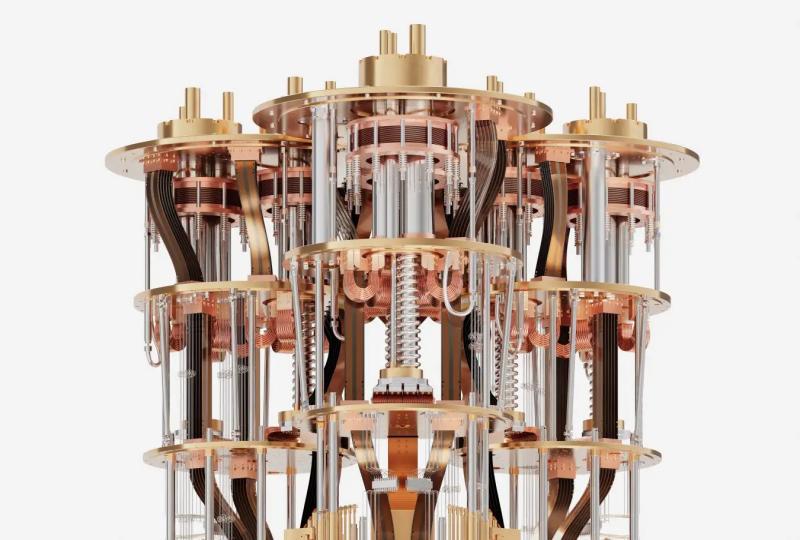
A superconducting QPU must operate in a carefully engineered low-temperature environment. The cryogenic platform is not a peripheral accessory; it is part of the computer itself. Temperature stability, wiring layout, filtering, attenuation, amplification, shielding, and mechanical design all affect the system’s ability to control and read out qubits.
Planning should address:
-
Dilution refrigerator selection
-
Laboratory space and utility assessment
-
Radio-frequency cabling and thermal anchoring
-
Microwave components and signal routing
-
Magnetic and electromagnetic shielding
-
Low-noise amplification for readout
-
Installation, commissioning, and maintenance procedures
A roadmap should also define responsibility boundaries. Teams need to know who manages cryogenic operations, who calibrates the control stack, and who maintains the software environment. Clear operational ownership reduces downtime and makes experimental results easier to reproduce.
SpinQ offers support for low-temperature deployment, including consultation on dilution refrigerators, RF components, laboratory assessment, installation, maintenance, and system upgrades. Explore our superconducting quantum hardware solutions to understand how chip, control, and low-temperature infrastructure can be planned as one integrated system.
-
Add a Quantum Control and Measurement Layer
Control electronics translate algorithms and pulse sequences into physical operations on qubits. The quantum control and measurement system must generate precise signals, synchronize operations, acquire readout data, and support calibration workflows.
At this stage, the roadmap should focus on:
-
Pulse generation and timing synchronization
-
Qubit-drive and readout-channel configuration
-
Signal upconversion and downconversion
-
Data acquisition and processing
-
Feedback and conditional control requirements
-
Calibration automation
-
Software access through APIs and programming frameworks
A high-quality control layer supports more than basic circuit execution. It allows researchers to investigate pulse optimization, gate calibration, readout discrimination, noise characterization, and experimental reproducibility.
SpinQ’s quantum control and measurement systems are designed for superconducting qubit manipulation and readout. By connecting hardware-level control with programming interfaces and pulse-layer software, organizations can support both device research and algorithm experimentation.
-
Establish Calibration and Benchmarking Practices
A quantum processor is not static. Qubit frequencies, coherence behavior, pulse parameters, and readout performance can shift over time. A mature roadmap therefore includes continuous calibration and benchmarking.
Useful practices include:
-
Establishing baseline device characterization
-
Monitoring qubit coherence and frequency stability
-
Calibrating single-qubit and two-qubit operations
-
Checking readout consistency
-
Tracking crosstalk and signal leakage
-
Maintaining experiment logs and configuration records
-
Comparing results across calibration cycles
The goal is not merely to report a performance figure. The goal is to understand whether the system is stable enough for the intended workload and whether observed changes can be diagnosed.
For teams developing internal quantum capability, repeatable calibration workflows are as important as the initial hardware installation. They create the operational knowledge required to make the platform useful over time.
-
Progress Toward Quantum Error Correction
Quantum error correction is a central milestone in the superconducting quantum computer roadmap. Physical qubits are vulnerable to decoherence, imperfect gates, readout errors, and environmental noise. Error correction aims to encode logical information across multiple physical qubits so that errors can be detected and managed without directly measuring the encoded quantum state.
This shift changes how progress is evaluated. Rather than focusing only on physical-qubit totals, roadmaps increasingly consider whether a system can support reliable logical operations, repeated syndrome measurements, and error-suppression experiments.
Current public roadmaps across the quantum industry reflect this direction. For example, D-Wave has publicly outlined a gate-model superconducting roadmap that links physical-qubit development, error reduction, logical qubits, and early fault-tolerant algorithms. Its published plan illustrates why error correction, not raw scale alone, is becoming a central benchmark for advanced quantum systems.
For research organizations, the immediate objective may be smaller: building the control precision, qubit connectivity, calibration methods, and software workflows needed to conduct meaningful error-correction experiments.
-
Scale Through Modular Engineering
As systems grow, the main challenge becomes integration. More qubits require more control channels, more wiring, more thermal management, more data handling, and more sophisticated automation.
A scalable roadmap should therefore consider modularity early:
-
Modular chip packaging
-
Expandable control electronics
-
Standardized RF interfaces
-
Reusable software APIs
-
Automated calibration pipelines
-
Configurable cloud or private-access environments
-
Documentation and training for local teams
This approach helps organizations add capability without redesigning the entire system each time a new hardware configuration is introduced.
Choosing Practical Roadmap Metrics
A useful superconducting quantum computer roadmap combines technical milestones with operational milestones. For the QPU, the practical question is whether the chip can support the target experiments consistently. For cryogenics, organizations should confirm that the low-temperature environment is stable, maintainable, and suitable for the selected research workload.
For the control layer, the focus should be whether operators can generate, synchronize, and measure signals reliably. Calibration processes should make performance changes visible and traceable over time. On the software side, users should be able to move efficiently from circuit design to hardware execution.
As quantum error correction becomes more important, teams should assess whether the platform can support experiments that go beyond isolated physical-qubit operations. Finally, operational capability matters: the organization should have the training, documentation, technical support, and maintenance processes needed to use the system sustainably.
Building Capability, Not Only Equipment
The most effective superconducting quantum computer roadmap creates local capability. It gives researchers access to an integrated system, but it also builds the skills needed to use that system: device characterization, cryogenic operation, pulse control, software development, experimental design, and result interpretation.
SpinQ supports this journey with superconducting quantum chips, quantum control and measurement systems, low-temperature deployment services, software tools, and technical support. Our approach is designed to help institutions move from a defined research objective to a deployable quantum computing environment.
A roadmap should remain adaptable. Hardware architectures, error-correction techniques, and application priorities will continue to evolve. However, organizations that plan around integration, measurement discipline, and team capability are better positioned to convert quantum computing research into durable technical infrastructure.
Featured Content