
What Can Quantum Computers Do?
2026.08.17 · Blog What Can Quantum Computers Do
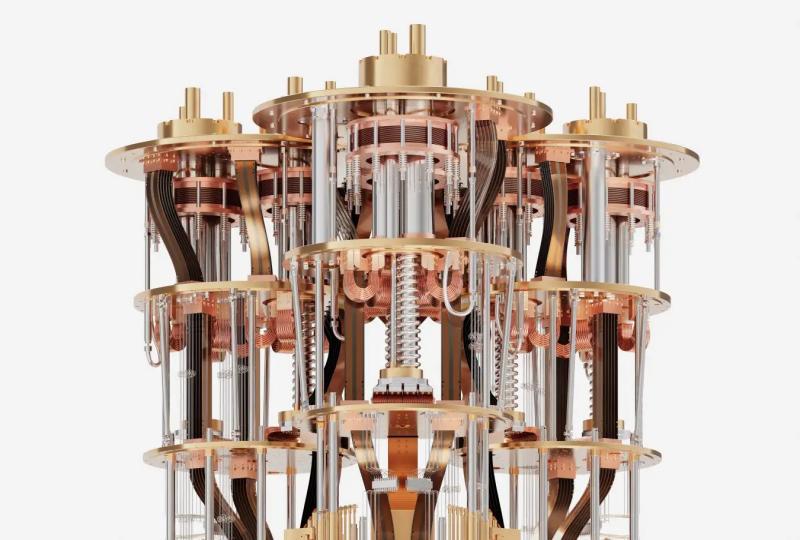
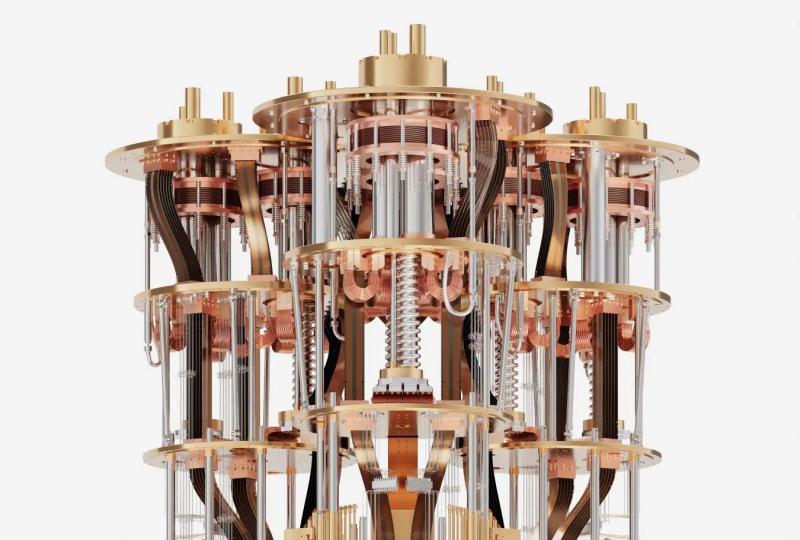
Quantum computers are no longer just a theoretical curiosity. They are emerging as powerful tools for solving complex problems that classical machines struggle with, especially in simulation, optimization, and pattern discovery. As the technology matures, a central question becomes: what can quantum computers actually do today, and how can more people access them without needing a full-scale quantum lab?
To unlock real-world impact, quantum computing must move beyond elite research facilities and into classrooms, small research groups, and industry innovation teams. This is where accessible platforms such as NMR (nuclear magnetic resonance) quantum systems come in, providing a practical way for educators, students, and researchers to work hands-on with qubits and quantum circuits.
What Can Quantum Computers Do? Core Capabilities
At the heart of quantum computing are qubits and the uniquely quantum properties of superposition, entanglement, and interference. These allow quantum computers to represent and process information in ways that are impossible for classical bits. Instead of flipping strictly between 0 and 1, qubits can exist in multiple states simultaneously, making quantum systems particularly suited for certain classes of problems.
In practice, two broad capabilities stand out:
-
Simulation of quantum systems Quantum computers can naturally simulate molecules, materials, and other quantum phenomena. This is essential in chemistry, materials science, and drug discovery, where understanding complex interactions at the quantum level can accelerate innovation.
-
Advanced optimization and pattern discovery Many industrial challenges—from portfolio optimization to logistics routing—can be turned into complex optimization problems. Quantum algorithms are being developed to explore these solution spaces more efficiently, providing new ways to handle combinatorial explosions, risk modeling, and pattern recognition that classical methods cannot manage at scale.
Key Application Domains Where Quantum Computers Matter
While large, fault-tolerant quantum computers are still in development, early applications and proof-of-concept use cases are already emerging across multiple industries. The following domains illustrate what quantum computers can do and why they matter:
-
Healthcare and drug discovery Quantum computers can help simulate molecular structures and interactions more accurately, supporting drug candidate screening and protein folding studies. This promises faster discovery cycles and more targeted therapies.
-
Finance and risk management Financial institutions explore quantum algorithms for portfolio optimization, asset pricing, and complex risk modeling. By searching through vast combinations of possible decisions and constraints, quantum approaches can reveal strategies that are difficult to find with classical tools alone.
-
Materials science and energy Designing new materials for batteries, semiconductors, and sustainable energy technologies often depends on understanding quantum-level behavior. Quantum simulation can support the creation of more efficient materials and energy systems.
-
Cybersecurity and cryptography Quantum computing raises both challenges and opportunities. Certain classical cryptographic schemes may be vulnerable to future quantum attacks, but quantum-safe algorithms and quantum key distribution offer pathways to stronger security.
-
AI and logistics optimization Quantum-inspired and quantum-native algorithms can enhance machine learning workflows, optimize supply chains, and improve routing and resource allocation problems in transportation and manufacturing.
Table: Selected Quantum Computing Application Areas and Benefits
| Industry | Example Use Case | Potential Benefit |
| Healthcare | Molecular simulation for drug discovery | Faster candidate screening, more targeted therapies |
| Finance | Portfolio optimization | Improved risk-adjusted returns and risk analysis |
| Materials & Energy | New battery material design | Higher efficiency, lower cost, better performance |
| Cybersecurity | Quantum-safe cryptography | Stronger protection against emerging threats |
| AI & Logistics | Supply chain optimization | Reduced costs, better resource and route planning |
Why Accessibility Matters: Bridging the Gap Between Quantum Theory and Users
Many organizations are curious about what quantum computers can do, but they face practical barriers. Large superconducting quantum systems are complex, expensive, and often accessible only through specialized cloud platforms or national labs. For universities, smaller research groups, and industry teams exploring quantum computing, this can make hands-on experimentation difficult.
To move from theory to impact, the ecosystem needs affordable, maintenance-free, and easy-to-use quantum solutions. Accessible quantum systems give students an opportunity to run real quantum algorithms, allow researchers to prototype new ideas, and help industry teams build internal expertise without having to invest in full-scale quantum infrastructure.
Making Quantum Computing Accessible with NMR Quantum Systems
NMR quantum computing uses nuclear magnetic resonance to implement qubits and quantum gates, offering a stable and robust way to build small-scale quantum processors. One key advantage of NMR-based systems is that they can be engineered as compact, integrated platforms that are well suited for teaching and early-stage research.
Education-grade NMR quantum computers often come as desktop or portable systems, combining hardware and software in a single package. This integration reduces maintenance requirements and simplifies the user experience, making it possible to focus on learning quantum concepts and implementing algorithms rather than operating complex hardware.
Brands such as Spinq offer superconducting and NMR quantum computers, quantum processing units, cloud platforms, and software that are designed to make quantum computing more practical for education and industry innovation. Educators and researchers who want to explore accessible quantum solutions can look at NMR quantum products for teaching and research like those presented in Spinq’s quantum computing solutions and dedicated NMR quantum computer product range.
These systems provide a way to design and run quantum circuits, experiment with basic algorithms, and integrate quantum topics into curricula without needing a specialized laboratory.
Real-World Scenarios: How Accessible Quantum Systems Are Used
Accessible NMR quantum systems are already being used in several practical contexts:
-
University quantum computing courses Universities can incorporate hands-on labs where students implement simple quantum algorithms—such as basic gate operations, small-scale variational circuits, or algorithms like Grover’s search—on a desktop NMR quantum computer. This transforms abstract concepts into interactive learning experiences.
-
Research labs exploring new algorithms Smaller research teams can use NMR platforms to validate algorithmic ideas on real quantum hardware, even before scaling to larger superconducting systems or cloud-based QPUs. This supports rapid prototyping and helps bridge the gap between theory and implementation.
-
Industry training and proof-of-concept projects Enterprises interested in what quantum computers can do may deploy accessible quantum systems to run internal workshops and pilot use cases. Teams can explore how quantum approaches might benefit optimization, simulation, or security problems relevant to their business, building internal skills and a clearer understanding of real-world impact.
Conclusion
Quantum computers promise transformative capabilities in simulation, optimization, and pattern discovery across industries such as healthcare, finance, materials science, cybersecurity, and logistics. However, achieving real impact depends on making quantum technology accessible to the people who will develop and apply it.
NMR quantum systems, especially compact and education-grade platforms, play a critical role in bridging the gap between theoretical models and practical usage. By bringing qubits into classrooms, research labs, and innovation teams, they enable more individuals to explore what quantum computers can do—moving the field steadily from abstract theory toward tangible, real-world benefits.
Featured Content