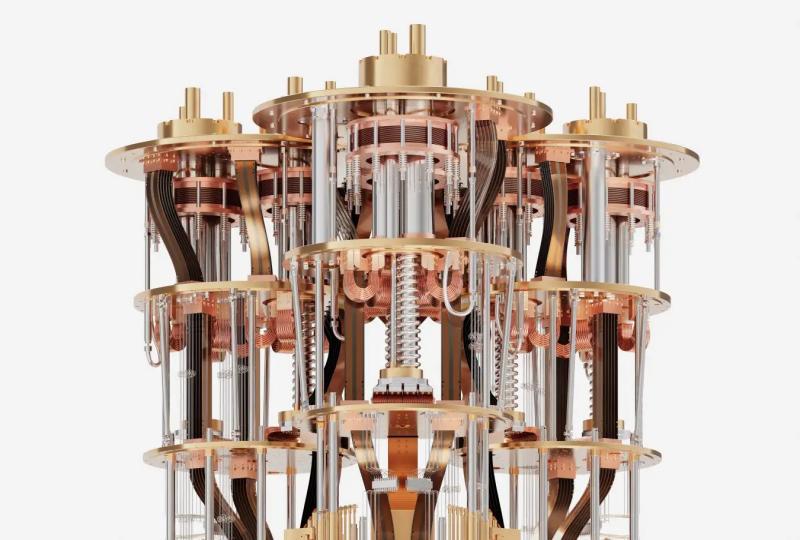

Cryostat Integration for a Superconducting Quantum Computer
2026.08.18 · Blog cryostat integration superconducting quantum computer
Cryostat integration is one of the most important engineering tasks in a superconducting quantum computer project. A superconducting quantum processor can only deliver meaningful experimental performance when the chip, dilution refrigerator, RF wiring, control electronics, shielding, and software operate as a coordinated system.
For organizations building quantum research infrastructure, a cryostat should not be treated as a standalone cooling device. It is the environment that enables the quantum processing unit to operate. Decisions made during laboratory planning, cable routing, component selection, thermal anchoring, and commissioning can affect measurement quality, maintenance effort, and the ability to scale.
SpinQ supports integrated superconducting quantum computing deployments that connect quantum chips, quantum control and measurement systems, low-temperature infrastructure, software, and technical support. This article provides a practical framework for cryostat integration in a superconducting quantum computer environment.
Why Cryostat Integration Is Critical
Superconducting qubits are engineered circuits that must operate at extremely low temperatures. In this environment, the materials used in the quantum chip can exhibit superconducting behavior, and thermal noise is greatly reduced.
However, cooling a QPU is only part of the challenge. The system must also carry carefully shaped microwave signals into the cryogenic environment and return weak readout signals to room-temperature electronics. Every cable, connector, attenuator, filter, amplifier, and mounting decision can influence the experiment.
Successful cryostat integration balances several objectives:
-
Maintain a stable low-temperature environment
-
Deliver accurate control signals to the QPU
-
Protect qubits from unwanted noise and thermal radiation
-
Preserve the quality of readout signals
-
Enable safe installation and repeatable maintenance
-
Leave room for future system expansion
A poorly planned cryogenic setup can limit the usefulness of an otherwise capable quantum processor. A well-integrated setup helps researchers focus on qubit operation, calibration, quantum algorithms, and error-correction experiments rather than recurring infrastructure issues.
The Cryostat as Part of the Quantum System
In a superconducting quantum computer, the cryostat connects directly to several system layers:
-
Quantum processing unit: The chip is mounted and thermally anchored in the lowest-temperature region.
-
RF and microwave lines: Control, flux, and readout signals travel through dedicated paths between room-temperature electronics and the QPU.
-
Thermalization components: Attenuators, filters, and cables are placed at selected temperature stages to manage heat flow and reduce noise.
-
Readout chain: Weak signals from the qubits are amplified and processed through a low-noise measurement path.
-
Control electronics: Quantum control and measurement equipment generates pulses, synchronizes events, and acquires data.
-
Software layer: Calibration software, pulse-level tools, and programming frameworks define and execute experiments.
Because these elements are interdependent, cryostat integration should begin with a full system architecture, not with component purchasing alone.
Step 1: Assess the Laboratory Environment
Before installing a dilution refrigerator or related infrastructure, assess the laboratory itself. This early step reduces late-stage modifications and helps ensure that the system can be operated safely and consistently.
Key considerations include:
-
Available floor space and equipment access routes
-
Structural suitability for the planned installation
-
Electrical supply and grounding
-
Cooling-water or facility requirements, where applicable
-
Ventilation and heat-management planning
-
Electromagnetic interference in the surrounding environment
-
Vibration sources near the installation area
-
Space for control racks, network equipment, and operator workstations
The lab should also support practical service access. Quantum systems need scheduled maintenance, cable inspection, component replacement, and upgrades. A layout that is difficult to access may increase downtime and complicate troubleshooting.
SpinQ can support laboratory assessment and low-temperature system planning, helping teams align physical infrastructure with their QPU, measurement, and research requirements.
Step 2: Plan the Signal Architecture
A superconducting QPU requires multiple types of microwave and RF connections. The exact configuration depends on the chip design and experimental goals, but common paths include qubit-drive lines, readout lines, flux-bias lines, and auxiliary measurement channels.
Signal architecture should be planned before installation because the number of channels, cable types, connector standards, and routing requirements affect both the cryostat configuration and the room-temperature control rack.
Questions to answer include:
-
How many qubit-control channels are needed?
-
Which qubits require flux control?
-
How many resonators or multiplexed readout paths will be used?
-
What bandwidth and timing precision are required?
-
How will control signals be attenuated and filtered?
-
What amplification is required on the return path?
-
How will the system accommodate future channels?
Planning for expansion is valuable even in early-stage projects. A laboratory may begin with a small experimental configuration, then later need more control lines, different chip packaging, or additional readout capability.
Step 3: Manage Thermal Loads and Noise
The cryostat has multiple temperature stages. Components and cables must be installed so that heat is managed effectively as signals travel toward the coldest stage.
Thermal anchoring helps prevent unwanted heat from reaching the QPU. Attenuators and filters can reduce noise entering from room-temperature electronics. On the readout path, carefully selected amplification stages help preserve weak quantum signals for analysis.
Integration teams should document:
-
Cable materials and specifications
-
Attenuator locations
-
Filter placement
-
Thermal anchoring points
-
Connector types
-
Component serial numbers
-
Installation dates
-
Maintenance history
This level of documentation may appear operational rather than scientific, but it becomes essential during troubleshooting. When a measurement changes unexpectedly, teams need to determine whether the cause is related to the QPU, calibration, a signal chain, a cryogenic component, or environmental conditions.
Step 4: Install and Package the Quantum Chip
The QPU package forms the interface between the superconducting chip and the cryogenic microwave environment. Packaging design affects signal integrity, grounding, electromagnetic isolation, thermal connection, and access for testing.
A careful installation workflow usually includes:
-
Visual inspection of the QPU and package
-
Verification of connectors and bond integrity
-
Controlled mounting inside the designated cryogenic stage
-
Confirmation of grounding and shielding strategy
-
Continuity checks before cooldown
-
Documentation of the installed configuration
The chip must be treated as part of a larger RF structure. A high-quality quantum chip can still experience reduced performance if packaging, interconnects, or the surrounding environment introduce loss, spurious modes, or unwanted coupling.
SpinQ’s superconducting quantum chip services cover design, manufacturing, and professional testing, allowing research teams to coordinate chip development with downstream system requirements.
Step 5: Connect the Quantum Control and Measurement System
Quantum control and measurement systems convert digital experiment instructions into physical pulses and measurement sequences. Integration with the cryostat must preserve timing accuracy, frequency control, and signal quality.
The control layer typically needs to support:
-
Microwave pulse generation
-
Qubit-drive modulation
-
Readout excitation
-
Trigger synchronization
-
Signal acquisition
-
Data processing
-
Pulse-level parameter adjustment
-
Experimental automation
During setup, teams should verify that each control channel maps correctly to the intended physical path. Labeling, configuration management, and repeatable test procedures are especially important as channel counts increase.
A unified control stack helps researchers move efficiently from a software-defined circuit to an experiment on real hardware. SpinQ’s quantum control and measurement solutions are built for accurate manipulation and readout of superconducting qubits, with support for system-level integration and software access.
Step 6: Cool Down and Commission the System
The first cooldown is a major milestone, but it is the beginning of commissioning rather than the end of installation. After the system reaches operating conditions, teams need to characterize the signal environment and the quantum device.
A commissioning plan can include:
-
Verifying refrigerator operation and temperature stability
-
Checking line continuity and signal transmission
-
Identifying resonators and qubit frequencies
-
Confirming readout response
-
Measuring basic coherence behavior
-
Performing initial gate calibration
-
Testing repeatability across experimental runs
-
Recording a baseline configuration
These baseline measurements become a reference for future maintenance and upgrades. They also help distinguish expected device behavior from integration-related issues.
Common Integration Challenges
Cryostat integration involves several recurring challenges. Signal loss or unexpected noise may require teams to review cable paths, attenuation settings, filtering components, grounding arrangements, and connectors. When the cryogenic environment appears thermally unstable, engineers should inspect thermal anchoring, component installation, and relevant facility conditions.
If measurements drift unexpectedly, teams should maintain detailed calibration records and compare current behavior with baseline tests completed during commissioning. When a project has limited channel capacity, the control rack, wiring layout, and interfaces should be designed with future expansion in mind.
Maintenance also becomes more manageable when systems use documented layouts, clear cable labels, and accessible routing. Where hardware and software workflows are disconnected, teams should define control APIs, data-handling procedures, and calibration workflows before formal commissioning.
The objective is not to remove every technical challenge from a superconducting quantum computing environment. Instead, the objective is to establish a platform that can be inspected, understood, calibrated, maintained, and improved over time.
Integration for Long-Term Scalability
As superconducting quantum systems expand, cryogenic integration must support more than initial operation. It must accommodate growing control-channel requirements, denser wiring, more advanced readout techniques, and new error-correction experiments.
Industry roadmaps increasingly identify interconnect density, signal quality, and system reliability as important constraints in scaling quantum hardware. Public work on quantum-system I/O roadmaps similarly emphasizes channel capacity, low-noise performance, and reliability as interrelated requirements for larger systems.
For institutions building their own quantum capability, this means designing early systems with modularity in mind. A controlled, documented, expandable integration strategy is more valuable than an installation that only meets immediate needs.
Work With an Integrated Partner
Cryostat integration requires coordination across quantum hardware, RF engineering, low-temperature systems, software, and laboratory operations. Fragmented procurement can create unnecessary interface risks.
SpinQ provides an integrated route for superconducting quantum computing projects, including QPUs, quantum control and measurement systems, low-temperature deployment services, software tools, and technical support. Our services can help institutions plan a coherent path from laboratory assessment through installation, commissioning, and long-term operation.
To discuss an integration plan for your research environment, visit SpinQ’s superconducting quantum computing solutions.
Featured Content