
Super Quantum Computers: How Qubits Work
2026.05.15 · Blog super quantum computer
Super quantum computers are reshaping what’s computationally possible, not by replacing classical computers, but by tackling problems that are too complex for even the most powerful supercomputers. At the core of this revolution are superconducting qubits—microscopic circuits that harness quantum mechanics to process information in ways classical bits never could.
This guide breaks down:
-
what superconducting qubits actually do.
-
how they work from first principles, and
-
why their fabrication is the make-or-break factor for building real-world super quantum computers.
The Real Role of Superconducting Qubits
In classical computing, bits are binary: 0 or 1. Superconducting qubits break that rule. They can exist in superposition (both 0 and 1 at once) and become entangled with other qubits, creating a shared quantum state that scales exponentially with each added qubit.
This enables three game-changing capabilities:
-
Molecular and material simulation: Modeling complex chemical reactions and new materials with atomic precision—critical for drug discovery, battery tech, and catalyst design.
-
Large-scale optimization: Solving logistics, scheduling, and financial portfolio problems with thousands of interdependent variables.
-
Quantum-native algorithms: Running specialized tasks like quantum sampling and linear algebra faster than classical methods.
Unlike other qubit types, superconducting qubits are built using circuit layouts similar to classical microchips. This makes them the most compatible with existing semiconductor manufacturing infrastructure—and the leading candidate for scaling to thousands of qubits.
How Superconducting Qubits Work: From Quantum Physics to Computation
A superconducting qubit is an artificial atom made from electrical components rather than natural elements. Its behavior emerges from two key physics phenomena.
Superconductivity + Josephson Junction = Quantum Levels
-
When cooled to near absolute zero (~10–20 mK), certain metals (like aluminum) conduct electricity with zero resistance.
-
A Josephson junction—a nanoscale insulating barrier between two superconducting layers—introduces nonlinearity, creating discrete energy levels that act like a two-level quantum system (|0⟩ and |1⟩).
Microwave Control + Resonator Readout
-
Qubits start in their ground state (|0⟩) after cooling.
-
Microwave pulses at precise frequencies rotate the qubit’s state, executing quantum gates.
-
Readout resonators detect the final state by measuring microwave response, collapsing the superposition into classical 0 or 1.
Because qubits are extremely sensitive to noise, they require:
-
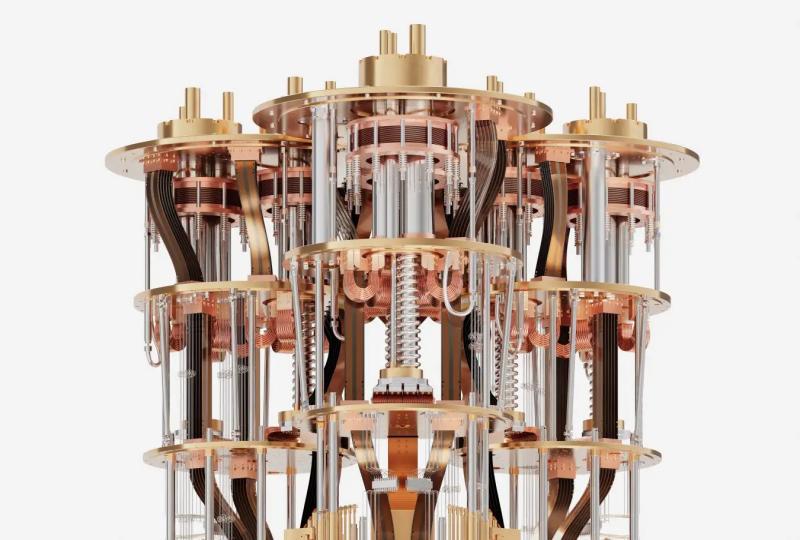
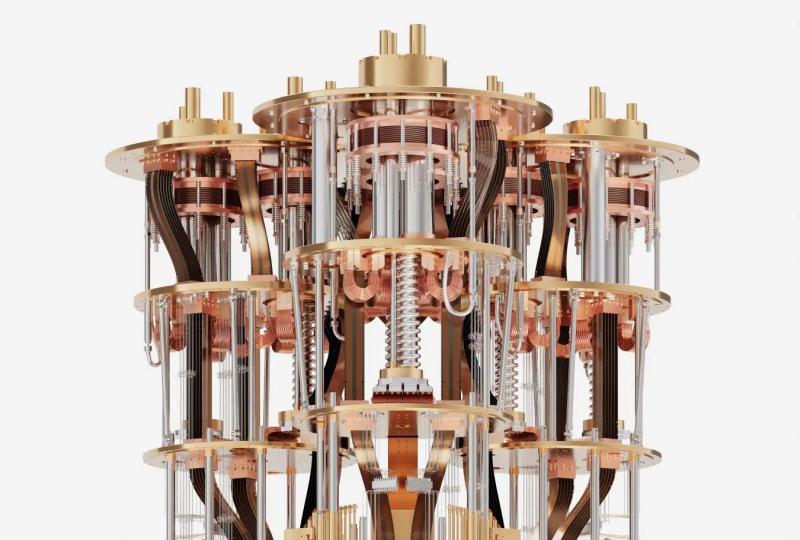
Millikelvin temperatures (inside dilution refrigerators)
-
Electromagnetic shielding
-
Ultra-pure materials to minimize decoherence
The most common designs today are:
-
Transmon qubits: Optimized for stability against charge noise.
-
Flux-tunable qubits: Allow dynamic frequency tuning via magnetic fields.
Why Fabrication Is the Make-or-Break for Super Quantum Computers
Building a super quantum computer isn’t just about quantum physics—it’s about nanoscale precision manufacturing. A single atomic defect can destroy a qubit’s coherence and break the entire processor.
Key Manufacturing Steps
-
Substrate prep: High-purity silicon or sapphire wafers with minimal dielectric loss.
-
Superconducting film deposition: Aluminum or niobium layers grown with atomic-level thickness control.
-
Electron-beam lithography: Patterns Josephson junctions with features under 100 nm.
-
Junction oxidation: Forms the thin oxide barrier (e.g., Al₂O₃) that defines the junction’s critical current.
-
Multi-layer etching: Builds control lines, couplers, and readout resonators.
-
Cryogenic integration: Wire-bonding, packaging, and per-chip calibration inside dilution refrigerators.
Critical Manufacturing Bottlenecks
| Challenge | Why It Matters |
| Junction uniformity | Small size variations shift qubit frequencies, breaking gate fidelity |
| Surface defects | Reduce coherence time (T1/T2), limiting how long calculations can run |
| Wiring density | Each qubit needs control + readout lines; scaling requires integrated solutions |
| Production yield | Low yield makes it impossible to build 1,000+ qubit processors for error correction |
The industry is now treating superconducting qubit fabrication as a semiconductor foundry challenge, investing in:
-
CMOS-compatible processes
-
Standardized design kits
-
Tight process control
-
Advanced packaging to reduce the “wiring bottleneck”
The Road Ahead: From Noisy Prototypes to Fault-Tolerant Machines
Today’s super quantum computers operate in the NISQ (Noisy Intermediate-Scale Quantum) era—powerful but limited by noise. The next leap requires:
-
Logical qubits: Combining many physical qubits into one error-corrected unit.
-
Modular architectures: Linking multiple chips via quantum interconnects.
-
On-chip control: Integrating classical electronics directly with qubit arrays.
Superconducting qubits remain the most scalable path forward. Their manufacturing stack—spanning quantum physics, materials science, and semiconductor engineering—is the foundation of the next computing revolution.
The bottom line: Super quantum computers won’t win on theory alone. They’ll win through precision manufacturing. If you want to understand the future of computation, watch how these qubits are built—not just how they work.
Featured Content