
What Is a Super Quantum Computer?
2026.06.25 · Blog super quantum computer
Super Quantum Computer: From Concept to Full‑Stack Reality
A super quantum computer is more than a buzzword. It describes a new generation of quantum systems that move beyond isolated lab prototypes toward scalable, high‑performance platforms capable of addressing real scientific and industrial problems. While there is no official technical standard for the term, it captures one clear idea: a quantum computer that combines powerful hardware, robust error management, and an integrated software stack into a practical, usable machine.
At SpinQ, we use “super quantum computer” to describe our vision for full‑stack quantum infrastructure. This includes superconducting quantum chips, cryogenic and control systems, software frameworks, and complementary NMR platforms for education. Instead of thinking in terms of components alone, we focus on how every layer—from qubit design to user experience—works together to deliver reliable quantum capability.
What Defines a Super Quantum Computer?
Although different organizations may use slightly different language, several shared characteristics distinguish a super quantum computer from early experimental devices. The key is not only how many qubits a system has, but how usable and reliable those qubits are in practice.
Common traits include:
-
A scalable qubit architecture (often superconducting qubits in 2D lattices).
-
High coherence and gate quality that support non‑trivial circuit depth.
-
Built‑in strategies for error detection and mitigation.
-
Integration of hardware, cryogenics, control electronics, and software.
-
Accessible interfaces for researchers, students, and application developers.
From our perspective, a system is “super” when it can move beyond one‑off demonstrations and consistently support meaningful workloads in chemistry, optimization, materials science, finance, or quantum algorithm research. It is this repeatability and stability—rather than headline‑grabbing benchmarks alone—that defines real progress.
.jpg)
The Hardware Foundation: Superconducting Quantum Technology
Many candidates for super quantum computers are based on superconducting qubits. These qubits are implemented as engineered circuits containing Josephson junctions, which behave like artificial atoms with discrete energy levels. By operating at cryogenic temperatures, resistance drops to nearly zero and quantum behavior becomes dominant, allowing qubits to maintain fragile superposition and entanglement states long enough for computation.
Superconducting technology has several advantages that make it suitable for super quantum computers:
-
It leverages mature semiconductor and microfabrication processes.
-
It supports structured 2D layouts with growing qubit counts.
-
It allows precise microwave control of individual qubits and couplers.
SpinQ’s superconducting product roadmap is built around these strengths. Our quantum chips are designed for scalability, with lattice layouts and coupling schemes tailored for both algorithm development and quantum error‑correcting code experiments. By standardizing our design and fabrication flow, we lay a solid foundation for stable, repeatable performance across multiple system generations.
Full‑Stack Integration: From QPU to User Interface
A super quantum computer cannot be reduced to its quantum chip alone. Real‑world operation requires a tightly integrated stack that connects delicate qubits to robust software and user workflows. We structure this full stack into four main layers.
-
Quantum Processing Unit (QPU) This is the superconducting chip at the heart of the system. It provides the physical qubits, their connectivity, and the basic operations available to the user. Layout, frequencies, couplers, and readout resonators are all carefully optimized.
-
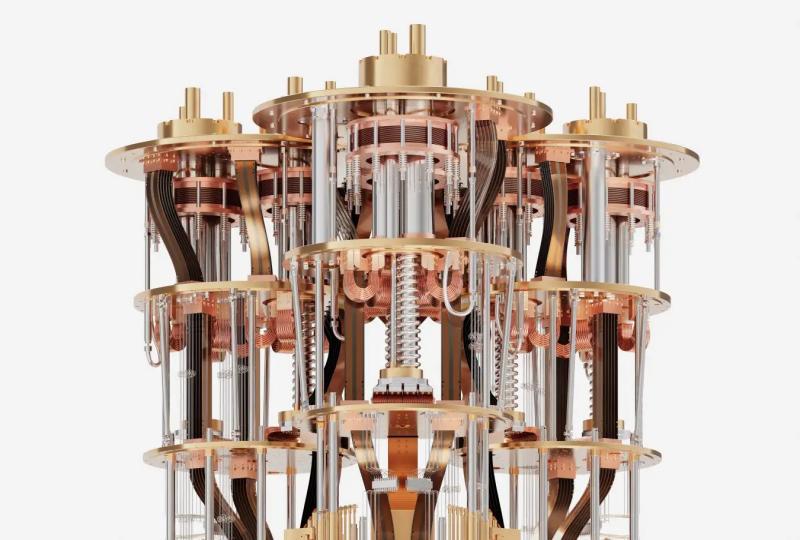
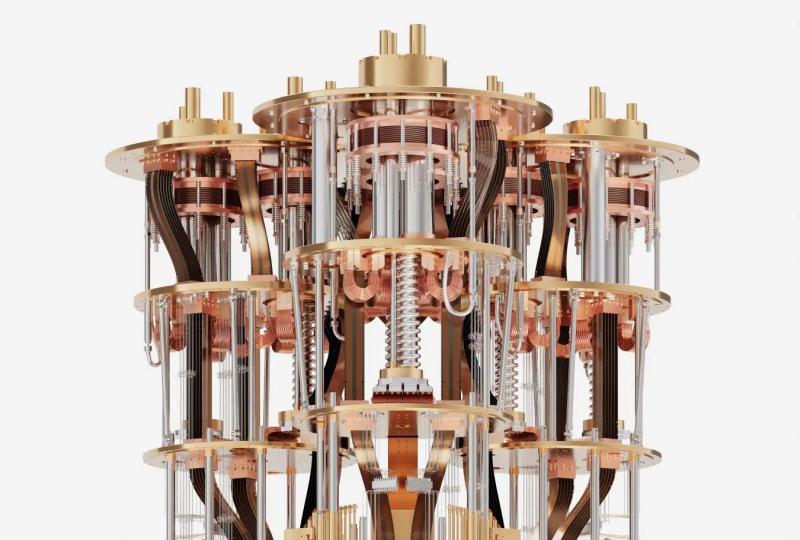
Cryogenic Infrastructure The QPU is housed in a dilution refrigerator that brings it to milli‑Kelvin temperatures. Mechanical design, thermal anchoring, and filtering are all tuned to minimize noise and ensure long‑term stability.
-
Control and Measurement System Microwave electronics, timing hardware, and readout chains translate high‑level instructions into precise pulses on the chip, and convert qubit states back into classical data. Stability in this layer is crucial to gate quality and reproducibility.
-
Software and User Experience From programming frameworks and circuit compilers to calibration tools and dashboards, the software layer determines how easily users can design experiments, diagnose issues, and integrate quantum resources into larger workflows.
SpinQ’s approach is to design and deliver these layers as a coherent whole. Instead of asking users to assemble their own stack from disparate vendors, we provide complete systems that arrive ready for serious experimentation.
Why Education Matters for Super Quantum Computers
Super quantum computers are only as valuable as the people who know how to use them. Building a quantum‑ready workforce has become just as important as building quantum hardware. However, not every institution can immediately deploy a large superconducting system.
This is where our NMR quantum platforms come in. Compact NMR quantum computers operate at room temperature, require only standard lab infrastructure, and are specifically tailored for learning and training. They allow users to:
-
Visualize basic quantum states and operations.
-
Program small‑scale quantum circuits.
-
Experience real hardware imperfections and noise.
By giving students and early‑stage researchers a practical path into quantum programming and experiment design, these systems create a talent pipeline. When those users later step up to superconducting‑based super quantum computers, they already understand core concepts, workflows, and best practices.
We see education‑grade systems and high‑performance superconducting platforms as complementary rather than competing. Both are essential to a healthy quantum ecosystem.

What Can a Super Quantum Computer Do?
The most compelling justification for super quantum computers lies in their potential applications. While the field is still maturing, several domains are widely viewed as promising early candidates for quantum acceleration.
-
Quantum Chemistry and Materials Science Simulating molecules and condensed‑matter systems is classically challenging. Even modest improvements in accuracy or efficiency can support drug discovery, catalyst design, and advanced material development.
-
Optimization and Logistics Many real‑world planning and scheduling problems are hard for classical algorithms. Quantum methods may help explore complex solution spaces more effectively, providing better routes, timetables, or resource allocations.
-
Finance and Risk Management Portfolio construction, risk analysis, and scenario modeling often involve large, complex mathematical structures. Quantum algorithms could complement classical methods in exploring these spaces.
-
Quantum‑Enhanced Machine Learning Research continues into how quantum circuits might assist with feature mapping, kernel methods, or specific training tasks in machine learning workflows.
Our goal is not to claim universal speedups, but to build systems that let researchers and industry teams test these ideas on real hardware. A super quantum computer is valuable precisely because it moves theoretical proposals into experimental reality.
From Noise Management to Error‑Resilient Architectures
All quantum computers must contend with decoherence and gate errors, and a super quantum computer is no exception. What changes at this scale is the strategy. Instead of focusing only on physical noise suppression, we design systems that are prepared for structured error management from the outset.
On the physical side, this includes:
-
Careful chip layout and materials choices.
-
Shielded, filtered cryogenic environments.
-
Stable, calibrated control electronics and readout.
On the logical side, it means designing qubit layouts that support error‑correcting codes and developing software pipelines that incorporate calibration, characterization, and mitigation into daily operation.
At SpinQ, we view noise management and error handling as part of the product, not as an afterthought. Our engineering and research teams work together so that system evolution—from chip revisions to control firmware updates—moves toward increasingly error‑resilient architectures.
Building Your Roadmap to a Super Quantum Computer
Adopting a super quantum computer should be treated as a strategic journey rather than a one‑time purchase. From our experience working with institutions and companies at different stages, a practical roadmap often includes:
-
Early engagement with quantum concepts through NMR education platforms.
-
Pilot superconducting experiments using smaller systems or chip‑level access.
-
Structured expansion into integrated, multi‑qubit superconducting systems for targeted research and application development.
Throughout this process, we emphasize training, documentation, and ongoing technical support. Our role is to act as a long‑term partner, aligning hardware evolution, software updates, and education initiatives with each customer’s goals.
A super quantum computer is not only a machine—it is an investment in future capability. Our mission is to help you get the most from that investment, from first lab setup to advanced quantum R&D.

Featured Content