
Quantum Super Computer: A Complete Guide
2026.06.25 · Blog quantum super computer
Quantum Super Computer: Redefining High‑Performance Computing
The quantum super computer reflects a simple idea: combining the principles of quantum mechanics with the ambition of supercomputing. Traditional supercomputers push classical hardware to its limits using massive parallelism and specialized architectures. A quantum super computer aims to complement this with qubits, quantum gates, and entanglement, opening new pathways for tackling complex computational problems.
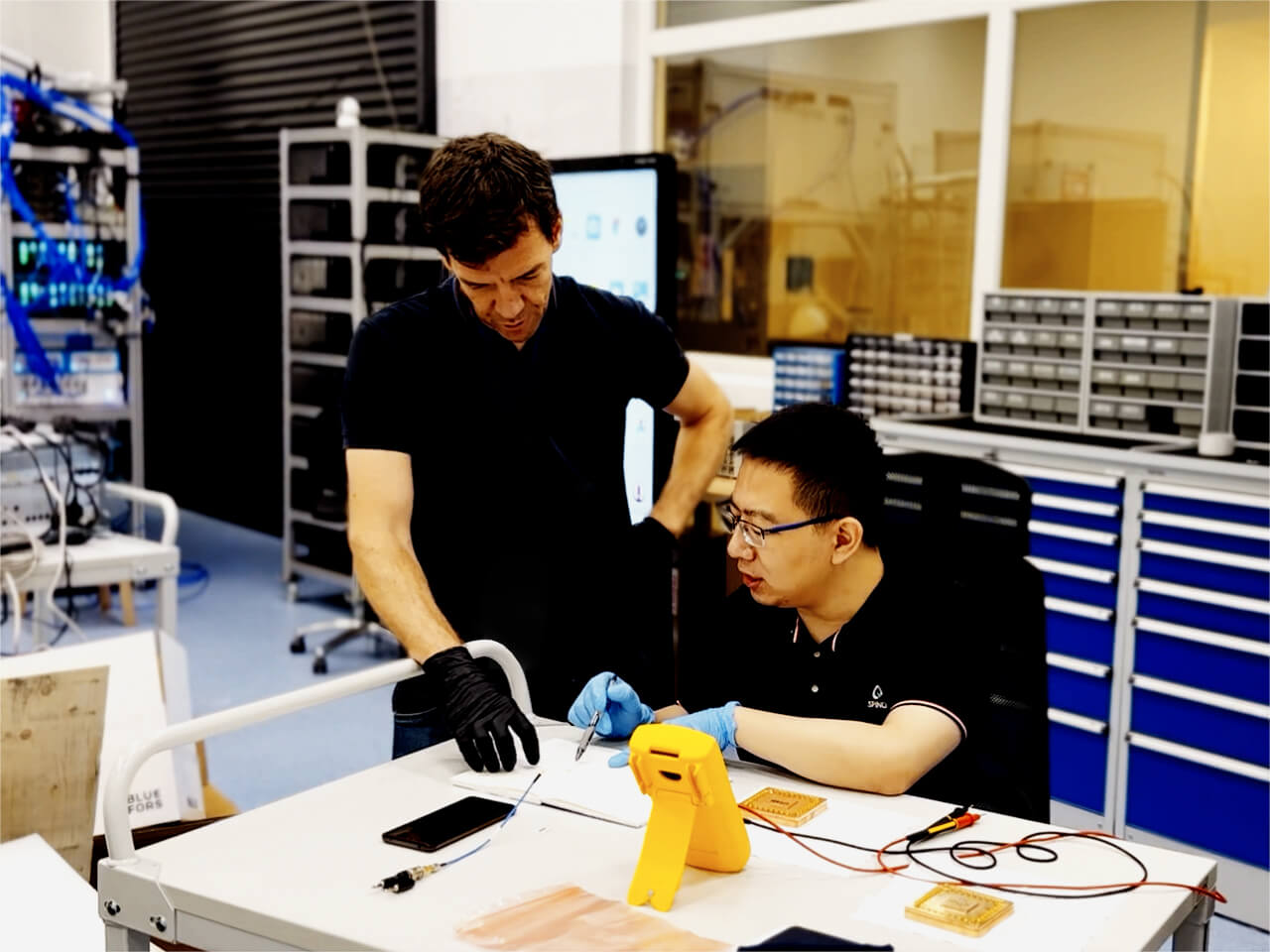
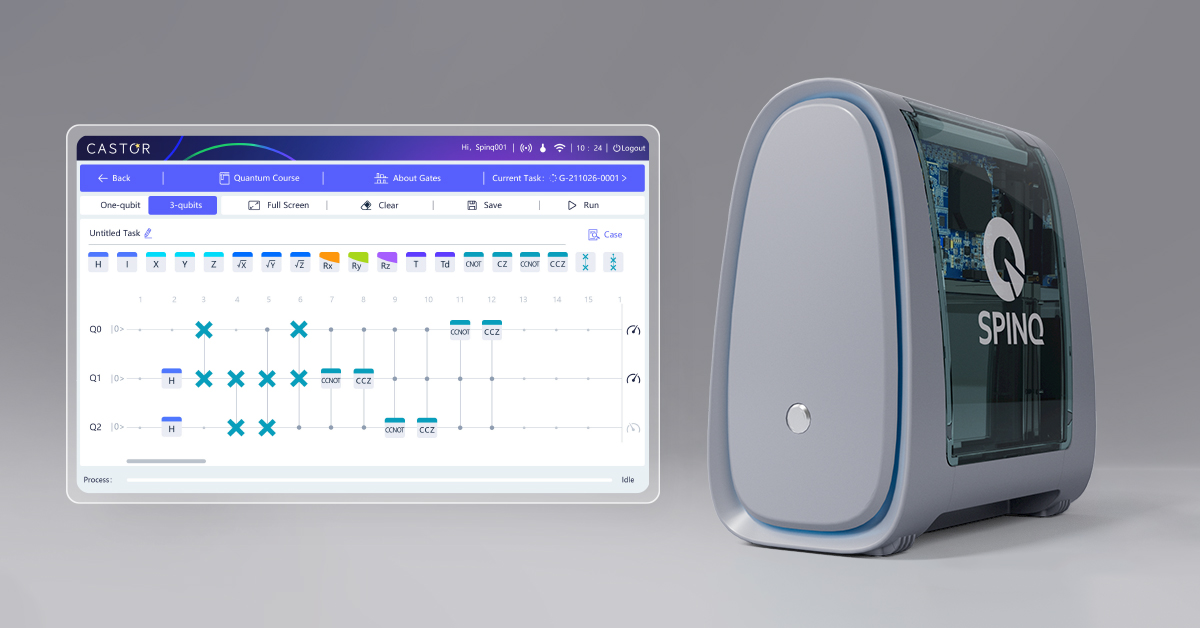
At SpinQ, we view a quantum super computer as a full environment that unites quantum and classical resources. Superconducting quantum processors, NMR‑based educational systems, control electronics, and software frameworks all work together, often alongside classical high‑performance computing clusters. This hybrid approach allows users to explore algorithms that blend classical and quantum strengths rather than relying on one paradigm alone.
Key Components of a Quantum Super Computer
A genuine quantum super computer must move beyond isolated experiments and provide a coherent, end‑to‑end architecture. We break this architecture into several essential components.
Quantum Core
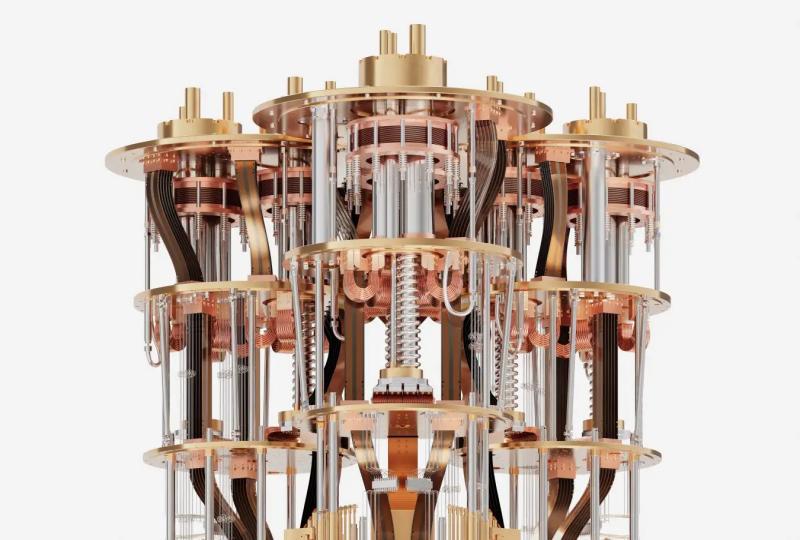
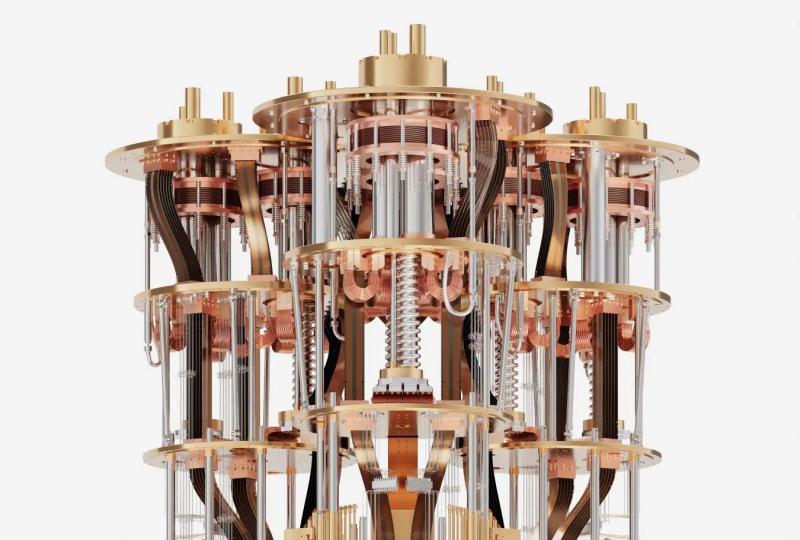
The quantum core is the collection of qubits and couplers that perform quantum operations. In our systems, this typically consists of superconducting quantum chips designed for:
-
Robust qubit performance under cryogenic conditions.
-
Structured connectivity that supports both algorithms and error‑correcting codes.
-
Compatibility with scalable packaging and wiring strategies.
Classical Control and Orchestration
No quantum system operates alone. Classical processors handle:
-
Pulse generation and timing control.
-
Real‑time feedback and adaptive circuits.
-
Job scheduling and resource allocation across quantum and classical units.
In a quantum super computer, this control layer is as important as the quantum core itself. It determines how flexibly users can define experiments, how quickly they can iterate, and how efficiently they can mix classical and quantum steps.
Cryogenic and Environmental Infrastructure
The superconducting quantum core operates in a carefully engineered cryogenic environment. Thermal noise, vibration, and electromagnetic interference must all be managed. The quantum super computer integrates this infrastructure with monitoring and diagnostics so that performance remains stable over long periods.
Software Ecosystem
Finally, the system must provide a software ecosystem that includes:
-
High‑level programming interfaces and SDKs.
-
Circuit compilation and optimization tools.
-
Calibration, benchmarking, and diagnostic utilities.
-
APIs for integration with existing data pipelines and HPC systems.
Our aim is to ensure that developers and researchers can focus on ideas, algorithms, and experiments, rather than low‑level hardware details.
Where Does SpinQ’s Technology Fit In?
SpinQ’s mission is to provide the building blocks and complete systems that make a quantum super computer attainable for universities, laboratories, and industry. We do this through three complementary pillars.
-
Superconducting Quantum Chips and Systems Our superconducting chips form the heart of high‑performance quantum systems. They are designed for scalability, with qubit layouts and couplers that enable structured experiments and future error‑correcting architectures. Integrated systems bring these chips together with cryogenics, control electronics, and software.
-
NMR Quantum Computers for Education and Prototyping Our NMR platforms offer a room‑temperature, plug‑and‑play entry point into practical quantum computing. They are particularly well suited for curriculum integration, early‑stage algorithm exploration, and workforce training.
-
End‑to‑End Support and Collaboration We work closely with partners to align hardware selection, lab planning, curriculum design, and application goals. This collaborative model helps ensure that each deployment is a step toward a broader quantum super computer strategy rather than a standalone project.
Quantum Super Computer vs. Classical Supercomputer
It is tempting to think of a quantum super computer as a direct replacement for a classical supercomputer. In reality, they play different roles and will likely coexist for a long time.
-
Classical supercomputers excel at tasks that map well onto parallel processing of bits and floating‑point operations.
-
Quantum super computers focus on tasks where superposition and entanglement can naturally represent complex spaces or correlations.
In practice, many future workloads may be hybrid. For example, a classical system might preprocess data, call a quantum routine for a specific subproblem, then continue classical post‑processing. Our development philosophy therefore emphasizes interoperability and workflow integration rather than isolation.
Use Cases for Quantum Super Computers
The most promising use cases for quantum super computers overlap with those discussed for super quantum computers, but with a stronger emphasis on integration into high‑performance computing environments.
Potential application areas include:
-
Advanced Simulation Quantum systems can naturally represent certain physical models. Coupling a quantum processor with classical simulation tools may enable new kinds of hybrid solvers in physics, chemistry, and materials science.
-
Combinatorial Optimization Complex optimization problems often appear in logistics, telecommunications, and engineering design. Quantum algorithms and heuristics may complement classical solvers, especially when integrated into existing optimization pipelines.
-
Secure Communication and Cryptography Research Quantum computers have implications for cryptographic schemes and secure communication protocols. While responsible use and adherence to regulations are essential, research in this area can help guide the next generation of secure systems.
-
Algorithm Development and Benchmarking A quantum super computer provides a realistic environment for testing new quantum algorithms at scale, comparing hardware implementations, and refining algorithmic techniques.
At SpinQ, we design our systems to be flexible enough to support both domain‑specific experiments and fundamental quantum computing research.
Building Confidence: Reliability, Calibration, and Operations
For a quantum super computer to be trusted by its users, reliability and operational workflow are as important as raw capability. That is why we invest heavily in:
-
Automated calibration routines that keep gates and readout aligned over time.
-
Diagnostic tools that help users understand and improve experiment performance.
-
Operational best practices that guide lab technicians and researchers in daily usage.
We view each deployment as a living system that evolves. As firmware, software, and hardware improve, we provide upgrade paths and documentation so that our partners can continuously increase capability without constantly starting over.
A Practical Path Toward a Quantum Super Computer
Many organizations are interested in quantum super computers but unsure where to begin. Based on our experience, a structured, phased approach is often the most effective.
-
Awareness and Training Introduce key stakeholders and technical teams to quantum concepts through seminars, workshops, and online resources.
-
Hands‑On Education Deploy NMR quantum platforms in teaching labs or internal training programs so that students and engineers can gain practical experience.
-
Pilot Quantum Projects Identify specific research or R&D topics where quantum methods may add value. Design small‑scale experiments, potentially using both NMR and early superconducting systems.
-
System‑Level Deployment When your team, infrastructure, and use cases are ready, invest in integrated superconducting systems that can serve as the core of your quantum super computer environment.
-
Continuous Expansion and Integration Over time, increase capability, integrate with classical HPC resources, and broaden the range of applications.
SpinQ supports all stages of this journey. Our goal is not only to ship hardware but to help you build a sustainable quantum program that grows in step with the technology.

Featured Content