
Solid-State NMR Quantum Computing for Practical Learning
2026.08.24 · Blog solid state nmr quantum computing
Solid-state NMR quantum computing offers a useful way to study real quantum operations through controllable nuclear-spin systems. Rather than treating quantum computing only as software simulation or remote cloud access, this approach enables learners and researchers to connect quantum algorithms with physical preparation, pulse control, signal acquisition, and measurement.
For institutions building quantum education programs, the appeal is clear: a physical NMR-based platform can make key concepts—superposition, phase evolution, quantum gates, and measurement—more concrete. It also gives students a structured environment for learning how quantum programs become experimentally executed operations.
At SpinQ, NMR quantum computing is part of a broader full-stack quantum technology portfolio that also includes superconducting quantum computers, quantum chips, control systems, software, and cloud-access tools. This combination supports different stages of quantum learning and research, from foundational instruction to advanced hardware-oriented development. Learn more about SpinQ’s quantum computing products.
What Is Solid-State NMR Quantum Computing?
Nuclear magnetic resonance quantum computing uses the quantum properties of nuclear spins as qubits. A nucleus with a suitable spin can interact with an external magnetic field and radio-frequency pulses. These interactions allow the system to represent, manipulate, and measure quantum information.
In a solid-state NMR quantum computing context, the quantum system is based on spins within a solid material or a solid-state device environment. The exact physical implementation can vary, but the underlying principle remains the same: carefully controlled electromagnetic pulses are used to prepare spin states, implement quantum operations, and observe measurable signals.
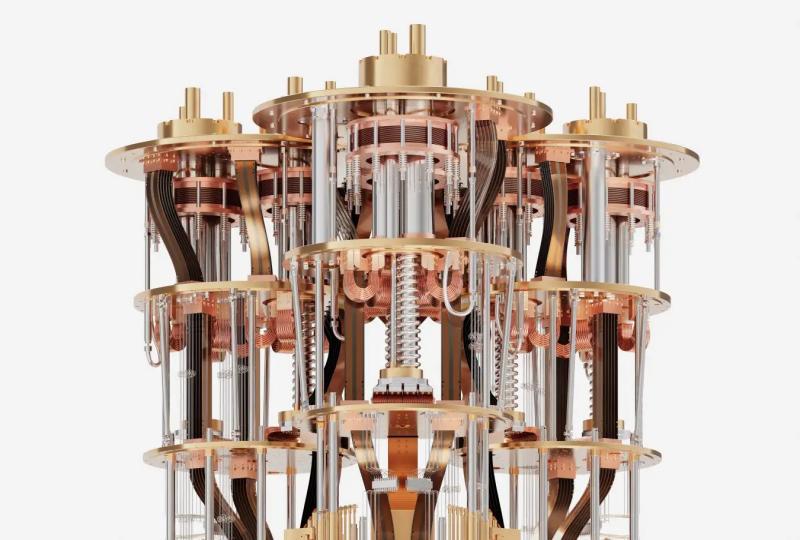
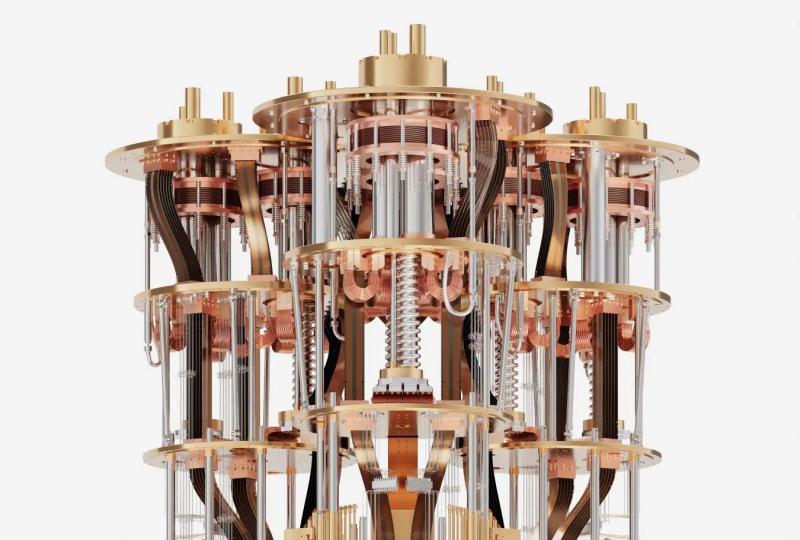
This differs from superconducting quantum computing, where qubits are created using superconducting circuits and Josephson junctions at extremely low temperatures. NMR systems generally operate using well-understood magnetic-resonance techniques and can be particularly valuable for educational demonstrations, experimental teaching, and quantum-control research.
The phrase “solid state” is important because it highlights the physical nature of the qubit platform. Quantum information is not merely represented in a software model. It is encoded in a real quantum system whose behavior is influenced by magnetic fields, pulse parameters, material properties, and measurement conditions.
.jpg)
Why NMR Remains Relevant for Quantum Education
Quantum computing is often introduced through abstract notation, circuit diagrams, and simulations. These are useful learning tools, but students may still struggle to understand what happens at the physical layer. A physical NMR quantum computer helps bridge that gap.
With an NMR-based system, learners can see how a quantum circuit is translated into pulse sequences. They can explore how pulse duration, amplitude, frequency, and phase affect a quantum state. They can also examine the measured output signal and connect it to the final state of a quantum algorithm.
This experimental connection helps make several foundational topics easier to understand:
-
Qubits as physical systems rather than abstract symbols
-
Superposition as a controllable quantum-state property
-
Quantum gates as pulse-driven operations
-
Measurement as an experimental readout process
-
Decoherence and noise as real limitations rather than purely theoretical concepts
-
Quantum algorithms as workflows that must be compiled and executed on hardware
For universities, this makes NMR quantum computing relevant not only to quantum-information courses but also to physics, electronics, computer science, signal processing, materials science, and engineering laboratory programs.
.png)
From Quantum Circuits to Pulse Control
One of the most valuable aspects of solid-state NMR quantum computing is the connection between high-level programming and low-level control.
A student may begin by writing a simple quantum circuit containing Hadamard gates, controlled operations, and measurements. In a real quantum system, those logical instructions must be translated into physical control signals. For NMR-based hardware, the process usually involves radio-frequency pulse sequences designed to drive spin transitions in a controlled way.
This process introduces users to a central principle of quantum engineering: quantum software and quantum hardware are tightly connected.
A gate that appears simple at the circuit level may require careful pulse design at the physical level. The pulse may need to be calibrated for phase, frequency, timing, and amplitude. If these parameters are inaccurate, the resulting quantum operation may deviate from the intended gate.
This is why NMR platforms can be especially useful in educational environments. They allow users to move beyond the question, “What does a quantum algorithm do?” and toward more practical questions:
-
How is a quantum state prepared?
-
How is a gate implemented physically?
-
How does pulse calibration influence accuracy?
-
How can a readout signal be interpreted?
-
What happens when an experimental parameter changes?
These questions form a strong foundation for students who may later work with superconducting, trapped-ion, photonic, neutral-atom, or other quantum technologies.
Core Capabilities of an NMR Quantum Platform
A practical NMR quantum computing platform includes more than a qubit sample. It combines multiple components that work together to execute quantum experiments.
The hardware typically includes a magnetic environment, radio-frequency control electronics, signal-detection components, and a processing interface. The software layer provides circuit construction, experiment configuration, pulse-level interaction where appropriate, data visualization, and result analysis.
For educational use, accessibility and reliability are equally important. A system must be suitable for repeated classroom use while giving instructors and students enough openness to explore the underlying physics.
SpinQ’s education-grade NMR quantum computers are designed to support this type of learning environment. The company’s NMR product line includes desktop, portable, and laboratory-oriented platforms that bring real quantum experimentation into classrooms and research settings. SpinQ’s NMR systems are positioned for quantum education, experimental teaching, and research exploration, while its superconducting systems address industrial-grade quantum computing requirements. Explore SpinQ’s NMR quantum computer solutions.
Learning Through Real Quantum Experiments
A well-designed NMR quantum computing course can combine theory, coding, experiment execution, and interpretation. This gives students a more complete view of the quantum-computing workflow.
For example, an instructor may introduce a simple quantum-state preparation exercise. Students first learn the mathematical representation of a qubit state. They then write a short circuit to create a target state, execute the corresponding experiment, and inspect the acquired signal.
The learning value does not depend on presenting quantum computing as a finished or effortless technology. In fact, it becomes more meaningful when students encounter the realities of experimental control. They may see why calibration matters, why repeated measurements are useful, and why physical noise can affect results.
This practical workflow encourages several important skills:
-
Translating quantum concepts into executable circuits
-
Understanding the relationship between logical gates and control pulses
-
Working with experimental datasets
-
Comparing expected and observed results
-
Identifying potential sources of error
-
Communicating experimental methods and findings
These skills are relevant across the quantum ecosystem. As organizations develop quantum programs, they need people who understand both quantum algorithms and the physical constraints of real devices.
NMR and Superconducting Quantum Computing
NMR and superconducting quantum computing serve different technical and operational roles. They should not be viewed as interchangeable systems.
NMR quantum computers are particularly well suited to education, demonstrations, and fundamental experiments because they can offer a more approachable experimental environment. They provide a direct way to teach pulse control, quantum-state evolution, and measurement on real hardware.
Superconducting quantum computers are designed for a different class of challenges. They use microwave-controlled superconducting qubits in cryogenic environments and are a major platform for research into higher-qubit-count systems, quantum error correction, and industrial quantum applications.
SpinQ supports both technology routes. This provides institutions with a way to develop quantum capabilities progressively. An education program can introduce hands-on quantum concepts using NMR hardware, while an advanced research group can investigate superconducting quantum systems, control electronics, cryogenic deployment, and scalable quantum processor architectures.
This connection matters because quantum workforce development is not limited to algorithm designers. The field also needs experimental physicists, hardware engineers, RF specialists, software developers, control-system engineers, and application researchers.
Software Access and Programming Experience
The usefulness of an NMR quantum computer depends partly on the quality of its software environment. Users need an interface that lets them construct circuits, run experiments, analyze outputs, and develop their skills without unnecessary barriers.
SpinQit is SpinQ’s quantum programming framework. It supports Python-based quantum programming and provides users with a pathway to work with quantum circuits, simulators, cloud resources, and compatible quantum hardware environments. A common programming environment can help students move from introductory exercises to more sophisticated projects without having to relearn the entire software workflow. Discover the SpinQit quantum programming framework.
For teaching teams, a software framework can also support course design. Instructors can build structured exercises around quantum gates, small algorithms, measurement concepts, and pulse-level experimentation. Students can begin with visual or high-level circuit construction and later explore more detailed control concepts as their understanding develops.
Building a Sustainable Quantum Education Program
Introducing solid-state NMR quantum computing into an institution is not only a hardware decision. It is a curriculum and capability-building decision.
A sustainable program normally needs several elements: teaching content, instructor preparation, laboratory workflows, software access, maintenance planning, and opportunities for students to progress from introductory concepts to research-oriented experimentation.
SpinQ’s approach combines quantum hardware with software and education-oriented support. This is useful for institutions that want to avoid treating quantum computing as a single course or a one-time demonstration. Instead, they can develop a broader pathway that connects physics education, computing, engineering practice, and emerging quantum applications.
Solid-state NMR quantum computing offers a practical entry point into that pathway. It gives learners access to real quantum behavior, encourages hands-on exploration, and establishes the technical foundation needed for more advanced quantum research.
The Value of Physical Quantum Learning
Quantum computing will continue to evolve through multiple hardware routes. For students and institutions, the most useful early experience is often not simply running an algorithm in a simulator. It is understanding how quantum information is prepared, controlled, and measured in a real system.
Solid-state NMR quantum computing makes that connection tangible. It supports a learning journey from quantum theory to hardware operation, from circuit design to pulse control, and from expected results to experimental interpretation.
By combining NMR quantum education platforms with superconducting quantum hardware, software, and system-level capabilities, SpinQ supports organizations seeking a practical and structured route into quantum computing.
Featured Content