
China Superconducting Quantum Computer: Building Full-Stack Quantum Systems
2026.08.24 · Blog china superconducting quantum computer
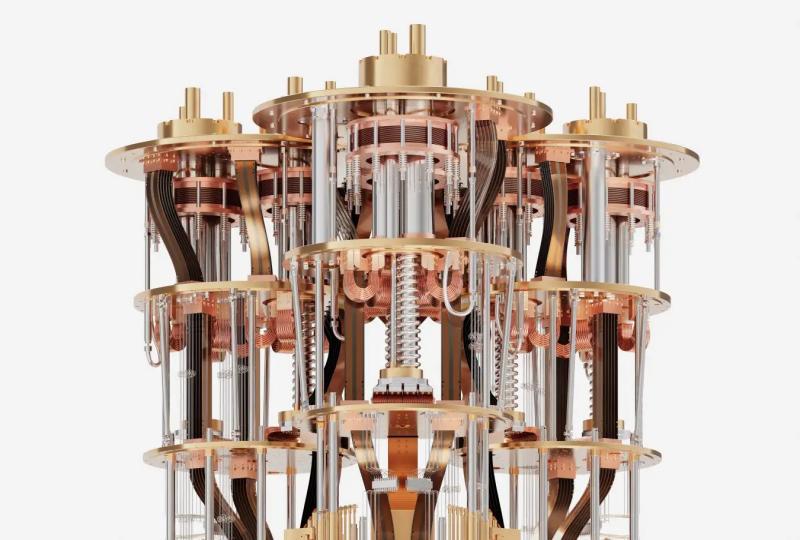
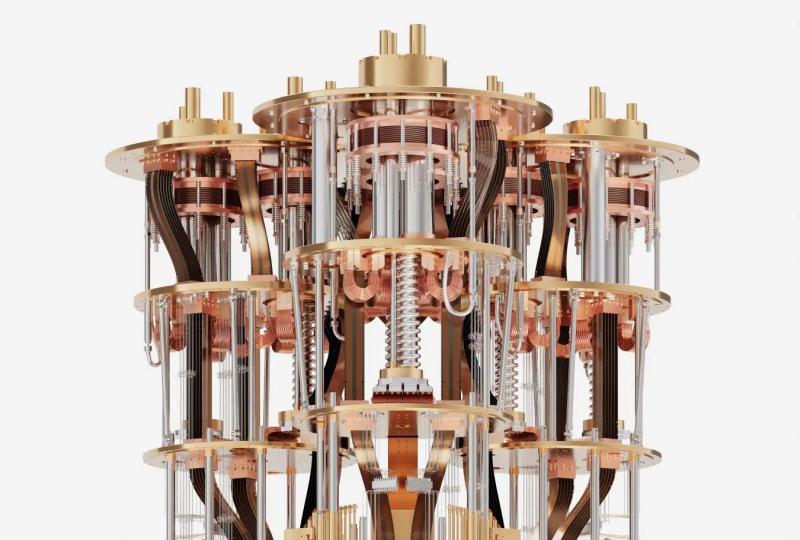
China superconducting quantum computer development is advancing through work across quantum chips, low-temperature engineering, control electronics, software, and application research. A superconducting quantum computer is not simply a processor installed in a laboratory. It is an integrated system in which every hardware and software layer must operate in close coordination.
For research institutions, enterprises, and public-sector organizations evaluating quantum technology, this full-stack perspective is essential. The performance of a quantum processor depends not only on its qubit design, but also on cryogenic stability, microwave control quality, readout precision, calibration workflows, and the ability of software to translate algorithms into reliable physical operations.
SpinQ develops superconducting quantum computing systems with this system-level approach in mind. Its portfolio includes superconducting quantum processing units, quantum control and measurement systems, cryogenic deployment support, software tools, and integrated superconducting quantum computer platforms. Explore SpinQ’s superconducting quantum computers.
What Defines a Superconducting Quantum Computer?
A superconducting quantum computer uses electrical circuits that operate at extremely low temperatures. These circuits contain Josephson junctions, which create nonlinear quantum energy levels that can be used as qubits.
The qubits are controlled with carefully shaped microwave pulses. These signals can prepare a qubit in a desired state, perform single-qubit and two-qubit operations, and support readout procedures that determine the final computational result.
The core principle is relatively straightforward, but the engineering challenge is substantial. Superconducting qubits must be protected from heat, electromagnetic interference, signal noise, vibration, material defects, and unwanted interactions with neighboring qubits. Small deviations in system performance can affect coherence, gate accuracy, and measurement reliability.
This is why superconducting quantum computing is a full-system engineering discipline. The quantum chip, cryogenic platform, measurement electronics, control software, and calibration procedures cannot be developed in isolation.
The Role of China in Superconducting Quantum Computing
China has developed a growing quantum technology ecosystem that includes universities, national laboratories, research institutes, hardware manufacturers, software teams, and application-focused organizations. Within this ecosystem, superconducting quantum computing is an important hardware route because superconducting circuits can be fabricated using processes related to established microfabrication techniques.
The development of China superconducting quantum computer capabilities is relevant to organizations that want to establish local quantum research capacity, explore quantum hardware supply options, or build private quantum-computing environments for long-term research programs.
For many buyers, the decision is not only about qubit count. It also involves system availability, engineering support, delivery scope, software compatibility, experimental flexibility, maintenance planning, and whether the platform can be integrated into an existing laboratory or computing environment.
SpinQ has built its product strategy around these practical requirements. The company offers modular components as well as integrated systems, allowing organizations to assess their requirements at the chip, control, cryogenic, software, or full-system level.
.jpg)
The Quantum Processing Unit
The quantum processing unit, or QPU, is the computational core of a superconducting quantum computer. It contains the superconducting qubits, couplers, resonators, wiring structures, and other elements needed to perform quantum operations.
A QPU is judged by more than the number of qubits it contains. Important considerations include qubit topology, coherence behavior, gate performance, readout capability, fabrication consistency, packaging quality, and suitability for calibration and error-correction research.
Qubit topology affects how efficiently an algorithm can be mapped onto the processor. A system with appropriate connectivity can reduce the number of additional operations needed to move quantum information between qubits. This can be important because each additional operation introduces another potential source of error.
Coherence refers to how long a qubit can retain useful quantum information. Gate fidelity describes how closely an implemented operation matches its intended behavior. Both characteristics influence the practical circuit depth that can be executed before noise becomes dominant.
SpinQ’s QPU C Series is designed for superconducting quantum computing research and system integration. The platform forms part of SpinQ’s broader hardware ecosystem, which connects chip development with control, low-temperature deployment, and software. Learn about SpinQ quantum chip solutions.
.jpg)
Why Cryogenic Engineering Matters
Superconducting qubits operate at milli-kelvin temperatures. Maintaining this environment requires a dilution refrigerator and carefully designed supporting infrastructure.
A cryogenic system does much more than cool a chip. It must manage thermal loads from cables, filters, amplifiers, and other components. It must provide temperature-stage organization, electromagnetic protection, reliable grounding, and a physical environment that reduces disturbance to the quantum processor.
Microwave lines connect room-temperature electronics to the cold quantum chip. These lines must be designed with appropriate attenuation, filtering, thermal anchoring, and signal-routing considerations. The goal is to deliver control pulses accurately while minimizing unwanted heat and noise entering the low-temperature environment.
Readout signals travel in the opposite direction. Because quantum readout signals can be weak, low-noise amplification is often required before the signals reach room-temperature digitization and processing equipment.
Laboratory conditions also matter. Power quality, vibration, electromagnetic interference, room layout, cooling infrastructure, and installation procedures can all affect system operation. Organizations planning a China superconducting quantum computer deployment should therefore evaluate the laboratory environment early, rather than treating it as a final installation detail.
SpinQ’s cryogenic deployment services address this broader infrastructure requirement, including equipment planning, laboratory assessment, installation coordination, and commissioning support. Explore quantum computer cryogenic deployment services.
Quantum Control and Measurement Systems
A superconducting QPU cannot execute quantum algorithms without a precise control and measurement layer. The quantum control and measurement system, commonly referred to as QCM, creates the signals that manipulate qubits and processes the signals used to determine their states.
At a high level, the QCM system must generate synchronized microwave waveforms, distribute clocks and triggers, support readout, and provide feedback capabilities for experiments that require rapid response.
Control quality is central to system performance. If a microwave pulse has the wrong phase, amplitude, frequency, or duration, the gate operation may not produce the intended quantum state. Noise in the signal chain can also contribute to control errors.
Measurement quality is equally important. Readout must distinguish qubit states with sufficient reliability to support experiments, benchmarking, calibration, and error-correction workflows.
As systems scale, synchronization becomes a greater challenge. Multiple channels must maintain consistent timing across a growing number of qubits. Modular control architecture can help organizations expand their experimental capability while maintaining a consistent operating framework.
SpinQ’s QCM system is developed specifically for superconducting qubit control and readout. It supports the signal-generation, synchronization, measurement, and feedback functions needed to connect quantum programs with physical processor operations. Learn more about SpinQ quantum control and measurement systems.
Calibration Is a Continuous Process
Calibration is one of the most important operational requirements in superconducting quantum computing. Qubits and supporting electronics can change over time due to environmental conditions, component behavior, thermal effects, and interactions within the system.
A reliable calibration strategy typically includes frequency tuning, pulse optimization, gate characterization, readout adjustment, crosstalk evaluation, and performance monitoring. These processes must be repeated as system conditions evolve.
For a small number of qubits, manual calibration can be useful for research and training. As processors grow, automated workflows become increasingly important. Automation can help teams monitor parameters, identify drift, update pulse settings, and reduce the amount of time experts spend on repetitive tuning tasks.
Hardware-software co-design plays a major role here. The software layer must understand the physical properties and calibrated parameters of the device. The hardware must provide stable, controllable behavior that allows calibration routines to operate effectively.
This relationship is especially relevant for quantum error correction research. Error-correction experiments require reliable gates, predictable measurements, and stable timing. Calibration does not eliminate all errors, but it helps create the controlled conditions needed to identify, characterize, and manage them.
Software Connects Users to Hardware
A quantum computer becomes useful when researchers and developers can access it through a practical programming and execution environment. The software layer translates quantum circuits into instructions that match the characteristics of the physical hardware.
This can include circuit compilation, gate decomposition, pulse scheduling, hardware configuration, experiment execution, data collection, and result analysis. In advanced workflows, users may also need interfaces for calibration, characterization, error mitigation, and hybrid quantum-classical computing.
SpinQit provides a Python-based framework for quantum programming and supports the connection between users, quantum hardware, simulators, and quantum cloud resources. For organizations developing their own quantum workflows, a unified software environment can help reduce fragmentation between algorithm development and experimental execution.
The ability to work across hardware and simulation environments is particularly useful during early research. Teams can prototype an algorithm in a simulator, assess resource needs, then execute selected experiments on available quantum hardware.
From Individual Modules to Integrated Systems
A China superconducting quantum computer deployment may begin with a specific need: a quantum chip, an RF control system, a dilution refrigerator, or a software interface. However, the long-term success of the project often depends on how well these modules work together.
A QPU with strong design characteristics still requires reliable low-temperature operation. A cryogenic system must be matched with appropriate RF cabling and amplifiers. Control electronics must be synchronized and calibrated for the processor. Software must account for hardware constraints rather than treating all qubits as identical.
This is where integrated platforms can simplify planning. A full-stack system provides a coordinated route from physical hardware to user-level programming, reducing the burden of combining independently sourced components.
SpinQ’s SQC superconducting quantum computer platform brings these layers together, integrating superconducting QPUs, cryogenic systems, QCM electronics, and the SpinQit software framework. The system is intended for academic research and industrial exploration in areas such as materials science, biopharmaceutical research, financial technology, and artificial intelligence.
Selecting a Platform for Long-Term Research
Organizations evaluating superconducting quantum computing should focus on more than a short list of headline specifications. They should ask whether the system can support their actual research or development workflow.
Relevant questions include:
-
Does the platform include a clear integration plan from QPU to software?
-
What laboratory infrastructure is required before installation?
-
How are calibration, maintenance, and upgrades handled?
-
Can researchers access pulse-level controls where needed?
-
Does the system support training for operators and developers?
-
Can the platform evolve as the organization’s quantum program grows?
-
Is there technical support for deployment, commissioning, and continuing operation?
The answers help determine whether a quantum computer can move beyond initial installation and become a durable research capability.
Building Quantum Capability With SpinQ
China superconducting quantum computer technology is increasingly shaped by the ability to combine quantum chip design, precision electronics, low-temperature infrastructure, and usable software into coherent systems.
SpinQ’s full-stack approach is designed to support this requirement. From QPU development and quantum control systems to cryogenic deployment and programming tools, the company provides components and integrated solutions for institutions pursuing practical quantum computing research.
For organizations planning quantum infrastructure, the central task is not simply acquiring a quantum processor. It is building an environment in which the processor, controls, cryogenics, calibration routines, and software can operate together reliably. That integrated perspective provides a stronger foundation for sustained quantum research and future application development.
Featured Content