
Quantum Computer to Buy: What Actually Matters in 2026
2026.06.30 · Blog quantum computer to buy
1.In 2026, what does it mean to “buy” a quantum computer?
In 2026, buying a quantum computer is no longer science fiction, but it is also not the same as purchasing a standard plug-and-play server that you simply install in a rack and forget about.
Instead, what you are really acquiring is a piece of experimental infrastructure that sits at the intersection of research, education, and long-term strategic development.
In practice, most buyers choose between three paths: an on-premises superconducting quantum system designed for advanced research, an education-grade platform built for teaching and training, or a hybrid setup that combines local hardware with cloud access to more powerful quantum processors.
Companies like SpinQuanta operate within this evolving landscape, offering industrial-grade superconducting systems on one end and NMR-based educational platforms on the other, allowing organizations to match the hardware to their actual stage of development rather than to market hype.
2.Start with your next 3–5 years, not the next headline
Before you worry about qubit counts or gate fidelities, it helps to be very honest about what you expect to do with a quantum computer over the next three to five years. That time horizon is long enough to justify serious investment but short enough that you can still plan concretely.
A national lab might want a platform for quantum error correction, benchmarking, and sovereign capability. A university may be focused on running a handful of research projects while teaching hundreds of students. An enterprise R&D team may simply want to test whether quantum makes a dent in their optimization, chemistry, or finance problems.
SpinQuanta’s portfolio reflects these different needs: SPINQ SQC superconducting quantum computers target research labs and industrial users that need full‑stack systems, while its Gemini Mini, Triangulum and other NMR products are built as accessible teaching machines for classrooms and training labs.
3.Pick a platform that fits your role
Superconducting systems for serious R&D
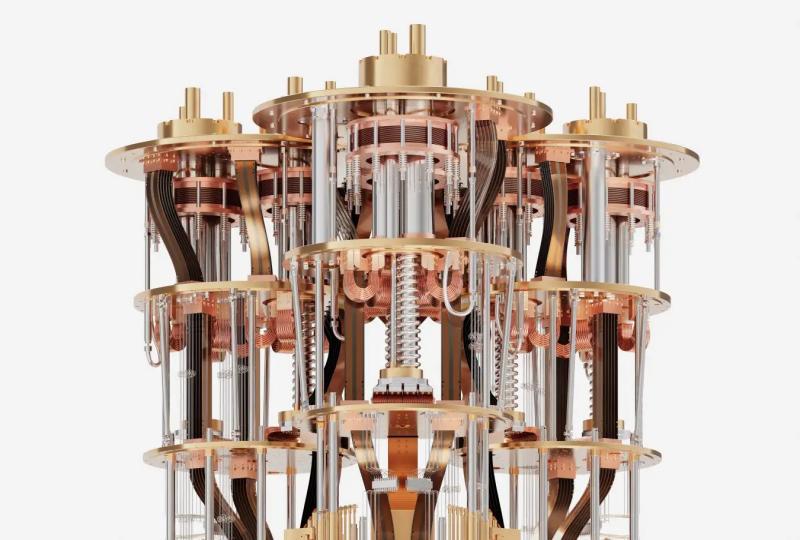
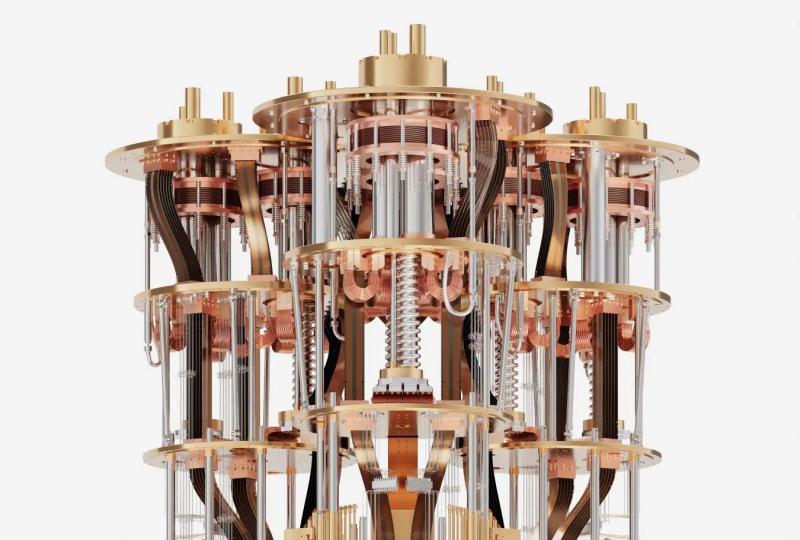
Superconducting quantum computers are one of the most mature platforms in 2026, combining scalable qubit chips, cryogenic infrastructure, and integrated control systems. They are the natural choice if you want to run frontier‑level research, develop algorithms, or integrate quantum into existing high‑performance computing workflows.
SpinQuanta’s SPINQ SQC is a typical example of this class: a superconducting quantum computer that uses Josephson‑junction circuits to realize qubits, supports up to around 100 superconducting qubits, and comes bundled with quantum control and measurement systems plus cryogenic deployment. For institutions that prefer an on‑prem or hybrid setup, a solution like SQC reduces the number of moving pieces you have to integrate by yourself.
Education‑oriented systems for teaching and training
If your priority is to teach quantum computing rather than push hardware limits, a smaller, education‑grade system often makes more sense in 2026. NMR quantum computers, for instance, operate at room temperature, require minimal maintenance, and are designed to be stable enough for repeated lab classes.
SpinQuanta’s NMR line, including the Gemini Mini series and the Triangulum desktop systems, offers two‑ to three‑qubit devices with built‑in interfaces and teaching materials so students can run real quantum experiments without dealing with dilution refrigerators. Many universities and colleges use these machines locally and pair them with cloud access to larger superconducting processors when students are ready for more complex circuits.
4.Decide how close you want the hardware to be
Once you know your main use cases and the type of platform you prefer, the next question is how close you want the hardware to sit to your users.
-
With a cloud‑only approach, your team accesses quantum processors over the internet and pays for usage. This is a low‑commitment way to start and works well for early exploration.
-
With an on‑prem system, such as a SpinQuanta SQC installation, you host the quantum computer in your own facility and integrate it with your local networks, security policies, and workflows.
-
In a hybrid setup, you run a smaller system locally—for training, sensitive experiments, or internal workflows—and rely on external cloud hardware when you need additional capacity or specific processor types.
Cloud‑only is attractive when you are still building your team and exploring use cases. On‑prem starts to make sense when sovereignty, integration with existing tools, or consistent availability becomes important. Hybrid models give you room to grow, which is why many national labs and advanced universities are moving in that direction.
5.Questions that actually matter when you talk to vendors
With your role and deployment model in mind, vendor conversations can be much more concrete. You can ask for straightforward answers instead of generic promises.
On the hardware and performance side, it helps to ask:
-
What does a typical coherence and fidelity profile look like, not just a single best‑case sample?
-
How much automation is there in calibration and daily operation?
-
How long does it take to bring the system from cold start to “ready for experiments”?
-
How easy is it for your team to access low‑level controls when needed?
SpinQuanta’s QCM (Quantum Control & Measurement) system, for example, is designed as a modular RF control platform with FPGA acceleration and built‑in calibration tools, so users can handle qubit measurement and control faster and with less manual tuning.
On the integration side, you want to know:
-
How demanding the cryogenic deployment is in terms of floor space, power, cooling, and vibration.
-
How the system connects to your networks and security stack.
-
Whether the software stack integrates with your existing tools and languages.
Because SpinQuanta delivers complete superconducting solutions—from QPU chips to cryogenic deployment and control systems—it can give fairly specific guidance on site preparation and integration instead of leaving you to coordinate multiple suppliers.
6.Look at the total cost, not just the invoice
A quantum computer to buy in 2026 is closer to a scientific instrument than to a laptop. The list price is only one part of the story; the rest shows up in operation, support, and people.
Entry‑level educational systems, such as SpinQuanta’s NMR quantum computers, typically fall in the tens of thousands of dollars and are designed to be maintenance‑free, which keeps ongoing costs low. Superconducting systems, like the SQC series, sit in the seven‑figure range depending on configuration and service options, and their long‑term cost includes electricity, cooling, maintenance, and staff time.
When you compare offers, it helps to map out a five‑year picture: how much you expect to spend, who will operate the system, and how much useful work you expect to get out of it during that period. A system that is slightly smaller on paper but easier to keep running—thanks to automation, standardized components, and good support—may deliver more real value than a larger, harder‑to‑manage machine.
7.How different buyers move in practice
In reality, organizations rarely jump straight from “no quantum” to a large, fully integrated quantum computer. They usually move in stages.
A national lab might begin with shared or cloud access to superconducting systems to build expertise, then commission an on‑prem SQC installation from SpinQuanta once the team and roadmap are in place. A university might start with NMR desktops like Gemini Mini or Triangulum for lab courses, and later add dedicated access to larger processors through national facilities or partnerships. An enterprise R&D group might stay cloud‑only for several years, running pilot projects and cost‑benefit analyses, before justifying a local system for specific workflows.
Across these cases, the pattern is similar: start with something your people can realistically run and learn from, then expand as your needs and capabilities grow. A provider like SpinQuanta, which covers both education‑grade NMR and industrial‑grade superconducting systems, makes it easier to climb that ladder without constantly switching vendors.
8.Turning “which quantum computer to buy” into a practical question
When you first search “quantum computer to buy,” it can feel like a huge, abstract decision. Once you break it down, the question becomes much more concrete:
-
What do we want to be doing with quantum a few years from now?
-
How close do we want the hardware to be to our users?
-
Which platform (superconducting, NMR education, or a mix) matches that plan?
-
Which vendor can provide not only hardware, but also integration, training, and a roadmap we trust?
If you can answer those in plain language, your shortlist almost writes itself. For many organizations in 2026, that shortlist includes a mix of cloud providers and at least one full‑stack quantum company like SpinQuanta: cloud for breadth, and a SpinQuanta system for local depth and long‑term capability.

Featured Content