
Quantum Computing Stocks: The Complete 2026 Investment Guide
2026.03.06 · Blog quantum computing stock
The year 2026 marks a watershed moment in financial markets as quantum computing transitions from theoretical physics into a rapidly commercializing industry. As classical computing architectures increasingly approach their physical limits, the demand for exponentially greater computational power has made quantum technology the next major frontier. For investors, quantum computing stocks represent a generational wealth-building opportunity characterized by massive upside potential and proportional technological risk.
Over the past year, the market has witnessed unprecedented capital inflows directed toward companies capable of solving complex problems in cryptography, drug discovery, and artificial intelligence. This surge has been driven by both private venture capital and massive public market speculation, creating an environment where early adopters are seeing life-changing returns. However, navigating this complex sector requires a deep understanding of the underlying hardware architectures, from superconducting circuits to room-temperature photonics.
This comprehensive guide will dissect the 2026 quantum stock market landscape. We will analyze the top-performing pure-play quantum computing stocks, evaluate the massive tech giants integrating quantum capabilities into their cloud ecosystems, and explore how specialized hardware providers are building the physical foundation of this revolution. Whether you are an institutional investor or a retail trader, understanding these market dynamics is essential for identifying long-term winners in the quantum era.
Understanding the Quantum Computing Market in 2026
The current quantum computing market is experiencing an extraordinary financial boom fueled by strategic institutional commitments and global macroeconomic trends. A significant catalyst for this explosive growth has been the rapid convergence of quantum processing with artificial intelligence, creating entirely new paradigms for machine learning and data optimization. Furthermore, massive financial institutions have heavily validated the sector's commercial viability. For example, JPMorgan Chase recently unveiled its $1.5 trillion, 10-year Security and Resiliency Initiative, which specifically targets quantum computing as a critical sub-area for direct equity and venture capital investments.
This level of institutional backing has triggered jaw-dropping returns for pure-play quantum computing stocks. Throughout 2025 and into early 2026, specialized quantum companies have posted staggering trailing 12-month gains ranging from 712% to over 5,700%. These figures easily dwarf the returns of traditional technology indices and highlight the speculative premium investors are willing to pay for early market dominance. However, the astronomical growth rates also introduce significant volatility, as many of these companies continue to burn through cash reserves to hit their ambitious technological milestones.
Investors currently face a bifurcated market offering two distinct avenues for capital allocation. On one side are the pure-play quantum stocks—companies entirely dedicated to quantum hardware, software, and networking that offer high-risk, high-reward exposure. On the other side are the mega-cap tech giants, which treat quantum computing as a strategic division within a highly diversified business model. Accurately assessing these stocks requires investors to look beyond simple revenue metrics and evaluate critical engineering milestones, such as qubit coherence times, error correction breakthroughs, and the scalability of their chosen quantum architectures.
Top Pure-Play Quantum Computing Stocks to Watch
Pure-play quantum computing stocks provide the most direct financial exposure to the industry's rapid advancements. These companies are intensely focused on overcoming the engineering bottlenecks associated with commercializing quantum processing units (QPUs).
IonQ Inc. (NYSE: IONQ)
IonQ has firmly established itself as a premier leader in the trapped-ion quantum computing space. By early 2026, the company achieved a massive market capitalization exceeding $12.1 billion, propelled by a 712% surge in its stock price over the trailing twelve months. IonQ's technological approach offers highly stable qubits with exceptional coherence times, making them highly attractive for complex algorithmic processing. To solidify its hardware supply chain, IonQ initiated the acquisition of SkyWater Technology, a semiconductor manufacturing company, granting IonQ complete control over the production of its quantum computer chips. Coupled with strategic acquisitions in satellite quantum technology, IonQ is rapidly consolidating the industry to build a comprehensive quantum platform.
Rigetti Computing Inc. (NASDAQ: RGTI)
Rigetti Computing has been the undisputed performance champion of the quantum stock sector, delivering an astonishing 5,700% return to investors over the past year. Utilizing superconducting qubit technology, Rigetti is aggressively scaling its hardware capabilities. The company has reaffirmed an ambitious development roadmap, aiming to deliver 150+ qubit systems in 2026 and targeting monumental 1,000+ qubit systems by 2027. Rigetti also benefits from deep integrations with major cloud service providers like Amazon Braket and Microsoft Azure Quantum, ensuring broad commercial access to its hardware. Despite its massive upside potential, investors must carefully monitor Rigetti's execution risks as it scales manufacturing operations.
D-Wave Quantum Inc. (NYSE: QBTS)
Taking a completely different architectural approach, D-Wave focuses on quantum annealing, a method specifically tailored for solving complex optimization problems. The company's stock delivered a phenomenal 3,670% return over the past year as market sentiment recognized the immediate commercial value of its hybrid AI and quantum solutions. Unlike gate-model quantum computers that are still fighting error rates, D-Wave's systems are currently being deployed by enterprise clients for supply chain logistics, manufacturing optimization, and advanced financial modeling.
Quantum Computing Inc. (NASDAQ: QUBT)
Quantum Computing Inc. (QCi) has captured massive speculative interest through its innovative room-temperature photonic computing approach. The stock posted gains of over 3,300% as investors recognized the disruptive potential of nanophotonic "entropy computing" systems. Because QUBT's technology does not require the massive, expensive cryogenic dilution refrigerators used by superconducting systems, it promises a much faster path to edge computing integration. While its valuation of over $4 billion remains highly speculative given its modest trailing revenue, the company's focus on AI and cybersecurity optimization makes it a compelling, high-volatility asset.
Pure-Play Quantum Stocks Performance Summary
| Company Name | Ticker Symbol | Core Quantum Technology | 1-Year Stock Return | Market Focus |
| IonQ Inc. | IONQ | Trapped-Ion | 7.12 | Commercial hardware & quantum networking |
| Rigetti Computing | RGTI | Superconducting | 5700% | High-qubit scaling & cloud integration |
| D-Wave Quantum | QBTS | Quantum Annealing | 3670% | Enterprise optimization & AI hybrid models |
| Quantum Computing Inc. | QUBT | Photonic/Entropy | 3324% | Room-temperature sensing & computing |
Tech Giants Leading the Quantum Revolution
While pure-play companies offer explosive growth potential, global tech behemoths provide a more stable, diversified route for quantum computing investors. These mega-cap companies possess the immense capital, existing cloud infrastructure, and top-tier research talent required to fund decades of quantum development.
Alphabet Inc. (NASDAQ: GOOGL)
Alphabet's Google Quantum AI division remains one of the most historically significant players in the sector, having famously achieved "quantum supremacy" in 2019 with its Sycamore processor. In 2026, the company continues to push the boundaries of superconducting qubit research with its next-generation Willow processor. Google's primary advantage lies in its ability to directly integrate quantum error correction breakthroughs into its massive existing AI ecosystem. For conservative investors, Alphabet represents a secure asset where quantum computing serves as a long-term, high-margin growth catalyst.
International Business Machines (NYSE: IBM)
IBM operates arguably the most mature and extensive quantum ecosystem in the world through its IBM Quantum initiative. The company leads the industry in delivering a transparent, multi-year superconducting development roadmap and has made unparalleled strides in error mitigation. Furthermore, IBM's dedication to building an open-source quantum software community has created a massive user base of developers and researchers actively programming on IBM hardware. This deep market penetration makes IBM a foundational pillar of the commercial quantum landscape.
Microsoft Corp. (NASDAQ: MSFT)
Microsoft has chosen the most technologically challenging, yet potentially rewarding, path by focusing on topological qubits. If successful, topological qubits will offer vastly superior stability and inherently lower error rates compared to competing architectures. In the meantime, Microsoft serves as a critical industry aggregator through its Azure Quantum cloud platform, which allows enterprise clients to access hardware from multiple different quantum vendors.
The Role of SpinQ in the Global Quantum Ecosystem
While publicly traded giants dominate the financial headlines, the physical realization of the quantum computing market relies heavily on private hardware innovators. Understanding this hardware supply chain is vital for investors, as the underlying infrastructure dictates the commercial viability of the entire sector. A premier example of this foundational innovation is SpinQ, a leading enterprise that provides both industrial-grade and educational quantum systems.
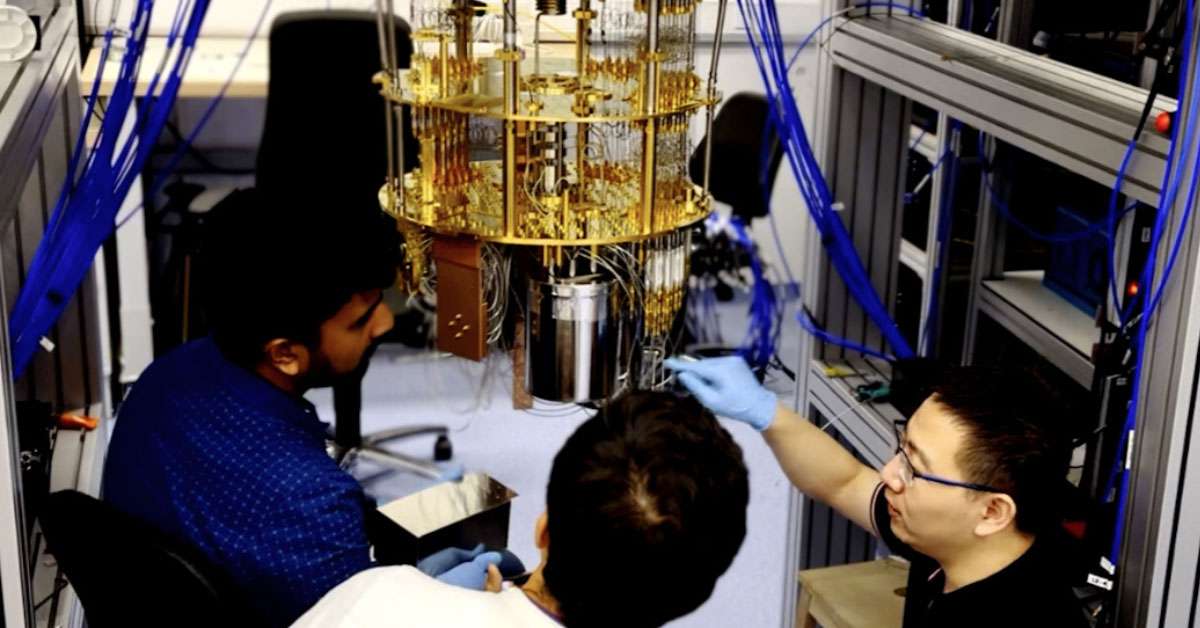
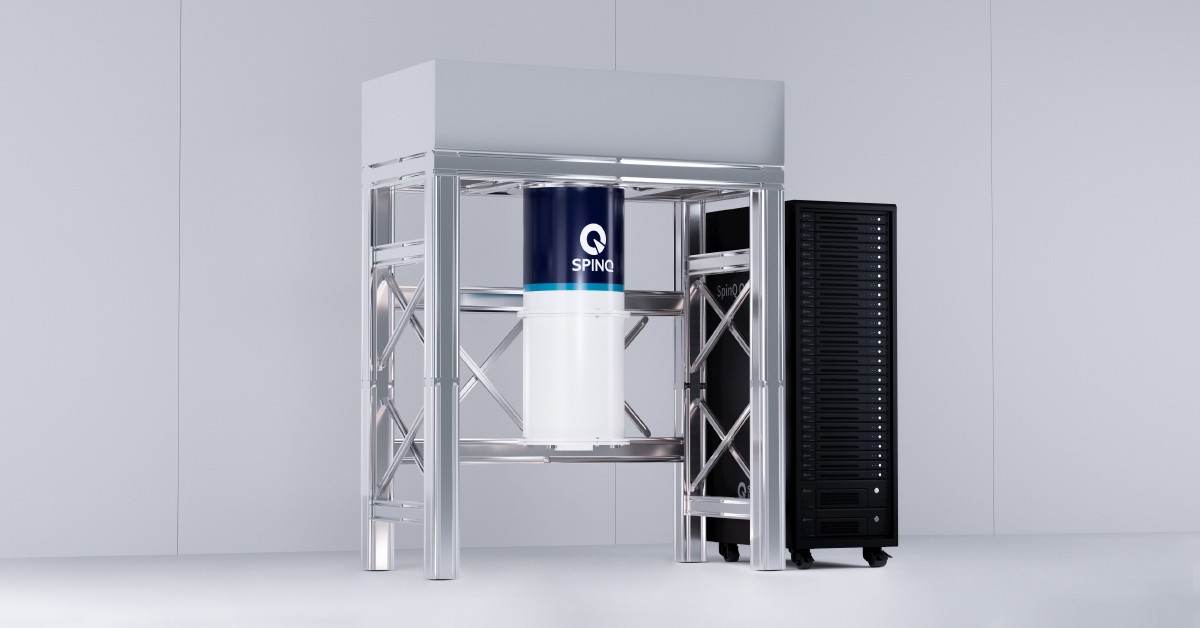
At the enterprise level, SpinQ develops comprehensive Superconducting Quantum Computers designed for high-fidelity operations and industrial scalability. By leveraging advanced circuit design and premium material platforms, SpinQ's systems achieve exceptional coherence times, which are absolutely critical for executing complex algorithms in quantum chemistry and financial technology. Rather than just providing bare chips, SpinQ delivers turnkey solutions that encompass quantum control electronics, dilution refrigeration, and the SpinQit programming framework. This high level of hardware-software integration provides the reliable computational power that global research institutions desperately need to drive the industry forward.
Equally important to the sector's long-term growth is the cultivation of a skilled quantum workforce. SpinQ directly addresses this bottleneck by democratizing access to quantum hardware through its desktop NMR quantum computers. Devices like the SPINQ Triangulum provide a 3-qubit, maintenance-free system that allows university students and researchers to perform hands-on quantum programming and execute famous algorithms like Grover’s and Deutsch’s. By lowering the barrier to entry for quantum education, SpinQ is actively training the next generation of engineers that publicly traded companies will eventually hire. Investors seeking to understand the fundamental physics driving these machines can explore SpinQ's detailed guide on How Does a Quantum Computer Work? on the official https://www.spinquanta.com/ website.
Key Factors to Consider Before Investing in 2026
Allocating capital toward quantum computing stocks in 2026 carries unique risks that differ substantially from traditional software or hardware investments. Investors must look past the hype and evaluate several critical business and technological factors to ensure long-term portfolio stability.
First and foremost is the issue of cash burn and shareholder dilution. Developing quantum processing units is an incredibly capital-intensive endeavor that requires massive investments in cryogenics, specialized fabrication facilities, and PhD-level talent. Many pure-play quantum stocks generate negligible near-term revenue, forcing them to routinely raise capital through secondary stock offerings that dilute existing shareholders.
Secondly, investors must prioritize the quality of qubits over the sheer quantity. While press releases frequently tout the total number of physical qubits a system possesses, the true metric of success is achieving fault-tolerant, error-corrected logical qubits. A company with 50 highly stable, high-fidelity qubits is infinitely more commercially valuable than a company with 1,000 highly noisy, unstable qubits. Monitoring a company's progress in algorithmic coherence times will provide the best indicator of its future commercial viability.
Finally, macroeconomic and geopolitical dynamics play an outsized role in this sector. Because quantum computing poses a theoretical threat to modern cryptographic security, it is treated as a matter of critical national security. Sudden changes in export controls, government subsidies, or military contracts can instantly alter a quantum company's financial trajectory.
Frequently Asked Questions (FAQs) About Quantum Computing Stocks
What is a pure-play quantum computing stock?
A pure-play quantum computing stock belongs to a company whose primary, and often sole, business objective is the development of quantum hardware, software, or networking systems. Unlike diversified tech giants that have minor quantum divisions, pure-play companies rely entirely on the success of the quantum industry for their revenue. Examples include IonQ, Rigetti Computing, and D-Wave.
Why did quantum computing stocks surge so aggressively heading into 2026?
The massive surge was driven by a combination of technological breakthroughs in error correction, the rapid integration of quantum computing with artificial intelligence, and massive institutional investments. Initiatives like JPMorgan's $1.5 trillion security and resiliency program signaled to Wall Street that quantum technology had shifted from a research experiment to a critical enterprise necessity.
Which quantum computing architecture is the best investment?
Currently, there is no single "winning" architecture. Superconducting qubits (used by Rigetti and IBM) offer excellent scalability and speed but require extreme cryogenic cooling. Trapped-ion systems (used by IonQ) offer high stability and connectivity but face scaling challenges. Photonic systems (used by QCi) operate at room temperature but are difficult to engineer into gate-based systems. A diversified investment approach is highly recommended.
Are there ETFs available for quantum computing?
Yes, investors looking to mitigate the extreme volatility of individual pure-play stocks can utilize Exchange Traded Funds (ETFs) that focus on next-generation computing. These funds typically blend pure-play quantum companies with legacy tech giants and AI infrastructure stocks, providing a balanced exposure to the broader computational revolution.
How does a quantum computer fundamentally differ from a classical computer?
While classical computers process data in binary bits (0s or 1s), quantum computers use quantum bits (qubits) that can exist in a state of superposition, representing both 0 and 1 simultaneously. This allows them to evaluate multiple complex possibilities at once, making them exponentially faster at specific mathematical tasks. For a complete technical breakdown, visit SpinQ's guide on How Does a Quantum Computer Work?.
Featured Content