
Quantum Computers: The Revolutionary Technology Transforming Computing in 2026
2026.02.28 · Blog quantum computers
Quantum computers represent one of the most transformative technological breakthroughs of the 21st century, leveraging the principles of quantum mechanics to solve problems that would take classical computers thousands of years to compute. As of 2026, the global quantum computing market has exceeded $10 billion, with industry leaders racing to achieve practical quantum advantage across multiple sectors. Unlike traditional computers that process information in binary bits (0s and 1s), quantum computers use quantum bits, or qubits, which can exist in multiple states simultaneously through a phenomenon called superposition, enabling exponentially greater computational power for specific problem classes.
Understanding Quantum Computing Fundamentals
Quantum computing operates on fundamentally different principles than classical computing, harnessing three key quantum mechanical phenomena: superposition, entanglement, and interference. These properties allow quantum computers to process vast amounts of information in parallel, making them exceptionally suited for optimization problems, molecular simulations, and complex pattern recognition tasks.
Qubits serve as the basic unit of quantum information, analogous to classical bits but with quantum properties. While a classical bit must be either 0 or 1, a qubit can exist in a superposition of both states simultaneously until measured. This capability enables a quantum computer with just 300 qubits to theoretically represent more states than there are atoms in the observable universe.
Quantum entanglement creates correlations between qubits that persist regardless of distance, allowing coordinated computational operations across the quantum system. When qubits become entangled, measuring one qubit instantly affects its entangled partners, enabling complex quantum algorithms that would be impossible with classical systems.
Quantum interference allows quantum algorithms to amplify correct answers while canceling out incorrect ones, effectively guiding the computation toward the desired solution. This property is fundamental to quantum algorithms like Shor's algorithm for factoring large numbers and Grover's algorithm for database searching.
Types of Quantum Computing Technologies
The quantum computing landscape features multiple competing hardware platforms, each with distinct advantages and challenges. The following table compares the major quantum computing technologies available in 2026:
| Technology Type | Operating Temperature | Qubit Count (2026) | Key Advantages | Primary Applications | Leading Companies |
| Superconducting | Near absolute zero (~0.01K) | 100-1,386 qubits | Fast gate operations, high fidelity, scalable | Research, optimization, AI | IBM, Google, SpinQ |
| Nuclear Magnetic Resonance (NMR) | Room temperature | 2-8 qubits | Stable, maintenance-free, affordable | Education, algorithm development | SpinQ, universities |
| Trapped Ion | ~1 Kelvin | 36-100+ qubits | Long coherence times, high precision | Drug discovery, simulations | IonQ, Quantinuum |
| Neutral Atom | Near absolute zero | 256+ qubits | Natural connectivity, scalable | Scientific computing, optimization | Atom Computing |
| Photonic | Room temperature | Varies | No cryogenics needed, network-ready | Quantum communication, distributed computing | Xanadu, PsiQuantum, Photonic |
Superconducting Quantum Computers
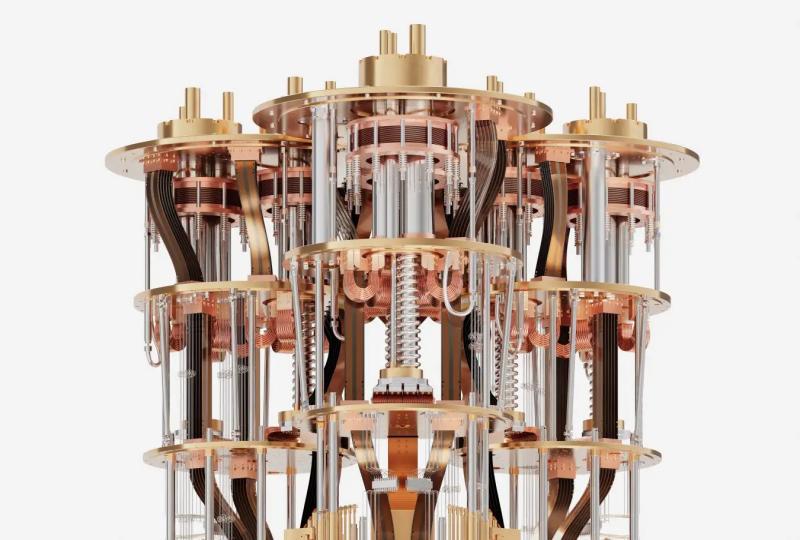
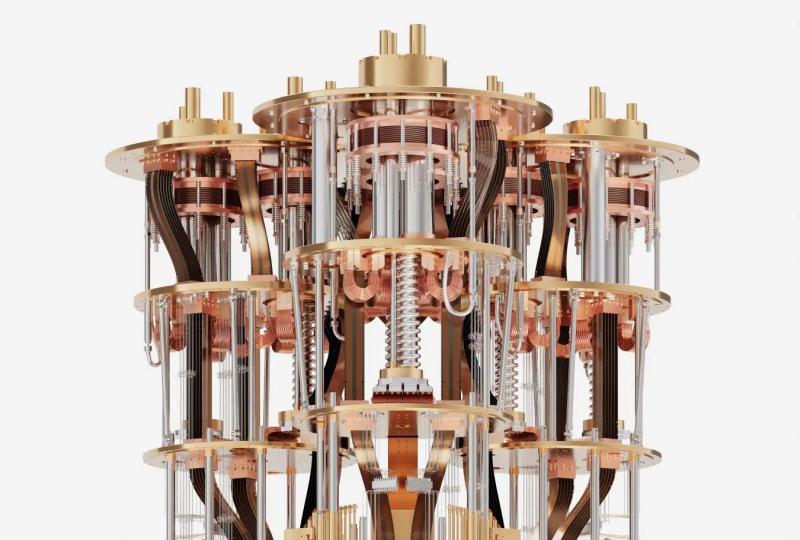
Superconducting quantum computers leverage superconducting circuits with Josephson junctions to create qubits that operate at ultra-low temperatures. IBM's 2026 roadmap targets the Kookaburra processor with logical qubits and quantum memory, while their 2028 Starling processor aims for 200 logical qubits from approximately 10,000 physical qubits. SpinQ develops modular superconducting quantum processing units (QPUs) paired with comprehensive measurement and control systems, enabling precise qubit manipulation for complex quantum tasks. The company expects to deliver a 100-qubit quantum computer by late 2026.
NMR Quantum Computing Platforms
NMR quantum computers use the spin states of atomic nuclei as qubits, controlled through carefully calibrated radio frequency pulses. SpinQ's NMR systems, including the Gemini and Triangulum series, provide reliable, maintenance-free quantum computing platforms operating at room temperature—ideal for education, research, and algorithm development. The NMR approach offers high stability and long coherence times relative to some other qubit types, without requiring complex cryogenic infrastructure. SpinQ's roadmap includes a 6-qubit NMR platform by 2027, priced under $100,000, enabling advanced undergraduate programs and small research teams to explore quantum algorithms beyond basic demonstrations.
Trapped Ion and Neutral Atom Systems
Trapped ion quantum computers achieved significant milestones in 2025, with IonQ and Ansys running a medical device simulation on IonQ's 36-qubit computer that outperformed classical high-performance computing by 12 percent—one of the first documented cases of practical quantum advantage. IonQ projects systems with over 2 million physical qubits by 2030. Atom Computing's neutral atom platform has attracted DARPA attention, with the company demonstrating utility-scale quantum operations and planning substantial scaling by 2026.
Real-World Quantum Computing Applications
Quantum computers are transitioning from theoretical promise to practical utility across multiple industries. The technology excels at solving certain complex problems with many variables, from molecular simulation to energy infrastructure management and financial market modeling.
Drug Discovery and Healthcare
Quantum computing enables unprecedented molecular simulation capabilities essential for pharmaceutical research. By accurately modeling protein folding, molecular interactions, and drug-receptor binding at the quantum level, researchers can identify promising drug candidates more efficiently than classical methods. Quantum computers can simulate photosynthesis mechanisms in plants and bacteria, helping researchers explore energy efficiency at the molecular level, and model superconductivity that may lead to revolutionary developments in energy transmission.
SpinQ's systems have demonstrated practical capabilities in chemical and molecular simulation through implementations of the Variational Quantum Eigensolver (VQE) algorithm. In collaboration with BGI Genomics, SpinQ successfully applied quantum computing to genome assembly challenges, converting complex gene sequencing problems into combinatorial optimization tasks that leverage quantum superposition and entanglement.
Financial Services and Optimization
Financial institutions are exploring quantum computing for portfolio optimization, risk analysis, fraud detection, and algorithmic trading. Canadian company 1QBit partnered with British Columbia's utility provider to explore quantum-enhanced approaches for load balancing and energy distribution in smart grids. Quantum algorithms can optimize large-scale systems involving numerous variables—problems that grow exponentially complex for classical computers but remain tractable for quantum systems.
Artificial Intelligence and Machine Learning
Quantum computers have the potential to significantly accelerate machine learning model training and enhance artificial intelligence capabilities. The ability to process and analyze vast amounts of data in parallel can lead to faster training times for AI models, improving accuracy in natural language processing, image recognition, and predictive analytics. Companies like SpinQ are exploring how quantum computing can improve AI models, enabling breakthroughs in everything from autonomous driving to healthcare diagnostics.
Cybersecurity and Cryptography
Quantum computing presents both opportunities and challenges for cybersecurity. Shor's algorithm, demonstrated theoretically in the 1990s, could factor large numbers exponentially faster than classical algorithms, threatening current public-key cryptographic systems. However, forecasting research suggests quantum devices capable of factoring RSA-2048 are unlikely to exist before 2039. Simultaneously, quantum computing drives development of quantum-resistant cryptographic methods and quantum key distribution systems for ultra-secure communications.
Materials Science and Energy Systems
Quantum computers play a pivotal role in advancing materials science, critical for developing new materials for batteries, solar panels, and energy solutions. By simulating atomic and molecular behavior at the quantum level, researchers can discover materials with specific properties—such as more efficient energy storage or advanced superconductivity. Companies like Microsoft are exploring quantum computing to create better batteries and optimize renewable energy systems, potentially reducing global dependence on fossil fuels.
Quantum Computing Industry Landscape 2026
The quantum computing industry has experienced explosive growth, with major corporations expanding quantum initiatives and startups securing substantial funding. The following chart illustrates the progression of qubit counts from leading quantum computing companies:
Quantum Computing Progress: Qubit Milestones
| Year | Company | System | Qubit Count | Technology Type | Key Achievement |
| 2023 | IBM | Condor | 1,121 | Superconducting | Largest single-chip processor |
| 2025 | IBM | Condor | 1,121 | Superconducting | Sustained operations |
| 2025 | Fujitsu/RIKEN | Unnamed | 256 | Superconducting | 4x larger than 2023 system |
| 2025 | IonQ | Unnamed | 36 | Trapped Ion | First documented practical advantage |
| 2026 | IBM | Kookaburra (planned) | 1,386 | Superconducting | Multi-chip with quantum links |
| 2026 | Fujitsu/RIKEN | Planned | 1,000 | Superconducting | Next-generation system |
| 2026 | SpinQ | Planned | 100 | Superconducting | Commercial delivery expected |
| 2028 | IBM | Starling (roadmap) | 200 logical | Superconducting | From ~10,000 physical qubits |
| 2030 | IonQ | Projected | 2,000,000 physical | Trapped Ion | Long-term scaling target |
Strategic Partnerships and Investment
Major corporations continue expanding their quantum initiatives through strategic partnerships. The IBM-Cisco partnership targets networked distributed quantum infrastructure by 2030. Google announced the Quantum Echoes algorithm breakthrough, demonstrating the first-ever verifiable quantum advantage running the out-of-order time correlator algorithm, which runs 13,000 times faster on Willow than on classical supercomputers.
PsiQuantum, with over $1.3 billion in funding and focused on photonic quantum computers, was anticipated to pursue a 2026 public offering. Strategic alliances between hardware developers, cloud providers, and industry-specific application companies have created integrated platforms combining quantum processors with classical co-processing units. These hybrid quantum-classical architectures represent the realistic path to near-term practical quantum systems.
SpinQ: Democratizing Quantum Computing Access
SpinQ Technology, founded in 2018 and based in Shenzhen, China, has emerged as a leading innovator in making quantum computing accessible through two main product lines. The company offers small-scale nuclear magnetic resonance (NMR) quantum computers with approximately three qubits for educational use, and industrial-grade superconducting quantum computers with up to 20 qubits currently, scaling to 100 qubits by late 2026.
SpinQ's Comprehensive Product Ecosystem
SpinQ provides a full-stack product ecosystem from QPUs and QPU EDA to quantum control and measurement systems, offering cost-effective modular units, integrated systems, and complete solutions. The company's offerings include:
Educational NMR Quantum Computers: SpinQ's Gemini Mini, Gemini, and Triangulum series operate at room temperature without complex cryogenic requirements. The Gemini Mini is an entry-level two-qubit system priced around $8,104, while more advanced models offer increased complexity and coherence times. These systems are characterized by low cost, maintenance-free operation, and high stability, offering complete products and services for quantum computing research and teaching.
Superconducting Quantum Computers: SpinQ develops modular superconducting QPUs with comprehensive measurement and control systems that enable precise manipulation of qubits for complex quantum tasks. The company expects to deliver a 100-qubit quantum computer by the end of 2026.
Quantum Cloud Platform: The SPINQ Cloud links various real quantum computing systems, featuring quantum computers with 2, 3, 5, and 8 qubits, and a high-performance simulation platform with up to 24 qubits. The platform supports graphical quantum circuit design, online QASM programming, user-defined quantum gates, and a variety of built-in typical quantum algorithms to meet different needs of scientific research, education, and enthusiasts.
Software and Programming Framework: SpinQ offers quantum programming based on Python, providing users with rich quantum algorithm interfaces, cross-platform execution support, and connections with quantum computers, quantum simulators, and the SpinQ cloud platform. The company also provides QPU EDA, a highly automated superconducting QPU design software that generates quantum devices through parameterization and automatic wiring algorithms.
Global Reach and Applications
SpinQ has sold products—including educational quantum computers, superconducting quantum computers, chips, quantum measurement and control systems, and application software—to over 40 countries. The company provides comprehensive solutions tailored for quantum education (universities, K12, science popularization), fintech-based applications, biomedical research, and AI-based solutions. By combining in-depth theoretical teaching with practical exercises, SpinQ offers customized classroom setups, professional teaching teams, and educational quantum computing equipment to help teachers and students master essential future skills.
Technical Challenges and Future Developments
Despite significant progress, quantum computing faces substantial technical challenges. Six major trends dominate the 2026 quantum computing landscape: increased experimentation with logical qubits as error correction matures; development of specialized hardware and software for specific problem classes; increased networking of noisy intermediate-scale quantum devices; additional layers of software abstraction facilitating easier quantum programming; expanded workforce development tools; and continuous improvement in physical qubit performance.
Error Correction and Fault Tolerance
Quantum computers struggle because their qubits are incredibly easy to disrupt, especially during calculations—a phenomenon known as decoherence. Recent research has focused on developing fault-tolerant algorithms that can correct for this "noise" or operate beyond its reach. IBM achieved a 10x speedup in quantum error correction (QEC) decoding, one year ahead of schedule. Microsoft and Quantinuum figured out a way to check qubit errors without altering a quantum computer's environment, signaling a new era in quantum computing.
Quantinuum's H2 processor, a 56-qubit fully connected architecture, achieved quantum volume of 2^25 (33.5 million) and became the first quantum computer to reach Microsoft's Level 2 Resilient phase, producing logical qubits with error rates 800x lower than physical rates using just 30 physical qubits to create four logical qubits. Proof-of-concept fault-tolerant computation based on superconductor technology is estimated to be unlikely (less than 5% confidence) before 2026, with substantial scaling expected in subsequent years.
Quantum Advantage Timeline
In 2026, quantum computers are reaching new levels of capability, with the first fault-tolerant quantum computer potentially unveiled before year end. IBM targets demonstrating scientific quantum advantage by 2026 and fault-tolerant modules by 2027, while Google aims for error-corrected quantum computers by 2029. The industry expects practical quantum advantage in specific applications by 2030, with IBM's roadmap extending to 2033, targeting quantum computers capable of executing 1 billion gates on up to 2,000 qubits.
Leading quantum and classical methods are currently neck-and-neck in ways the research community never expected to see so soon. The quantum computing field is transitioning from the NISQ (Noisy Intermediate-Scale Quantum) era toward fault-tolerant quantum computing, with hybrid quantum-classical systems providing the most realistic path to near-term practical applications.
Scalability and System Integration
Scaling quantum computers from hundreds to millions of qubits presents significant outstanding quantum hardware, fabrication, software architecture, and algorithmic challenges. Many proposals to scale quantum technology rely on modular or distributed designs wherein individual quantum processors, called nodes, are linked together to form multinode quantum computers (MNQC). Superconducting quantum systems with optical interconnects show promise, though internode gates may be two to three orders of magnitude noisier and slower than local operations.
Networking neutral-atom qubits through nanofiber-based approaches offers another pathway for multiprocessor fault-tolerant quantum computers. SpinQ's miniaturization and portability initiatives deliver real quantum capabilities in compact form factors, bringing quantum computing into classrooms and labs outside specialized facilities. The company's room-temperature NMR devices operate stably without cryogenic cooling, reducing overhead and complexity compared to superconducting systems.
Quantum Computing Market Outlook
The quantum computing market is experiencing rapid expansion across multiple segments. Short-term opportunities (2025-2026) include low-risk, high-likelihood success areas such as quantum cloud services, NMR education systems, and entry-level hardware. The NMR quantum computing platform market plays a specialized role within the global quantum ecosystem, serving educational institutions and research laboratories seeking affordable, accessible quantum computing experience.
Medium-term goals (2028-2030) focus on achieving practical quantum advantage in specific applications, with substantial hardware scaling and improved error correction. Long-term vision (2030+) extends toward universal fault-tolerant quantum computing capable of solving previously intractable problems across chemistry, optimization, machine learning, and fundamental physics. The integration of quantum systems with classical high-performance computing and AI accelerators will create powerful hybrid computational ecosystems that leverage the strengths of both paradigms.
Investment opportunities span quantum hardware manufacturers, software and algorithm developers, quantum cloud service providers, application-specific solutions, and quantum education platforms. Companies like SpinQ are positioned at the intersection of these opportunities, providing accessible quantum computing hardware, comprehensive software platforms, and specialized solutions for education, research, and industrial applications.
Conclusion
Quantum computers represent a paradigm shift in computational capability, leveraging quantum mechanical principles to solve problems beyond the reach of classical systems. As of 2026, the technology has transitioned from theoretical promise to early practical applications, with companies like IBM, Google, IonQ, and SpinQ driving innovation across hardware platforms, software ecosystems, and real-world use cases.
SpinQ's commitment to democratizing quantum computing through accessible NMR educational systems and scalable superconducting platforms positions the company as a key player in expanding quantum literacy and accelerating practical adoption. With the SPINQ Cloud platform connecting diverse quantum computing resources and comprehensive software tools, researchers, educators, and industry professionals can explore quantum algorithms and develop applications without requiring specialized facilities.
The path to fault-tolerant, utility-scale quantum computing involves overcoming significant technical challenges in error correction, qubit coherence, and system scaling. However, the combined efforts of industry leaders, research institutions, and innovative companies suggest that quantum computing will deliver transformative impact across drug discovery, financial optimization, artificial intelligence, materials science, and fundamental physics within the coming decade. For organizations seeking to prepare for the quantum future, engagement with accessible platforms like those offered by SpinQ provides essential hands-on experience with this revolutionary technology.
Featured Content