
Quantum Computing Meets High-Performance Computing: The New Era of Quantum HPC
2026.03.13 · Blog quantum computing
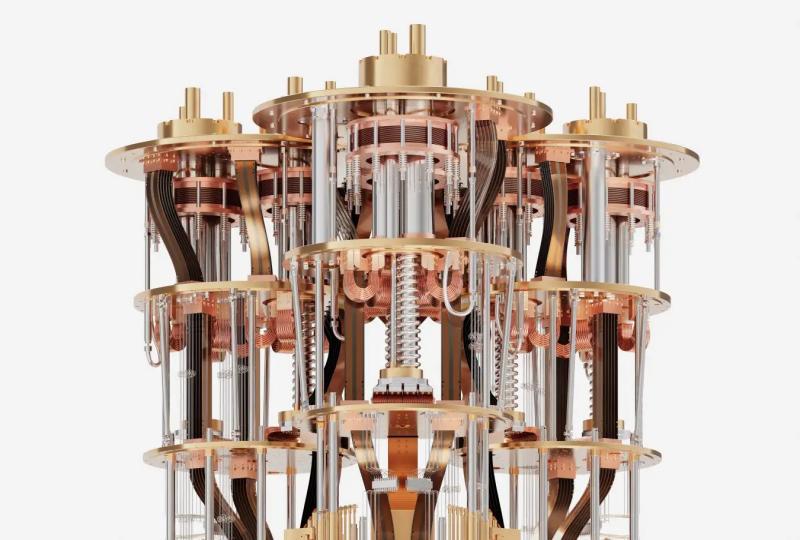
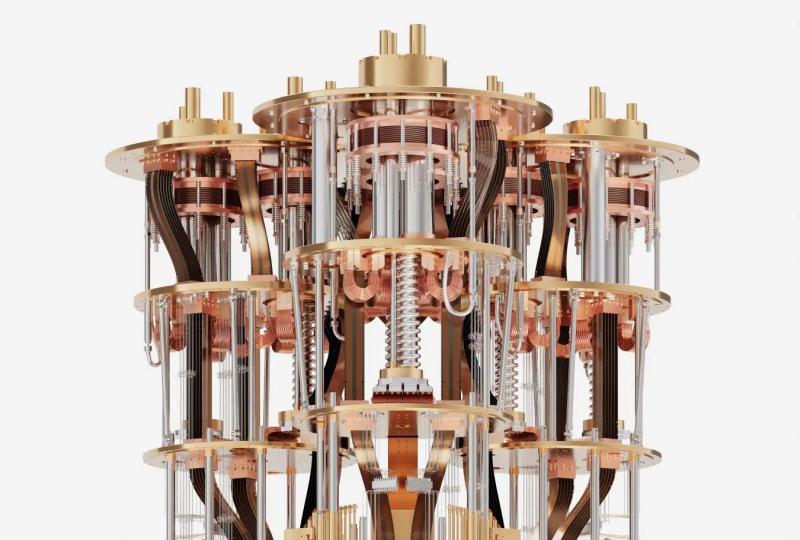
Quantum computing is no longer confined to physics laboratories — it is actively reshaping the landscape of high-performance computing (HPC) and becoming one of the most transformative technologies of the 21st century. As of 2025–2026, quantum computing has entered a pivotal transition phase, moving from theoretical promise to tangible commercial and scientific impact, fundamentally augmenting what classical supercomputers can achieve.
What Is Quantum High-Performance Computing?
High-performance computing (HPC) traditionally relies on massive parallelism, high throughput, and low latency — thousands of CPU/GPU cores processing enormous datasets simultaneously. Quantum computing introduces a radically different computational paradigm: quantum bits (qubits) exploit superposition and entanglement to encode and process multiple states at once, offering an exponential leap in computational capacity for specific problem classes.
Quantum HPC is not a replacement for classical supercomputers — it is a powerful augmentation. The convergence of HPC and quantum technologies is expected to enable solutions to previously intractable problems, forming what researchers now call a quantum-accelerated HPC ecosystem. Experts from academia, industry, and national laboratories are actively developing middleware, algorithms, and decomposition strategies to integrate quantum processors into existing HPC infrastructures without reinventing established tools.
2025–2026 Breakthrough Milestones
The pace of quantum computing advancement has accelerated dramatically. Here are the most significant developments shaping quantum HPC today:
-
Google Willow Chip (2025): Google's 105-qubit superconducting processor demonstrated exponential error reduction as qubit counts increased — completing a benchmark calculation in ~5 minutes that would require a classical supercomputer 10251025 years to perform.
-
Google Quantum Echoes Algorithm: Google's 65-qubit processor ran a complex physics simulation 13,000 times faster than the Frontier supercomputer, the world's fastest classical machine — a landmark demonstration of verifiable quantum advantage.
-
IonQ + Ansys Medical Simulation (March 2025): IonQ's 36-qubit computer outperformed classical HPC by 12% in a real medical device simulation, one of the first documented cases of practical quantum advantage in a real-world application.
-
Fujitsu + RIKEN (April 2025): Announced a 256-qubit superconducting quantum computer — four times larger than their 2023 system — with a 1,000-qubit machine planned for 2026.
-
Nvidia NVQLink (SC25): Nvidia introduced NVQLink, linking quantum systems to GPU supercomputers to tackle quantum error correction with microsecond latency and hundreds of gigabits per second throughput, with adoption at over a dozen national labs across the U.S., Asia, and Europe.
-
Microsoft Majorana 1 Chip: Microsoft launched a chip using a Topological Core architecture, creating more stable qubits through a novel state of matter called topological superconductors.
HPC vs. Quantum Computing: A Side-by-Side View
Understanding the differences — and the synergy — between classical HPC and quantum computing is essential for researchers, engineers, and decision-makers.
| Feature | Classical HPC | Quantum Computing |
| Processing Units | CPUs / GPUs | Qubits |
| Parallelism | Thousands of cores | Exponential (in theory) |
| Technology Maturity | Mature and scalable | Rapidly evolving (NISQ era) |
| Core Strengths | AI training, big data, simulations | Optimization, chemistry, cryptography |
| Energy Profile | Very high power consumption | Potentially more energy-efficient |
| Error Rates | Extremely low | Still being reduced via error correction |
| Integration Path | Standalone supercomputers | Hybrid quantum-classical architectures |
| Development Direction | More nodes, better GPUs | Fault tolerance, logical qubit scaling |
Key Application Domains for Quantum HPC
Quantum computing is poised to deliver the greatest near-term impact in domains where classical computers hit fundamental limits:
-
Quantum Chemistry & Materials Science: Simulating molecular interactions at atomic resolution for drug discovery and new material design — problems involving strongly interacting electrons appear closest to quantum advantage.
-
Combinatorial Optimization: Solving routing, scheduling, and logistics problems — quantum optimization algorithms can tackle constraint-heavy problems that are NP-hard for classical machines.
-
Financial Modeling: Portfolio optimization, risk management, fraud detection, and option pricing benefit from quantum's ability to model large-scale complex systems with high parallelism.
-
Genomics & Bioinformatics: Quantum algorithms like VQE (Variational Quantum Eigensolver) have already been used to solve genome assembly challenges that bottleneck classical HPC pipelines.
-
Artificial Intelligence & Machine Learning: Hybrid quantum-AI systems are accelerating optimization, quantum neural networks, and model training — with AI also being used in return to improve quantum error mitigation.
-
Cryptography & Cybersecurity: Quantum algorithms threaten current encryption, while also enabling quantum-safe communication protocols.
The Hybrid Quantum-Classical Architecture
The realistic near-term path to practical quantum computing runs through hybrid architectures — systems that combine quantum processors with classical HPC resources. Rather than a pure quantum machine handling every task, hybrid systems delegate specific problem sub-components to quantum processors (QPUs) while classical CPUs/GPUs manage pre- and post-processing.
This approach is reflected in major industry roadmaps. IBM's Quantum Starling system, targeted for 2029, will feature 200 logical qubits capable of executing 100 million error-corrected operations, eventually scaling to quantum-centric supercomputers with 100,000 qubits by 2033. Nvidia's CUDA-Q platform allows users to orchestrate quantum devices and AI supercomputers together, managing hybrid quantum-classical workflows in a unified environment. For researchers and developers, desktop quantum computers — like those offered by SpinQ — now allow local prototyping of these hybrid workflows before deploying them to cloud-based quantum resources.
SpinQ: Full-Stack Quantum Computing for the HPC Era
SpinQ Technology is a Shenzhen-based quantum computing company founded in 2018, recognized globally as one of the leading one-stop solution providers for the industrialization and popularization of quantum computing. SpinQ's product ecosystem spans hardware, software, cloud platforms, and educational solutions — delivering the full stack needed for both research-grade HPC integration and hands-on quantum education.
SpinQ's Core Product Lines
| Product Category | Model | Key Specs |
| Superconducting Quantum Computer | SPINQ SQC S20 | 20 qubits, 99.9% single-qubit gate fidelity, 98% two-qubit fidelity, T1 ≈ 30 µs |
| Superconducting QPU | SPINQ QPU C2–C20 | 2–20 qubits, T1 up to 100 µs+, 1D/2D chain topology |
| Desktop NMR Quantum Computer | SPINQ Triangulum | 3 qubits, room-temperature, maintenance-free |
| Portable NMR Quantum Computer | SPINQ Gemini Mini/Mini Pro | 2 qubits, portable, built-in touchscreen |
| Quantum Control System | SPINQ QCM System | Modular, FPGA-accelerated, scalable to 100+ qubits |
| Quantum Cloud Platform | SPINQ Cloud | 2–8 qubit real machines + 24-qubit full-amplitude simulator |
| Programming Framework | SpinQit | Python-based, cross-platform, supports VQA & QML |
SpinQ's SPINQ SQC superconducting quantum computer uses Josephson junction-based superconducting circuits for high-fidelity quantum logic gate operations, offering scalable qubits, long coherence times, and compatibility with complex quantum chemistry and materials science workloads. The company's SPINQ QPU series — spanning 2 to 20 qubits — enables tasks from foundational quantum computing research all the way to quantum chemistry and fintech applications.
For software integration, SpinQit supports Python-based quantum programming, is compatible with OpenQASM 2.0 and Qiskit syntax, and provides CPU/GPU quantum simulators with backpropagation and noise simulation — making it an ideal framework for hybrid quantum-classical HPC workflows. The SPINQ Cloud platform links real quantum machines with a 24-qubit high-performance simulator, enabling multi-user collaboration and seamless task submission from local environments.
SpinQ was also the first Chinese company to export superconducting quantum chips overseas, delivering its chips to a research institution in the Middle East in 2023 and achieving standardized, mass-produced QPU manufacturing.
Six Major Trends Driving Quantum HPC in 2025–2026
The quantum computing industry in 2025 is shaped by six key trends that directly intersect with the future of HPC:
-
Logical qubit experimentation — Error correction is maturing, with Quantinuum's H2 processor achieving error rates 800× lower than physical rates using just 30 physical qubits.
-
Specialized hardware and software — Rather than universal quantum computers, developers are building domain-specific quantum-HPC solutions optimized for chemistry, optimization, or finance.
-
Quantum device networking — NISQ devices are being networked together to scale effective computational resources beyond individual machines.
-
Software abstraction layers — New middleware is making quantum programming accessible without deep hardware expertise, lowering the entry barrier for HPC users.
-
Quantum-AI convergence — AI is accelerating quantum error mitigation while quantum algorithms are enhancing ML model training and generative AI.
-
Workforce development — Educational quantum hardware, such as SpinQ's desktop and portable NMR computers, is training the next generation of quantum HPC engineers in universities and research centers worldwide.
Frequently Asked Questions (FAQs)
Q1: Will quantum computing replace classical HPC supercomputers? No. Quantum computing will not replace HPC — it will complement it. Over a 5–10 year horizon, error-corrected quantum processors are expected to become components of next-generation HPC architectures, working alongside CPUs, GPUs, and other accelerators rather than replacing them.
Q2: What is the current state of quantum error correction?
Significant progress has been made. Error rates have been pushed to record lows of 0.000015% per operation, and QuEra researchers published fault-tolerance techniques that reduce quantum error correction overhead by up to 100×. Quantinuum's Helios chip demonstrated real-time error correction with Nvidia's NVQLink at a round-trip latency of just 67 microseconds.
Q3: What quantum hardware technologies are best suited for HPC integration?
Superconducting qubits currently lead in gate speed and scalability, making them the primary choice for HPC center integration. Trapped ion, neutral atom, and photonic platforms are also advancing, with different trade-offs in coherence time, connectivity, and temperature requirements.
Q4: How does SpinQ's technology fit into the quantum HPC landscape? SpinQ provides a full-stack quantum computing ecosystem — from superconducting QPUs and quantum control measurement systems to the SpinQit programming framework and SPINQ Cloud — enabling researchers, enterprises, and universities to develop and test hybrid quantum-HPC workflows at multiple scales. Learn more at https://www.spinquanta.com/.
Q5: What industries will benefit first from quantum HPC? Materials science, quantum chemistry, financial services, genomics, and logistics optimization are the domains closest to achieving practical quantum advantage. IBM's roadmap projects quantum systems addressing Department of Energy scientific workloads within 5–10 years.
Q6: How can organizations start preparing for quantum HPC today? Organizations should invest in hybrid quantum-classical workflow design, quantum workforce training, and access to cloud-based quantum computing resources. Deploying educational or desktop quantum computers (such as SpinQ's NMR series) allows teams to gain hands-on experience with quantum programming frameworks before committing to full-scale industrial systems.
Q7: What is the quantum computing market size in 2025? Market size estimates for 2025 range from USD 1.8 billion to USD 3.5 billion, reflecting rapid expansion across hardware, software, cloud services, and consulting segments.
The Road Ahead: Quantum-Accelerated HPC by 2030
IBM's roadmap targets quantum-centric supercomputers with 100,000 qubits by 2033, operating with 100 million error-corrected gate operations per run. Fujitsu and RIKEN plan a 1,000-qubit machine by 2026. Nvidia's NVQLink ecosystem is rapidly expanding across national laboratories globally, and new architectures like Microsoft's topological qubits promise even greater stability and scalability.
For the quantum HPC industry to reach its full potential, progress must happen in parallel across hardware (qubit quality, error correction), software (compilers, hybrid algorithms), infrastructure (low-latency quantum-GPU interconnects), and education (quantum workforce development). Companies like SpinQ are addressing all four dimensions simultaneously — from industrial-grade superconducting computers to desktop teaching instruments deployed in universities across 30+ countries — helping accelerate the transition from quantum curiosity to quantum productivity. Explore SpinQ's complete quantum computing solutions at https://www.spinquanta.com/.
Featured Content