
Quantum Computer Chip: How Modern Quantum Chips Work and Why SpinQ QPUs Stand Out
2026.03.13 · Blog quantum computer chip
A quantum computer chip is the tiny but powerful processor at the heart of a quantum computer, designed to store and manipulate quantum bits (qubits) so they can solve problems far beyond the reach of classical hardware. In this guide, we will unpack how a quantum computer chip works, what makes superconducting chips so important, and how SpinQ’s industrial‑grade QPU (quantum processing unit) ecosystem stands out in this fast‑moving field.
What is a quantum computer chip?
A quantum computer chip is a specialized integrated circuit that hosts qubits and the structures needed to control, couple, and read them out, acting as the “brain” of a quantum computer. Unlike classical chips that process bits as 0 or 1, a quantum chip processes information in quantum states that can be 0, 1, or any superposition and entangled combination of these, enabling massively parallel computation on certain tasks.
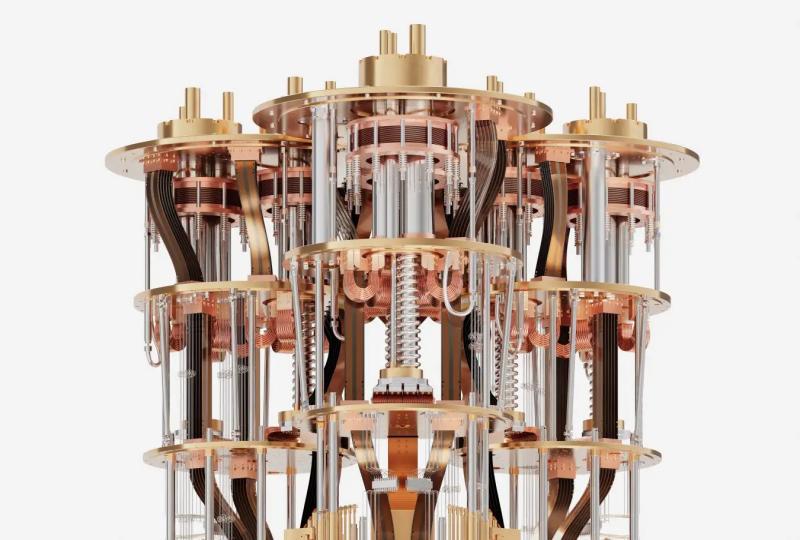
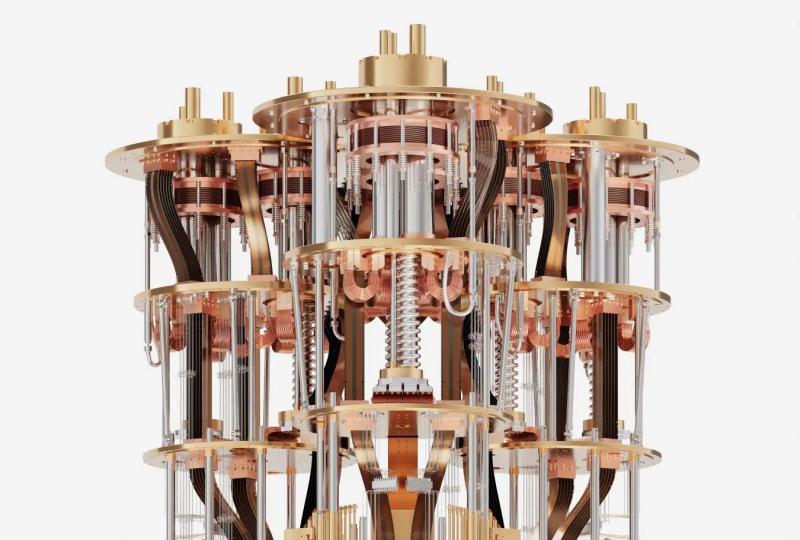
Modern superconducting quantum computer chips, such as SpinQ’s QPU C Series, are fabricated on cryogenic-compatible substrates and operate at temperatures near 20 millikelvin to preserve delicate quantum states. These chips combine high coherence (long-lived qubits), precise microwave control, and carefully engineered coupling between qubits to implement useful quantum algorithms.
How a quantum computer chip works
At a high level, a quantum chip has three core roles: store quantum information, perform quantum logic, and deliver measurable outputs.
-
Qubits as information carriers Superconducting qubits use macroscopic quantum states of circuits with Josephson junctions, where current flows with zero resistance and energy levels act as qubit states ∣0⟩∣0⟩ and ∣1⟩∣1⟩. In SpinQ’s superconducting designs, these qubits are arranged in 1D or 2D chain topologies on the chip, allowing scalable, controllable connectivity for multi‑qubit operations.
-
Quantum gates and control Microwave pulses at gigahertz frequencies implement single‑qubit rotations and two‑qubit entangling gates by driving transitions and controlled interactions between qubits. SpinQ’s Shaowei‑class superconducting chips, for example, support single and two‑qubit gate operations on the timescale of tens of nanoseconds, with single‑qubit gate fidelities above 99.9% and two‑qubit gate fidelities above 98%.
-
Readout and measurement Each qubit is typically coupled to a resonator, whose microwave response shifts depending on the qubit state, allowing the system to “read” measurement outcomes as classical bits. High‑quality (high‑Qi) resonators and low‑noise cryogenic amplifiers help maintain signal integrity so that the final measurement accurately reflects the quantum computation performed on the chip.
The practical power of a quantum computer chip depends on how many reliable operations it can perform within its coherence time, which is why SpinQ emphasizes both long T₁ coherence (10–100 microseconds on Shaowei chips) and very fast gate operations.
Quantum computer chip vs. classical CPU
A quantum computer chip is not a drop‑in replacement for a CPU; it complements classical processors for specific workloads. The table below highlights key differences.
Core differences between classical and quantum chips
| Feature | Classical CPU | Quantum computer chip (superconducting example) |
| Basic unit of information | Bit (0 or 1) | Qubit (superposition of 0 and 1) |
| Core operations | Boolean logic gates (AND, OR, NOT) | Quantum gates (rotations, entangling CNOT/CZ, etc.) |
| Parallelism | Instruction‑level & data‑level (SIMD, multithreading) | Quantum parallelism across superposed states for specific algorithms |
| Operating temperature | Room temperature with air or liquid cooling | Milli‑Kelvin regime (~20 mK) in a dilution refrigerator for superconducting chips |
| Error behavior | Low per‑gate error, handled largely in software | Higher per‑gate error, requiring careful calibration and eventual quantum error correction |
| Best‑fit problems | General computing, everyday applications | Optimization, simulation, cryptography, and specialized algorithms (e.g., VQE, QAOA) |
Main types of quantum computer chips
Different physical platforms implement qubits differently, but the goal is the same: stable, controllable, and scalable quantum logic.
-
Superconducting quantum chips Use superconducting circuits and Josephson junctions on a chip, operated in dilution refrigerators. SpinQ’s QPU C Series superconducting chips, with 2, 5, 10, and 20‑qubit variants, are engineered for high‑coherence, high‑stability operation and serve as the core of SpinQ’s industrial‑grade superconducting quantum computers.
-
NMR (nuclear magnetic resonance) quantum devices Employ nuclear spins in molecules as qubits, manipulated by radio‑frequency pulses in strong magnetic fields. SpinQ’s desktop NMR quantum computers like Gemini and Triangulum are optimized for education and research, offering 2–13 qubits at room temperature with highly stable, maintenance‑free operation.
-
Other platforms (trapped ions, neutral atoms, photonics, semiconductor spins) Use ions in electromagnetic traps, neutral atoms in optical lattices, photons in integrated optics, or spins in quantum dots to encode qubits, each with its own advantages and engineering challenges.
Among these, superconducting quantum computer chips currently lead in industrialization due to their compatibility with mature semiconductor processes and strong progress in scaling and gate fidelity.
Inside a superconducting quantum computer chip (SpinQ example)
SpinQ’s superconducting quantum computer architecture integrates the chip, cryogenics, and control electronics into a full‑stack system targeted at industrial‑grade workloads.
-
QPU C Series chips The SPINQ QPU C Series are superconducting quantum computer chips designed and fabricated in‑house, operating around 4–6 GHz qubit frequencies with readout resonators near 7–8 GHz. They feature 1D or 2D chain topologies, qubit–qubit coupling strengths around 10–20 MHz, and decoherence times (T₁) from roughly 20 to over 100 microseconds depending on the model and generation.
-
Performance snapshot Factory‑characterized QPUs come with standard test reports including qubit frequencies, resonator frequencies, decoherence times, and gate fidelities, ensuring predictable behavior for end users. Single‑qubit gate fidelities reach 99.9% or higher, with two‑qubit gate fidelities at 99% or better on the QPU C Series, aligning with industry‑leading benchmarks for superconducting hardware.
-
Export‑ready, standardized chips SpinQ’s Shaowei superconducting quantum chip is one of the few standardized, mass‑produced quantum chips on the market and was the first Chinese superconducting quantum chip successfully delivered overseas. This standardization allows SpinQ to offer configurable 2‑, 5‑, 10‑, and 20‑qubit QPUs plus custom designs, serving both research validation and more complex application scenarios like quantum chemistry and materials science.
Key specifications when evaluating a quantum computer chip
When comparing quantum computer chips—especially superconducting QPUs—several metrics dominate:
-
Number of qubits and topology More qubits expand problem size but only if connectivity and gate fidelity remain high. SpinQ’s QPU family offers 2–20 qubits in 1D and 2D chain topologies, balancing scalability with manageable control complexity.
-
Coherence times (T₁, T₂) Longer coherence means more gates can be executed before errors dominate; SpinQ reports T₁ values from 20 up to 100 microseconds or more on its superconducting chips, depending on model and fabrication run.
-
Gate fidelities and speed High single‑ and two‑qubit gate fidelities are critical for deep circuits and future error‑corrected systems. Shaowei‑class chips achieve >99.9% single‑qubit and >98% two‑qubit gate fidelities with gate durations in the tens of nanoseconds, enabling hundreds of operations within coherence windows.
-
Uniformity and stability Uniform qubit parameters (frequency, anharmonicity, coupling) simplify calibration and algorithm mapping. SpinQ’s dedicated superconducting chip production line focuses on consistency and process control, which is essential for standardized, mass‑produced quantum computer chips.
Example: SpinQ quantum computer chip specifications
The following table summarizes typical ranges from SpinQ’s superconducting QPU lineup, illustrating what you might expect from a modern quantum computer chip.
Representative specs of SpinQ superconducting QPUs
| Parameter | Typical range (SpinQ QPU family) |
| Qubit count options | 2, 5, 10, 20 qubits (C‑Series configurations) |
| Topology | 1D or 2D chain coupling networks |
| Qubit frequency | ~4–6 GHz |
| Readout resonator frequency | ~7–8 GHz |
| Decoherence time T₁ | ~20–100+ μs depending on chip generation |
| Single‑qubit gate fidelity | Up to ≈99.9% or higher |
| Two‑qubit gate fidelity | ≈98–99% or higher |
| Operating temperature | ~20 mK in dilution refrigerator |
For more details on SpinQ’s superconducting products, see the official Superconducting Quantum Products & Chips page.
From design to fabrication: quantum chip EDA and foundry
Designing a quantum computer chip is complex: engineers must decide qubit types, topologies, resonator geometries, coupling strengths, and routing, all under tight fabrication constraints.
-
Quantum chip EDA (Electronic Design Automation) SpinQ’s SPINQ QEDA is a web‑based superconducting QPU EDA software that generates quantum devices through parameterization and intelligent automatic wiring algorithms. Engineers can specify component parameters (e.g., finger length, junction positions), use one‑click layout generation, and adjust routing paths in a drag‑and‑drop GUI, dramatically shortening the chip design cycle.
-
Simulation and manufacturability QEDA integrates device mapping and fabrication process mapping so that designed circuits are optimized both for quantum performance and for SpinQ’s actual production processes. Built‑in simulation capabilities help predict coherence times, resonator characteristics, and coupling behavior before fabrication, reducing the risk of expensive design failures.
-
Foundry and characterization services SpinQ operates a dedicated superconducting quantum chip production line, offering standardized mass‑produced chips and custom design‑and‑fab services. Its QPU foundry and characterization services deliver chips accompanied by detailed factory reports (e.g., decoherence times, frequencies, gate benchmarking), enabling researchers and companies to plug standardized quantum computer chips into their own cryogenic and control stacks.
You can explore SpinQ’s QPU EDA solution on the official SPINQ QEDA product page.
Where the quantum computer chip fits in a full system
A quantum chip on its own is not a usable computer; it must be integrated with cryogenics, control electronics, and software. SpinQ emphasizes a full‑stack approach:
-
Superconducting quantum computer (SPINQ SQC) Integrates a superconducting QPU, a dilution refrigerator providing ~10–20 mK operation, and a modular SPINQ QCM control and measurement system capable of managing tens to hundreds of qubits. The system includes a microkernel‑based operating environment, automated qubit calibration, and resource scheduling for running quantum‑classical hybrid algorithms at scale.
-
Control & measurement electronics (SPINQ QCM) High‑performance arbitrary waveform generators and quantum analyzers in the QCM system provide up to 16‑bit vertical resolution, multi‑gigahertz sampling, and sub‑nanosecond synchronization accuracy. This electronics layer is essential to translate digital pulse schedules into analog microwave signals that actually drive the quantum gates on the chip, then capture and process readout signals.
-
Software and cloud integration The SpinQit programming framework and SpinQ Cloud platform provide Python‑based quantum programming, circuit optimization, and access to both NMR and superconducting backends and simulators. This stack lets users write algorithms once and execute them on different physical quantum computer chips via cloud or on‑premise systems, depending on their needs.
For an overview of SpinQ’s full ecosystem—from chips to systems and applications—see the About SpinQ page.
Real‑world applications of quantum computer chips
As gate fidelities rise and system sizes grow, quantum computer chips are increasingly used in exploratory and early‑stage applied workloads.
-
Quantum chemistry and materials science Variational Quantum Eigensolver (VQE) and related algorithms are used on NISQ‑era hardware to approximate ground‑state energies and model molecular interactions, as demonstrated in SpinQ collaborations on molecular simulations and hydrogen‑chain systems.
-
Financial optimization and risk models Quantum clustering and quantum neural networks have been tested on SpinQ hardware to support tasks like ATM network optimization and portfolio analysis, with one such project winning a national financial technology award in China.
-
Bioinformatics and genomics Hybrid quantum‑classical algorithms running on SpinQ platforms have been applied to genome assembly challenges, using quantum chips to accelerate combinatorial optimization components within complex pipelines.
These use cases illustrate how quantum computer chips are shifting from theoretical prototypes toward practical, domain‑specific accelerators.
FAQs about quantum computer chips
What is a quantum computer chip in simple terms?
A quantum computer chip is the core processor of a quantum computer, hosting qubits and the circuitry needed to control and read them so the system can perform quantum algorithms. Unlike a classical chip, which works with binary bits, a quantum chip works with quantum states that can represent many possibilities at once.
Why do quantum computer chips need to be so cold?
Superconducting quantum computer chips must operate at milli‑Kelvin temperatures because their qubits rely on superconductivity and extremely low thermal noise to maintain fragile quantum states. At higher temperatures, environmental interactions would quickly destroy coherence, making reliable quantum computation impossible.
How many qubits does a typical superconducting quantum chip have?
Current commercially available superconducting quantum chips from providers like SpinQ typically offer 2–20 qubits per chip in standardized configurations, with higher‑qubit systems combining multiple chips and advanced packaging. Research‑grade and roadmap systems may have significantly more qubits, but near‑term practical chips in industry and research often sit in this small‑to‑medium range for high‑fidelity experimentation.
What makes SpinQ quantum computer chips unique?
SpinQ distinguishes itself by combining standardized, mass‑produced superconducting QPUs, a dedicated chip foundry, and an integrated design tool (SPINQ QEDA) with full‑stack systems and software. It was the first Chinese company to export superconducting quantum chips overseas, leveraging its Shaowei‑class chips and QPU C Series as the basis for industrial‑grade quantum computers and cloud services.
Can I buy a quantum computer chip or system today?
Yes. SpinQ, for example, sells desktop NMR quantum computers such as Gemini and Triangulum for education, as well as superconducting QPUs and complete superconducting quantum computer systems for research and industrial users. Access is typically arranged via direct engagement with the vendor, and many users start with cloud access before moving to on‑premise hardware.
Do I need special software to program a quantum computer chip?
Yes. Quantum chips are programmed through quantum software frameworks that translate high‑level circuits into calibrated pulse sequences. SpinQ offers the SpinQit framework and SpinQ Cloud, which support Python‑based programming, OpenQASM compatibility, and direct execution on SpinQ’s NMR and superconducting quantum computer chips.
Featured Content