
Quantum Computing Explained: A Beginner’s Guide to the Future of Technology
2026.04.17 · Blog quantum computing explained
In a world where classical computers power everything from our smartphones to global data centers, a new era of computing is emerging: quantum computing. For many, the term “quantum computing” feels like a distant, complex concept reserved for physicists in labs. But the truth is, quantum computing is not just a scientific curiosity—it’s a technology that’s poised to transform how we solve the world’s most intractable problems. In this guide, we’ll break down quantum computing explained in simple terms, demystify key concepts like quantum entanglement and superposition, and explore why this technology matters for businesses, scientists, and everyday people.
What Is Quantum Computing, Exactly?
First, let’s start with the basics: what is quantum computing? At its core, quantum computing is a type of computing that leverages the principles of quantum mechanics—the branch of physics that governs the behavior of tiny particles like atoms and electrons—to process information. Unlike classical computers, which use bits (binary digits that can only be 0 or 1) to store and process data, quantum computers use qubits (quantum bits). This fundamental difference is what gives quantum computing its extraordinary power.
The Building Blocks: Superposition & Quantum Entanglement
To understand why qubits are game-changing, we need to explore two foundational quantum principles: superposition and quantum entanglement. These are the building blocks of quantum computing, and they’re what make it possible for quantum computers to outperform classical computers on certain tasks.
Superposition: Qubits Can Be Multiple States at Once
Superposition is the ability of a qubit to exist in multiple states at once. A classical bit can only be 0 or 1, but a qubit can be 0, 1, or both 0 and 1 simultaneously. Think of it like a coin: a classical coin can only be heads or tails, but a quantum coin could be both heads and tails until it’s flipped (or “measured,” in quantum terms). This might sound counterintuitive, but it’s a proven phenomenon of quantum mechanics—one that Erwin Schrödinger famously illustrated with his “Schrödinger’s cat” thought experiment, where a cat in a sealed box exists in a superposition of alive and dead until observed.
Superposition is powerful because it allows quantum computers to process millions of possibilities at once. A single qubit can represent two states, two qubits can represent four states, three qubits can represent eight states, and so on. With just 50 qubits, a quantum computer can represent more states than there are atoms in the observable universe. This exponential growth in processing power is what makes quantum computing capable of solving problems that classical computers could never tackle in a reasonable timeframe.
Quantum Entanglement: “Spooky Action at a Distance”
Then there’s quantum entanglement—a phenomenon that Albert Einstein famously called “spooky action at a distance.” Quantum entanglement occurs when two or more qubits become linked in such a way that the state of one qubit instantly influences the state of the others, no matter how far apart they are. If two qubits are entangled, measuring one qubit will immediately determine the state of the other, even if they’re on opposite sides of the planet.
Quantum entanglement is not just a fascinating scientific phenomenon—it’s a critical tool for quantum computing. When qubits are entangled, they can work together to process information more efficiently, enabling quantum computers to solve complex problems faster than classical computers. For example, quantum entanglement is key to quantum algorithms like Shor’s algorithm, which can factor large numbers exponentially faster than any classical algorithm—a capability that could revolutionize cryptography and cybersecurity.
Superposition is the ability of a qubit to exist in multiple states at once. A classical bit can only be 0 or 1, but a qubit can be 0, 1, or both 0 and 1 simultaneously. Think of it like a coin: a classical coin can only be heads or tails, but a quantum coin could be both heads and tails until it’s flipped (or “measured,” in quantum terms). This might sound counterintuitive, but it’s a proven phenomenon of quantum mechanics—one that Erwin Schrödinger famously illustrated with his “Schrödinger’s cat” thought experiment, where a cat in a sealed box exists in a superposition of alive and dead until observed.
Superposition is powerful because it allows quantum computers to process millions of possibilities at once. A single qubit can represent two states, two qubits can represent four states, three qubits can represent eight states, and so on. With just 50 qubits, a quantum computer can represent more states than there are atoms in the observable universe. This exponential growth in processing power is what makes quantum computing capable of solving problems that classical computers could never tackle in a reasonable timeframe.
Then there’s quantum entanglement—a phenomenon that Albert Einstein famously called “spooky action at a distance.” Quantum entanglement occurs when two or more qubits become linked in such a way that the state of one qubit instantly influences the state of the others, no matter how far apart they are. If two qubits are entangled, measuring one qubit will immediately determine the state of the other, even if they’re on opposite sides of the planet.
Quantum entanglement is not just a fascinating scientific phenomenon—it’s a critical tool for quantum computing. When qubits are entangled, they can work together to process information more efficiently, enabling quantum computers to solve complex problems faster than classical computers. For example, quantum entanglement is key to quantum algorithms like Shor’s algorithm, which can factor large numbers exponentially faster than any classical algorithm—a capability that could revolutionize cryptography and cybersecurity.
How Does a Quantum Computer Actually Work?
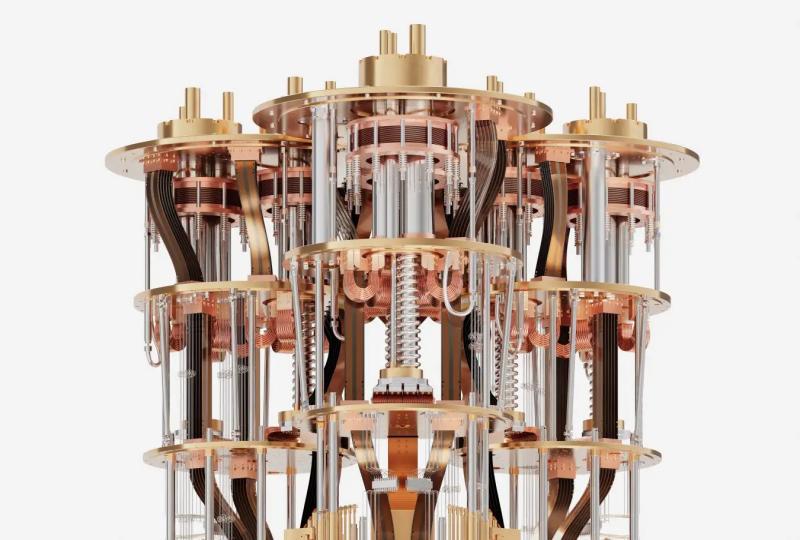
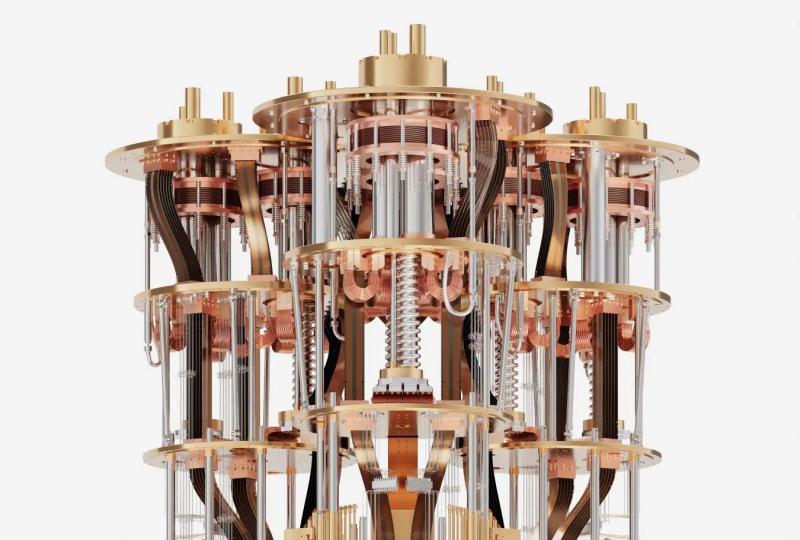
Now that we’ve covered the basics of qubits, superposition, and quantum entanglement, let’s answer a common question: how does a quantum computer actually work? Unlike classical computers, which use electrical signals to flip bits on and off, quantum computers use physical systems to create and manipulate qubits. These systems can vary—some use superconducting circuits cooled to near absolute zero, others use trapped ions, photons, or even defects in diamonds.
Regardless of the system, the goal is the same: to control qubits in a way that leverages superposition and quantum entanglement to perform calculations. Quantum computers use quantum gates (similar to classical logic gates) to manipulate qubits, changing their states and creating entanglement between them. These gates are applied in sequences to execute quantum algorithms, which are designed to solve specific problems.
Regardless of the system, the goal is the same: to control qubits in a way that leverages superposition and quantum entanglement to perform calculations. Quantum computers use quantum gates (similar to classical logic gates) to manipulate qubits, changing their states and creating entanglement between them. These gates are applied in sequences to execute quantum algorithms, which are designed to solve specific problems.
Why Quantum Computing Matters: Real-World Applications
But why does quantum computing matter? What problems can it solve that classical computers can’t? The answer lies in “quantum advantage”—the point at which a quantum computer can solve a problem faster than the most powerful classical supercomputer. While we’re still in the early stages of achieving full quantum advantage, researchers have already demonstrated that quantum computers can outperform classical computers on certain tasks.
Drug Discovery & Healthcare
One of the most promising applications of quantum computing is in drug discovery and healthcare. Classical computers struggle to simulate the complex behavior of molecules, which makes it difficult to develop new drugs and treatments. Quantum computers, however, can simulate molecular structures with unprecedented accuracy, allowing scientists to identify potential new drugs faster and more efficiently. This could lead to breakthroughs in treating diseases like cancer, Alzheimer’s, and HIV.
Finance & Risk Management
Quantum computing also has the potential to revolutionize finance. Financial institutions use complex models to predict market trends, manage risk, and optimize investment portfolios. Quantum computers can process these models exponentially faster than classical computers, enabling more accurate predictions and better risk management. They can also help with fraud detection, by analyzing large datasets to identify patterns that classical computers would miss.
Cybersecurity
Another key application is cybersecurity. Classical encryption relies on the difficulty of factoring large numbers—a task that classical computers take years to complete. But Shor’s algorithm, a quantum algorithm, can factor large numbers in minutes, which means that many of our current encryption methods could become obsolete once quantum computers become more powerful. On the flip side, quantum computing can also be used to create “quantum-safe” encryption, which is resistant to quantum attacks.
Other Industry Applications
Other industries that stand to benefit from quantum computing include logistics (optimizing global supply chains), energy (developing more efficient batteries and renewable energy sources), and artificial intelligence (creating more advanced AI models that can process complex data faster). The possibilities are nearly endless, and as quantum technology advances, we’ll likely discover even more applications.
One of the most promising applications of quantum computing is in drug discovery and healthcare. Classical computers struggle to simulate the complex behavior of molecules, which makes it difficult to develop new drugs and treatments. Quantum computers, however, can simulate molecular structures with unprecedented accuracy, allowing scientists to identify potential new drugs faster and more efficiently. This could lead to breakthroughs in treating diseases like cancer, Alzheimer’s, and HIV.
Quantum computing also has the potential to revolutionize finance. Financial institutions use complex models to predict market trends, manage risk, and optimize investment portfolios. Quantum computers can process these models exponentially faster than classical computers, enabling more accurate predictions and better risk management. They can also help with fraud detection, by analyzing large datasets to identify patterns that classical computers would miss.
Another key application is cybersecurity. Classical encryption relies on the difficulty of factoring large numbers—a task that classical computers take years to complete. But Shor’s algorithm, a quantum algorithm, can factor large numbers in minutes, which means that many of our current encryption methods could become obsolete once quantum computers become more powerful. On the flip side, quantum computing can also be used to create “quantum-safe” encryption, which is resistant to quantum attacks.
Other industries that stand to benefit from quantum computing include logistics (optimizing global supply chains), energy (developing more efficient batteries and renewable energy sources), and artificial intelligence (creating more advanced AI models that can process complex data faster). The possibilities are nearly endless, and as quantum technology advances, we’ll likely discover even more applications.
Challenges Facing Quantum Computing
Of course, quantum computing is not without its challenges. One of the biggest hurdles is “decoherence”—the tendency of qubits to lose their quantum state (superposition and entanglement) when they interact with their environment. Even tiny amounts of heat, light, or vibration can cause decoherence, which makes it difficult to maintain qubits for long periods of time. Researchers are working on ways to reduce decoherence, such as using superconducting materials and advanced error-correction techniques, but it remains a significant challenge.
Another challenge is scalability. Currently, quantum computers have a small number of qubits (most have fewer than 100), and scaling up to the thousands or millions of qubits needed for practical applications is a major engineering feat. Companies like IBM, Google, and our own quantum computing firm are investing heavily in research and development to overcome these challenges, and progress is being made every day.
Another challenge is scalability. Currently, quantum computers have a small number of qubits (most have fewer than 100), and scaling up to the thousands or millions of qubits needed for practical applications is a major engineering feat. Companies like IBM, Google, and our own quantum computing firm are investing heavily in research and development to overcome these challenges, and progress is being made every day.
The Future of Quantum Computing
So, what does the future of quantum computing look like? While we’re still years away from having quantum computers in every home or office, the technology is advancing rapidly. In the next decade, we can expect to see more powerful quantum computers, more practical applications, and a growing ecosystem of quantum software and tools. Quantum computing will not replace classical computing—instead, the two will work together, with classical computers handling everyday tasks and quantum computers tackling the most complex problems.
Wrapping Up: Quantum Computing for Everyone
To wrap up, quantum computing is a revolutionary technology that leverages the principles of quantum mechanics to process information in ways that classical computers cannot. By understanding key concepts like qubits, superposition, and quantum entanglement, we can begin to see the potential of this technology to transform industries and solve problems that were once thought impossible. Whether you’re a business leader, a student, or just someone curious about the future of technology, quantum computing is a topic worth paying attention to.
At SPINQ, we’re committed to advancing quantum computing technology and making it accessible to businesses and researchers around the world. If you want to learn more about how quantum computing can benefit your organization, reach out to our team today.
Featured Content