
Quantum Computing Basics: A Beginner’s Guide to the Future of Computing
2026.04.03 · Blog quantum computing basics
In the fast-paced world of technology, quantum computing has emerged as one of the most revolutionary fields—promising to solve complex problems that classical computers can’t touch, from drug discovery to cryptography and beyond. But for many beginners, terms like “qubits” and “superposition” can feel overwhelming. This guide breaks down quantum computing basics in simple, accessible language, so you can understand what it is, how it works, and why it matters for the future of innovation.Whether you’re a tech enthusiast, a business leader exploring quantum’s potential, or a student curious about the next frontier of computing, this post will demystify the core concepts of quantum computing and help you grasp its transformative power. Let’s dive in.
What Is Quantum Computing, Exactly?
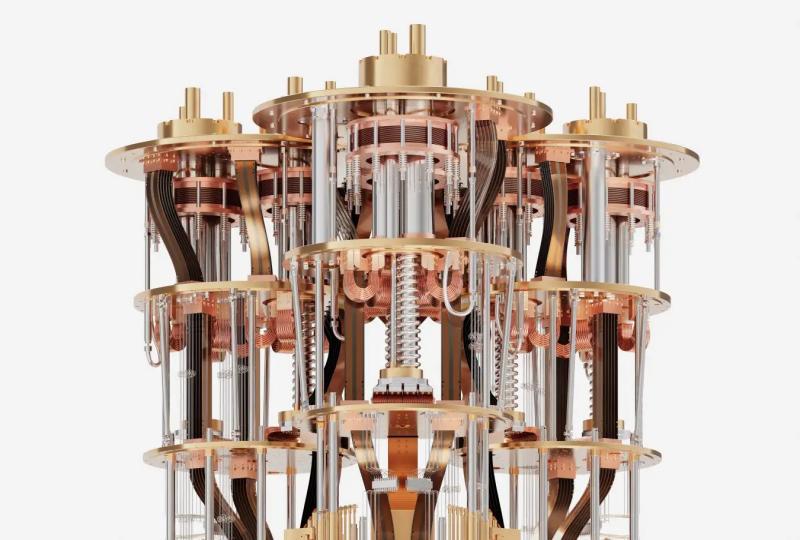
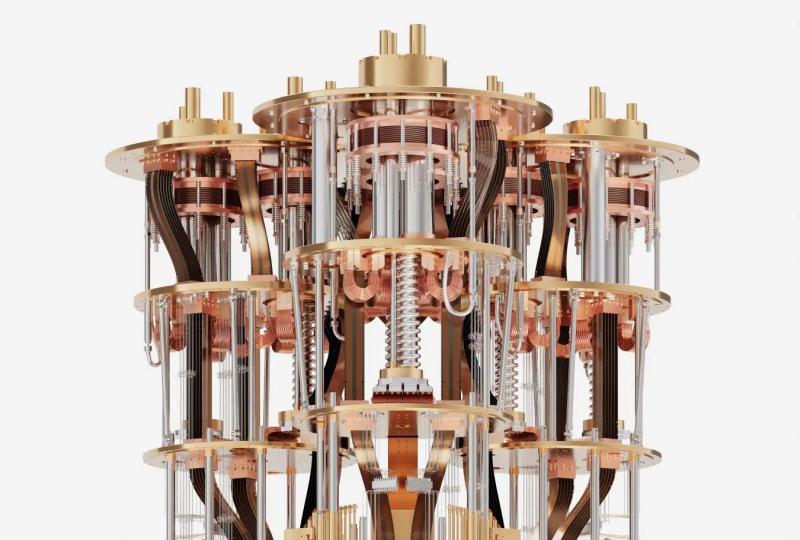
At its core, quantum computing is a type of computation that harnesses the unique laws of quantum mechanics—the science that governs particles at the smallest scale (think atoms and subatomic particles). Unlike classical computers, which use binary bits (0s and 1s) to process information, quantum computers use quantum bits, or qubits—the building blocks of quantum computing that unlock entirely new ways of processing data.
Classical computers are limited by their binary nature: each bit can only be in one state (0 or 1) at a time. Quantum computers, however, leverage quantum phenomena to process multiple possibilities simultaneously—making them exponentially faster at solving certain complex problems. This isn’t just an upgrade to classical computing; it’s a complete reimagining of how we process information.
Key Quantum Computing Basics: Core Concepts You Need to Know
To understand quantum computing, you first need to grasp three fundamental quantum phenomena that power it: superposition, entanglement, and interference. These concepts are what make quantum computing unique—and powerful.
1. Superposition: Qubits Can Be “Both/And” (Not Just “Either/Or”)
The most foundational concept in quantum computing issuperposition. A classical bit is either 0 or 1—no in-between. A qubit, however, can exist in a superposition of both 0 and 1 at the same time. Think of it like a spinning coin: while it’s in the air, it’s neither heads nor tails—it’s both. Only when it lands (or is “measured”) does it settle into one state or the other.
Why does this matter? Superposition allows quantum computers to process millions of possibilities at once. For example, a 2-qubit system can represent 4 states simultaneously, a 3-qubit system 8 states, and so on—growing exponentially with the number of qubits. This is why quantum computers can tackle problems that would take classical supercomputers thousands of years to solve.
2. Entanglement: Qubits That Are “Linked” Across Distance
The second key concept is entanglement—a phenomenon where two or more qubits become so tightly linked that the state of one qubit cannot be described independently of the others, even if they’re separated by vast distances. This “spooky action at a distance,” as Einstein once called it, is what makes quantum computing even more powerful.
For example, if two qubits are entangled, measuring one qubit will instantly determine the state of the other—no matter how far apart they are. This isn’t just a theoretical idea: scientists have demonstrated entanglement with qubits separated by miles. Entanglement allows quantum computers to process information in parallel, amplifying their computational power and enabling complex calculations that classical computers can’t replicate.
3. Interference: Guiding Qubits to the Right Answer
The third critical concept is quantum interference. Just like waves in water can overlap and either amplify or cancel each other out, quantum states can interfere with one another. Quantum computers use this interference to “guide” qubits toward the correct solution to a problem, while canceling out incorrect possibilities.
Interference is what makes quantum algorithms effective. By manipulating qubits to create constructive interference (amplifying correct answers) and destructive interference (canceling incorrect ones), quantum computers can efficiently narrow down the solution to complex problems—from optimizing supply chains to simulating molecular structures.
Classical vs. Quantum Computing: What’s the Difference?
To truly appreciate quantum computing, it helps to compare it directly to classical computing. Here’s a simple breakdown of the key differences:
Information Unit: Classical computers use bits (0/1); quantum computers use qubits (can be 0, 1, or both via superposition).
Processing Speed: Classical computers process information sequentially (one task at a time); quantum computers process multiple possibilities simultaneously, making them exponentially faster for specific tasks.
Scalability: Classical computing power grows linearly with the number of bits; quantum computing power grows exponentially with the number of qubits.
Use Cases: Classical computers excel at everyday tasks (browsing the web, word processing, basic data analysis); quantum computers excel at complex problems (cryptography, drug discovery, quantum machine learning).
It’s important to note: quantum computers aren’t replacing classical computers. Instead, they’re a complementary tool—tackling the problems classical computers can’t solve, while classical computers handle the day-to-day tasks we rely on.
Quantum Computing Basics: Real-World Applications
Quantum computing is still in its early stages (we’re in the “noisy intermediate-scale quantum,” or NISQ, era), but it’s already showing promise in a range of industries. Here are some real-world applications that highlight why quantum computing matters today:
1. Drug Discovery & Molecular Simulation
Quantum computers can simulate the behavior of molecules at the quantum level—something classical computers struggle with. This allows scientists to design new drugs faster, by modeling how molecules interact with each other. For example, quantum simulations can help identify potential treatments for diseases like cancer or Alzheimer’s by predicting how drugs will bind to target proteins.
2. Cryptography & Cybersecurity
Classical encryption relies on the difficulty of factoring large integers—something classical computers take years to do. Quantum computers, however, can use algorithms like Shor’s Algorithm to factor large numbers exponentially faster, which could break many current encryption methods. On the flip side, quantum computing also enables “quantum encryption,” which is theoretically unhackable—using entanglement to create secure communication channels that can’t be intercepted without detection.
3. Optimization & Logistics
Complex optimization problems—like routing delivery trucks, scheduling flights, or managing supply chains—require evaluating millions of possibilities. Quantum computers can solve these problems in a fraction of the time classical computers take, helping businesses save time, reduce costs, and improve efficiency. For example, quantum algorithms can optimize delivery routes to minimize fuel use and delivery time, even for large-scale logistics networks.
4. Quantum Machine Learning
Quantum computing is also revolutionizing machine learning. Quantum machine learning algorithms can process large datasets faster and identify patterns that classical ML models miss. This has applications in everything from image recognition to financial forecasting, enabling more accurate and efficient AI systems.
The Future of Quantum Computing: What’s Next?
While we’re still years away from large-scale, fault-tolerant quantum computers, the field is advancing rapidly. Researchers and companies are working to improve qubit quality, reduce noise, and scale quantum systems. Here’s what to watch for in the coming years:
Better Qubits: More stable qubits with longer “coherence times” (the time a qubit can maintain its quantum state) and lower error rates.
Quantum Advantage: More demonstrations of “quantum advantage” (also called quantum supremacy)—where a quantum computer outperforms the most powerful classical supercomputers on a specific task.
Hybrid Quantum-Classical Systems: Combining quantum and classical computers to solve real-world problems today, while we wait for fully fault-tolerant quantum systems.
Wider Adoption: As quantum tools become more accessible, more industries will start integrating quantum computing into their workflows—from healthcare to finance to manufacturing.
Final Thoughts on Quantum Computing Basics
Quantum computing doesn’t have to be intimidating. At its core, it’s a new way of processing information—one that leverages the weird and wonderful laws of quantum mechanics to solve problems we once thought impossible. By understanding the basics—qubits, superposition, entanglement, and interference—you’re already ahead of the curve in understanding the future of technology.
Featured Content