
Quantum Computers: Unlocking the Power of Quantum Superposition for Tomorrow’s Innovations
2026.04.03 · Blog quantum computer
In the rapidly evolving landscape of technology, quantum computers are no longer just a theoretical concept—they’re a transformative force poised to redefine what’s possible in computing. Unlike classical computers that rely on binary bits (limited to 0s and 1s), quantum computers harness the bizarre yet powerful principles of quantum mechanics to process information at speeds that classical systems can only dream of. At the heart of this revolution lies quantum superposition, a phenomenon that distinguishes quantum computing from its classical counterpart and unlocks its most groundbreaking capabilities.
Classical vs. Quantum: The Binary Barrier Quantum Breaks
To understand why quantum computers are a game-changer, we first need to contrast them with the classical computers we use daily. Classical bits are like tiny light switches: they can only be in one state at a time—either off (0) or on (1). Every task your laptop, smartphone, or server performs—from browsing the web to running complex software—boils down to billions of these binary decisions, processed sequentially. This works well for everyday tasks, but when faced with highly complex problems—like simulating molecular structures, optimizing global supply chains, or cracking advanced encryption—classical computers hit a wall. They simply can’t process the sheer volume of possibilities fast enough, often taking thousands of years to solve problems that quantum computers can tackle in minutes or hours.
What Is Quantum Superposition? The Core of Quantum Power
This is where quantum superposition comes into play. Quantum superposition is a fundamental principle of quantum mechanics that allows quantum bits (qubits)—the building blocks of quantum computers—to exist in multiple states simultaneously, rather than being restricted to 0 or 1 alone. Think of a classical bit as a coin that lands either heads (0) or tails (1); a qubit, thanks to superposition, is like a coin spinning in mid-air, existing as both heads and tails at the same time until it’s observed (or measured).
Why Superposition Matters for Quantum Computing
Superposition isn’t just a theoretical curiosity—it’s the driving force behind quantum computing’s unmatched power. When qubits are in superposition, they can process multiple possibilities at once, enabling parallel computation on a scale that classical computers can never achieve. For example, a single qubit in superposition can represent 2 states, two qubits can represent 4 states, three qubits 8 states, and so on—with the number of states doubling with each additional qubit. This exponential growth means that even a quantum computer with a relatively small number of qubits can outperform the most powerful classical supercomputers on specific tasks.
Superposition in Action: The Double-Slit Experiment
A classic example of superposition in action is the double-slit experiment, where electrons or photons pass through two slits and create an interference pattern on a screen—even when fired one at a time. This happens because each particle exists in a superposition of passing through both slits simultaneously, interfering with itself before being measured. This experiment isn’t just a demonstration of quantum weirdness; it’s proof that superposition is a real, observable phenomenon that shapes the behavior of quantum systems at the smallest scales.
Superposition-Driven Innovations Across Industries
So, what does this mean for the future of technology? Quantum superposition, combined with other quantum phenomena like entanglement and interference, is opening doors to innovations across industries. In healthcare, quantum computers can use superposition to simulate molecular structures with unprecedented accuracy, accelerating drug discovery and personalized medicine by predicting how new drugs interact with the human body at the atomic level. In finance, they can optimize investment portfolios and risk models by processing millions of variables simultaneously, uncovering patterns that classical computers miss. In cybersecurity, quantum algorithms powered by superposition (like Shor’s algorithm) can crack classical encryption methods, while quantum encryption can create unhackable communication systems by leveraging the fragility of superposition—any attempt to intercept the data would collapse the quantum state, alerting users to tampering.
The Current State of Quantum Computing: Challenges and Progress
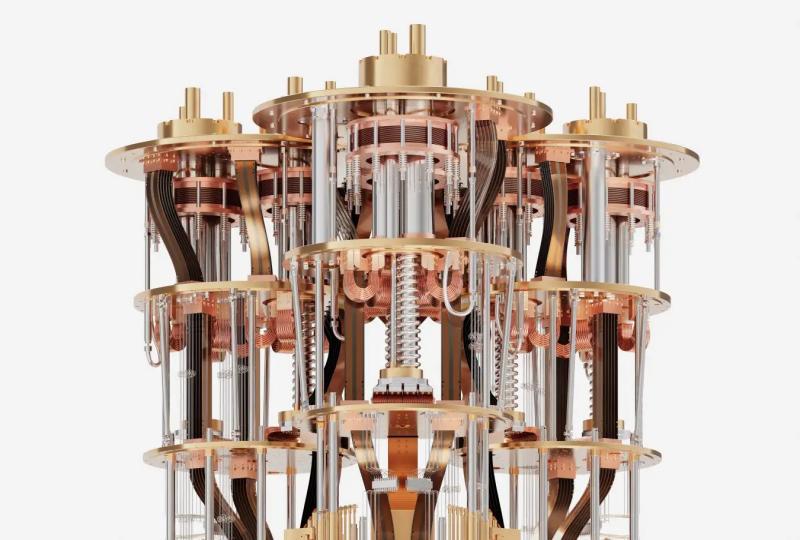
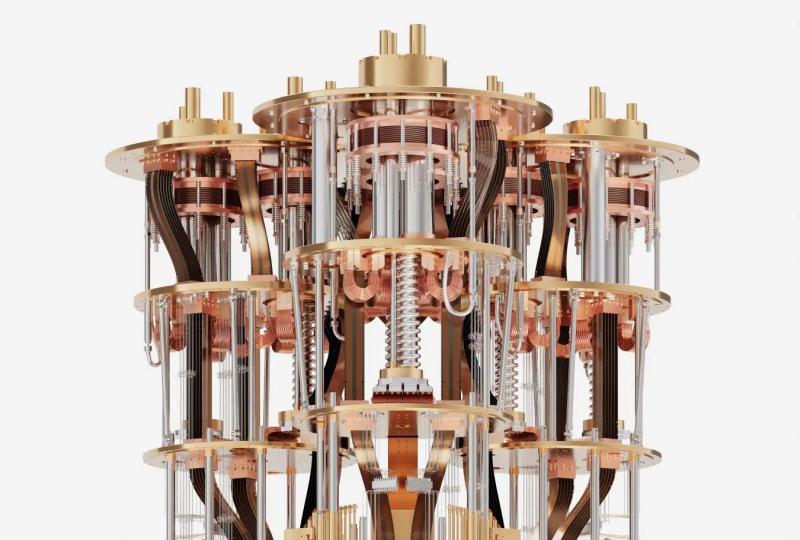
It’s important to note that quantum computing is still in its early stages. Today’s quantum computers (often called “noisy intermediate-scale quantum” or NISQ devices) have a limited number of qubits, and maintaining superposition is challenging—environmental factors like temperature, vibration, and electromagnetic interference can cause qubits to lose their quantum state (a process called decoherence) before a computation is complete. However, research and development in quantum hardware—from superconducting qubits to ion trap qubits—is advancing rapidly, with companies and research institutions working to build more stable, scalable quantum systems that can fully harness the power of superposition.
What Superposition Means for Businesses and Innovators
For businesses and innovators, understanding quantum superposition isn’t just about grasping a complex scientific concept—it’s about recognizing the potential of quantum computing to transform their industries. As quantum technology matures, the companies that embrace superposition and its capabilities will be at the forefront of innovation, solving problems that were once thought impossible and unlocking new opportunities for growth.
The Future Is Quantum: Superposition as the Foundation
The era of quantum computing is here, and quantum superposition is its foundation. As we continue to unlock the secrets of quantum mechanics, we’re not just building faster computers—we’re building a future where the impossible becomes possible. Stay tuned for more insights into quantum computing, superposition, and the innovations that will shape our world.
Featured Content