
How Cloud-Based Superconducting Quantum Chips Enable Remote Quantum Computing
2026.09.07 · Blog cloud-based Superconducting Quantum Chip
Quantum computing is developing beyond standalone laboratory systems. As quantum hardware, control electronics, and software become increasingly integrated, remote access is becoming an important way to explore quantum computing resources.
A cloud-based superconducting quantum chip combines superconducting quantum processing hardware with software and network-based access. Instead of requiring every researcher or developer to operate the complete physical infrastructure directly, remote users can interact with quantum computing resources through an online environment.
What Is a Cloud-Based Superconducting Quantum Chip?
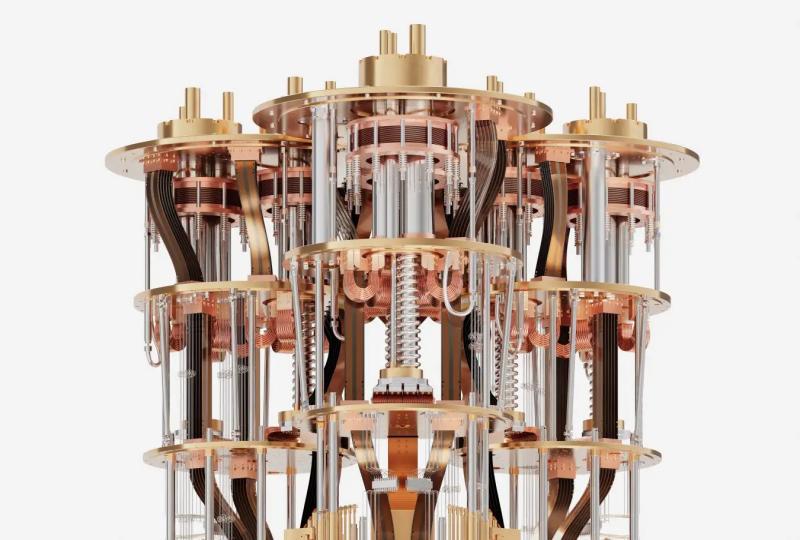
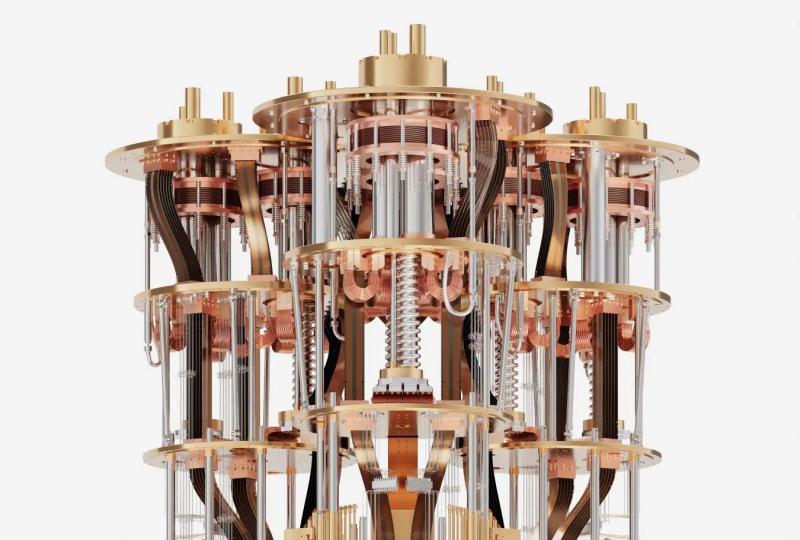
A superconducting quantum chip is a quantum processing unit based on superconducting qubits. It serves as the physical hardware where quantum operations are performed. SpinQ develops superconducting quantum computers as part of its integrated quantum computing ecosystem.
A cloud-connected quantum computing environment can provide users with a remote interface for interacting with quantum hardware, submitting experiments, and receiving results.
This creates a separation between the user and the physical quantum infrastructure. The user can focus on quantum algorithms, experiments, and data analysis, while specialized hardware handles the underlying quantum operations.
For superconducting systems, the complete setup involves much more than the QPU itself. Precise control and measurement are essential because quantum states need to be manipulated and measured through dedicated electronic systems.
How Remote Access to Superconducting Quantum Chips Works
Quantum Hardware at the Physical Layer
At the physical layer, the superconducting QPU performs quantum operations. A dedicated quantum control and measurement system provides the hardware layer needed to generate control signals and acquire measurement data for superconducting QPUs. The surrounding hardware must provide the signals and measurement capabilities required to control and observe the qubits.
This makes the relationship between the QPU and its control system particularly important. A cloud-based interface can provide convenient remote access, but the quality and architecture of the underlying control and measurement infrastructure directly affect how quantum experiments are executed.
Cloud-Based Control and Access
The remote computing workflow can be understood as a connection between software and physical quantum hardware.
A user works through a software environment to prepare a quantum experiment. The experiment is then translated into instructions that can be processed by the quantum control system. Signals are generated and delivered to the quantum hardware, while measurement data is acquired and processed before results are returned to the user.
This architecture allows quantum computing resources to be used remotely while keeping the specialized physical infrastructure in a controlled environment.
The advantage is particularly relevant for research and education. Users do not necessarily need to manage every component of a superconducting quantum system themselves before they can begin exploring quantum computing.
Key Benefits of Cloud-Based Quantum Computing
Remote Access to Quantum Hardware
One of the clearest advantages is accessibility. Remote users can interact with quantum computing resources without being physically located beside the quantum processor.
For institutions developing quantum applications, this can make experimentation more flexible. Researchers can work with quantum resources while concentrating on algorithms, experiments, and application development.
Lower Barriers to Quantum Experimentation
Superconducting quantum systems require specialized hardware and infrastructure. Cloud-based access can separate the user experience from the complexity of the physical system.
This creates a more practical environment for researchers, developers, and learners who want to experiment with quantum computing without independently building every layer of the hardware stack.
Flexible Quantum Software Development
Remote quantum computing also creates opportunities to connect software development with real quantum hardware.
Instead of treating quantum hardware as an isolated laboratory instrument, a cloud-oriented architecture can make it part of a broader software workflow. Users can develop experiments, submit them remotely, analyze measurement results, and refine their approaches iteratively.
Supporting Research and Education
Cloud access can also support broader use of quantum computing resources. SpinQ provides superconducting quantum computers alongside NMR quantum computers, an online quantum experiment platform and software, and related quantum solutions for scientific research and education.
The Role of Quantum Design and Control Systems
A cloud-based superconducting quantum computing environment depends on multiple technical layers. Quantum chip design determines the physical structure of the QPU, while control and measurement electronics provide the signals and data acquisition needed to operate the quantum processor.
For organizations working across the quantum hardware development process, QPU EDA design software can form part of the design workflow, connecting quantum processor development with broader engineering processes.
At the hardware control level, SpinQ's SPINQ QCM System is designed for compatibility with superconducting QPUs. It uses a modular architecture with high-precision RF control electronics and supports quantum control and measurement. The system also uses FPGA-based hardware acceleration for waveform generation and initial signal processing.
Another important capability is scalability. According to SpinQ, the modular SPINQ QCM System can expand control capabilities by adding similar units and supports remote FPGA program upgrades, automated qubit characterization, and calibration functions.
These functions are relevant to remote quantum computing because a cloud-accessible quantum system still depends on reliable physical control underneath the software interface. Remote access does not eliminate the need for precise quantum hardware control; instead, it makes the underlying control architecture part of a larger connected system.
Cloud-Based Superconducting Quantum Chips and the Future of Remote Quantum Computing
The development of cloud-based quantum computing is closely connected to the evolution of quantum hardware.
As superconducting quantum systems become more integrated, the relationship between QPUs, control electronics, software, and remote interfaces becomes increasingly important. A useful remote quantum computing environment needs to connect these layers without hiding the fundamental requirements of the physical hardware.
For developers, this can create a more accessible path from quantum programming to real hardware experimentation. For researchers, remote access can provide a practical way to conduct experiments without requiring every user to operate the complete infrastructure directly.
SpinQ's quantum computing products cover superconducting quantum computers, NMR quantum computers, and online quantum experiment platforms and software, while its quantum control and measurement technologies address an important hardware layer for quantum experimentation.
As these technologies continue to develop together, the cloud-based Superconducting Quantum Chip can become more than a way to access quantum hardware remotely. It represents a connected approach in which quantum processors, control systems, software, and users can participate in the same computing workflow.
FAQ About Cloud-Based Superconducting Quantum Chips
What is a cloud-based superconducting quantum chip?
It refers to a superconducting quantum processing system that can be accessed through a cloud or remote computing environment. The “cloud-based” aspect describes the access model, while the superconducting quantum chip provides the underlying quantum processing hardware.
How can users remotely access superconducting quantum computing resources?
Users can interact with quantum computing resources through software and online interfaces. Their experiments are translated into instructions for the underlying quantum hardware, while measurement results are returned for further analysis.
What role does a superconducting quantum chip play in cloud quantum computing?
The superconducting QPU is the physical processing layer. It performs quantum operations, while control electronics, measurement systems, and software provide the infrastructure required to operate and access it.
Is quantum control hardware important for remote quantum computing?
Yes. Remote access does not replace the physical control system. Precise signal generation, measurement, calibration, and data processing remain important parts of operating superconducting quantum hardware.
Conclusion
A cloud-based superconducting quantum chip connects physical quantum processing with remote software access. Behind this connection are several layers, including superconducting QPUs, quantum control and measurement electronics, software, and online access environments.
By combining these technologies, remote quantum computing can make specialized quantum hardware more accessible while supporting experimentation, research, education, and software development. For superconducting quantum systems, the future of cloud-based access will therefore depend not only on cloud interfaces, but also on the continued integration of quantum processors, control technologies, and software.
Featured Content