
China Quantum Chip: Technology, Innovation & SpinQ's Breakthrough Solutions
2026.03.13 · Blog China Quantum Chip
China has rapidly emerged as a global powerhouse in quantum chip development, with homegrown companies engineering superconducting quantum processors that rival international counterparts and — for the first time — exporting them to research institutions worldwide. At the forefront of this revolution is SpinQ Technology (www.spinquanta.com), a Shenzhen-based quantum computing company that made history as the first Chinese company to deliver superconducting quantum chips overseas.
What Is a Quantum Chip?
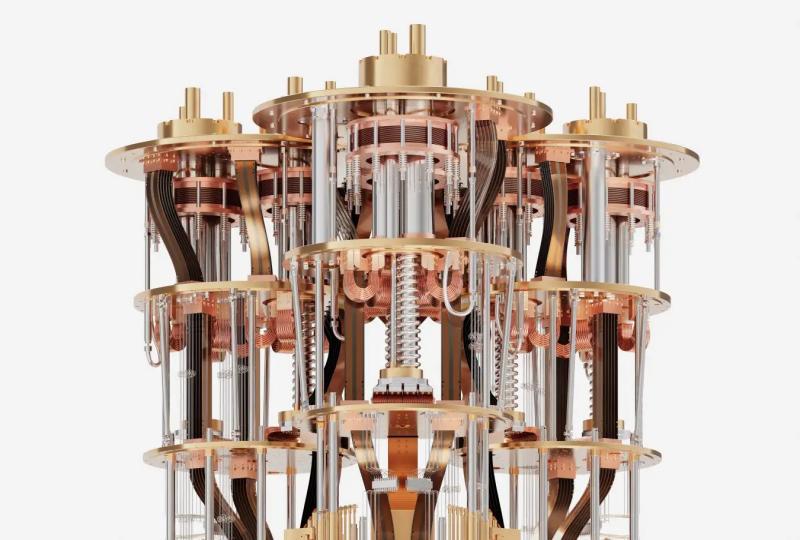
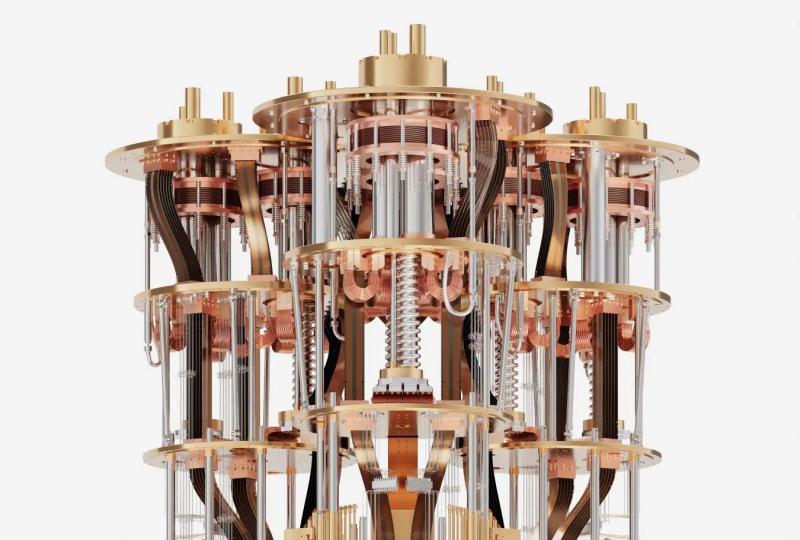
A quantum chip — also called a Quantum Processing Unit (QPU) — is the processor at the heart of a quantum computer. Unlike classical silicon chips that encode information as binary 0s and 1s, quantum chips use qubits, which can exist in superposition states of 0 and 1 simultaneously. This fundamental difference allows quantum chips to process exponentially more information for certain problem types, including molecular simulation, optimization, and machine learning.
In China, quantum chip development has been accelerated by both national investment and a generation of commercially focused startups. Key technologies include:
-
Superconducting qubits — the most industrialized approach globally, using Josephson junctions at near absolute-zero temperatures (~20 mK)
-
NMR (Nuclear Magnetic Resonance) qubits — a stable, room-temperature approach ideal for education and research
-
Semiconductor spin qubits and photonic qubits — emerging technologies being explored by research groups
China's Quantum Chip Landscape
China has invested billions into its national quantum strategy. Research institutions such as the University of Science and Technology of China (USTC) and companies like SpinQ, Origin Quantum, and others have made China one of the top two nations in quantum computing patents and publication output.
One of the most notable milestones came in late 2023, when SpinQ Technology delivered its superconducting quantum chip, called "Shaowei", to a research institution in the Middle East — making it one of the few standardized, mass-produced superconducting quantum chip products in the world. China Daily reported: "SpinQ has become the first Chinese company to deliver superconducting quantum chips overseas."
What distinguishes China's approach is the emphasis on both R&D and commercial implementation. SpinQ's full-stack ecosystem — spanning quantum chips, control systems, software, and cloud platforms — is a direct reflection of this dual-track strategy.
SpinQ's Superconducting Quantum Chip (QPU)
SpinQ's SPINQ QPU series is independently developed and manufactured at the company's proprietary QPU fabrication center. This ensures quality control, minimizes cross-contamination risks, and enables standardized mass production — a rare capability even globally.
Key Technical Specifications
| Parameter | Specification |
| Available qubit counts | 2, 5, 10, 20 qubits |
| Topology | 1D chain / 2D chain |
| Operating temperature | ~20 mK |
| Qubit frequency range | 4.0–6.0 GHz |
| Readout resonator frequency | 7.0–8.0 GHz |
| Decoherence time (T1) | 20–102 µs (up to 100 µs+) |
| Single-qubit gate fidelity | ≥ 99.9% |
| Two-qubit gate fidelity | ≥ 99% |
| Qubit-qubit coupling strength | 10–20 MHz |
| Coupling type | Fixed capacitance coupling |
Each QPU ships with a standard factory characterization report that includes resonant cavity frequency, qubit frequency, and decoherence time measurements. This level of transparency is critical for research institutions that require precise benchmarking before integrating a quantum processor into their lab.
SpinQ also offers customization services, including tailored QPU layout design, foundry services, and professional QPU characterization — enabling clients without fabrication infrastructure to develop superconducting quantum computing capabilities.
Full-Stack Quantum Computing Ecosystem
A standalone quantum chip is not enough — it requires an entire ecosystem to function. SpinQ's vertically integrated product stack covers every layer of the quantum computing pipeline:
| Layer | SpinQ Product |
| Quantum chip (QPU) | SPINQ QPU (2/5/10/20 qubit) |
| Chip EDA design software | SPINQ QEDA |
| Measurement & control system | SPINQ QCM System |
| Dilution refrigerator & cryogenic services | Cryogenic Environment Deployment |
| Quantum computer (full system) | SPINQ SQC (Superconducting Quantum Computer) |
| Software framework | SpinQit (Python-based) |
| Cloud platform | SPINQ Cloud |
SPINQ SQC — Industrial-Grade Superconducting Computer
The SPINQ SQC S20 integrates all layers into one deployable superconducting quantum computer:
-
20 qubits, single-qubit gate fidelity of 99.9%, two-qubit gate fidelity of 98%
-
Average decoherence time T1: 30 µs
-
System footprint: approximately 25 m², weight 1,500 kg, height 3.0 m
-
Average power consumption: 20 kW
This industrial-grade system is designed for quantum chemistry, materials science, quantum finance, and other computationally intensive commercial applications.
SPINQ QEDA: Quantum Chip Design Made Accessible
One of the bottlenecks in scaling quantum chip development is the complexity of QPU design. SpinQ addresses this with SPINQ QEDA, a highly automated web-based EDA (Electronic Design Automation) software specifically for superconducting QPU layout.
Key features include:
-
One-click layout generation after setting design parameters
-
Drag-and-drop interface for component positioning
-
High-performance automatic wiring algorithms to maximize success rates
-
Rich component library including Xmon qubits, transmons, resonators, and more
-
Free online access — no download required
This democratizes quantum chip design, enabling both experienced quantum engineers and new researchers to participate in QPU development without specialized fabrication expertise.
China Quantum Chip in Education: SpinQ's NMR Lineup
While superconducting chips dominate industrial quantum computing, China has also pioneered educational quantum hardware. SpinQ launched the world's first programmable desktop NMR quantum computer — the SPINQ Gemini — and has since built an entire product family:
| Product | Qubits | Form Factor | Coherence T1 | Gate Fidelity (2Q) |
| SPINQ Gemini Lab | 1–3 (expandable) | Desktop lab platform | 10 µs | 99.50% |
| SPINQ Gemini | 2 | Desktop | 12 µs | 99.30% |
| SPINQ Triangulum | 3 | Desktop | 15 µs | 97% |
| SPINQ Gemini Mini/Mini Pro | 2 | Portable | 8–10 µs | 98–99.3% |
| SPINQ Triangulum Mini | 3 | Portable | 10 µs | 96% |
These NMR-based systems operate at room temperature, are maintenance-free, and cost a fraction of superconducting systems — making real quantum hardware accessible to universities, high schools, and science centers globally. SpinQ's educational quantum computers are now deployed in institutions across more than 30 countries and regions.
Applications of China's Quantum Chips
Finance
SpinQ's quantum computers helped Huaxia Bank build a Quantum AI model for ATM management, analyzing 2,243 machines across 7 dimensions. The project won the First Prize of the 2020 Financial Technology Development Award from the People's Bank of China.
Biomedical / Genomics
BGI Research used SpinQ quantum computers with Variational Quantum Eigensolver (VQE) algorithms to tackle genome assembly — converting the problem into a combinatorial optimization challenge and leveraging quantum superposition to process large genomic datasets faster than classical methods.
Materials Science & Quantum Chemistry
SpinQ's 10- and 20-qubit QPUs are specifically suited for quantum chemistry simulations and materials science research, enabling the modeling of molecular interactions at a scale impossible for classical supercomputers.
Global Reach and Partnerships
SpinQ is not just a domestic player — it is the first company to distribute quantum computing products to all five continents and the first Chinese company to export superconducting quantum chips overseas. Its partners include:
-
MIT, University of Waterloo, University of Tokyo, NYU Abu Dhabi (global research universities)
-
Tsinghua University, Peking University, HKUST, SUSTech (top Chinese institutions)
-
Huaxia Bank, Ping An Bank (fintech)
-
BGI Genomics (biotech)
-
National Supercomputing Center in Shenzhen
The company has also received recognition from Neue Zürcher Zeitung (Switzerland's oldest newspaper), Quantum Zeitgeist, and Muycomputerpro, highlighting its global influence in quantum hardware commercialization.
Frequently Asked Questions (FAQs)
Q1: What is a China quantum chip, and how does it differ from classical chips?
A China quantum chip (QPU) uses quantum mechanical properties — superposition and entanglement — to process information using qubits, rather than the binary transistors used in classical chips. This enables exponentially faster computation for specific problem classes such as optimization, simulation, and cryptography.
Q2: What makes SpinQ's quantum chips unique?
SpinQ operates a proprietary QPU fabrication center, enabling standardized mass production with consistently high decoherence times (T1 up to 100 µs+) and gate fidelities (single-qubit: ≥99.9%, two-qubit: ≥99%). SpinQ was also the first Chinese company to export superconducting QPUs overseas.
Q3: Can research institutions buy individual quantum chips (QPUs) from SpinQ?
Yes. SpinQ offers standalone QPU products in 2, 5, 10, and 20-qubit configurations, along with optional foundry services, design consultation, and professional characterization reports. Institutions can integrate SpinQ QPUs into their own cryogenic and control systems.
Q4: What software is available for SpinQ quantum chips?
SpinQ provides SpinQit, a Python-based quantum programming framework compatible with OpenQASM 2.0 and Qiskit. It supports cross-platform execution on real quantum computers, simulators, and the SPINQ Cloud platform, which connects 2, 3, 5, and 8-qubit real machines plus a 24-qubit simulator.
Q5: What industries can benefit from China's quantum chip technology?
Key application domains include financial technology (portfolio optimization, risk management), biomedical research (drug discovery, genomics), materials science, artificial intelligence, logistics optimization, and telecommunications.
Q6: How is China's quantum chip technology advancing education?
SpinQ has deployed real quantum hardware — based on NMR technology — in universities and high schools across 30+ countries. These room-temperature, maintenance-free devices allow students to run actual quantum algorithms on real qubits, bridging the gap between theory and experiment.
Q7: Where can I learn more or purchase SpinQ quantum products? Visit the official website at https://www.spinquanta.com/ for product details, technical specifications, and contact information.
The Road Ahead
China's quantum chip ecosystem is maturing rapidly. With companies like SpinQ pioneering full-stack commercialization — from raw QPU fabrication to cloud-accessible quantum computers — and with over 100 invention patents filed and nearly ¥100 million in Pre-Series B financing secured, the trajectory is clear: China is not just participating in the global quantum race, it is helping define the finish line.
Whether you are a researcher seeking a high-fidelity superconducting QPU, an educator looking to bring real quantum hardware to your classroom, or an enterprise exploring quantum-enhanced AI, SpinQ's product portfolio — accessible at https://www.spinquanta.com/ — offers a comprehensive entry point into the quantum era.
Featured Content