
Superconducting Qubit Chip: China’s Quantum Chip Breakthrough and the Future of Quantum Computing
2026.03.13 · Blog superconducting qubit chip
Superconducting qubit chips sit at the heart of today’s most advanced quantum computers, acting as quantum processing units (QPUs) that manipulate fragile quantum states to solve problems far beyond the reach of classical machines. In the past few years, rapid progress in coherence times, gate fidelity, and chip scale has turned superconducting quantum processors from laboratory prototypes into commercially deployed systems and standardized products.
A key part of this story is China’s quantum chip breakthrough, where SpinQ Technology became the first Chinese company to export standardized, mass‑produced superconducting quantum chips overseas, signaling that quantum chip manufacturing is entering an industrial era rather than remaining a purely experimental activity. This report explains what superconducting qubit chips are, why they are central to current quantum news hotspots, how companies like SpinQ design and manufacture them, and where the technology is heading.
What Is a Superconducting Qubit Chip?
A superconducting qubit chip is a microfabricated circuit, typically based on aluminum or niobium on silicon or sapphire, that uses Josephson junctions to create quantized energy levels which function as qubits. When cooled to millikelvin temperatures in a dilution refrigerator, these circuits behave like artificial atoms whose lowest two energy levels encode the logical states 0 and 1, while quantum superposition and entanglement enable powerful parallel computation.
Superconducting qubits are driven and read out using microwave control electronics, which generate carefully shaped pulses to implement single‑qubit and two‑qubit logic gates with very high speed and accuracy. Because they are fabricated with processes similar to those used in semiconductor manufacturing, superconducting qubit chips can be patterned as 1D or 2D arrays of qubits with integrated resonators and coupling structures, making them one of the most scalable quantum hardware platforms.
Why Superconducting Qubit Chips Dominate Today’s Quantum News
Among all qubit technologies, superconducting qubits are the most mature and widely deployed in industrial‑grade quantum processors, used by major players like IBM, Google, and SpinQ. Their dominance in recent quantum computing news is driven by three converging trends: rapid qubit‑count scaling, breakthroughs in error correction, and steady improvements in materials and fabrication.
On the scaling front, IBM has demonstrated multi‑chip superconducting architectures with more than one thousand physical qubits, and Fujitsu and RIKEN announced a 256‑qubit superconducting quantum computer in 2025 with plans to reach 1,000 qubits by 2026. In parallel, Google’s 105‑qubit Willow chip showed “below‑threshold” quantum error correction, where logical error rates decrease exponentially as more qubits are added, providing strong evidence that large, fault‑tolerant quantum computers can be constructed. Academic teams have complemented these advances; for example, Princeton engineers reported a superconducting qubit with coherence times exceeding 1 millisecond—about three times better than previous records—by focusing on improved materials and fabrication techniques.
Key Performance Metrics for Superconducting Qubit Chips
Several hardware metrics determine how powerful and practical a superconducting qubit chip is for real‑world applications.
| Metric | Typical Leading‑Edge Values | Why It Matters |
| Coherence time T1 (energy relaxation) | 10–100 microseconds for commercial QPUs such as SpinQ’s Shaowei chip; >1 millisecond demonstrated in recent research qubits | Longer T1 allows more gate operations before qubits lose information, directly impacting algorithm depth. |
| Single‑qubit gate fidelity | 99.9 percent or higher on industrial QPUs, including SpinQ’s superconducting chips | High fidelity reduces the probability of error per gate, which is crucial for both NISQ algorithms and error‑corrected logical qubits. |
| Two‑qubit gate fidelity | 98–99 percent or higher on advanced superconducting processors | Two‑qubit gates create entanglement; their fidelity strongly influences the overhead of quantum error correction. |
| Qubit connectivity / topology | 1D or 2D nearest‑neighbor chains on SpinQ QPUs and many academic chips | Connectivity determines how easily qubits can interact without excessive SWAP operations, affecting circuit depth and compilation overhead. |
| Operating temperature | Around 10–20 millikelvin in dilution refrigerators | Ultra‑low temperatures suppress thermal noise so that quantum states remain stable long enough for computation. |
Industrial products such as SpinQ’s superconducting QPU series combine decoherence times T1 of 20–100 microseconds, single‑qubit gate fidelities of 99.9 percent, and two‑qubit fidelities around 99 percent, making them suitable for both algorithm research and early commercial pilots.
China’s Quantum Chip Breakthrough and SpinQ’s Role
China’s most visible quantum chip breakthrough in recent years has been the emergence of standardized, mass‑produced superconducting qubit chips that can be exported to international customers. SpinQ Technology, founded in 2018 in Shenzhen, invested in a dedicated superconducting quantum chip production line in the Shenzhen–Hong Kong Innovation and Technology Cooperation Zone to industrialize this capability.
In April 2023, SpinQ launched the Shaowei superconducting quantum chip, one of the few standardized and mass‑produced superconducting quantum chip products globally, with T1 coherence times in the 10–100 microsecond range and gate times in the tens of nanoseconds. Shortly afterward, the company delivered Shaowei chips to a research institution in the Middle East, becoming the first Chinese company to successfully export superconducting quantum chips overseas. This export was quickly followed by repeat orders for higher‑qubit‑count versions, highlighting growing international confidence in Chinese‑made quantum hardware.
SpinQ’s QPU series provides 2‑, 5‑, 10‑, and 20‑qubit superconducting processors with 1D or 2D chain topologies, qubit frequencies around 4–6 GHz, and readout resonators in the 7–8 GHz band. These chips are paired with comprehensive characterization reports covering resonant frequencies, decoherence times, and gate fidelities, making them attractive building blocks for laboratories and companies that want to conduct quantum experiments without building fabrication lines from scratch.
From Chip to System: Superconducting Quantum Computers
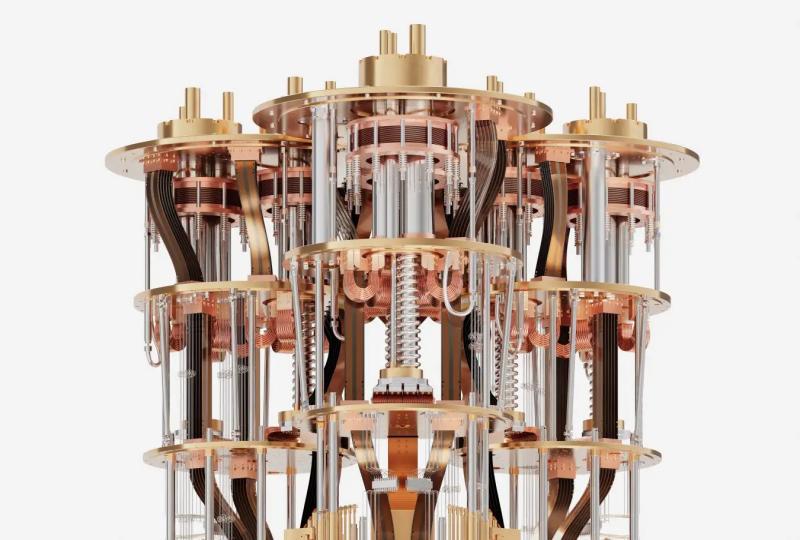
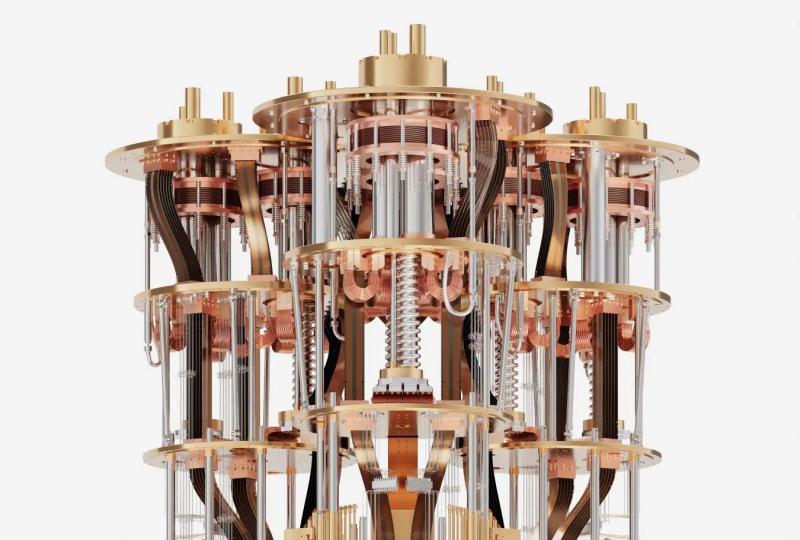
A practical superconducting quantum computer integrates three major subsystems: the superconducting qubit chip (QPU), a cryogenic environment (typically a dilution refrigerator), and a quantum control and measurement system. SpinQ’s SQC superconducting quantum computer exemplifies this full‑stack integration by combining a 20‑qubit superconducting QPU, a milli‑kelvin cryogenic platform, and a high‑precision Quantum Control Measurement (QCM) system in an approximately 25‑square‑meter footprint.
The QCM system includes modular arbitrary waveform generators, quantum analyzers, clock distribution units, and trigger distribution units, all synchronized to sub‑nanosecond accuracy to drive and read out tens to hundreds of qubits. Hardware acceleration using FPGAs allows real‑time waveform synthesis and fast feedback, while high vertical resolution and low noise ensure accurate qubit control. This hardware layer is complemented by SpinQit, a Python‑based quantum programming framework, and a quantum cloud platform that lets users run algorithms on both NMR and superconducting backends through a unified software interface.
Superconducting Qubits vs. Other Qubit Technologies
Although superconducting qubit chips lead many of today’s quantum headlines, they are not the only route to quantum computation. Other platforms include trapped ions, neutral atoms, photonic qubits, semiconductor spin qubits, and emerging topological qubits. Each technology has its own strengths and trade‑offs in terms of coherence, connectivity, operating temperature, and engineering complexity.
| Qubit Type | Typical Platform | Key Advantages | Main Challenges |
| Superconducting qubits | IBM, Google, SpinQ superconducting QPUs | Mature fabrication, fast gate operations, compatibility with semiconductor processes, strong qubit coupling, clear scaling path | Requires ultra‑low temperatures, decoherence still limits circuit depth, complex cryogenics. |
| Trapped ions | IonQ, academic ion‑trap systems | Extremely long coherence times, high‑fidelity gates, all‑to‑all connectivity in small systems | Slower gate speeds, engineering challenges for scaling to very large ion chains or 2D arrays. |
| Neutral atoms | Rydberg‑atom arrays | Natural scalability to large 2D arrays, strong Rydberg interactions | Control electronics and error rates still under active development; industrial ecosystem is younger. |
| Photonic qubits | Optical interferometers, quantum optics platforms | Operates at or near room temperature, good for communication | Deterministic two‑qubit gates and large‑scale integration remain challenging. |
| Topological qubits | Experimental Majorana‑based devices | Potential for inherently protected qubits requiring less error correction | Still at early proof‑of‑concept stage; materials and device physics are complex. |
Superconducting qubit chips stand out today because they pair relatively mature fabrication and control technology with clear evidence of scalable architectures and error‑corrected computation, making them the workhorse of many national and corporate quantum roadmaps.
How Superconducting Qubit Chips Are Designed and Manufactured
Designing a superconducting qubit chip involves electromagnetic simulation of resonators, qubits, and couplers, followed by layout generation that balances coherence, connectivity, and compatibility with fabrication constraints. SpinQ’s QEDA superconducting QPU EDA software illustrates how this design process is being automated: engineers can configure parametric components like transmons, resonators, and coupling capacitors, then generate full chip layouts with one click using intelligent routing algorithms.
Once a design is finalized, wafers go through thin‑film deposition, lithography, etching, and Josephson junction fabrication, similar to advanced semiconductor manufacturing but with tighter requirements on materials purity and surface defects. SpinQ’s standardized pipeline covers design, fabrication, packaging, and testing, enabling mass production of high‑performance QPUs with consistent parameters and T1 times up to 100 microseconds. Every chip is delivered with a factory characterization report that includes cavity frequencies, qubit frequencies, decoherence times, and gate fidelity benchmarks to support system integration and algorithm development.
Real‑World Applications Enabled by Superconducting Qubit Chips
As coherence and fidelity improve, superconducting qubit chips are enabling increasingly sophisticated algorithms in finance, chemistry, materials science, and optimization. Hybrid quantum‑classical workflows such as the Variational Quantum Eigensolver (VQE) and quantum approximate optimization algorithms are particularly well suited to today’s noisy intermediate‑scale quantum (NISQ) processors.
SpinQ and its partners have demonstrated several representative use cases, including quantum clustering models to optimize ATM deployment for commercial banks and VQE‑based approaches for genome assembly challenges, which earned high‑profile awards from financial authorities and advanced biomedical research programs. Superconducting QPUs also play a central role in quantum machine learning, where variational circuits running on superconducting chips can accelerate classification, recommendation, and portfolio optimization workloads compared to purely classical methods in some regimes.
Future Trends and Quantum Chip Breakthroughs
Looking ahead, the key quantum chip breakthroughs are expected in three areas: longer coherence, better error correction, and tighter hardware–software integration. Materials‑driven advances like Princeton’s millisecond‑coherence qubit show that simply improving loss channels in existing superconducting designs can dramatically reduce the number of physical qubits required for a logical qubit. At the same time, industry roadmaps emphasize scalable error‑correcting codes and multi‑chip modules that can support thousands of logical qubits within the next decade.
On the industrial side, companies such as SpinQ are expanding chip production lines, quantum control systems, and cloud platforms to deliver end‑to‑end solutions rather than standalone chips, reflecting a broader shift toward full‑stack quantum ecosystems. China’s continued investment and the success of exporting standardized superconducting qubit chips suggest that global competition in quantum hardware will intensify, likely accelerating innovation and lowering barriers for end users worldwide.
For organizations exploring quantum computing today, superconducting qubit chips offer the most accessible path to near‑term experimentation and long‑term fault‑tolerant architectures. Monitoring news about coherence milestones, export achievements, and standardized QPU products—such as SpinQ’s Shaowei chip and superconducting QPU series—provides a practical lens on how quickly this technology is moving from laboratory curiosity to industrial infrastructure.
FAQ: Superconducting Qubit Chips and Quantum Chip Breakthroughs
What is a superconducting qubit chip in simple terms?
A superconducting qubit chip is a tiny electronic circuit that behaves according to quantum mechanics when cooled to extremely low temperatures, allowing each circuit element (qubit) to represent both 0 and 1 simultaneously. Controlled with microwave pulses, these qubits can run quantum algorithms that outperform classical computers for certain specialized tasks.
How is a superconducting qubit chip different from a classical chip?
Classical chips use transistors that process bits strictly as 0 or 1, while superconducting qubit chips use Josephson junctions and resonant circuits that can exist in superpositions of 0 and 1 and become entangled with each other. This enables exponential state space growth with qubit count, but also makes the hardware far more sensitive to noise, requiring ultra‑low temperatures and sophisticated control electronics.
What makes China’s quantum chip breakthrough significant?
China’s breakthrough lies in moving from lab‑scale prototypes to standardized, mass‑produced superconducting qubit chips that can be exported and integrated by international customers. SpinQ’s successful overseas delivery of its Shaowei chip demonstrated that Chinese manufacturers can meet global performance and reliability expectations, strengthening China’s position in the quantum supply chain.
How many qubits do today’s superconducting chips have?
Research‑grade superconducting chips now range from tens to thousands of physical qubits, with IBM, Google, and Fujitsu–RIKEN reporting processors in the 100–1,000‑plus‑qubit class. Commercially available QPUs targeted at algorithm development and education, such as SpinQ’s 2‑, 5‑, 10‑, and 20‑qubit superconducting QPUs, focus on high fidelity and ease of integration rather than sheer qubit count.
What are the main challenges for superconducting qubit chips?
The biggest challenges are decoherence (quantum states decaying too quickly), gate errors, and the engineering complexity of scaling control and cryogenic systems to thousands or millions of qubits. Overcoming these issues requires better materials, improved device designs, advanced error‑correcting codes, and highly integrated cryo‑electronics and control architectures.
How can developers access superconducting qubit chips today?
Most users access superconducting qubit chips through cloud platforms that expose them as backends behind high‑level SDKs, rather than handling the physical hardware directly. SpinQ, for example, offers a quantum cloud platform and SpinQit programming framework that connect users to real superconducting and NMR quantum computers as well as simulators, enabling experimentation without owning cryogenic hardware.
Which industries will benefit first from superconducting quantum chips?
Early beneficiaries are likely to include finance (portfolio optimization, risk analysis), chemistry and materials (molecular simulation, catalyst discovery), logistics and manufacturing (routing and scheduling), and certain machine‑learning tasks. In these domains, even modest quantum speedups can translate into significant cost savings or new capabilities, motivating ongoing experiments with superconducting qubit hardware.
Superconducting qubit chips are now the leading hardware platform for practical quantum computers, and recent breakthroughs—especially China’s standardized, exportable superconducting chips from SpinQ—show that quantum processors are moving from lab prototypes into industrial production.
Below is an SEO‑optimized article on superconducting qubit chips, including tables, FAQs, and references to recent quantum chip breakthroughs. Internal links use only the official SpinQ website as requested.
What Is a Superconducting Qubit Chip?
A superconducting qubit chip is a specialized quantum processing unit (QPU) built from tiny superconducting circuits that behave like artificial atoms when cooled to extremely low temperatures. Each circuit element—called a qubit—encodes information in quantized energy levels and can exist in a superposition of 0 and 1, enabling powerful parallel computation beyond classical bits.
These chips are fabricated on substrates such as silicon or sapphire and use Josephson junctions (superconductor–insulator–superconductor structures) to create non‑linear circuit elements that support well‑defined quantum states. When placed in a dilution refrigerator at around 10–20 millikelvin, microwave control pulses can implement single‑qubit and two‑qubit gates, making it possible to run full quantum algorithms on the chip.
Why Superconducting Qubit Chips Dominate Quantum Hardware
Among the many ways to build a quantum computer—trapped ions, neutral atoms, photons, spin qubits—superconducting qubit chips currently lead in industrial maturity and deployment. Several features make them stand out:
-
They are compatible with modern semiconductor fabrication, supporting lithographically defined arrays of qubits on a single chip.
-
They offer very fast gate operations, typically in the tens of nanoseconds, allowing many quantum logic operations within the coherence time.
-
They have demonstrated high‑fidelity gates (above 99.9 percent for single‑qubit and around 99 percent for two‑qubit operations) in commercial‑grade devices.
These strengths have led major players—including IBM, Google, and SpinQ—to choose superconducting qubit chips as the core of their quantum processors.
Quantum News Hotspot: Recent Superconducting Chip Breakthroughs
Recent milestones have pushed superconducting qubit chips to the center of quantum technology news:
-
Scaling up qubit counts: IBM’s roadmap targets processors with more than one thousand superconducting qubits via multi‑chip architectures, while Fujitsu and RIKEN announced a 256‑qubit superconducting quantum computer in 2025 with plans for a 1,000‑qubit machine by 2026.
-
Error‑correction breakthroughs: Google’s 105‑qubit “Willow” chip demonstrated “below‑threshold” quantum error correction, where logical error rates drop exponentially as more qubits are added, proving that fault‑tolerant quantum computing with superconducting qubits is realistically achievable.
-
Record coherence times: Princeton researchers built a superconducting qubit that maintains coherence for over 1 millisecond—three times longer than previous bests and nearly 15 times longer than typical large‑scale processors—by optimizing materials and fabrication.
These developments collectively reduce errors, increase circuit depth, and bring practical quantum advantage significantly closer.
China’s Quantum Chip Breakthrough: SpinQ and Standardized Superconducting QPUs
One of the most important recent stories is China’s move from prototype chips to standardized, mass‑produced superconducting qubit chips that can be exported globally.
SpinQ Technology, founded in 2018 in Shenzhen, has built a superconducting quantum chip production line and research center in the Shenzhen–Hong Kong Innovation and Technology Cooperation Zone, covering chip design, fabrication, testing, and system integration. In April 2023, SpinQ released its “Shaowei” superconducting quantum chip, one of the few standardized, mass‑produced superconducting quantum chip products in the world.
Key characteristics of the Shaowei‑class chips include:
-
Energy‑relaxation times T1T1 on the order of 10–100 microseconds, enabling many gate operations per qubit.
-
Single‑qubit gate fidelities above 99.9 percent and two‑qubit fidelities above 98 percent, with gate durations in the tens of nanoseconds.
-
Integration in 1D or 2D qubit chain topologies suited for near‑term algorithms and error‑correcting code experiments.
In November 2023, SpinQ became the first Chinese company to successfully export superconducting quantum chips overseas, delivering Shaowei chips to a research institution in the Middle East and later receiving follow‑up orders for higher‑qubit versions. This export marks a major quantum chip breakthrough for China, confirming that its foundry and quality‑control processes meet international standards.
For readers exploring chip‑level details, SpinQ provides more background in its quantum chip and foundry content on the official site, such as its coverage of top quantum chip companies and chip‑foundry capabilities on spinquanta.com.
Core Metrics of a Superconducting Qubit Chip
For engineers, researchers, and decision‑makers, a few hardware metrics largely determine how “good” a superconducting qubit chip is.
Performance Metrics Table
| Metric | Typical Leading‑Edge Range | Why It Matters |
| Coherence time T1T1 | 10–100 microseconds for commercial QPUs like SpinQ’s Shaowei; >1 ms in cutting‑edge lab qubits | Longer T1T1 means qubits retain information longer, allowing deeper circuits before decoherence dominates. |
| Single‑qubit gate fidelity | ≥99.9 percent | Lower error per gate boosts the success rate of algorithms and reduces error‑correction overhead. |
| Two‑qubit gate fidelity | 98–99 percent or above | High‑quality entangling gates are essential for most quantum algorithms and for building logical qubits. |
| Gate time | Tens of nanoseconds | Faster gates let more operations fit within the coherence window. |
| Qubit connectivity | 1D or 2D nearest‑neighbor networks | Connectivity affects how easily qubits can interact without many SWAP operations; better layouts reduce circuit depth. |
| Operating temperature | ~10–20 millikelvin | Ultra‑low temperatures suppress thermal noise and support stable quantum behavior. |
SpinQ’s superconducting QPU series—covering 2‑, 5‑, 10‑, and 20‑qubit chips—sits in the commercially relevant sweet spot: relatively modest qubit counts, but strong coherence and fidelity plus standardized, well‑documented performance.
From Chip to Full Superconducting Quantum Computer
A superconducting qubit chip is only one part of a working quantum computer. A full superconducting system typically includes:
-
Superconducting QPU: The chip that hosts and manipulates qubits.
-
Cryogenic environment: A dilution refrigerator providing an ultra‑low‑temperature (≈10 mK) environment to keep qubits coherent.
-
Quantum control & measurement electronics: Arbitrary waveform generators, quantum analyzers, clock and trigger distribution, and RF components that generate precise microwave pulses and readout signals.
-
Software stack: Compilers, programming frameworks, and cloud platforms that turn high‑level code into hardware‑level control sequences.
SpinQ’s SQC superconducting quantum computer integrates these layers in a 20‑qubit system that combines its own QPUs, a low‑vibration dilution refrigerator, and a modular Quantum Control Measurement (QCM) system. The QCM hardware can scale to control hundreds of qubits, using FPGAs for waveform generation and fast feedback while maintaining sub‑nanosecond synchronization between channels.
On the software side, SpinQ offers the SpinQit quantum programming framework and a quantum cloud platform that allow users to develop quantum algorithms in Python, run them on real superconducting or NMR quantum computers, and switch between hardware and simulators transparently. This full‑stack approach reduces integration complexity for universities, research labs, and enterprises.
Superconducting Qubits vs. Other Qubit Technologies
Superconducting qubit chips aren’t the only option, but they occupy a special position in the current landscape.
Comparison Table: Qubit Technologies
| Qubit Type | Example Platforms | Key Advantages | Key Challenges |
| Superconducting qubits | IBM, Google, SpinQ superconducting QPUs | Mature fabrication, fast gates, strong qubit–qubit coupling, compatible with semiconductor processes. | Need ultra‑low temperatures; decoherence and noise still limit circuit depth; complex cryogenic engineering. |
| Trapped ions | Ion‑trap systems | Extremely long coherence times, high‑fidelity gates, often all‑to‑all connectivity in small systems. | Slower gate speeds; scaling many ions while maintaining control is difficult. |
| Neutral atoms | Rydberg atom arrays | Naturally scalable 2D arrays, strong Rydberg interactions for fast entangling gates. | Control electronics and error rates are still under rapid development. |
| Photonic qubits | Integrated photonics, optical interferometers | Operate at or near room temperature; ideal for quantum communication. | Deterministic two‑qubit gates and large‑scale integration are challenging. |
| Topological qubits | Experimental Majorana devices | Potentially error‑resilient qubits that reduce error‑correction overhead. | Still at early proof‑of‑concept stage; materials and device physics are complex. |
Superconducting chips dominate today’s commercial ecosystem because they combine fast iteration cycles, good performance, and industrial tooling. Other modalities may eventually surpass them for specific applications, but for the near term, most high‑profile quantum chip breakthroughs are happening on superconducting platforms.
How Superconducting Qubit Chips Are Designed and Manufactured
Designing a superconducting qubit chip involves:
-
Circuit‑level design: Choosing qubit types (e.g., transmon variants), resonator geometries, coupling strengths, and readout structures.
-
Electromagnetic simulation: Optimizing frequencies, coupling and cross‑talk using microwave and RF simulations.
-
Layout generation: Turning parametric designs into full chip layouts that satisfy design rules and fabrication constraints.
SpinQ addresses this workflow with its QEDA superconducting QPU EDA software, which runs in a browser and allows designers to select from a rich library of quantum components, tune parameters, and generate complete layouts with intelligent automatic routing. This greatly reduces design time and lowers the barrier for researchers who want to prototype custom superconducting QPUs.
On the manufacturing side, wafers undergo thin‑film deposition, photolithography, etching, and Josephson‑junction fabrication—all under strict control to maximize coherence and uniformity. SpinQ’s standardized pipeline enables mass‑produced superconducting QPUs with T1 up to around 100 microseconds, and each chip ships with a detailed characterization report covering resonant frequencies, decoherence times, and gate‑fidelity benchmarks.
Real‑World Applications Enabled by Superconducting Chips
As superconducting qubit chips improve, they are being tested in real business and scientific scenarios:
-
Finance: Quantum clustering and optimization algorithms have been used to optimize ATM deployment and improve financial decision‑making for commercial banks, achieving awards from major financial regulators.
-
Biomedicine: Variational Quantum Eigensolver (VQE)‑based methods on quantum hardware are being explored to accelerate genome assembly and molecular‑structure calculations.
-
Optimization and logistics: Quantum approximate optimization algorithms running on superconducting chips are being investigated to solve routing, scheduling, and resource‑allocation problems more efficiently.
-
Quantum machine learning: Hybrid quantum–classical models use superconducting qubits in variational circuits for classification, recommendation, and anomaly‑detection tasks.
SpinQ’s cloud platform and hardware portfolio (from educational NMR systems to industrial‑grade superconducting QPUs) provide a practical on‑ramp for institutions that want to explore these use cases without building their own cryogenic labs.
Future Trends: Where Superconducting Qubit Chips Are Heading
Looking ahead, three trends define the future of superconducting qubit chips:
-
Longer coherence via better materials: Work like Princeton’s millisecond‑coherence qubit shows that improvements in materials and interfaces can dramatically extend coherence time without radically changing circuit design, reducing the number of physical qubits needed per logical qubit.
-
Stronger error correction and scaling: Industrial roadmaps project thousands of logical qubits built from millions of physical superconducting qubits over the next decade, using advanced codes and chip‑to‑chip interconnects.
-
Hardware–software co‑design: Companies such as SpinQ are integrating chip design tools, control electronics, operating systems, and cloud platforms so applications can move smoothly from simulation to execution on real superconducting hardware.
China’s progress in exporting standardized superconducting qubit chips and building independent manufacturing lines suggests a more global, competitive quantum hardware landscape, which is likely to accelerate innovation and lower access costs for users worldwide.
FAQ: Superconducting Qubit Chips and Quantum Chip Breakthroughs
-
What is a superconducting qubit chip in simple terms?
It is a tiny superconducting circuit that, when cooled close to absolute zero, behaves quantum mechanically so that each element (qubit) can be 0, 1, or a superposition of both at the same time. Controlled by microwave pulses, many such qubits on a chip can run quantum algorithms that classical chips cannot efficiently simulate.
-
How does a superconducting qubit chip differ from a classical chip?
Classical chips use transistors that process definite 0 or 1 states, whereas superconducting qubit chips use Josephson‑junction circuits with discrete quantum energy levels that support superposition and entanglement. This adds enormous computational power but also requires ultra‑low temperatures and extremely low‑noise environments.
-
Why is China’s superconducting quantum chip breakthrough important?
Because SpinQ demonstrated that China can design, mass‑produce, and export standardized superconducting quantum chips that meet international performance expectations. This shifts quantum chip manufacturing from a few Western suppliers toward a more diversified, global supply chain.
-
How many qubits do today’s superconducting chips have?
Lab‑scale and commercial processors now range from a few qubits up to more than one thousand physical qubits, depending on the provider. SpinQ’s current standardized superconducting QPUs focus on 2‑, 5‑, 10‑, and 20‑qubit configurations with high fidelity and detailed characterization, ideal for research and prototyping.
-
What limits today’s superconducting qubit chips?
The main limitations are decoherence (quantum states decaying too quickly), gate errors, and the engineering challenge of scaling cryogenics and control electronics to very large systems. Overcoming these requires better materials, device designs, error‑correction schemes, and integrated cryo‑control hardware.
-
How can developers or students experiment with superconducting qubit chips?
Most users access these chips through cloud platforms rather than owning the hardware. SpinQ, for example, provides a cloud service and the SpinQit framework that let users program in Python and run circuits on real superconducting and NMR quantum backends hosted in SpinQ’s facilities.
-
Which industries are likely to benefit first?
Finance, chemistry and materials, logistics, and certain machine‑learning applications are early candidates, where even modest quantum speedups can yield tangible value. As coherence and fidelity continue to improve, more domains—from pharmaceuticals to advanced manufacturing—are expected to adopt superconducting‑based quantum solutions.
Featured Content