
Superconducting Devices: Building Blocks of Quantum Computers
2026.04.10 · Blog Superconducting Devices
Superconducting devices sit at the heart of today’s most advanced quantum computers. They transform tiny electrical circuits into quantum systems that can process information in ways no classical chip can match. In this article, we’ll unpack what superconducting devices are, how they work, and why companies like SpinQ are betting on them as a scalable hardware foundation.
Why Superconducting Devices Matter for Quantum Computing
Modern quantum computers need hardware that is fast, scalable, and compatible with existing semiconductor know‑how. Superconducting devices deliver exactly that by using circuits that lose all electrical resistance at extremely low temperatures, allowing current to flow without energy loss. This makes them ideal candidates for building large‑scale qubit arrays that can handle complex algorithms for chemistry, optimization, finance, and AI.
What Makes a Material “Superconducting”?
A material becomes superconducting when it is cooled below a critical temperature and its electrical resistance drops effectively to zero. In this state, electrons form Cooper pairs that move through the lattice without scattering, enabling dissipationless current flow. Quantum devices typically use superconducting metals such as aluminum or niobium, which can be patterned into thin‑film circuits on silicon wafers with mature microfabrication techniques.
From Classical Electronics to Superconducting Circuits
At first glance, superconducting circuits look similar to classical microwave electronics: there are capacitors, inductors, transmission lines, and resonant structures. The key difference is that these circuits operate in the quantum regime, where energy is quantized and the electromagnetic field behaves like a quantum oscillator. By carefully engineering circuit parameters, researchers can create artificial atoms whose energy levels encode qubit states and can be manipulated with microwave pulses.
Josephson Junctions: The Core Element of Superconducting Devices
The Josephson junction is the fundamental non‑linear component that makes superconducting devices truly quantum. It consists of two superconductors separated by a thin insulating barrier through which Cooper pairs can tunnel, giving rise to a current that depends on the quantum phase difference. This non‑linearity allows circuits to have discrete energy levels and enables operations such as qubit rotations, readout, and parametric gates that are impossible with purely linear components.
Superconducting Qubits: Turning Circuits into Quantum Bits
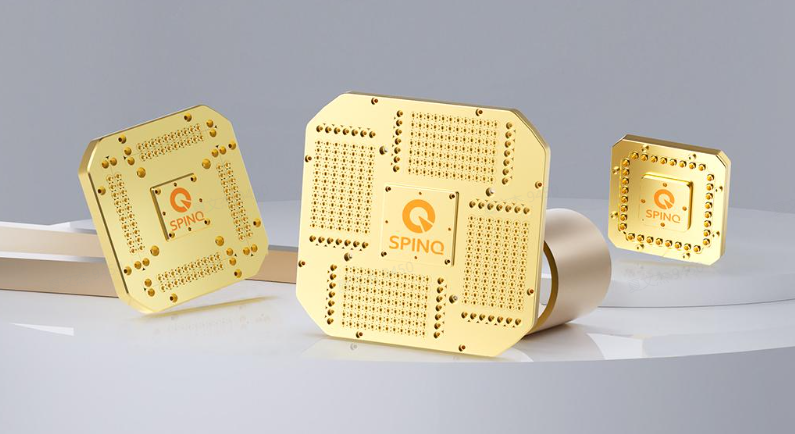
Superconducting qubits are artificial atoms built from Josephson junctions and linear circuit elements to create an anharmonic oscillator with at least two well‑separated energy levels used as ∣0⟩∣0⟩ and ∣1⟩∣1⟩. Popular designs such as the transmon qubit trade some anharmonicity for improved noise resilience, leading to longer coherence times and more stable gate performance. In SpinQ’s superconducting platforms, high‑coherence qubits on QPU C‑Series chips form the core of scalable, gate‑based quantum processors.
Resonators and Readout Circuits in Superconducting Systems
Superconducting resonators are used to couple qubits, route microwave signals, and read out quantum states. In dispersive readout, a qubit slightly shifts the resonance frequency of a coupled cavity, and by probing that cavity one can infer whether the qubit is in the ground or excited state. Carefully engineered resonators also act as quantum buses that mediate two‑qubit gates, enabling entanglement and more complex multi‑qubit operations.
Cryogenic Infrastructure: Keeping Superconducting Devices Cold
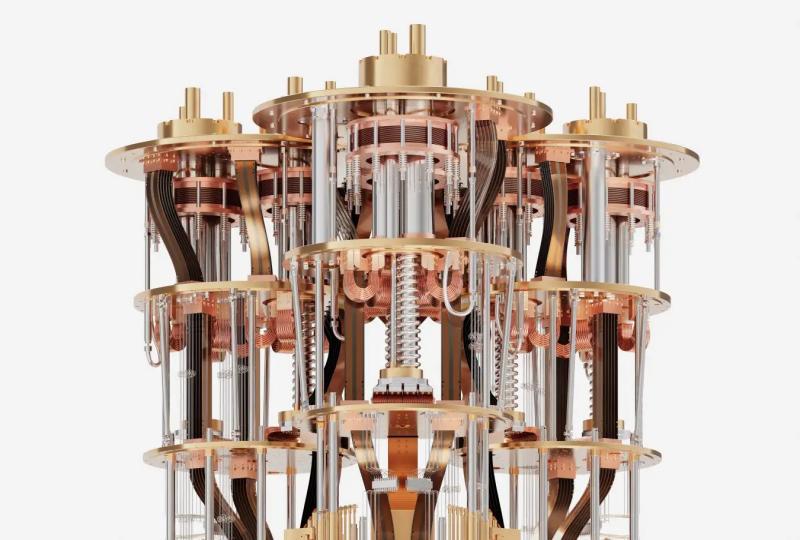
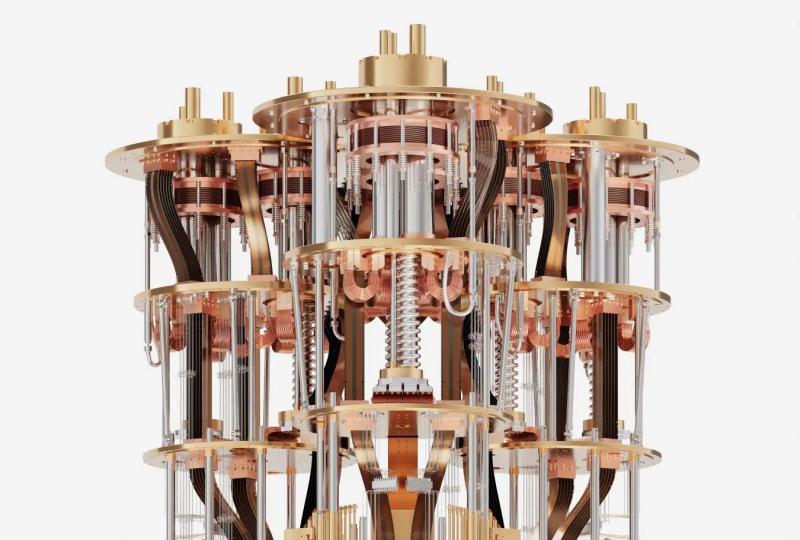
To maintain superconductivity and preserve fragile quantum states, superconducting devices must operate at milli‑kelvin temperatures in dilution refrigerators. These cryogenic systems isolate the quantum hardware from thermal noise, vibrations, and electromagnetic interference that would otherwise destroy coherence. SpinQ’s superconducting quantum computers integrate 20 mK cryogenic platforms with low‑vibration design to support high‑fidelity operation of densely packed qubit chips.

Coherence, Noise, and Error Sources
Despite their advantages, superconducting devices are still vulnerable to decoherence from material defects, stray photons, flux noise, and imperfect control pulses. Coherence times determine how long a qubit can reliably store quantum information before errors accumulate. Addressing these limitations requires better materials, cleaner fabrication, improved shielding, and sophisticated calibration routines powered by advanced control electronics.
Scaling Up: From Single Devices to Large‑Scale Quantum Processors
Scaling beyond a few qubits demands a full‑stack architecture: high‑yield chip fabrication, modular cryogenics, and powerful control and measurement electronics. Superconducting technology is leading here because it leverages lithographic manufacturing and can integrate dozens to hundreds of qubits on a single chip. SpinQ’s SQC superconducting quantum computer connects superconducting QPUs, a milli‑kelvin refrigerator, and a high‑precision QCM system into a single, production‑grade platform designed to reach 100‑plus qubits.
How SpinQ Uses Superconducting Devices
SpinQ’s QPU C‑Series superconducting chips feature high‑coherence qubits, strong internal quality factors, and uniform circuit parameters optimized for scalable gate‑based quantum computation. Combined with the SPINQ QCM measurement and control system, which uses modular RF electronics and FPGA acceleration to manage hundreds of channels, these devices form a turnkey superconducting stack for research and early‑stage industrial workloads.
Real‑World Applications Enabled by Superconducting Quantum Hardware
As superconducting processors grow in size and fidelity, they become powerful engines for quantum simulation, combinatorial optimization, and machine‑learning acceleration. Early use cases include molecular modeling for drug discovery, materials design, portfolio optimization, and secure cryptographic primitives. SpinQ’s roadmaps position its superconducting platforms to support both academic experiments and industry‑focused pilots seeking practical quantum advantage.

Future Directions: Higher Coherence, Better Integration, Lower Cost
The future of superconducting devices lies in pushing coherence times higher, gate errors lower, and system integration tighter. Innovations such as improved junction fabrication, 3D integration, cryo‑CMOS electronics, and native support for quantum error correction are already appearing in next‑generation designs. SpinQ’s SQC S Series, with 103 qubits and support for parametric gates and error‑correction‑ready architectures, reflects this shift toward practical, large‑scale quantum machines.
Featured Content