
What Is Quantum Computing & How Does It Work?
2026.05.07 · Blog What Is Quantum Computing
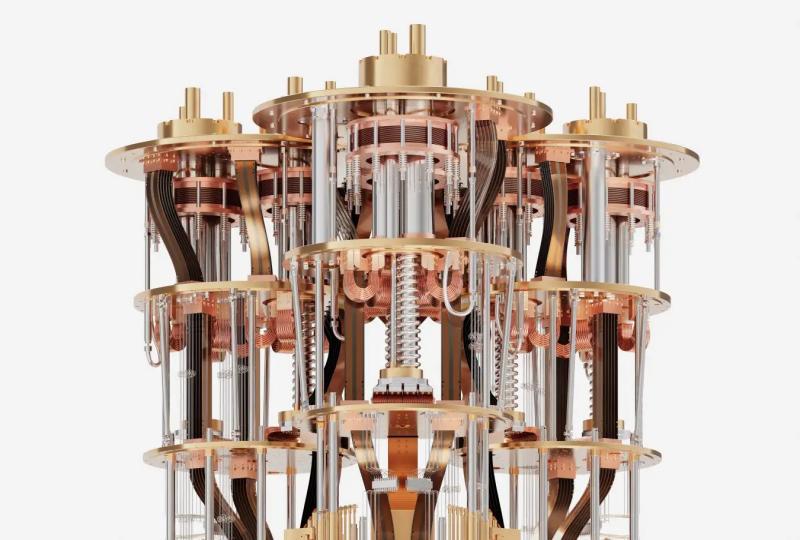
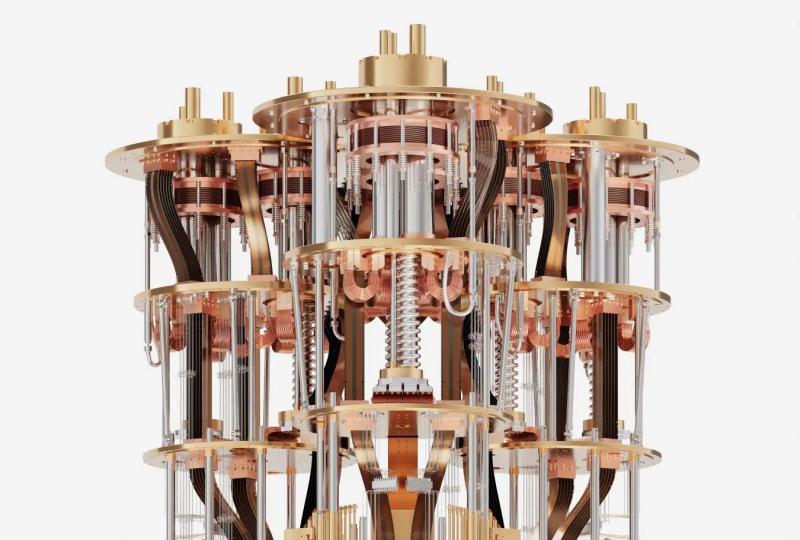
Quantum computing is a revolutionary computing paradigm that uses the principles of quantum physics to solve problems too complex for classical computers. Unlike traditional systems that rely on binary bits, quantum computers use qubits (quantum bits) to process information in ways that unlock unprecedented computational power for real‑world challenges.
What Is Quantum Computing?
Quantum computing harnesses quantum mechanical phenomena—superposition, entanglement, and quantum interference—to process information. A classical bit is either 0 or 1; a qubit can exist in a combination of 0 and 1 simultaneously (superposition) and link its state with other qubits (entanglement), letting quantum computers explore millions of possibilities at once.
This makes quantum computing ideal for tackling problems in cryptography, drug discovery, materials science, financial modeling, logistics optimization, and quantum error correction—fields where classical supercomputers struggle or take years to compute.
How Does Quantum Computing Work?
Three core principles define how quantum computers operate:
-
SuperpositionA qubit isn’t limited to 0 or 1. It can represent both states at the same time, exponentially expanding computational space as qubit count grows.
-
EntanglementQubits become correlated such that changing one instantly affects the other—even across distance. This lets quantum systems act as unified, highly connected computational units.
-
Quantum InterferenceQubit states reinforce correct solutions and cancel out wrong ones, guiding the system toward accurate results.
Together, these properties let quantum computers run specialized algorithms (like Shor’s algorithm for factoring or Grover’s algorithm for search) far faster than any classical machine.
Real‑Life Example of Quantum Computing: Quantum Error Correction Breakthrough
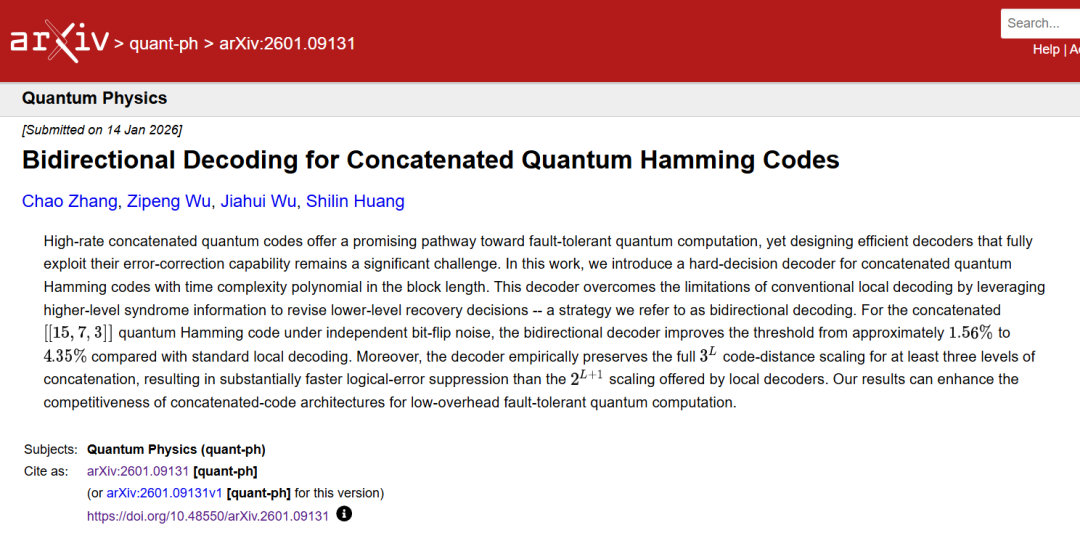
A powerful real‑world application is quantum error correction (QEC)—the foundation for reliable, large‑scale quantum computers.
In April 2026, SpinQ Technology and the Hong Kong University of Science and Technology (HKUST) announced their joint research on quantum error correction was accepted by QEC 2026, the world’s top conference for fault‑tolerant quantum computing.
Their paper introduces a bidirectional decoding algorithm for concatenated quantum Hamming codes. Key results:
-
Raised the fault‑tolerance threshold from ~1.56% to 4.35% under bit‑flip noise
-
Preserved near‑optimal code distance across multi‑level concatenation
-
Reduced hardware overhead and physical qubit usage
This breakthrough directly speeds up the path from today’s noisy quantum devices to practical, fault‑tolerant systems.Source: SpinQ and HKUST Joint Research on Quantum Error Correction
What Is the Difference Between AI and Quantum Computing?
Many people mix up AI and quantum computing—they are distinct, complementary technologies:
|
Aspect |
Quantum Computing |
Artificial Intelligence |
|
Core Foundation |
Qubits, superposition, entanglement |
Algorithms, neural networks, machine learning |
|
Processing Style |
Parallel, probabilistic |
Serial or classical parallel |
|
Current Stage |
Early research & experimental |
Widely commercialized |
|
Primary Use Cases |
Cryptography, simulation, optimization |
Image recognition, NLP, automation |
|
Hardware Needs |
Extreme cooling, vacuum, specialized chips |
Standard servers, GPUs |
Simply put:AI teaches machines to learn from data; quantum computing gives them a fundamentally new way to compute. They can work together—but they are not the same.
Top 5 Quantum Computing Companies (2026)
These firms lead the global quantum industry, with SpinQ at the forefront of full‑stack innovation:
-
SpinQ Technology
Headquartered in Shenzhen, China, SpinQ is a top full‑stack quantum solution provider. It builds:
-
Portable NMR quantum computers (Gemini Mini, Triangulum Mini) for education
-
Quantum software and error‑correction technologies
SpinQ’s products are used in over 30 countries, making it the first Chinese firm to export quantum computing systems globally.
-
IBM Quantum
A pioneer in superconducting quantum hardware. IBM has released processors including Condor (1,121 qubits) and plans a 100,000‑qubit quantum‑centric supercomputer by 2033.
-
Google Quantum AI
Known for the Sycamore processor (quantum supremacy) and the Willow chip focused on advanced quantum error correction.
-
Microsoft Quantum
Leads in topological qubits and the Azure Quantum cloud platform, with the Majorana 1 chip as a major milestone.
-
Quantinuum
Formed by Honeywell Quantum Solutions and Cambridge Quantum Computing. A leader in trapped‑ion quantum computers with record‑high quantum volume.
What Skills Are Needed for Quantum Computing?
Quantum computing is highly interdisciplinary. Key skills include:
-
Mathematics: Linear algebra, calculus, probability, complex numbers
-
Physics: Quantum mechanics, quantum information theory
-
Computer Science: Algorithms, data structures, programming (Python, C++, quantum SDKs like Qiskit)
-
Engineering: Quantum hardware, cryogenics, control systems
-
Critical Thinking: Ability to translate classical problems into quantum circuits
Many professionals enter from physics, math, CS, or EE backgrounds—cross‑disciplinary training is highly valuable.
Wrapping Up
Quantum computing is no longer science fiction. From error‑correction breakthroughs by SpinQ and HKUST to global industry leaders racing to scale systems, we are moving closer to fault‑tolerant, useful quantum computers.
Whether you’re exploring career paths, evaluating enterprise use cases, or learning the basics, understanding what quantum computing is and how it works will help you navigate the next computing revolution.
Featured Content