
How to Learn Quantum Computing from Scratch (Roadmap)
2026.05.07 · Blog quantum computing
Quantum computing is no longer just theoretical physics—it’s a fast-growing, practical industry reshaping finance, healthcare, manufacturing, and cloud computing. If you want to learn quantum computing from zero basics, this roadmap gives you a clear, step-by-step path to go from beginner to confident practitioner.
What Is Quantum Computing & Why Does It Matter?
Quantum computing uses the principles of quantum mechanics—superposition, entanglement, and interference—to solve problems classical computers cannot handle efficiently.
A classical bit is either 0 or 1. A qubit (quantum bit) can be 0, 1, or a combination of both at the same time. This lets quantum computers explore many possibilities in parallel, delivering exponential speedups for specific tasks.
What Will Quantum Computing Do?
Quantum computers excel at problems involving:
-
Massive combinatorial search & optimization
-
Complex simulation (molecules, materials, genomes)
-
High-dimensional data processing
-
Pattern recognition & AI acceleration
Real-world use cases include:
-
Drug discovery & molecular modeling
-
Financial risk analysis & portfolio optimization
-
Supply chain & logistics route planning
-
Genome sequencing & assembly
-
Natural language processing (NLP)
-
Smart factory & industrial design
How Quantum Computers Work
You only need 4 core ideas to start:
-
Qubit: The basic unit of quantum information
-
Superposition: A qubit exists in multiple states simultaneously
-
Entanglement: Qubits become correlated, even when separated
-
Quantum Gate & Circuit: Operations that manipulate qubits to perform calculations
When you measure a qubit, it “collapses” to a definite 0 or 1—this is how you get results from quantum computation.
Cloud Quantum Computing: Access Real Quantum Hardware Easily
You don’t need to buy a quantum computer to learn. Cloud quantum platforms let you run circuits on real hardware and high-performance simulators from your browser.
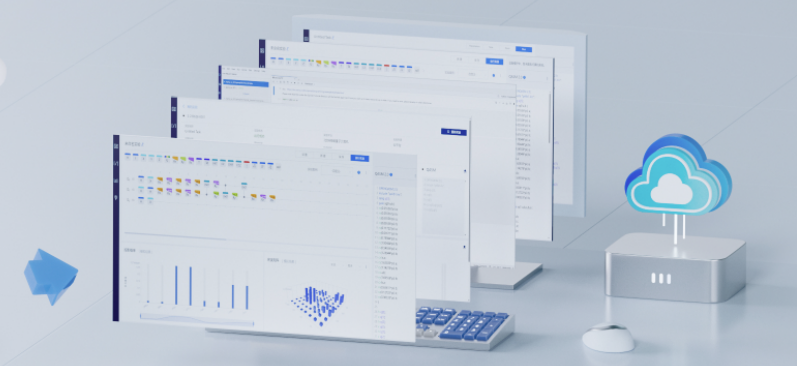
A great example is SPINQ Cloud, a full-featured quantum computing cloud platform designed for researchers, developers, and beginners.
Key Features of SPINQ Cloud:
-
Real quantum machines: 2, 3, 5, 8-qubit systems (NMR and superconducting)
-
High-performance simulator: Up to 24-qubit full-amplitude simulation
-
Visual circuit design + OpenQASM editing (graphic-code sync)
-
Online Python/Jupyter programming with multi-user collaboration
-
Clear task management: status tracking, import/export, result visualization
-
Local task submission via SPINQit SDK
-
Pre-built algorithm examples: Grover’s algorithm, quantum neural networks, etc.
-
Real industry applications: NLP, path optimization, manufacturing part selection
Cloud quantum computing lowers the barrier to entry—you can start building and running quantum circuits on day one.
Who Uses Quantum Computers in Real Life?
Quantum computing is already moving from labs to real industry solutions. Here are two landmark collaborations showing real impact.
-
Finance: Huaxia Bank × SpinQ – Quantum AI for Smart Banking
Huaxia Bank’s fintech subsidiary partnered with SpinQ to build quantum neural network models for better commercial banking decisions.

Use Case: ATM Network Optimization
-
Problem: Falling cash use means high ATM costs and low utilization. Banks need to optimize placement and reduce redundant machines.
-
Solution: A quantum neural network run on SpinQ’s NMR quantum computer
-
Process:
-
Data from 2,243 ATMs over 2 years
-
Build prediction model (failure rate, usage, operation time)
-
Quantum data encoding via variational embedding
-
Run on real quantum hardware
-
-
Result: 75% accuracy for ATM retention/removal decisions—faster, higher precision than classical algorithms
-
Bonus: Quantum optimization finds optimal placement even without full sample parameters
-
Award: First Prize in the 2020 People’s Bank of China Financial Technology Development Award (first-ever in quantum computing)
Quantum computing also supports smart counter clustering, precision marketing, and risk control in banking.
-
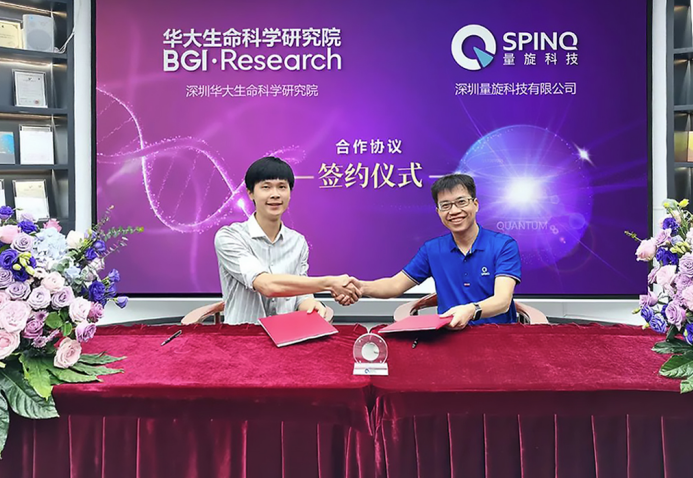
Life Sciences: BGI-Research × SpinQ – Genome Assembly with VQE
BGI-Research and SpinQ used variational quantum algorithms (VQE) to solve tough genome assembly challenges—a major bottleneck in bioinformatics.
Why Classical Methods Struggle
-
Short sequencing reads (100–300 bp) vs. 3B+ base pairs in human genome
-
Repetitive regions and high heterozygosity break classical assemblers
-
Huge compute and storage costs, especially de novo assembly
Quantum Solution
-
Convert genome assembly into a combinatorial optimization problem
-
Map DNA fragments to a directed graph → find optimal path
-
Use VQE to transform the problem into Hamiltonian terms
-
Solve for optimal eigenvalues → decode the best assembly path
Advantage
Uses quantum superposition and entanglement with hybrid quantum-classical algorithms to simulate larger systems with fewer qubits—ideal for the NISQ (Noisy Intermediate-Scale Quantum) era.
This breakthrough speeds up gene sequencing and supports future advances in personalized medicine, drug discovery, and disease research.
Your Roadmap: Learn Quantum Computing from Scratch
Phase 1: Foundations (Weeks 1–4)
-
Learn basic math: linear algebra, vectors, matrices, probability
-
Master core concepts: qubit, superposition, entanglement, measurement
-
Understand classical vs. quantum computing
Phase 2: Tools & Practice (Weeks 5–8)
-
Learn Python for quantum programming
-
Use a cloud quantum platform (like SPINQ Cloud)
-
Build simple circuits with visual editors or OpenQASM
-
Run simulators and real‑machine jobs
Phase 3: Algorithms & Applications (Weeks 9–12)
-
Study key algorithms: Grover’s search, VQE, quantum neural networks
-
Explore industry use cases: finance, genomics, optimization
-
Modify open-source examples and run your own experiments
Phase 4: Advanced & Projects (Ongoing)
-
Build end-to-end projects: optimization, classification, small simulation
-
Join communities and follow research
-
Explore specializations: quantum AI, quantum finance, quantum biology
Start Today
Quantum computing is for curious learners, developers, researchers, and industry professionals. With cloud platforms like SPINQ Cloud, you can access real hardware, collaborate with others, and turn theory into working code—all from your laptop.
The quantum era is here. Your journey starts now.
Featured Content