
What Does a Qubit Look Like in Hardware?
2026.07.08 · Blog what does a qubit look like
Why qubits are hard to “see”
The question “what does a qubit look like?” seems simple, but the answer is subtle. A qubit is a quantum state of a physical system, not a visible object with a clear shape or color. You cannot look at a chip and see whether a qubit is in state 0 or 1, or in a superposition. Instead, you see the hardware that hosts the qubit and the instruments that control and measure it.
This separation between physical hardware and invisible quantum state can make qubits feel abstract. However, by examining how different technologies implement qubits—and how those devices appear—we can build a concrete picture of what “houses” a qubit and how we interact with it.
Superconducting qubits: the look of quantum chips
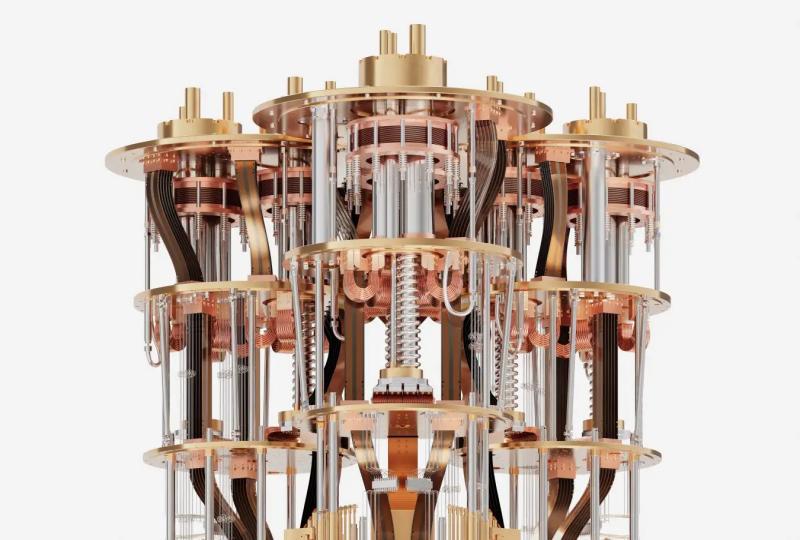
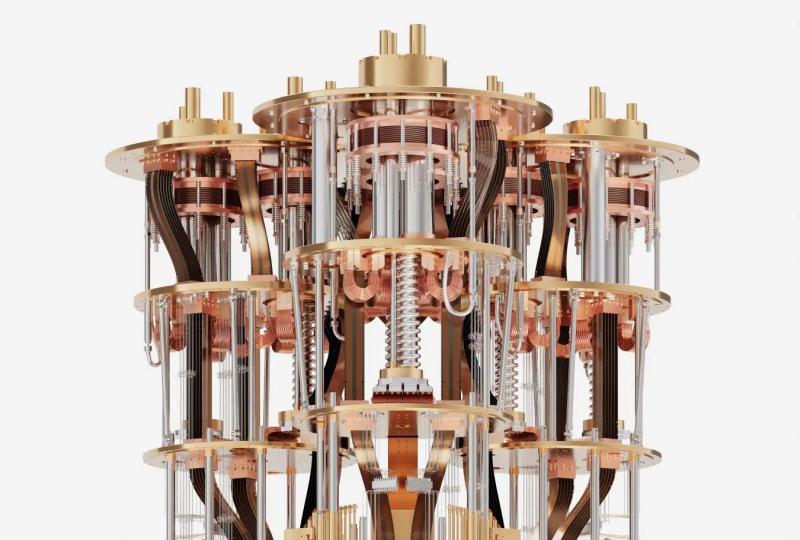
In superconducting quantum computers, qubits are implemented as engineered circuits on small chips. At a glance, these chips resemble specialized microwave circuits or advanced RF components. Under a microscope, you see metallic patterns on a substrate: resonators, pads, and wiring that connect to tiny nonlinear elements known as Josephson junctions.
The qubit itself is associated with the quantum energy levels of this circuit. The states 0 and 1 correspond to different configurations of current and phase in the superconducting loop. These differences are not visible to the eye; they are detected by sending microwave signals and measuring how the circuit responds. From the outside, what you “see” is a chip mounted on a carrier, wired into a cryogenic system. The visual identity of the qubit is the layout and packaging of that chip, even though the actual quantum state is hidden within its microscopic behavior.
NMR qubits: molecules, magnets, and coils
In NMR‑based quantum computers, qubits are nuclear spins in molecules. The hardware looks like a compact NMR setup: a magnet housing, coils, and sample containers. Inside, a carefully prepared sample holds molecules whose nuclei act as qubits when placed in the magnetic field.
The qubit state is the quantum orientation of a nucleus relative to that field, described by spin up and spin down or more general superpositions. You cannot see these spin states directly. What you see are the sample tubes, the magnet, and the electronics that generate and detect radiofrequency pulses. SpinQ’s desktop NMR quantum computers are specifically designed to make this environment approachable, with integrated enclosures and interfaces that clearly show where the sample sits and how the system is controlled.
Visual representations: Bloch spheres and circuit diagrams
Because you cannot directly see qubit states, educators and researchers use visual models. The Bloch sphere is one of the most common. It represents a single qubit’s possible pure states as points on a sphere, with the poles corresponding to the classical states and other points corresponding to different superpositions. Rotations on the Bloch sphere represent quantum gates acting on the qubit.
Circuit diagrams provide another visual layer. They show qubits as horizontal lines and gates as symbols placed along those lines. Entangling gates link different lines, illustrating how qubits become correlated. These diagrams do not depict hardware, but they help people visualize how quantum information flows and transforms inside a system. When learners see circuit diagrams alongside photos of chips or NMR magnets, they begin to connect logical operations with physical implementations.
What qubits look like in a lab or classroom
In a lab using superconducting qubits, you might see a large cryogenic refrigerator—a metal cylinder or box with multiple stages—connected to racks of microwave electronics. The quantum chips live at the coldest stage, mounted on holders and wired to coaxial cables. Engineers handle spare chips at the workbench, often in cleanroom conditions, inspecting patterns under microscopes. The qubits themselves, as energy levels in those circuits, remain invisible.
In a classroom or teaching lab using SpinQ desktop NMR quantum computers, the environment is more compact and familiar. You see the device as a desktop unit, with a magnet and control electronics integrated inside a single enclosure. Students place samples in designated positions, launch experiments from a computer, and see results on screen. The qubits—nuclear spins in the sample—are hidden, but the device’s clear layout and user interface give learners a physical sense of where quantum information resides.
Seeing qubits through experiments and data
Ultimately, the most meaningful way to “see” a qubit is through its experimental signatures. When you run a Rabi oscillation, you plot how measurement outcomes vary as you change pulse duration, revealing the qubit’s response to control. When you perform Ramsey interference, you get fringes that show how phase accumulates between pulses. When you create entangled states, you observe correlations in measurement patterns that cannot be explained by classical models.
SpinQ’s systems are designed to provide these signatures in an accessible way. Students can run predefined experiments, modify parameters, and immediately see how the data changes. Over time, they build mental images of qubit behavior: how states move on the Bloch sphere, how entanglement affects joint outcomes, and how decoherence blurs patterns. These images, though not literal photographs, answer the question “what does a qubit look like?” in a deeper, more useful sense—through understanding and experience rather than a single static picture.
From invisible states to practical tools
Qubits will likely remain invisible to the human eye, but that does not make them inaccessible. By combining physical hardware, visual models, and experimental data, we can build a rich, practical understanding of qubit behavior. Students learn to “see” qubits in diagrams and graphs, recognize the devices that host them, and interpret the signatures they leave in measurements.
SpinQ’s goal is to make this journey straightforward. Our educational systems place real quantum hardware into everyday learning environments, provide visual tools and data, and guide users from first encounters with qubits to confident experimentation. As quantum computing becomes more central to science and technology, this ability to see and think about qubits clearly will be one of the most important skills for the next generation of innovators.
Featured Content