
How Do Qubits Work in Real Quantum Computers?
2026.07.07 · Blog how do qubits work
From bits to qubits: the conceptual leap
To grasp how qubits work, it helps to begin with something familiar: the classical bit. A classical bit can be 0 or 1, and all conventional computers operate by transforming long strings of bits through logic gates. Every operation—adding numbers, rendering graphics, training neural networks—ultimately comes down to manipulating binary patterns.
Qubits, by contrast, are governed by the rules of quantum mechanics. Instead of being restricted to a single definite value, a qubit can exist in a superposition of 0 and 1, described by complex amplitudes. This is more than just a probabilistic mix; it is a genuine quantum state that can interfere with other states in ways classical bits cannot. When you place many qubits together, you get access to a huge mathematical space of possible configurations that quantum algorithms can explore in parallel.
Superposition and measurement: the heart of qubit behavior
Superposition is at the heart of how qubits work. A qubit in superposition might be described as being “in 0 and 1 at the same time,” but this phrase is a simplification. More precisely, the qubit has a quantum state that encodes both possibilities with certain amplitudes and phases. When we apply quantum gates—rotations, phase shifts, entangling operations—we change these amplitudes and phases, shaping the interference patterns that determine the outcome probabilities of measurements.
Measurement brings superposition back into classical reality. While the qubit evolves in superposition, once we perform a measurement in the computational basis, we only ever see 0 or 1. The probabilities of those outcomes are given by the squared magnitudes of the corresponding amplitudes. Quantum algorithms take advantage of this by arranging gate sequences so that desirable answers receive high probability, while irrelevant or incorrect outcomes are suppressed by destructive interference. The art of quantum programming is largely about choreographing superposition and measurement to favor useful results.
Entanglement: linking multiple qubits
When we move from a single qubit to multiple qubits, a new phenomenon appears: entanglement. Entanglement means that the state of the whole system cannot be described as a simple product of individual qubit states. Instead, the qubits share correlations that persist regardless of distance and cannot be explained by classical shared randomness.
Entanglement allows quantum computers to encode complex relationships in a compact form. For example, an entangled pair may have perfectly correlated measurement outcomes even though each qubit individually appears random. Quantum algorithms use entanglement to tie together different parts of a problem, ensuring that certain patterns emerge only when global constraints are satisfied. Understanding entanglement is crucial for grasping why multi‑qubit algorithms can be powerful, and why controlling larger quantum systems is technically demanding.
Physical implementations: turning theory into devices
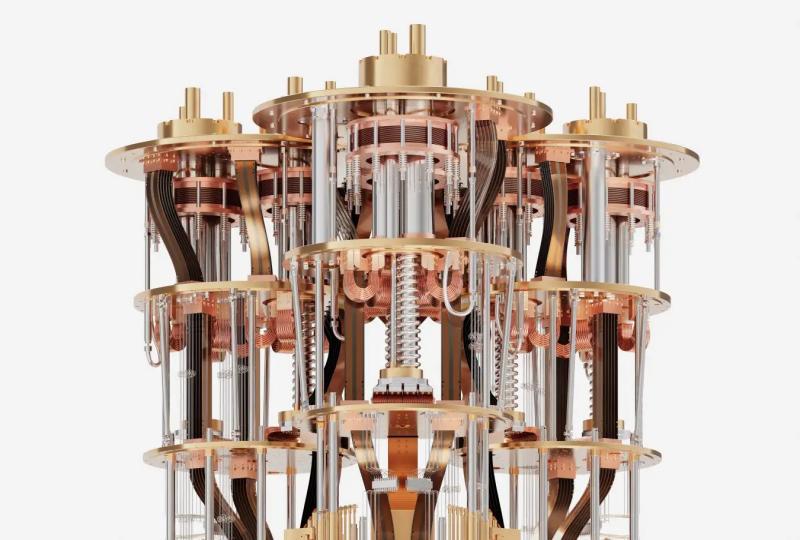
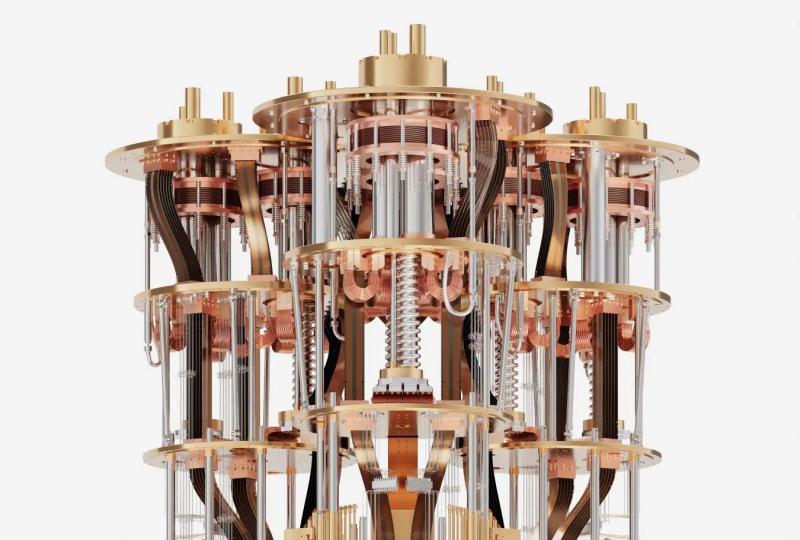
The abstract idea of a qubit must be realized in physical hardware to build a practical quantum computer. Different platforms choose different physical systems as qubits. Superconducting devices use engineered circuits whose energy levels behave like artificial atoms. Trapped‑ion systems use the electronic states of ions held in electromagnetic traps. Photonic platforms use properties of light, such as polarization. NMR‑based quantum computers use nuclear spins in molecules.
Each implementation has unique features. Superconducting qubits have fast gate times and can be lithographically fabricated using processes related to classical microelectronics, but they must be cooled to very low temperatures. Nuclear‑spin qubits in NMR systems are extremely stable and operate near room temperature, though they are typically used at smaller scales. At SpinQ, we focus on NMR‑based qubits for our desktop educational quantum computers, because they allow institutions to operate real qubits in a compact, accessible environment. At the same time, we develop superconducting qubit chips and systems for more advanced research and exploratory commercial projects.
Gates and circuits: how qubits perform computation
To make qubits do useful work, we build quantum circuits. A quantum circuit consists of qubits and a sequence of gates that act on them. Single‑qubit gates rotate states on the Bloch sphere—changing superposition and phase—while two‑qubit gates create entanglement. By composing gates carefully, we can implement algorithms for tasks such as search, factoring, simulation, and optimization.
For example, a simple circuit might start by placing a qubit into an equal superposition of 0 and 1, then apply a phase operation that encodes information about a function, and finally perform an interference step that amplifies certain outcomes. In multi‑qubit circuits, controlled gates link qubits in ways that propagate structure across the system. In SpinQ’s educational systems, users can design such circuits using intuitive software interfaces, then observe how measurement statistics change as they alter gate sequences, gaining direct insight into qubit behavior.
Qubits, decoherence, and errors
Real qubits are sensitive to their environment. Decoherence happens when unwanted interactions cause the quantum state to lose its delicate phase relationships, effectively pushing it toward classical randomness. Noise in control electronics, fluctuating fields, or material imperfections can all contribute to decoherence and errors.
Because of this, quantum algorithms must be designed to operate within coherence times and to tolerate some level of noise. Hardware engineers work continually to improve materials, shielding, and control schemes. Software teams develop error‑mitigation techniques and, in the long term, error‑correcting codes that can protect logical qubits using many physical ones. In educational settings, seeing decoherence and errors in actual experiments is invaluable. SpinQ’s systems let students observe how repeated measurements, circuit depth, or environmental disturbances affect results, turning abstract notions of noise into concrete experience.
How SpinQ helps people understand qubits
SpinQ’s mission is to make qubits and quantum algorithms understandable and usable for a broad audience. Our desktop NMR quantum computers give students, educators, and researchers direct access to real qubits in a compact, controlled environment. Users can run predefined experiments that illustrate superposition and entanglement, then design their own circuits as they gain confidence.
For institutions ready to go further, SpinQ’s work on superconducting quantum chips and full systems creates a pathway to more powerful quantum platforms. Together, these offerings form an ecosystem in which people can learn how qubits work, practice quantum programming, and gradually engage with more advanced hardware. In a field that is evolving quickly, such a staged approach helps ensure that knowledge and skills grow alongside the technology itself.

Featured Content