

Transparent quantum hardware for education and research
2026.07.24 · Blog Transparent quantum hardware
Introduction
Quantum computing education is moving beyond theory. Universities, research labs, and deep-tech teams now want students and researchers to understand how a circuit written on a screen becomes a physical experiment on real hardware. That is why Transparent quantum hardware is becoming an important topic in both education and research. Cloud access has made quantum systems easier to use, but access alone does not explain how the machine works.
Many users can submit a job to a remote quantum platform and receive output data without seeing the internal process. That is useful for early learning, yet it leaves a gap between software interaction and hardware understanding. For universities and research institutions, that gap matters. If people cannot see how qubit mapping, calibration, and measurement influence results, they may learn quantum programming without learning quantum engineering.

What Transparent quantum hardware Means
Transparent quantum hardware does not mean exposing every proprietary detail or giving unrestricted access to a system. It means giving users enough visibility to understand architecture, operation, and performance in a meaningful way. The goal is educational and research clarity, not full disclosure of every internal design choice.
1. Visibility Without Overexposure
A transparent system helps users understand several important layers of the hardware stack. They can see device architecture, qubit connectivity, native operations, calibration status, and measurement behavior. They can also observe how the system performs under different conditions. This makes the platform useful for both teaching and investigation.
2. Why the Concept Matters
In quantum computing, abstract models are necessary, but they are not sufficient. Students and researchers must understand how the machine behaves physically. Transparent quantum hardware gives them that bridge. It turns the system from a black box into a learning environment.
Why Cloud Access Is Not Enough
Cloud-based quantum platforms have helped expand access to quantum computing. They are easy to use, require little local maintenance, and allow remote experiments from almost anywhere. For many institutions, cloud access is the fastest way to introduce quantum topics into a curriculum or research program.
The problem is that cloud access often hides the mechanism behind the result. Users may see the circuit they submitted and the measurement output they received, but they may not see how the circuit was mapped onto physical qubits or how the machine state affected the experiment. That makes it harder to understand why the same algorithm can produce different outcomes on different runs.
1. What Cloud Users Usually See
Most cloud users interact with two endpoints: the input circuit and the final result. That is helpful for testing algorithms, but it limits visibility into the hardware layer. The user may never see calibration conditions, native gate behavior, or the impact of device topology.
2. Where the Learning Gap Appears
This becomes a problem in higher education and advanced research. Students can learn quantum programming syntax, but they may not learn how the hardware shapes execution. Researchers can run experiments, but they may not understand why a particular result changed after device conditions shifted. In other words, cloud access is valuable, but it is incomplete as a learning model.
3. Programming and Engineering Are Different
Quantum programming focuses on how to express a computation. Quantum engineering focuses on how that computation interacts with the physical machine. Both are necessary. Transparent quantum hardware helps users move from one to the other.
How Transparency Helps Education
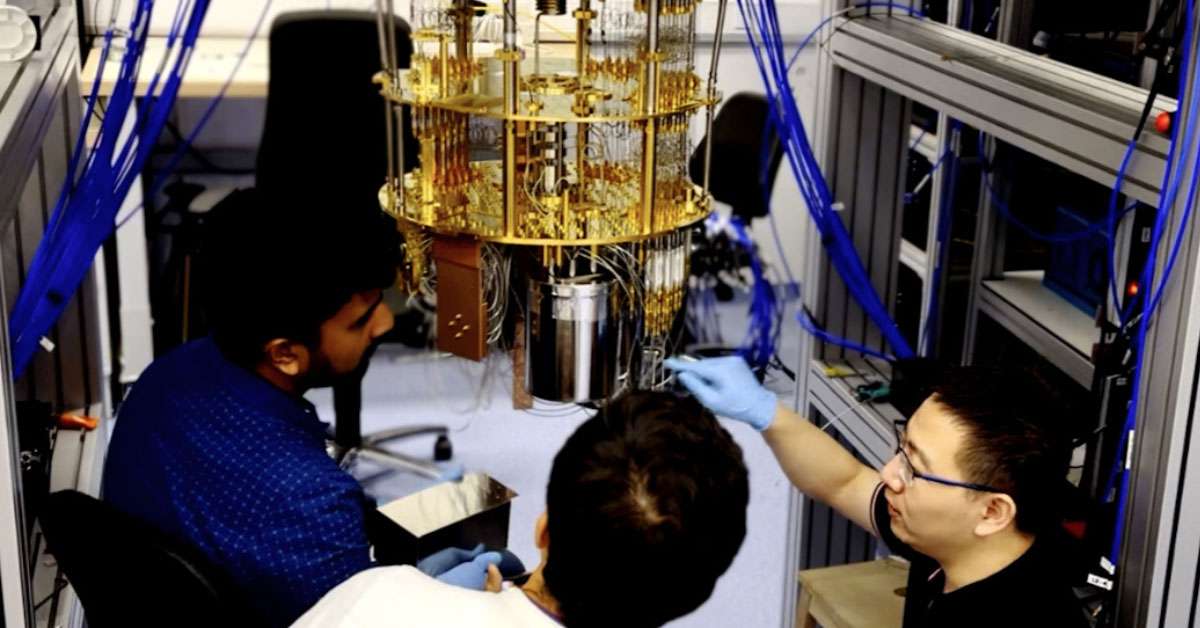
In a university setting, Transparent quantum hardware gives students a more realistic learning experience. They can study how a circuit is executed on a physical system, compare different qubit layouts, and see how hardware behavior affects measurement outcomes. This makes the learning process more concrete and less abstract.
1. Connecting Theory and Execution
Students often understand quantum gates, superposition, and entanglement in theory before they understand how those ideas behave on a device. Transparency helps connect those layers. When learners can observe how the hardware is structured and how a compiler changes the circuit before execution, they begin to see the full workflow instead of a simplified interface.
2. Learning from Variation
Variation is part of quantum education. Two runs of the same circuit may not produce identical results, and that difference is valuable for learning. Transparent systems help students analyze why results vary, whether due to calibration drift, measurement error, or device constraints. That kind of analysis builds technical maturity.
3. Better Lab Instruction
For professors and lab instructors, transparency creates better teaching opportunities. It allows them to design exercises that compare physical and simulated results, study hardware limitations, and explain why layout decisions matter. This kind of instruction is especially useful in programs that combine computer science, physics, and engineering.
Why Research Teams Need Visibility
Researchers also benefit from more visible hardware behavior. Quantum experiments are sensitive to system conditions, and even small changes in calibration or connectivity can influence results. A transparent platform helps researchers interpret their data with more context and less guesswork.
1. Understanding Experimental Results
When a result changes, researchers need to know whether the cause is the algorithm, the circuit mapping, or the device itself. Better visibility into the hardware makes that analysis more reliable. It also helps reduce confusion when comparing repeated experiments or testing different approaches.
2. Studying Hardware Constraints
Research is not always about getting the best output. Sometimes it is about understanding why a result behaves the way it does. Transparent quantum hardware supports this kind of work because it exposes the relationship between device conditions and experimental outcomes. That is useful for algorithm testing, benchmarking, and hardware-aware optimization.
3. Improving Hardware-Software Interaction
The interaction between software and hardware is one of the most important topics in quantum research. A transparent system helps teams study how compilers, layouts, and execution decisions affect performance. That makes the platform more than a machine for running circuits. It becomes a research tool.
Key Features of a Transparent Platform
A transparent platform should give users enough information to support learning and research without creating unnecessary complexity. The best systems are clear, structured, and controlled.
1. Hardware Visibility
Users should be able to understand the architecture of the system, the available qubits, the connectivity pattern, and the system status. This information helps them build an accurate mental model of how the device operates.
2. Software-Hardware Connection
A transparent platform should show how circuits are transformed before execution. That includes compiler behavior, circuit mapping, and execution details. This connection is essential for understanding how a conceptual quantum program becomes a physical process.
3. Diagnostic Capability
Visibility is most useful when it includes diagnostics. Calibration records, performance monitoring, and experimental data help users understand what the system is doing and how stable it is over time. These details are especially valuable in education and research environments.
4. Controlled Access
Transparency must still be controlled. Institutions need information that is useful without making the platform unsafe or insecure. The goal is not unrestricted access. The goal is informed access that supports responsible use.
How SPINQ Supports This Direction
SPINQ focuses on practical interaction with quantum technology. From an industry perspective, that matters because many organizations want more than theoretical exposure. They want hardware solutions that help people learn how quantum systems behave in real settings.
SPINQ supports the connection between quantum theory, education, and real-world hardware applications. That makes it relevant to universities, research organizations, and deep-tech teams that want to reduce the gap between instruction and physical experimentation. In practical terms, it helps institutions explore quantum systems in a way that is more meaningful than simulation alone.
This approach also addresses a common challenge: many users have limited experience with real quantum hardware. They may understand the concepts, but they have not worked closely with physical systems. By making the hardware context more accessible, SPINQ helps institutions build stronger learning and research environments.
The Future of Transparent Systems
The need for transparency will grow as quantum programs mature. Universities will expect more practical training environments. Researchers will expect better visibility into hardware behavior. Companies will expect engineers who understand both the software layer and the physical layer.
1. Education Will Become More Hands-On
Future quantum education will place more emphasis on real systems. Students will need to understand not just what a circuit does, but how the device executes it. Transparent quantum hardware will support that shift by making the physical process easier to study.
2. Hardware Knowledge Will Matter More
As the field develops, quantum engineers will need broader technical skills. They will need to understand architecture, calibration, execution, and measurement, not just circuit design. Transparency helps build that skill set by making the system easier to analyze.
3. Adoption Will Depend on Clarity
Organizations adopt technologies more easily when they understand them. Better hardware visibility can speed up quantum adoption because users feel more confident working with systems they can actually interpret. That makes transparency a practical enabler, not just an educational preference.
Conclusion
Transparent quantum hardware helps transform quantum computing from a purely software-based learning experience into a deeper understanding of real quantum systems. It gives students, researchers, and technical teams the context they need to connect circuits, hardware behavior, and measurement outcomes.
For universities and research institutions, the value is clear. Better visibility improves education, supports research, and strengthens the connection between theory and practice. Transparent quantum hardware is becoming an essential part of how the next generation learns, experiments, and builds quantum expertise.
Featured Content