
Superconducting Qubit Advantages for Research and System Development
2026.08.31 · Blog Superconducting Qubit advantages
When research institutions and technology teams assess quantum hardware, they need more than a general explanation of what a qubit is. They need to know whether the platform can support their experiments, fit their laboratory environment, connect with software workflows, and develop into a durable internal capability. The practical value of Superconducting Qubit advantages lies in this complete engineering context.
At SpinQ, we approach quantum computing as an integrated capability rather than an isolated processor. Our quantum computing solutions combine industrial-grade superconducting quantum computers, quantum processing units, control and measurement technologies, quantum software, and integration services. This enables customers to align technical configuration with research goals, operational conditions, and long-term development plans.
Why Superconducting Qubits Are Relevant to Practical Quantum Work
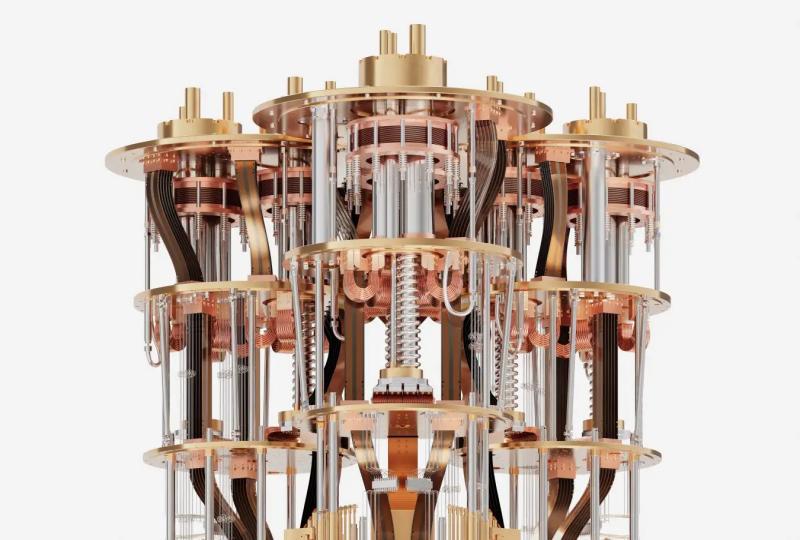
Superconducting qubits are quantum information units implemented with superconducting electronic circuits. They are controlled by carefully designed microwave signals and operate within an extremely low-temperature environment. In a real system, the quantum processor works together with control electronics, readout components, radio-frequency connections, cryogenic equipment, calibration procedures, and software tools.
This architecture gives laboratories a route to explore quantum computing through established engineering disciplines. Physicists can investigate qubit behavior and device performance. Microwave engineers can study signal delivery and readout. Software teams can work with circuits, compilation, and experimental data. System engineers can coordinate the processor, measurement chain, low-temperature infrastructure, and user workflow. These connected layers are central to the value of superconducting quantum hardware.
Fast Microwave Control Supports Iterative Experiments
A key superconducting qubit advantage is microwave-based quantum control. Quantum operations are implemented through shaped control pulses that prepare qubit states, perform gate operations, and support readout. This makes superconducting hardware relevant for teams conducting calibration, pulse optimization, quantum control studies, and hardware-aware algorithm experiments.
Fast control should not be treated as a standalone promise of experimental success. Effective quantum work also depends on qubit lifetime, gate behavior, measurement quality, signal integrity, crosstalk management, and calibration stability. A complete platform allows users to study these factors together. Researchers can investigate how device characteristics, pulse parameters, timing relationships, and software instructions influence experimental outcomes.
For organizations building quantum engineering capability, this enables a more disciplined workflow. Teams can move beyond idealized circuit descriptions and explore how a program becomes a physical operation on a real processor. The experience is valuable for developing expertise in pulse design, calibration routines, readout analysis, and system performance evaluation.
Engineered Chip Architecture Enables Focused Research
Superconducting quantum processors are engineered circuits that include qubits, resonators, couplers, transmission paths, and readout structures. Their design can be adapted to particular research objectives, including connectivity studies, device characterization, coupler behavior, control experiments, and quantum error correction exploration. This design flexibility is another important reason that superconducting hardware is used in quantum technology development.
SpinQ provides superconducting quantum computers and related services for customers who need to connect QPU development with complete system operation. Our portfolio covers quantum processors, quantum chip design and testing capabilities, quantum control and measurement systems, low-temperature environment deployment support, and software. This helps customers examine quantum hardware as a connected technical workflow rather than a single equipment decision.
For a university laboratory, this may support work on qubit layout and physical characterization. For a national or institutional research center, it may support controlled experimentation across hardware and software layers. For an enterprise research group, it may support the development of internal knowledge around quantum computation, quantum algorithms, and future hybrid workflows. The appropriate configuration always depends on the intended work and technical environment.
Control and Measurement Turn a Processor Into a System
A superconducting chip cannot perform useful experiments by itself. It must receive stable and accurately timed control signals, while a readout chain collects the information needed to interpret results. Signal routing, radio-frequency components, synchronization, data acquisition, and calibration are all part of this operational process.
SpinQ develops quantum control and measurement solutions designed for superconducting qubit operation. These capabilities support controlled qubit manipulation and measurement workflows, helping users run gate experiments, perform calibrations, assess qubit behavior, and relate physical hardware to programming tools. For research teams, a coordinated control and measurement architecture can reduce the difficulty of managing separate hardware layers.
Integration should be considered before the deployment phase. Laboratory space, equipment interfaces, cable routing, cryogenic compatibility, data handling, safety procedures, and the responsibilities of operating teams all affect system usability. A well-planned approach can help an organization establish a more reliable path from technical planning to productive research work.
Hardware-Software Co-Development Improves Research Workflows
Quantum computing requires collaboration across multiple specialties. Hardware teams work with processor design and device behavior. Control engineers manage microwave pulses and measurement. Software teams construct circuits, develop algorithms, and create workflows that link quantum and classical computing. Research users need to understand how these layers influence one another.
Superconducting systems support this collaboration because users can operate at several levels. At the circuit layer, they can express quantum programs. At the pulse layer, they can study how operations are physically implemented. At the system layer, they can connect calibration, device behavior, measurement, and data analysis. This makes superconducting hardware a practical environment for organizations that want to develop cross-functional quantum expertise.
SpinQ’s quantum software capabilities include programming and online experiment resources that can support graphical circuit design, QASM programming, custom quantum gate development, and built-in algorithm learning. These tools help users create a clearer route from program construction and simulation toward real hardware-oriented experimentation.
Cryogenic Integration Must Be Planned Early
Superconducting qubits require an extremely low-temperature operating environment. Cryogenic infrastructure is therefore part of the quantum computer itself, not a separate afterthought. The processor, control electronics, signal paths, readout chain, and low-temperature environment need to be planned as one connected architecture.
SpinQ supports customers with low-temperature environment planning and deployment for superconducting quantum computing. This can include coordination of low-temperature equipment, quantum computing radio-frequency components, laboratory assessment, installation, and ongoing technical planning. An integrated approach helps teams align their infrastructure decisions with their processor design, control requirements, and research objectives.
Organizations should assess laboratory readiness carefully. Relevant questions include whether they have suitable space, technical personnel, facilities support, integration capacity, and a realistic operating plan. Superconducting quantum research is most effective when it is treated as a long-term technical capability rather than a short-term installation.
How Research Teams Can Use Superconducting Hardware
Superconducting quantum systems can support different research directions. A team may study quantum chip performance, control optimization, qubit readout, noise behavior, or experimental protocols for quantum error correction. A university can use the platform to support advanced education in quantum hardware, microwave engineering, programming, and quantum system integration.
Technology organizations may also use superconducting systems to build internal understanding of quantum algorithms, quantum simulation concepts, hybrid quantum-classical workflows, and future application opportunities. Current quantum projects should be framed around realistic goals such as experimentation, technical readiness, talent development, and system knowledge. This approach helps organizations extract practical value while quantum technology continues to evolve.
Evaluating the Right Superconducting Configuration
The right system begins with the questions a customer needs to answer. A quantum hardware laboratory may need close access to control and measurement layers. A university may need a platform that supports graduate research and interdisciplinary training. An enterprise R&D team may need an environment for evaluating algorithms while protecting internal workflows and data.
Useful evaluation factors include the intended workload, degree of required hardware access, laboratory readiness, software interfaces, integration needs, training requirements, and technical support model. Teams should also consider how their platform may evolve. A configuration that only serves a single short experiment may not fit a multi-year program, while an unnecessarily complex deployment can create avoidable barriers at an early stage.
SpinQ works across quantum chip development, superconducting system integration, control and measurement, software, and low-temperature deployment. Our online quantum experiment platform and software complement hardware-focused work by supporting programmable workflows, circuit design, and quantum experimentation. Together, these capabilities help customers build a more coherent research foundation.
Frequently Asked Questions
What are the main superconducting qubit advantages?
The main advantages include microwave-based quantum control, compatibility with engineered electronic circuits, configurable processor architecture, integration with control and measurement systems, and support for hardware-software co-development. Their practical importance depends on how these capabilities are integrated into a complete quantum system.
Is a quantum processor enough to start superconducting experiments?
No. A functional environment also requires control and measurement electronics, cryogenic infrastructure, radio-frequency components, software tools, calibration procedures, data workflows, and technical operating practices. These elements collectively enable qubit control and readout.
Can superconducting hardware support university research?
Yes. It can support advanced work in quantum physics, quantum control, microwave engineering, quantum algorithms, and system integration. The system configuration, laboratory environment, and support plan should match the institution’s intended research and teaching use.
How does SpinQ support superconducting quantum projects?
SpinQ provides an integrated portfolio that includes quantum processing units, chip design and testing capabilities, superconducting quantum computers, control and measurement systems, low-temperature deployment support, software, and integration services.
Develop Your Quantum Capability With SpinQ
The practical value of superconducting qubit advantages comes from the complete operating environment. Fast control, engineered processor architecture, reliable measurement, low-temperature deployment, and software access must work together to support the customer’s intended research.
SpinQ helps institutions and technology teams establish this foundation through integrated quantum hardware, software, and service capabilities. We support structured work across processor development, system integration, experimental control, programming, and quantum capability building. Contact our team to explore a configuration that aligns with your research objectives, laboratory conditions, and future development roadmap.
Featured Content