
Understanding Superconducting Quantum System Stability
2026.07.02 · Blog Superconducting Quantum Computing System stability
Superconducting Quantum Computing System Stability: From Principle to Practice
At SpinQ, superconducting quantum computing system stability is the core design principle behind every product we ship. When a quantum computer evolves from a few‑qubit demonstrator into a system that supports real research and application development, stability becomes the deciding factor between fragile experiments and dependable capability.
We treat stability as a system‑wide property, not an isolated number attached to a single qubit or device. From the superconducting quantum chip to the cryogenic platform, control electronics, and software stack, every layer is engineered to work together in a stable operating envelope. The result is a family of superconducting quantum computers that can run long experimental campaigns, deep circuits, and repeatable calibrations without constantly fighting hardware drift.
What We Mean by “System Stability”
Superconducting quantum computing system stability covers multiple technical and operational dimensions. For us, a system is stable when users can run experiments day after day and obtain consistent, interpretable results without extensive rework or manual retuning.
We focus on several key aspects:
-
Qubit stability – Qubit frequencies and coherence times remain predictable over time, so calibration data stays useful instead of expiring after a few runs.
-
Gate stability – Single‑ and two‑qubit gate parameters hold within tight tolerances, allowing circuits to be reused, refined, and extended across sessions.
-
Readout stability – Measurement chains deliver clear, consistent signals that do not fluctuate unexpectedly with temperature cycles or daily usage.
-
Cryogenic stability – Dilution refrigerators achieve high uptime, with smooth cooldown, operation, and warm‑up cycles supported by clear procedures.
-
Control and software stability – Timing, pulse generation, and orchestration software maintain their behavior as systems scale and evolve.
When these elements move in lockstep, researchers can focus on quantum logic, algorithms, and applications instead of chasing hardware noise or inconsistent responses. That is the level of stability SpinQ targets in its superconducting quantum computing systems.
Chip‑Level Stability: How We Design QPUs
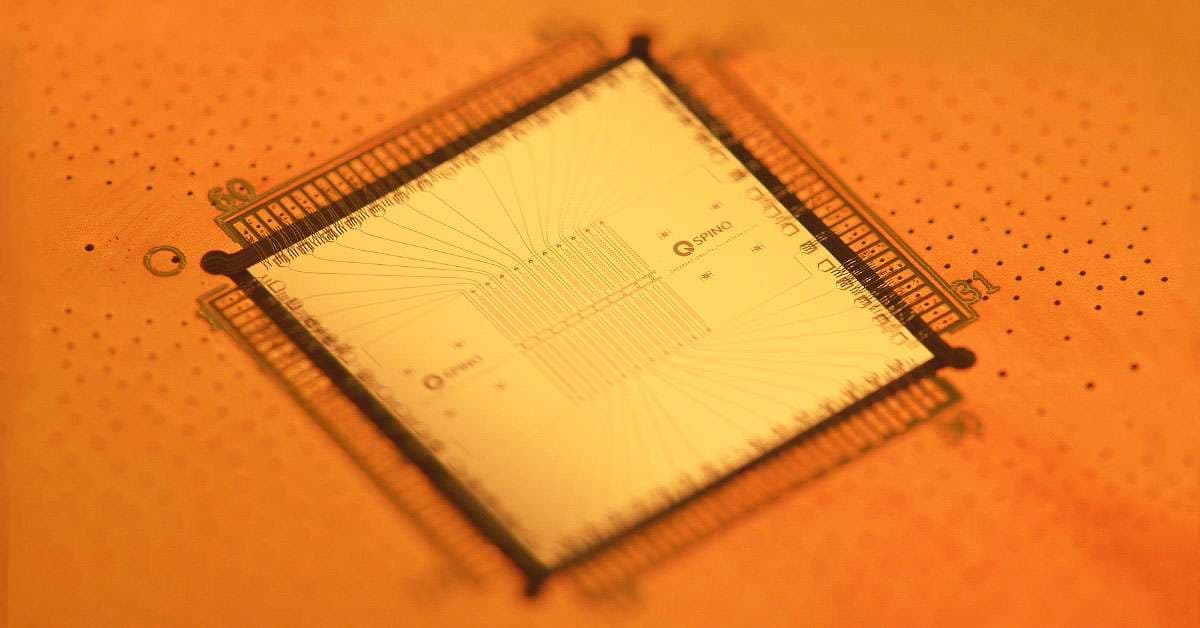
The quantum processing unit (QPU) is the heart of any superconducting quantum computer. Its stability sets the baseline for everything the system can and cannot do. At SpinQ, our superconducting chips are designed to provide high‑coherence qubits with predictable behavior and structured connectivity.
We start with qubit architectures that balance sensitivity and robustness. Geometry, junction configuration, and capacitor layout are tuned to reduce susceptibility to charge and flux noise while preserving the nonlinearity required for clean, controllable qubit states. Careful frequency planning avoids unwanted resonances and crowding, so each qubit and coupler lives in a well‑defined spectral window.
Materials and fabrication processes are equally important. Surface treatments, film quality, and patterning steps are selected to minimize defects and interface losses. This helps keep decoherence mechanisms under control, which directly supports stable T1T_1T1 and T2T_2T2 behavior over the life of the device. Every chip undergoes internal characterization before integration, giving us a clear picture of its operating regime and any adjustments needed at the system level.
By aligning design, fabrication, and characterization, we build QPUs that are not only high‑performance but also predictable. That predictability is the foundation of system stability.
Cryogenic Stability: Keeping the Quantum Core in Its Sweet Spot
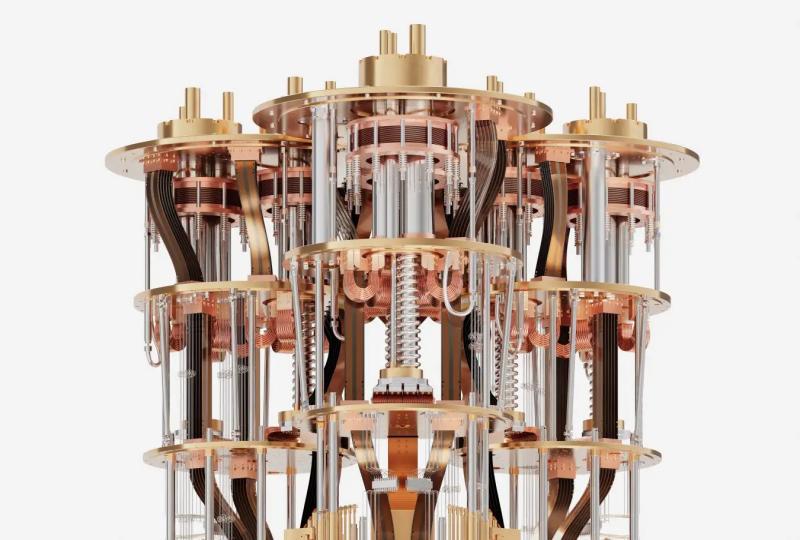
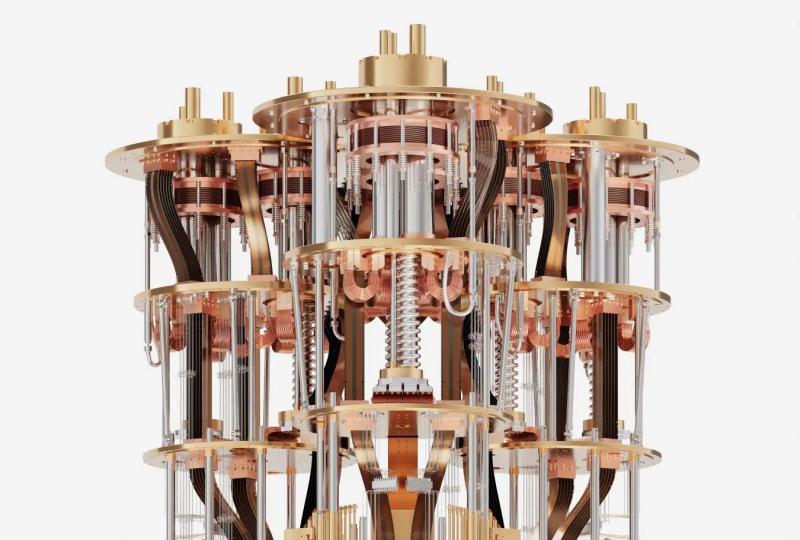
Superconducting qubits require cryogenic temperatures to function properly. The cryogenic system is therefore a critical part of superconducting quantum computing system stability. A refrigerator that frequently trips, fluctuates, or introduces noise will undermine even the best‑designed chip.
SpinQ’s superconducting quantum computers are built around cryogenic platforms that are optimized for uptime and environmental control. Thermal anchoring is carefully engineered so that temperature gradients are minimized and heat loads are predictable. Mechanical structures are designed to mitigate vibration and micro‑movement that could shift qubit frequencies or coupler behavior.
We also pay special attention to electromagnetic cleanliness. Each input and output line passes through a chain of filters, attenuators, and shielding measures. This reduces the amount of room‑temperature noise and stray signals that reach the quantum core. Over time, this kind of environmental stability proves just as important as coherence numbers on a data sheet.
Operationally, we define clear procedures for cooldown, operation, and maintenance. Automated monitoring allows operators to track refrigerator status and detect anomalies early. When a user powers up a SpinQ superconducting system, they enter an environment designed to stay within a narrow, well‑controlled operating window.
Control Electronics and Calibration: Stability in the Pulse Layer
Even the most stable chip and cryogenic environment can be undermined by unstable control electronics or loose calibration practices. In superconducting quantum computing, gate operations come from carefully shaped microwave pulses and synchronized control signals. If those pulses drift or timing skews, gate fidelities and circuit performance will suffer.
Our control and measurement systems are therefore designed for long‑term precision. We use stable microwave sources and high‑resolution waveform generators to produce pulses that behave the same on Monday morning as they did on Friday evening. Timing hardware is engineered to keep relative delays between channels under tight control, even as systems incorporate more qubits and control lines.
On top of this hardware, we deploy automated calibration routines that help maintain system stability day to day. These routines characterize qubit frequencies, readout responses, and pulse shapes, then update control parameters as needed. Users can run calibration scripts as part of their workflow, reducing manual effort and ensuring that experiments inherit up‑to‑date system knowledge.
For us, calibration is not a one‑time factory process. It is an ongoing practice embedded in the system, helping keep superconducting quantum computing system stability intact as workloads and conditions evolve.
Noise Reduction as a Stability Strategy
Noise and stability are tightly linked. Environmental noise, control errors, and material defects all manifest as decoherence, gate errors, and measurement variance. If noise is not addressed systematically, no amount of surface‑level calibration will make a system truly stable.
SpinQ’s approach to noise reduction mirrors its approach to stability: we treat it as a multi‑layer challenge. At the chip level, we reduce intrinsic noise sources through design and materials. In the cryogenic stack, we block and filter external noise before it reaches the quantum core. In the control and readout layer, we refine pulse shapes, filtering, and amplification to limit added noise.
We also use characterization tools to map where noise comes from and how it impacts specific qubits or operations. This information feeds into error‑mitigation techniques at the software level, allowing users to design experiments and circuits with realistic expectations and strategic compensation.
By attacking noise along the entire stack, we support superconducting quantum computing system stability from physics up to software.
Operational Stability: Workflows, Monitoring, and Recovery
System stability also has a daily‑operations dimension. Even a well‑engineered system needs clear workflows and monitoring to stay in its optimal regime over months and years.
SpinQ defines operational best practices for its superconducting quantum computers. These cover startup, calibration, experiment execution, data management, and shutdown. Lab technicians and researchers can follow consistent procedures that keep the system within expected conditions and minimize risk of unexpected behavior.
Monitoring tools track key metrics such as refrigerator status, qubit performance indicators, gate quality statistics, and experiment queues. When anomalies appear—whether from hardware, environment, or user code—operators receive clear signals and guidance on how to respond. Recovery procedures help bring the system back online smoothly after maintenance or rare interruptions.
We see operations as part of system engineering. A stable machine is one that supports predictable daily use, not only peak performance during a demo. Our superconducting quantum computing systems are built for that kind of everyday stability.
.jpg)
Why Stability Matters for Real Use Cases
Superconducting quantum computing system stability is not just a technical goal; it is a prerequisite for real applications. Whether a user is working on quantum chemistry, optimization, materials, machine learning, or fundamental quantum algorithms, they need a platform that behaves consistently.
For researchers, stability means that experiments can be reproduced, extended, and compared. It makes it possible to run parameter sweeps, benchmark algorithms, and publish results with confidence. For industrial teams, stability translates into predictable performance and clear operating costs. It reduces risk when integrating quantum hardware into pilot projects or workflows.
SpinQ designs its superconducting systems with these users in mind. Our mission is to turn superconducting quantum computing from a lab curiosity into a practical tool. Stable systems are the bridge from theory to use.
SpinQ’s Role in the Superconducting Quantum Ecosystem
SpinQ is a full‑stack quantum computing company. We provide superconducting quantum chips, integrated superconducting quantum computers, NMR quantum computers for education, cloud platforms, and software frameworks. System stability ties these offerings together.
On the superconducting side, we deliver machines that embody our stability philosophy—machines that can serve as the core quantum resource in labs, universities, and enterprises. On the NMR side, we provide accessible educational systems that prepare the next generation of quantum‑literate users. As customers grow from classroom programs to advanced research and industry pilots, they can continue working with the same solution provider and shared stability mindset.
We believe that superconducting quantum computing system stability will define the pace at which the field becomes truly useful. That is why it sits at the center of SpinQ’s engineering roadmap and product strategy.

Featured Content