
What an NMR Quantum Technology Company Brings to Education
2026.07.01 · Blog NMR quantum technology company
NMR Quantum Technology: A Different Angle on Quantum
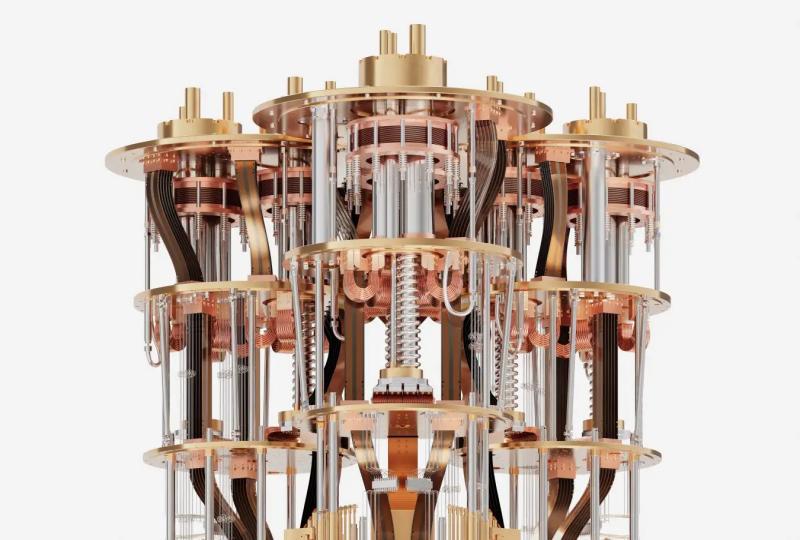
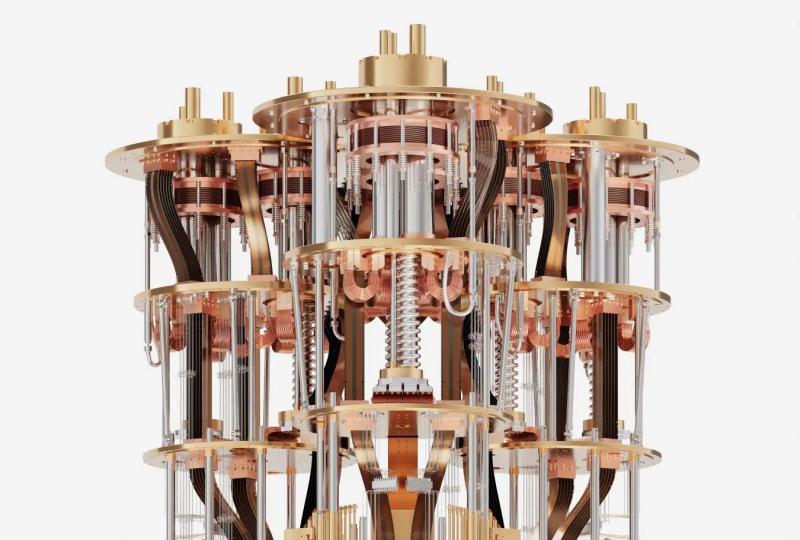
Most popular images of quantum computing involve futuristic server rooms filled with golden cryostats or laser‑lit vacuum chambers. NMR quantum technology offers a less dramatic but very practical alternative, especially for education.
In an NMR‑based quantum system, qubits are represented by nuclear spins in molecules or solid‑state samples placed in a strong magnetic field. These spins can be manipulated with radio‑frequency pulses and read out through changes in the NMR signal. The techniques are rooted in decades of NMR research used in chemistry and MRI, but repurposed for quantum information experiments.
An NMR quantum technology company takes this physical principle and builds compact, classroom‑friendly platforms that let students and researchers explore quantum concepts without needing the full infrastructure of a large physics laboratory.
Why NMR Is Attractive for Teaching and Outreach
If your goal is to build the largest possible quantum processor, NMR is not the leading contender today. But if your goal is to teach, demonstrate, and prototype, it has several advantages that are hard to ignore.
NMR‑based systems can often be:
-
More compact than large dilution refrigerator systems
-
Easier to operate once initial setup and training are complete
-
More stable for repeated experiments in a teaching lab
-
Directly connected to familiar ideas like spins, resonance, and spectroscopy
For an instructor, this means less time worrying about cryogenic leaks or laser alignment and more time focusing on what the students are actually learning. For students, it means a hands‑on quantum experience that feels approachable rather than fragile.
What an NMR Quantum Technology Company Typically Provides
A dedicated NMR quantum technology company usually offers a combination of hardware, software, and educational support.
On the hardware side, that may include:
-
Compact NMR spectrometers optimized for quantum‑style experiments
-
Integrated magnets, probes, and RF hardware tailored to stable classroom operation
-
Safety features and diagnostics that help non‑expert users manage the system
On the software side, they often provide:
-
User interfaces that hide low‑level NMR complexity when it is not needed
-
Scripting or graphical tools for defining pulse sequences and quantum circuits
-
Visualization tools that help students see the state evolution or measurement outcomes
And in terms of educational content:
-
Ready‑to‑use lab exercises showing superposition, entanglement‑like correlations, and simple quantum algorithms
-
Instructor guides explaining the physical principles and experiment setup
-
Example curricula that integrate NMR‑based experiments into broader quantum courses
Taken together, this combination allows institutions to adopt NMR quantum technology as a teaching platform rather than just a piece of specialized lab equipment.
Use Cases in Universities and Training Centers
Universities, colleges, and training centers can deploy NMR quantum systems in several ways.
In undergraduate labs, NMR devices can serve as the centerpiece of “Introduction to Quantum Information” or “Quantum Technology” practical courses. Students can set up experiments, run pulse sequences, and see how quantum states respond to different manipulations.
In graduate courses, NMR technology can be used to discuss more advanced topics such as pulse shaping, decoherence, and experimental design. Students who later work with other hardware platforms benefit from the hands‑on intuition they built with NMR.
Beyond degree programs, NMR quantum setups can be powerful tools for summer schools, teacher training workshops, or public outreach events. Because the hardware can be made reasonably robust and repeatable, it’s possible to run many demonstrations without constant expert supervision.
Bridging Theory and Practice for Learners
One of the persistent challenges in quantum education is bridging the gap between elegant theory and messy reality. NMR quantum systems sit right in that gap.
Students can start from textbook concepts—two‑level systems, rotations on the Bloch sphere, interference—and then see how those concepts appear in real signals and data. They learn that pulses are not ideal, that noise exists, and that careful calibration matters.
This experience pays off later when students move on to other platforms like superconducting qubits or trapped ions. They already understand that a real experiment is more than drawing a circuit; it is about controlling physical systems under imperfect conditions.
In that sense, an NMR quantum technology company provides more than hardware. It provides a training ground for robust scientific thinking.
Working Alongside Other Quantum Platforms
NMR technology does not have to compete with other quantum platforms within an institution. In fact, it often works best as part of a portfolio.
A typical progression might be:
-
First exposure to quantum concepts via simulations and visual tools
-
Hands‑on experiments with NMR‑based quantum systems in lab courses
-
Cloud access to superconducting or trapped‑ion devices for more complex algorithms
-
Advanced research projects on specific hardware platforms
In this ecosystem, NMR devices play the role of a reliable, “always‑available” teaching resource. More experimental platforms can then be reserved for advanced users and specialized research questions.
An NMR quantum technology company that understands this role will design its products to integrate smoothly into broader educational programs rather than trying to be a one‑stop solution for every need.
Building Long‑Term Partnerships with Institutions
Finally, adopting NMR quantum technology is not just a procurement decision; it’s the beginning of a long‑term partnership.
Institutions benefit when the company:
-
Offers regular software updates and feature improvements
-
Provides responsive technical support and maintenance options
-
Updates teaching materials as the field evolves
-
Listens to feedback from instructors and students
Over time, this partnership can evolve into joint workshops, co‑developed curricula, or even collaborative research on new teaching methods. As quantum education demand grows, these relationships help both sides scale up in a sustainable way.
For schools and universities that want to move beyond “quantum on slides” and give learners real experiments to run, an NMR quantum technology company can be a key ally—making quantum tangible without overwhelming the institution’s resources.

Featured Content