
Superconducting Quantum Computing System Limitations
2026.07.23 · Blog Superconducting Quantum Computing System limitations
Why limitations matter
Superconducting quantum computing has become one of the most visible approaches in the quantum industry, but visibility does not mean maturity. The system is powerful, fast, and technically impressive, yet it still faces a set of limitations that shape what it can and cannot do today. These limitations are not minor details. They define the current boundary between laboratory success and practical deployment.
Understanding those boundaries is important for anyone evaluating quantum hardware. Engineers need to know what must be improved. Buyers need to know what they are paying for. Researchers need to know where the bottlenecks are. Without a clear view of the limitations, it is easy to overestimate what a superconducting system can deliver in real-world conditions.
Sensitivity to noise
One of the most serious superconducting quantum computing system limitations is sensitivity to noise. Qubits in these systems are extremely delicate, and even small disturbances can alter their states. Noise can come from the environment, from the control system, or from imperfections in the device itself. Once noise enters the system, error rates rise quickly.
This is a major issue because quantum computation depends on preserving fragile quantum information long enough to finish a calculation. If the system cannot isolate qubits well enough, the computation loses reliability. In practice, this means developers must spend a great deal of effort reducing interference rather than simply running algorithms.
Noise is not just a technical inconvenience. It changes the pace of progress. Every improvement in hardware must also be matched by better shielding, better calibration, and better error management. That makes the whole stack more complex and slows the path toward large-scale applications.
Decoherence limits
Closely related to noise is decoherence, which is another core limitation of superconducting systems. Decoherence happens when a qubit loses its quantum behavior because it interacts too much with the outside world. Once coherence is lost, the system can no longer preserve the information it needs for computation.
This matters because quantum circuits require time. Even simple operations must complete within the window in which qubits remain stable. If coherence time is too short, circuit depth becomes limited, and many useful algorithms become difficult or impossible to run reliably.
That is why coherence time is one of the most watched metrics in superconducting quantum computing. It tells you how long the machine can keep quantum information alive before the environment begins to erase it. Short coherence time does not make the platform useless, but it does put a hard ceiling on what the machine can do today.
Cryogenic complexity
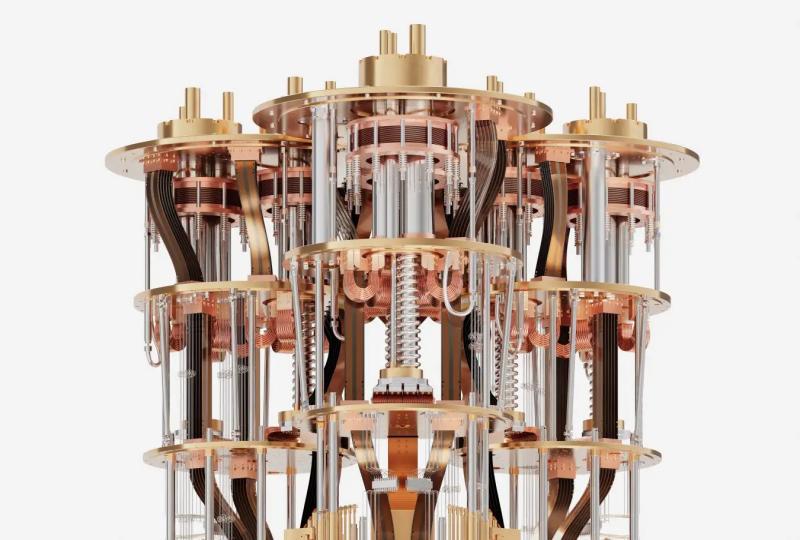
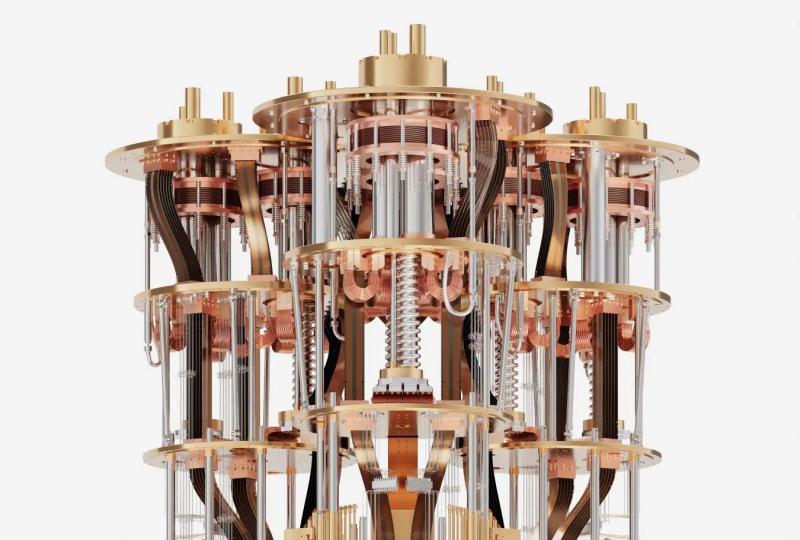
Another major limitation is the need for cryogenic operation. Superconducting qubits must be kept at extremely low temperatures in order to function properly. This requirement adds a large amount of engineering complexity to the entire system. It also increases cost, maintenance demands, and the difficulty of deployment.
Cryogenic environments are not simple to maintain. The cooling system must be stable, the wiring must be carefully managed, and the full setup must avoid introducing extra heat or noise. Every part of the machine becomes harder to design because it must work inside this specialized environment.
This is one reason superconducting quantum computers are not easy to scale into everyday products. The cooling infrastructure alone creates a barrier to wider adoption. Even if the qubits themselves improve, the surrounding support system still has to keep pace, and that makes real-world rollout much more difficult.
Scaling challenges
Scaling is another persistent limitation. It is one thing to demonstrate a few well-controlled qubits in a lab. It is another thing to build a system with many qubits that all operate reliably together. As the number of qubits increases, so do the chances of cross-talk, calibration drift, and control complexity.
This creates a difficult tradeoff. More qubits can mean more power, but more qubits also mean more opportunities for error. The control electronics become harder to manage, the wiring becomes denser, and the system as a whole becomes more fragile. The challenge is not simply adding qubits. The challenge is adding them without destroying performance.
That is why scaling is such a central topic in superconducting quantum computing research. The field does not just need bigger machines. It needs bigger machines that remain stable, accurate, and useful. Until that balance is solved, scaling will remain one of the biggest barriers to practical success.
Calibration burden
Superconducting systems also demand constant calibration. Qubits do not stay perfectly tuned on their own. They drift over time, respond to environmental changes, and require ongoing adjustment. This means the system is not just complex to build; it is also complex to operate.
Calibration takes time and expertise. Operators must continually fine-tune control pulses, check performance, and correct small errors before they grow into larger problems. In a small experimental setup, this may be manageable. In a larger system, it becomes a major operational burden.
The result is that superconducting quantum computing often requires a level of attention that is far beyond what most classical systems need. That is manageable in research labs, but it is one of the reasons the technology is still not fully ready for broad commercial use.
Limited tolerance for imperfections
Superconducting quantum computing systems have very little tolerance for imperfections. A small material defect, a tiny fabrication inconsistency, or a slight control error can affect performance. This makes manufacturing and deployment far more difficult than in ordinary electronics.
The issue is not just that the devices are sensitive. It is that the whole system must work with extremely high precision across multiple layers at once. Chip quality, packaging, wiring, signal generation, temperature control, and software calibration all need to align. If one layer underperforms, the entire system feels the effect.
This low tolerance increases cost and slows iteration. It also means that moving from prototype to robust product is not a simple engineering step. It is a long process of refinement, testing, and correction. That is why superconducting systems often look stronger in research than in practical deployment.
What these limits mean in practice
Taken together, these superconducting quantum computing system limitations show that the technology is still in a developmental phase. It has real promise, but the promise is constrained by the realities of noise, decoherence, cooling, scaling, and calibration. These are not temporary inconveniences. They are the core engineering problems that define the field.
For businesses or institutions considering quantum investment, this means expectations must stay grounded. A superconducting system may offer impressive demonstrations and useful experimental results, but it is still not the same as a mature, plug-and-play computing platform. The hardware must be supported carefully, and the operating environment must be managed continuously.
At the same time, these limitations are also what make the field exciting. Every improvement in coherence, stability, and control pushes the boundary forward. Progress is real, but it happens by narrowing the gap between what the technology can do in the lab and what it can do in the real world.
Next step for the field
The future of superconducting quantum computing depends on reducing these limitations without introducing new ones. Better materials, improved circuit design, stronger error correction, and more efficient control systems are all part of that path. The goal is not just to make qubits work. The goal is to make them work reliably, repeatedly, and at a scale that matters.
That is why the limitations are so important to study. They are not signs of failure. They are the roadmap. Each one points to the next area that must improve before superconducting quantum computers can move from promising systems to widely useful machines.
Featured Content