
Superconducting Quantum Computer Module: System Guide
2026.05.29 · Blog superconducting quantum computer module
Superconducting Quantum Computer Module: Architecture, Components, and Integration
Building a superconducting quantum computer is not a matter of engineering a single device—it is the science of precisely integrating multiple specialized modules, each operating at the limits of what modern physics and engineering allow. Understanding the architecture of a superconducting quantum computer module by module is essential for researchers, enterprise teams, and institutions evaluating quantum systems for deployment.
This guide breaks down the key functional modules that make up a superconducting quantum computer, explains how they interact, and shows how SpinQ Technology has engineered a fully integrated, turnkey quantum computing platform that brings all these components together into a coherent, production-ready system.
Why Modular Architecture Matters in Quantum Computing
Unlike classical computers, which are built on decades of standardized components and manufacturing processes, superconducting quantum computers require tight co-design across hardware layers that are physically and functionally interdependent. A mismatch between the quantum processing unit and its control electronics, or between the cryogenic environment and the chip's thermal requirements, can degrade performance significantly or render the system non-functional.
Modular architecture addresses this challenge by defining clear functional boundaries between system components—while ensuring that the interfaces between modules are precisely engineered for compatibility. This approach enables manufacturers and research teams to upgrade individual components as the technology matures, without requiring a complete system redesign. It also provides a framework for scaling systems to higher qubit counts as algorithmic demands grow.
Module 1: The Quantum Processing Unit (QPU)
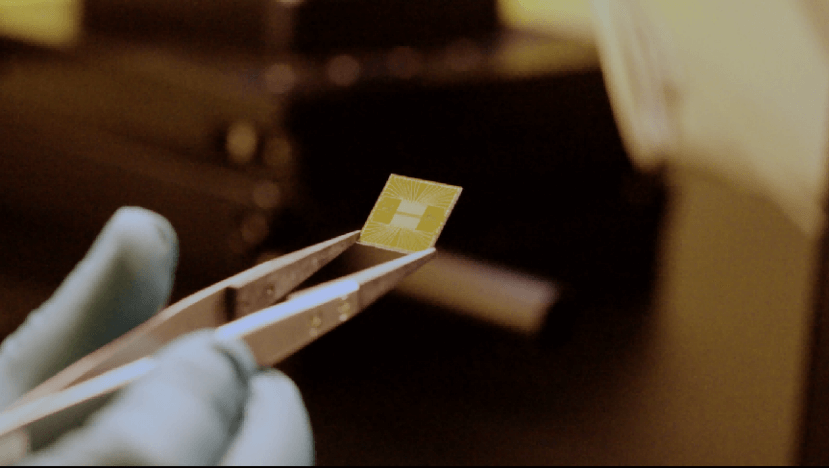
The quantum processing unit is the computational core of a superconducting quantum computer—the chip where qubits are defined, controlled, and measured. Superconducting QPUs use Josephson junctions embedded in carefully engineered circuits to create qubits that can be manipulated using precisely timed microwave pulses.
Key design parameters for the QPU module include:
-
Qubit topology: The arrangement of qubits and their couplers determines connectivity and algorithm mapping efficiency. 2D lattice topologies offer higher connectivity than 1D chains, enabling more efficient execution of complex quantum circuits.
-
Qubit count and scalability: From compact chips for R&D to processors supporting over 100 qubits for industrial applications, the QPU must be designed with clear scalability pathways.
-
Coherence and fidelity: Long T₁ and T₂ coherence times, combined with high single- and two-qubit gate fidelities, directly determine the depth of circuits that can be reliably executed.
-
Error correction support: Advanced QPUs provide native support for quantum error correction codes such as the surface code, a prerequisite for fault-tolerant quantum computing.
SpinQ's QPU C Series represents the company's latest generation of superconducting quantum chips, featuring an enhanced 2D lattice topology, support for up to 103 superconducting qubits, and native surface-code implementation with code distance up to d = 7. The C Series is manufactured on SpinQ's independent production and packaging line, enabling strict quality control and consistent performance across every chip produced.
Module 2: The Cryogenic System
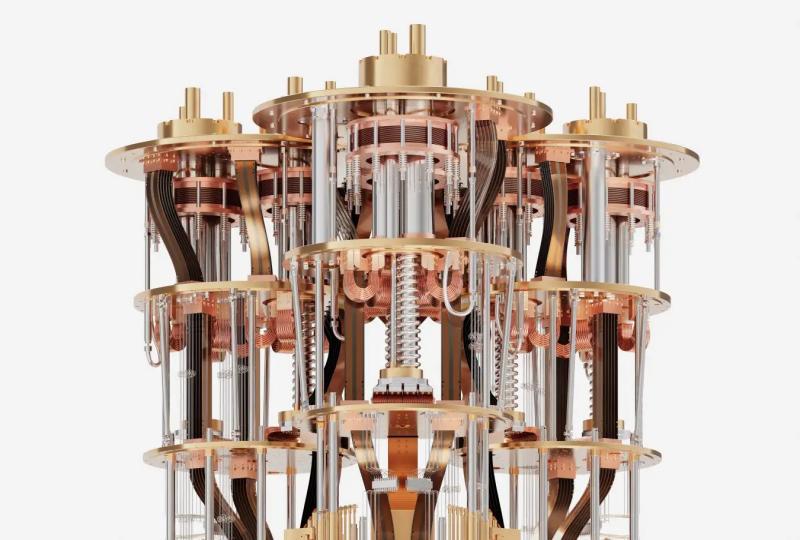
Superconducting qubits operate at approximately 10–20 millikelvin—temperatures achievable only with dilution refrigerators. The cryogenic module is not a passive enclosure; it is an active, precision thermal engineering system that must maintain stable operating temperatures across the QPU while accommodating the heat load introduced by control signal cabling, readout electronics, and amplifier stages.
Key components of the cryogenic module include:
-
Dilution refrigerator: Provides the milli-Kelvin environment (~10 mK) required for superconducting qubit operation. Modern systems use pulse tube cryocoolers for the upper temperature stages, enabling low-vibration operation essential for qubit stability.
-
Cryogenic RF coaxial cables: Carry microwave control and readout signals between room-temperature electronics and the cold chip, with carefully engineered thermal anchoring at each cryostat temperature stage to minimize heat load.
-
Cryogenic HEMT amplifiers: Low-noise amplifiers positioned near the chip stage, used to amplify weak qubit readout signals before they travel to room-temperature electronics—critical for high-fidelity readout.
-
Magnetic and thermal shielding: Superconducting chips are sensitive to stray magnetic fields and thermal radiation. Customized shielding solutions protect the QPU from environmental interference that would degrade coherence times.
SpinQ's cryogenic deployment services encompass the full scope of cryogenic infrastructure—from dilution refrigerator supply and installation to lab assessment, power distribution, grounding, vibration reduction, and on-site commissioning. This comprehensive support ensures that the thermal environment surrounding the QPU meets the stability requirements for reliable quantum computation.
.jpg)
Module 3: The Quantum Control and Measurement System
The quantum control and measurement system (QCM) is the electronic bridge between classical computing infrastructure and the quantum processor. It generates, transmits, synchronizes, and reads the microwave and DC signals used to initialize, manipulate, and measure superconducting qubits.
A high-performance QCM module must deliver:
-
Precise microwave pulse generation: Arbitrary waveform generators (AWGs) produce the microwave pulses that implement quantum gates. Timing precision at the sub-nanosecond level is required to achieve high gate fidelity.
-
Low-noise signal integrity: Any noise introduced by the control electronics directly translates into qubit errors. High spurious-free dynamic range (SFDR) and low phase noise are essential specifications.
-
Real-time feedback and readout: The system must be able to process qubit state measurements in real time and feed correction signals back to the quantum processor—a requirement for active error correction and adaptive quantum algorithms.
-
Scalable modular architecture: As qubit counts scale, the control system must expand to match, without introducing additional noise or synchronization errors.
SpinQ's QCM System is purpose-built for these demands, featuring FPGA-based hardware acceleration that calculates and generates waveform files directly from pulse sequences at the hardware level. The system achieves sub-nanosecond synchronization accuracy and up to 16-bit vertical resolution, with SFDR performance reaching ≤ −60 dBc in the 3–6 GHz range. Its modular design allows seamless expansion to support hundreds of qubits by adding identical or similar units—future-proofing control infrastructure as system scale grows.
Module 4: The Software and Programming Framework
A superconducting quantum computer module stack is not complete without the software layer that translates algorithmic intent into physical quantum operations. The software module handles quantum circuit compilation, pulse-level optimization, error mitigation, and the execution interface for end users.
This layer typically includes:
-
Quantum programming SDK: Enables users to write quantum circuits in high-level languages (e.g., Python-based frameworks) and automatically compile them into optimized pulse sequences for the target hardware.
-
Calibration and characterization tools: Automated routines for ongoing qubit characterization, frequency calibration, and gate optimization—essential for maintaining performance over time.
-
Error mitigation protocols: Software-level techniques that reduce the impact of gate and readout errors without requiring full quantum error correction, enabling more reliable results from near-term quantum processors.
-
Application libraries: Pre-built quantum algorithms and domain-specific toolkits for quantum chemistry, financial optimization, machine learning, and materials simulation.
SpinQ's SpinQit programming framework integrates tightly with the hardware stack, providing users with a unified environment for circuit design, execution, and result analysis—reducing the time from algorithm design to physical execution.
Full-Stack Integration: Where the Modules Come Together
The true measure of a superconducting quantum computing platform is not the quality of individual modules in isolation, but the performance delivered when all modules operate as an integrated system. Signal integrity from control electronics must be preserved through cryogenic connections to the chip. Readout signals must be amplified with minimal noise addition before digitization. Software compilation must generate pulses that match the calibrated characteristics of the physical qubits.
This full-stack integration challenge is precisely where SpinQ distinguishes itself from component-focused suppliers. The SpinQ SQC S Series—the company's flagship superconducting quantum computer—integrates high-performance QPU C Series chips, milli-Kelvin cryogenic systems, the QCM control and measurement platform, and the SpinQit software framework into a single, turnkey solution. Supporting up to 103 qubits with parametric gates and native quantum error correction, the SQC S Series is designed for both advanced academic research and industrial quantum computing deployment—across applications in biopharmaceuticals, materials science, financial technology, and artificial intelligence.
Choosing a Quantum Computing Platform Built for Scale
For institutions and enterprises evaluating superconducting quantum computer modules, the key question is not whether individual components meet specifications in isolation—it is whether the integrated system delivers reliable, reproducible quantum computation under real-world conditions. Standardized production processes, comprehensive testing protocols, and end-to-end support infrastructure are the differentiators that determine long-term success.
SpinQ's vertically integrated approach—from in-house QPU fabrication and testing to cryogenic deployment, control systems, and software—ensures that every layer of the module stack is engineered for compatibility, quality, and scalability. With systems deployed across more than 200 institutions in over 40 countries, SpinQ has demonstrated the operational maturity needed to support quantum computing initiatives at every stage—from initial research to production-scale deployment.
Featured Content