
Superconducting Quantum Computer Coherence Time Explained
2026.07.22 · Blog superconducting quantum computer coherence time
Introduction
Superconducting quantum computers are among the most promising platforms in modern quantum technology, but their performance depends on one critical factor: coherence time. In simple terms, coherence time determines how long a qubit can keep its quantum state before noise and environmental disturbance destroy it. The longer a qubit remains coherent, the more useful work a quantum computer can perform.
This makes coherence time one of the most important benchmarks in the entire field. It affects algorithm depth, gate execution, error rates, and the real-world usefulness of a quantum system. Without sufficient coherence, even an advanced quantum processor cannot fully realize its potential.
Understanding coherence time is essential not only for researchers and engineers, but also for businesses, investors, and buyers trying to compare quantum computing platforms. It helps explain why some systems are more stable than others, why cryogenic environments are necessary, and why quantum hardware is still difficult to scale. In other words,superconducting quantum computer coherence time is one of the clearest windows into the practical maturity of a superconducting quantum computer.
What Coherence Time Means
Coherence time is the length of time a qubit can preserve quantum information in a usable form. A qubit must hold superposition and entanglement long enough for quantum operations to be carried out successfully. Once coherence is lost, the qubit behaves more like a noisy classical bit than a quantum one.
In superconducting systems, this matters even more because the qubits are built from circuits that operate under extremely delicate conditions. These qubits are not naturally isolated from the outside world. They must be carefully shielded, cooled, calibrated, and controlled to prevent unwanted interactions from destroying the quantum state.
There are different ways to describe coherence, including relaxation time and dephasing time, but the core idea is the same: how long can the qubit remain reliable before its quantum behavior fades? That answer strongly influences whether a given machine can run short demonstrations or longer, more meaningful computations.
Why It Matters for Performance
Coherence time directly affects how many operations a superconducting quantum computer can complete before errors become too large. Every quantum gate takes a small amount of time, and a circuit can only be executed successfully if the qubits remain coherent throughout the process. If coherence is too short, the machine loses information before the computation finishes.
This is especially important because quantum algorithms often require many sequential operations. The more complex the algorithm, the more time the qubits need to stay stable. Longer coherence gives engineers more space to build deeper circuits and gives users more flexibility when running real workloads.
Coherence time also affects error correction. Quantum error correction is one of the main strategies for making large-scale quantum computing possible, but it depends on the hardware being stable enough to detect and correct errors before the state collapses. If coherence is poor, the cost of maintaining reliable computation rises sharply.
What Causes Coherence Loss
Superconducting qubits are sensitive to many forms of disturbance. One major cause of coherence loss is environmental noise, which can come from electromagnetic interference, vibrations, thermal fluctuations, or imperfect isolation from surrounding hardware. Even tiny disturbances can be enough to affect a qubit’s state.
Material imperfections also play a major role. Superconducting devices are built using advanced fabrication methods, but microscopic defects, surface irregularities, and inconsistencies in the circuit can create instability. These flaws may seem small, but at the quantum level they can have a large impact on performance.
Control system errors are another source of difficulty. Qubits must be manipulated with precise microwave pulses and carefully tuned signals. If the control electronics introduce noise or if calibration drifts over time, the qubit can lose coherence sooner than expected. That is why superconducting systems require constant tuning and monitoring.
Why Cryogenic Operation Is Necessary
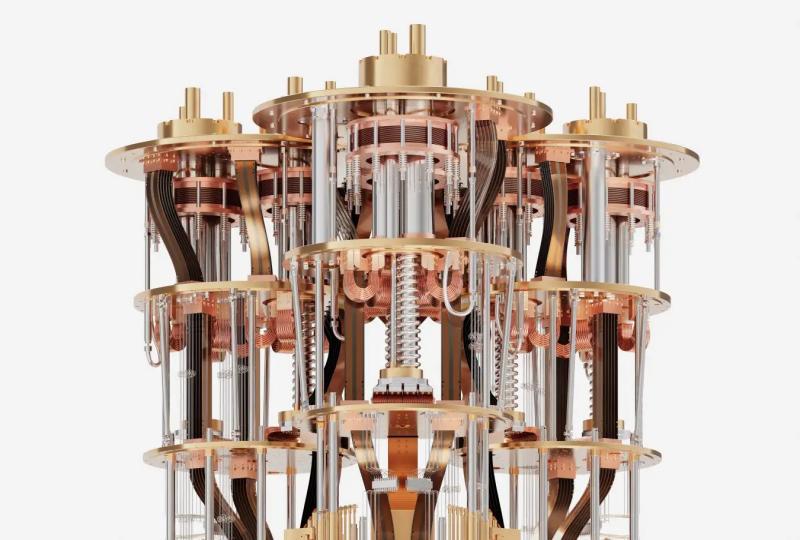
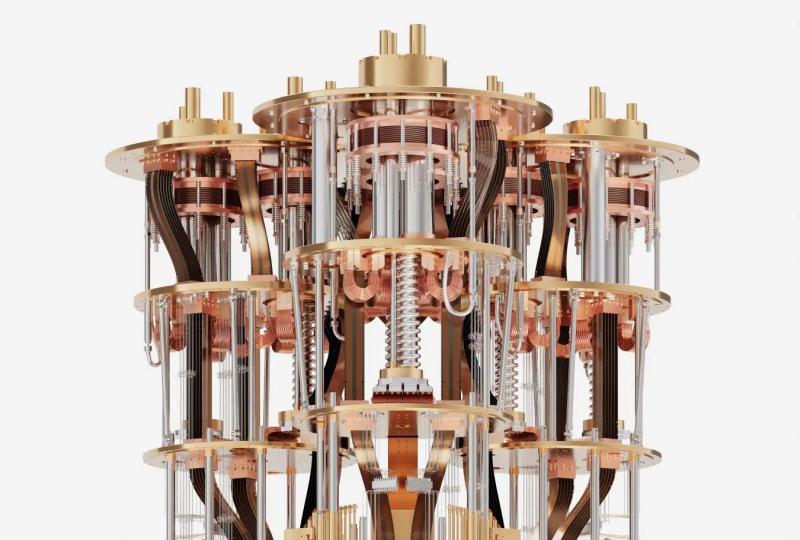
Superconducting quantum computers usually operate at extremely low temperatures because cold environments help reduce thermal noise and preserve quantum states. At higher temperatures, unwanted energy from the environment can quickly disrupt the qubit. Cryogenic operation helps keep the system quiet enough for quantum effects to remain observable and usable.
However, this advantage comes with major engineering complexity. Maintaining ultra-low temperatures is expensive and technically demanding. The cooling infrastructure itself adds cost, size, and operational constraints to the overall system. That is one reason superconducting quantum computers are powerful but not yet easy to deploy at scale.
The need for cryogenic environments also highlights a key tradeoff in quantum hardware design. To gain longer coherence time, engineers must accept a more demanding physical environment. The result is a machine that can be highly capable, but only when supported by sophisticated control, packaging, and cooling infrastructure.
How Engineers Improve Coherence Time
Improving coherence time is one of the central goals in superconducting quantum computing research. Engineers work on materials, architecture, packaging, and calibration to reduce sources of noise and instability. Better fabrication methods can lower defects, while improved circuit design can reduce sensitivity to interference.
Shielding is another important strategy. By isolating qubits from outside disturbance, engineers can protect fragile quantum states for longer periods. This includes both electromagnetic shielding and careful physical layout of the system. Small design choices often have a large effect on coherence performance.
Calibration and control also matter. Even a well-built qubit can perform poorly if its control signals are not precise. Engineers therefore spend significant effort tuning pulse shapes, timing, and signal strength to reduce unintended excitation and phase drift. In many cases, better control can meaningfully improve usable coherence without changing the hardware itself.
Coherence Time and Scalability
As quantum systems grow larger, maintaining coherence becomes harder. A small number of qubits can sometimes be controlled relatively well, but scaling up introduces new sources of noise, cross-talk, and calibration complexity. This means coherence time is not just a single-device issue; it becomes a system-level challenge.
In larger machines, each additional qubit creates more opportunities for interference and error. Wiring, packaging, and readout become more complicated, and the balance between control and isolation becomes harder to maintain. A platform may look strong at the prototype stage but struggle when expanded to dozens or hundreds of qubits.
That is why coherence time is closely linked to scalability. A successful large-scale superconducting quantum computer must preserve useful coherence while still allowing many qubits to interact. This balance is one of the hardest problems in the field and one of the clearest reasons why quantum computing remains an active research frontier.
How to Judge a Superconducting Quantum Computer
When evaluating a superconducting quantum computer, coherence time should be considered alongside several other factors. Gate fidelity matters because qubits must not only stay coherent, but also respond accurately to control instructions. Error rates matter because even a long coherence window is less useful if operations are too noisy.
Scalability is equally important. A system with excellent single-qubit performance may still fail to deliver practical value if it cannot grow into a larger architecture. Stability over time also matters, since a machine must perform consistently across many runs rather than only in isolated demonstrations.
A practical way to think about it is this: coherence time tells you how long the system can “remember” its quantum state, but gate fidelity and scalability tell you whether that memory can be used effectively. Strong quantum hardware requires all three to move in the same direction.
The Bigger Picture
Coherence time is often discussed as a technical detail, but it is actually one of the clearest indicators of the maturity of superconducting quantum technology. Longer coherence means more stable computations, deeper circuits, and better chances of solving real problems. It is one of the main reasons some platforms progress faster than others.
At the same time, coherence time alone does not define success. A useful quantum computer also needs high-quality control, efficient error correction, manufacturable hardware, and manageable operating cost. Progress in these areas must happen together for the field to move from laboratory experiments toward practical systems.
This is why researchers continue to focus so heavily on coherence. It sits at the center of performance, engineering, and scalability. Any serious discussion of superconducting quantum computing eventually comes back to the same question: how long can the qubit stay coherent, and how reliably can that time be used?
Conclusion
Superconducting quantum computer coherence time is one of the most important concepts in quantum hardware. It determines how long a qubit can remain useful, how deep a circuit can go, and how much real computation a machine can support. Without enough coherence, even the most advanced superconducting system cannot deliver its full potential.
For that reason, coherence time is more than a lab metric. It is a practical measure of quantum stability, hardware quality, and future scalability. As superconducting quantum computing continues to improve, extending coherence time will remain one of the central goals shaping the next generation of quantum machines.

Featured Content