
Cost Superconducting Qubit: What Drives the Price?
2026.07.23 · Blog cost superconducting qubit
Introduction
The cost superconducting qubit is not a simple number. It depends on how the qubit is designed, fabricated, tested, integrated, and supported inside a full quantum system. For buyers, researchers, and decision-makers, the real question is not only “how much does it cost?” but also “what exactly am I paying for?”
That matters because superconducting qubits are not off-the-shelf components. They are highly specialized quantum devices that require advanced materials, extreme operating conditions, and precise control infrastructure. A single qubit may look small, but the ecosystem around it can be large, complex, and expensive.
If you are comparing quantum technologies or planning a long-term investment, understanding cost is essential. It helps explain why one platform may appear affordable at first but becomes expensive in integration, while another may have a higher upfront price but deliver better performance and reliability. In this article, we will look at the main cost drivers in a straightforward way and focus on what actually shapes the final price.
What You Are Paying For
When people ask about the cost superconducting qubit, they often imagine only the chip itself. In reality, the qubit is only one part of the total expense. The true cost includes material selection, fabrication complexity, testing, cryogenic compatibility, and system integration.
Superconducting qubits are built using highly controlled semiconductor-like processes, but the tolerances are much more demanding. Tiny variations can affect performance, which means more quality control, more rejection, and more engineering time. That alone can raise cost significantly.
You are also paying for consistency. A single experimental qubit may be interesting, but a usable system requires repeatability. The more stable and uniform the qubits are, the more value they provide. That is why price is closely tied to manufacturability, not just scientific novelty.
Main Cost Drivers
The first major cost driver is fabrication. Superconducting qubits require precision manufacturing, specialized cleanroom processes, and advanced materials engineering. The smaller and more sensitive the device, the more difficult it becomes to keep yields high.
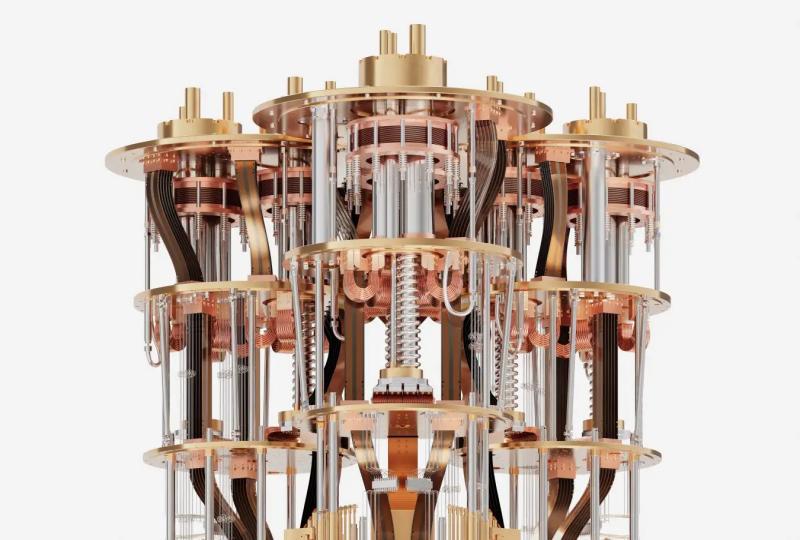
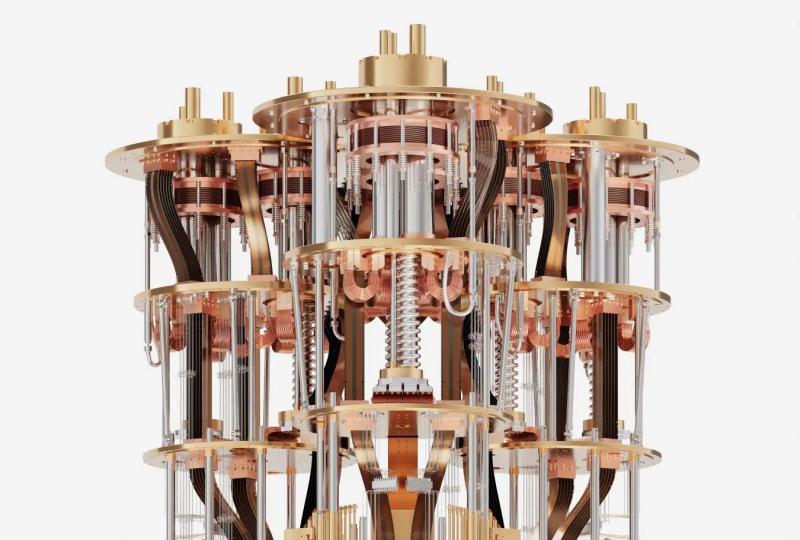
The second driver is cryogenic compatibility. Superconducting qubits must work in ultra-low-temperature environments, so the design must support stable operation under those conditions. This often means additional engineering for packaging, wiring, shielding, and thermal management.
The third driver is calibration and testing. A qubit does not become useful simply because it has been manufactured. It must be measured, tuned, and verified. That process takes time, skilled personnel, and specialized equipment. In many cases, the support work around the qubit costs more than the physical device itself.
Why Prices Vary So Much
One reason the cost superconducting qubit is hard to pin down is that there is no universal product category. Some qubits are part of research prototypes, while others are integrated into commercial systems. Some are sold as part of an education package, while others support enterprise-grade quantum computing development.
Scale also changes the price. A single qubit in a laboratory setting may be evaluated very differently from a multi-qubit architecture designed for practical workloads. The more you move from demonstration to deployment, the more hidden costs appear. Integration, support, documentation, maintenance, and system tuning all become part of the total cost.
Customization is another reason for variation. A standard device is usually cheaper than a tailored configuration built for a specific research goal or platform requirement. In quantum hardware, customization often increases value, but it also increases engineering time and project cost.
The Hidden Costs Buyers Miss
Many buyers focus on unit cost and overlook the broader ownership cost. That can lead to unrealistic budgeting. A superconducting qubit may be only one part of the system, but it depends on supporting hardware, software, and operational expertise to work properly.
One hidden cost is infrastructure. Because superconducting qubits require cryogenic environments, the surrounding system needs cooling, shielding, and stable control electronics. Another hidden cost is staff expertise. Quantum systems are not plug-and-play in the usual sense, so the organization must have people who can calibrate, maintain, and interpret results.
There is also the cost of downtime and iteration. In advanced quantum work, it is normal to spend time adjusting parameters, retuning experiments, and improving system stability. Those cycles are part of the real cost of using superconducting qubits effectively.
How to Evaluate Value
A practical way to judge cost is to compare price against what the qubit can actually deliver. A lower-cost device that performs inconsistently may be more expensive in the long run than a more stable one. Value in quantum hardware comes from reliability, repeatability, and integration quality, not just the sticker price.
Start by asking what the qubit is intended for. Is it for education, research, prototyping, or a larger commercial roadmap? The answer changes what “good value” means. For education, a lower-cost and easier-to-use system may be the best choice. For advanced research, performance and control may matter more than initial savings.
Also look at support. A strong vendor or platform can reduce learning time, setup friction, and long-term risk. In many technical fields, support is part of the product. In quantum computing, that is especially true because the environment is complex and the margin for error is small.
Cost Versus Performance
The cheapest option is not always the most economical. If a qubit has weak coherence, low fidelity, or unstable control behavior, it may create more downstream expense than it saves upfront. Poor performance can slow development, reduce experimental success rates, and increase the need for repeated calibration.
On the other hand, the most expensive option is not automatically the best fit either. If your use case is early-stage learning or limited experimentation, you may not need a high-end configuration. The key is matching cost to purpose. That is what makes quantum hardware buying decisions different from ordinary electronics purchases.
Think of it like buying a precision instrument. The price is tied to how accurately and consistently it can perform. In superconducting quantum computing, those details matter even more because the system is so sensitive to noise, temperature, and control errors.
A Simple Buying Framework
If you are evaluating cost superconducting qubit options, use a simple three-step framework.
First, define the purpose clearly. Decide whether the system is meant for learning, research, or advanced application development. This will narrow the acceptable price range quickly.
Second, look beyond the qubit itself. Check the required cryogenic setup, control electronics, support services, and maintenance needs. A lower quoted price can be misleading if it excludes the surrounding system.
Third, compare long-term usability. A system that is easier to calibrate, more stable to operate, and better supported may offer far more value than one with a slightly lower entry price. Total cost of ownership is usually the most useful number.
Conclusion
The cost superconducting qubit depends on much more than the device alone. Fabrication quality, cryogenic requirements, testing, calibration, support, and integration all influence the final price. That is why pricing varies so widely across platforms and use cases.
If you want to evaluate cost intelligently, focus on value, not just number. Ask what the system includes, how stable it is, and how much effort it will take to use well. In quantum hardware, the cheapest choice is not always the smartest one, and the best choice is usually the one that matches your real goals.

Featured Content