
What a “Super Quantum Computer” Really Means
2026.06.16 · Blog super quantum computer
What a “Super Quantum Computer” Really Means
The phrase “super quantum computer” appears frequently in media headlines, but it has no strict technical definition in the quantum information community. In practice, people usually use it to describe quantum processors that achieve performance beyond what classical supercomputers can reasonably simulate on specific tasks. Understanding what sits behind this phrase is important for setting realistic expectations and recognizing the value of more modest, but practical, quantum systems.
SpinQ focuses on building quantum computers that are not just powerful in theory, but genuinely usable for education, early‑stage research, and industry exploration. In this sense, a truly “super” quantum computer is not defined only by raw qubit count, but by the real‑world impact it can deliver.
From classical supercomputers to quantum advantage
Classical supercomputers remain the workhorses of scientific computing, delivering massive parallel performance for simulation, data analysis, and AI. Quantum computers differ fundamentally because they use qubits, which can exist in superpositions and become entangled, enabling new forms of computation for certain problems. When a quantum processor can complete a specific task dramatically faster than the best available classical methods, researchers speak of quantum advantage.
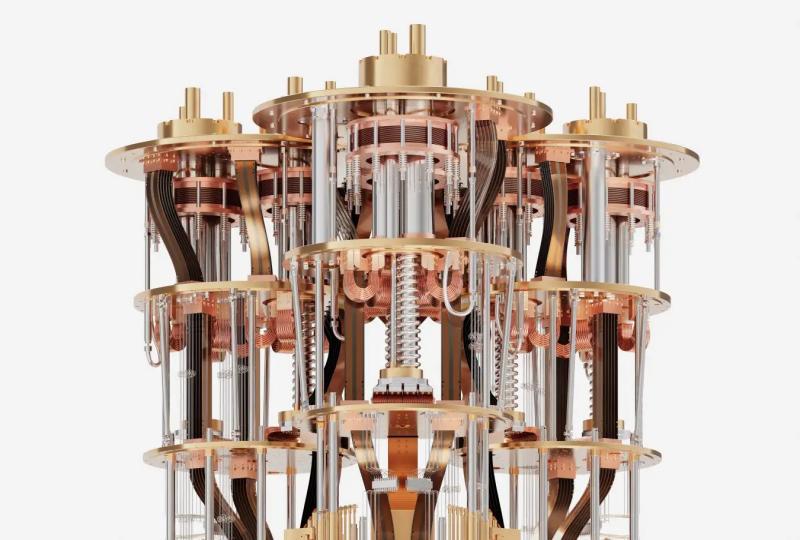
Several high‑profile experiments on superconducting quantum processors have demonstrated this kind of advantage for specially chosen sampling problems, achieving effective speedups of many orders of magnitude over classical simulations. These processors, operating with tens to more than a hundred qubits, are often described in popular language as “super quantum computers” because they outperform classical supercomputers on those benchmark tasks.
Why “super” is not only about size
However, equating “super” solely with qubit counts or headline speedups can be misleading. Quantum processors are still limited by noise, error rates, and connectivity constraints, and there is no single number that captures their overall capability. What matters is the combination of hardware quality, software integration, and user experience.
A small, well‑engineered quantum computer that students can operate directly in the classroom can have more long‑term impact than a distant, extremely large device that is difficult to access and understand. For many organizations, the most valuable “super” feature today is not maximum size, but the ability to integrate quantum hardware into existing workflows, train teams, and explore use cases systematically.
SpinQ’s philosophy: practical quantum first
SpinQ has built a portfolio of compact quantum computers that bring real quantum hardware out of isolated labs and into universities, schools, and research centers worldwide. Desktop and portable models make it possible for learners to run circuits, visualize results, and understand quantum algorithms without needing a large experimental facility. This focus on accessibility has been recognized by international media and educators, highlighting SpinQ as a pioneer in personal quantum computing.
At the same time, SpinQ invests in superconducting quantum chips and systems that align with mainstream research roadmaps. By combining education‑oriented devices with advanced platforms, we offer a complete path from first exposure to quantum computing up to cutting‑edge experimentation. In this view, a “super quantum computer” is not a single machine, but an ecosystem that supports learning, exploration, and innovation.
To see how this philosophy translates into hardware, you can visit our superconducting quantum computer product introduction on the official website.
Looking ahead: toward scalable, fault‑tolerant systems
The long‑term goal for the entire field is to build scalable, fault‑tolerant quantum computers capable of solving large, real‑world problems in chemistry, materials science, optimization, and beyond. This journey involves substantial advances in qubit coherence, gate fidelity, error correction, and control electronics, as highlighted by recent progress on superconducting processors with over one hundred qubits.
As research pushes these boundaries, it is essential to simultaneously cultivate a broad community of users who understand how to formulate problems for quantum hardware and interpret results. By providing accessible systems and clear learning paths, SpinQ helps ensure that when truly large‑scale quantum computers arrive, there will already be a skilled ecosystem ready to harness their capabilities responsibly and effectively.
Featured Content