
What Is a Super Quantum Computer?
2026.06.11 · Blog super quantum computer
Super Quantum Computer: Turning Quantum Theory into Scalable Reality
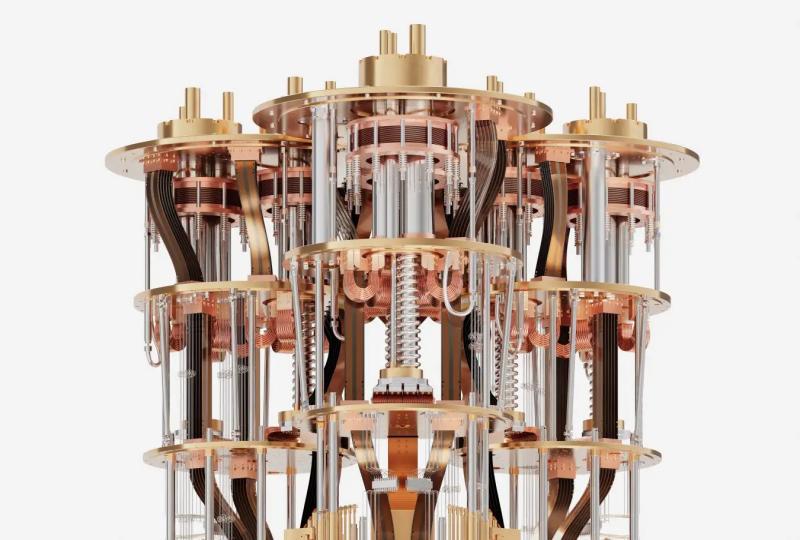
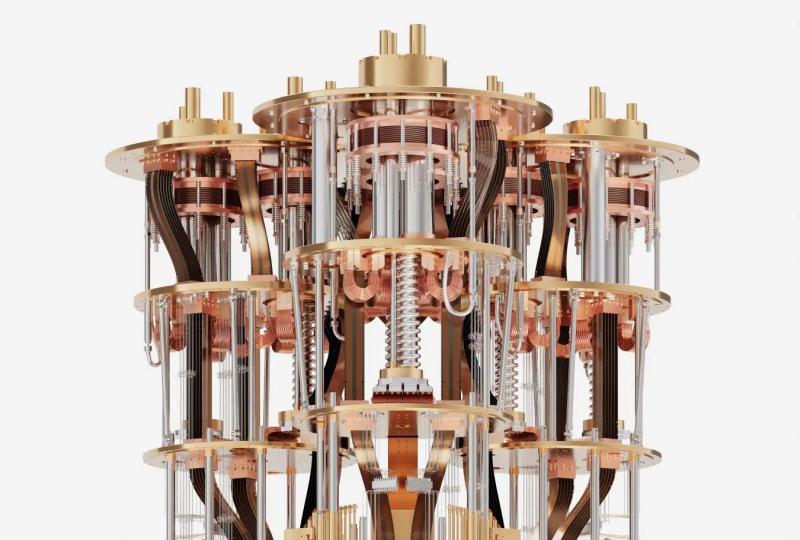
The phrase “super quantum computer” is increasingly used to describe quantum machines that go beyond small laboratory prototypes toward powerful, scalable systems. Rather than a strict technical term, it reflects a new class of hardware that combines many high‑coherence qubits, advanced control, and error‑management techniques to tackle complex real‑world problems.
SpinQ specializes in building exactly this kind of full‑stack quantum infrastructure, bringing together superconducting quantum processors, integrated cryogenic systems, control electronics, and educational NMR platforms. By delivering both industrial and classroom‑ready solutions, we help organizations move from abstract quantum concepts to practical, hands‑on capability.
To understand SpinQ’s complete offering at a glance, you can start from oursuperconducting quantum products overview:Superconducting Quantum Computers & Chips Provider.
What Defines a “Super” Quantum Computer?
While there is no official standard, several characteristics distinguish a super quantum computer from early experimental devices. These systems aim to deliver meaningful computational power, reliability, and usability for researchers and industry users.
Core features typically include several complementary elements.
-
A scalable qubit architecture, such as superconducting qubits arranged in 2D lattices.
-
High coherence times and high‑fidelity quantum gates that support deep circuits.
-
Native support for quantum error‑correcting codes to combat noise and decoherence.
-
Integrated cryogenic and control systems that offer stable, turnkey operation.
-
A software stack and cloud or local interfaces that make the machine accessible to algorithm developers and application teams.
SpinQ’s superconducting quantum computers are designed around these principles, offering tightly integrated systems that are ready for deployment in research institutions and forward‑looking enterprises.
Superconducting Technology at the Core
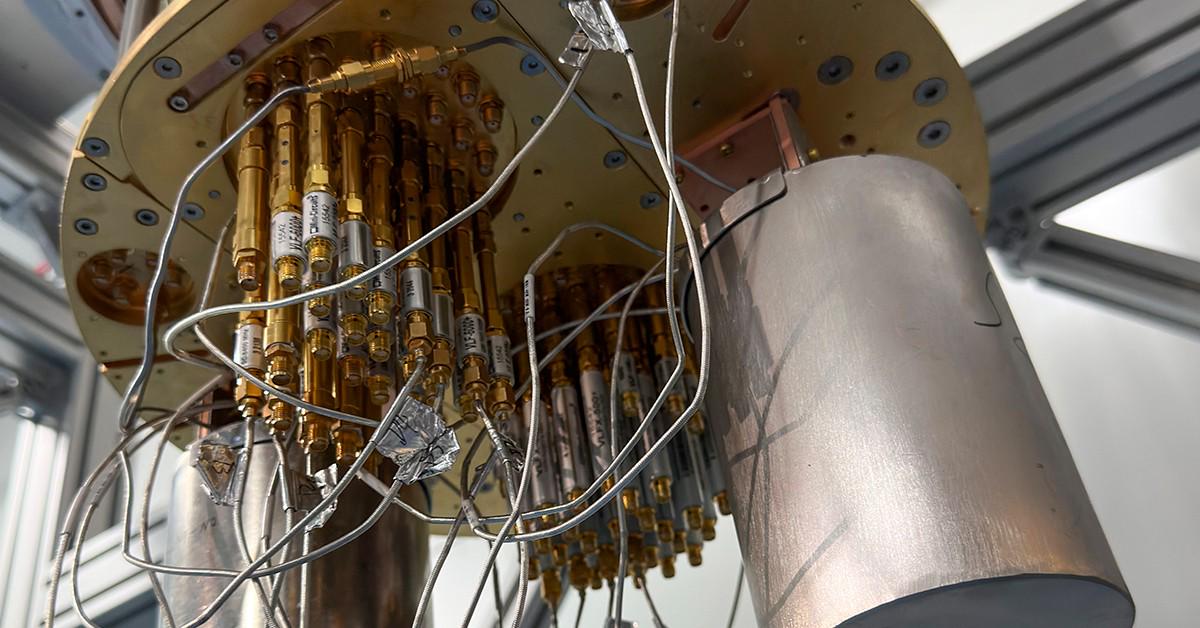
Many super quantum computer initiatives rely on superconducting qubits because they can be fabricated using advanced semiconductor processes and scaled into multi‑qubit chips. These qubits are implemented using Josephson junction circuits operating at cryogenic temperatures, where resistance vanishes and quantum behavior dominates.
SpinQ’s QPU C Series superconducting quantum chips represent this approach, providing high‑coherence qubits, enhanced 2D lattice layouts, and support for up to triple‑digit qubit counts. These chips can be integrated into standalone quantum computers or deployed as quantum processing units accessed via local or networked control systems.
To see how these processors are used in complete machines, you can explore SpinQ’ssuperconducting quantum computerproduct line:SPINQ SQC Superconducting Quantum Computer.
Full‑Stack Integration: From QPU to User Interface
A super quantum computer is more than just its quantum processor; it is a full stack that turns delicate hardware into a reliable tool. This stack spans several layers that must work in concert.
-
Quantum processorThe superconducting QPU provides the physical qubits and coupling topology required for quantum logic operations.
-
Cryogenic infrastructureDilution refrigerators bring the chip to milli‑Kelvin temperatures, suppressing thermal noise and enabling long coherence times.
-
Control and readout electronicsMicrowave control systems and precise timing hardware implement single‑ and two‑qubit gates and measure qubit states.
-
Software framework and developer toolsHigh‑level programming environments, circuit compilers, and calibration software make the system usable for algorithm development and experimentation.
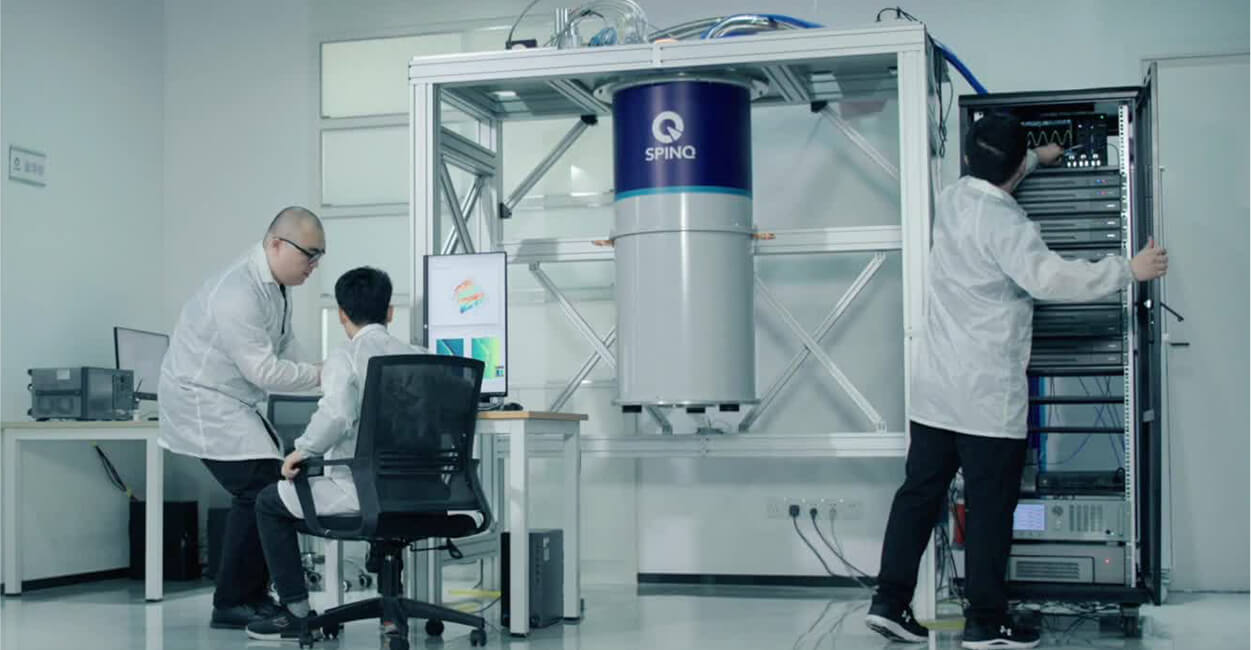
SpinQ delivers this entire stack in its SQC S Series superconducting quantum computers, giving organizations a single, integrated platform instead of a collection of disparate components. This full‑stack approach reduces deployment risk and accelerates time to research results.
Education as a Foundation: NMR Quantum Platforms
Building and operating a super quantum computer also requires a quantum‑literate workforce. For many universities and training centers, starting directly with a large superconducting system can be challenging in terms of cost, infrastructure, and curriculum development.
To address this, SpinQ provides compact NMR quantum computers such as the Gemini Mini, Gemini Lab, and Triangulum II, which operate at room temperature and are specifically designed for education and lightweight research. These platforms allow students and researchers to learn quantum circuit programming, run fundamental algorithms, and explore quantum control concepts without cryogenic complexity.
If you are planning a teaching lab or outreach program, you can explore SpinQ’sNMR quantum productshere:NMR Quantum Products & Services.
Practical Applications of Super Quantum Computers
A super quantum computer is valuable only if it can address problems that matter to science and industry. As hardware matures, several application domains are emerging as strong candidates for early quantum advantage.
-
Quantum chemistry and materials: Modeling molecules and materials at high accuracy to support drug discovery and advanced materials design.
-
Optimization and logistics: Tackling complex scheduling, routing, and resource‑allocation problems that are challenging for classical solvers.
-
Finance and risk analysis: Exploring portfolio optimization, risk modeling, and other quantitative finance tasks.
-
Quantum‑enhanced machine learning: Investigating algorithms that may accelerate aspects of pattern recognition and model training.
SpinQ works with partners across these sectors, providing hardware platforms and collaboration opportunities that link quantum research to real‑world challenges. By offering both educational and high‑performance systems, we help organizations progress from pilot projects to increasingly ambitious quantum workloads.
Reliability, Noise Management, and Error Handling
One of the defining traits of a super quantum computer is not just the raw qubit count, but how reliably those qubits can be used. High‑fidelity gates, long coherence times, and robust noise‑reduction strategies are all essential for running deep circuits.
SpinQ’s superconducting quantum chips and systems incorporate multiple layers of noise management, from materials and layout to cryogenic shielding and control calibration. At the same time, QEC‑ready architectures provide a path toward fault‑tolerant computing where logical qubits can be preserved over long algorithm runtimes.
For organizations evaluating different quantum platforms, this emphasis on reliability and error handling is a critical factor when defining what “super” means in their specific context.
Connecting Super Quantum Computers to a Global Ecosystem
Super quantum computers do not exist in isolation; they are part of a global ecosystem of research institutions, technology companies, and educators. SpinQ contributes to this ecosystem not only through hardware, but also through collaborations, training, and cloud‑based access.
By combining local deployments with remote access models, SpinQ enables a broader audience to experiment with superconducting and NMR quantum hardware. This helps institutions in different regions participate in the quantum era without needing to build full infrastructure from scratch.
If you are interested in learning more about SpinQ’s role in the global quantum computing landscape, including chip foundry services and system‑level offerings, you can visit oursuperconducting quantum chipspage:Quantum Chip – QPU C Series.
Building Your Own Roadmap to a Super Quantum Computer
For many organizations, adopting a super quantum computer is a multi‑stage journey rather than a single purchase. A practical roadmap often includes several steps that build capability over time.
-
Start with education and training using NMR quantum platforms to develop foundational skills.
-
Launch small‑scale superconducting experiments with lower‑qubit‑count chips to gain hands‑on experience with cryogenics and control systems.
-
Scale to integrated superconducting quantum computers when your team and use‑cases are ready for more complex workloads.
SpinQ supports customers at every stage of this roadmap with hardware, software, and technical guidance tailored to your goals. Our mission is to make super quantum computers and their enabling technologies accessible, practical, and impactful for education, research, and industry.
Featured Content