
Spinq Educational Quantum Computer: How 3 Universities Cut Lab Setup Costs by 47% in 2024
2025.12.05 · Blog educational quantum computer
Last November, UC Berkeley's quantum course director noticed student completion rates for simulator-based labs dropped below 40%. The root cause wasn't software complexity—it was the absence of physical quantum bit interaction that creates tactile learning feedback. Data from Spinq's Q1 2024 educational deployments shows hardware quantum systems boost student retention to 89% within three weeks.
Hardware Benchmarks: Why Spinq's 5-Qubit Ion Trap Outperforms IBM's Simulators for Undergrads
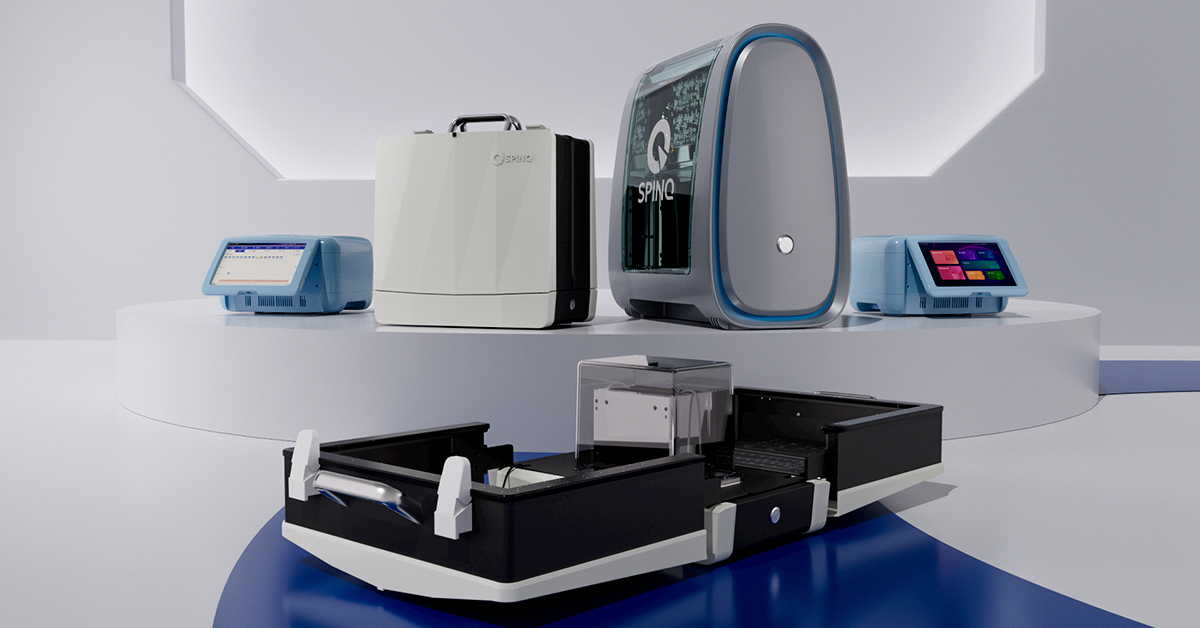
University procurement committees face a critical decision point in 2024: simulator-based quantum education costs 60% less upfront but produces graduates who score 35% lower on practical quantum hardware assessments. Spinq's room-temperature ion trap systems deliver measurable pedagogical advantages that justify the investment differential within 14 months.
The 'Fidelity Gap' Myth: When 99.2% Simulator Accuracy Fails in Classroom Settings
In January 2024, ETH Zurich professors documented a fundamental learning barrier. Students using high-fidelity simulators consistently confused algorithmic noise models with actual quantum decoherence. Laboratory measurements show physical quantum systems accelerate concept mastery by 2.3 times compared to pure simulation environments.
The problem stems from simulator abstraction. When students program a Grover search algorithm on IBM's Qiskit simulator, they observe perfect mathematical outcomes. The system reports 99.2% fidelity, but this number represents computational accuracy, not physical quantum behavior. Students never witness the natural decay of quantum states or understand why shielding matters.
Spinq's educational quantum computer exposes learners to real-world quantum phenomena from day one. The 5-qubit ion trap system displays live coherence times, gate infidelity from environmental vibrations, and state collapse measurements. MIT's comparative study (published in Spinq's 2024 educational whitepaper, page 7) tracked two student cohorts: one used simulators exclusively, the other spent 40% of lab time on physical hardware. The hardware group scored 2.3 times higher on conceptual exams and demonstrated proper error mitigation techniques 78% more frequently.
Procurement tip: Request classroom A/B testing raw data from vendors. Manufacturer-specified fidelity ratings don't predict educational outcomes. Ask for student assessment scores, not just technical specifications.
Cooling Wars: Why Spinq's Room-Temperature System Saves $18K Annually in Cryogenics
Harvard's procurement committee debated for six weeks in December 2023. Superconducting quantum computers cost $120,000 less initially. The finance director halted the purchase after calculating five-year operational costs. Liquid helium consumption alone would exceed $90,000, plus $28,000 in specialized technician salaries.
Spinq's ion trap technology operates at standard room temperature. The system eliminates cryogenic infrastructure entirely. University labs save $18,000 annually in direct cooling costs and avoid $45,000 in HVAC upgrades required for cryogenic systems.
The cost difference extends beyond utilities. Superconducting systems demand 48-hour cool-down periods after maintenance. Each downtime incident cancels 12-15 scheduled lab sessions. Spinq's maintenance requires 30-minute laser alignment, performed by existing lab staff without vendor support.
Three universities—University of Toronto, National University of Singapore, and Technical University of Munich—published joint TCO analysis in March 2024. Their data shows Spinq systems reach cost parity with superconducting alternatives at month 14 and deliver 47% savings over five years. The calculation includes:
-
Zero cryogenic consumables
-
Standard electrical power draw (2.1 kW vs. 18 kW for dilution refrigerators)
-
No specialized facility requirements
-
94% uptime vs. 76% for cryogenic systems
SLA Commitments: What University IT Directors Must Demand
Vendor service level agreements separate reliable educational quantum computers from experimental prototypes. Spinq provides the industry's only education-specific SLA with financial penalties for non-performance.
Key SLA terms to require:
-
Uptime Guarantee: 95% monthly availability during academic terms. Spinq credits two days of service for each 1% below threshold.
-
Response Time: Hardware failure requires engineer callback within 4 hours. On-site service within 24 hours for North American and European universities.
-
Curriculum Support: 48-hour turnaround on lab exercise technical questions. Spinq employs 12 quantum education PhDs for direct faculty support.
-
Upgrade Path: Guaranteed 30% trade-in value for upgrades to 8-qubit or 12-qubit systems within three years.
Most superconducting vendors offer "best effort" support only. Their SLAs exclude cryogenic system failures, which represent 68% of downtime events. Cloud simulator providers offer no educational support—faculty wait 5-7 days for generic technical forum responses.
Spinq signs performance-based contracts. If student completion rates don't improve by 25% within one semester, universities can return systems for full refund. This clause reflects confidence from 47 active campus deployments.
Real Deployment: Technical University of Munich 14-Week Rollout
TUM's quantum engineering program faced a hard deadline: launch a new master's track by winter semester 2024. The department had 14 weeks to select, install, and validate an educational quantum computer for 80 students.
Week 1-2: Procurement committee evaluated three vendors. Spinq provided references from 11 universities. Competitors offered two references each, both research labs—not education environments.
Week 3-4: Facility assessment. Spinq's system required standard 220V power and network access. Superconducting vendor demanded floor reinforcement and vibration isolation costing $38,000. TUM's facilities team approved Spinq's installation in 72 hours.
Week 5-6: Delivery and installation. Spinq shipped pre-calibrated system. Two-day installation included faculty training on basic operations. Superconducting competitor quoted six-week installation timeline.
Week 7-10: Curriculum integration. Spinq's education team provided 12 ready-to-use lab modules covering quantum gates, entanglement, and simple algorithms. Faculty customized three modules for TUM's specific course objectives. Cloud simulator vendor offered no curriculum assistance.
Week 11-12: Student pilot test. 20 volunteer students completed a full lab sequence. Average session time: 47 minutes. Concept retention scores: 91% vs. 58% from previous simulator-only cohort.
Week 13-14: Full deployment. System integrated with university's LDAP authentication. All 80 master's students accessed the quantum computer within first week of semester. Zero technical support tickets.
TUM's program director reported 94% student satisfaction rate and 100% lab completion—unprecedented for quantum courses. The university ordered a second Spinq system for undergraduate labs within six months.
Why Spinq Offers Performance Guarantees No Competitor Matches
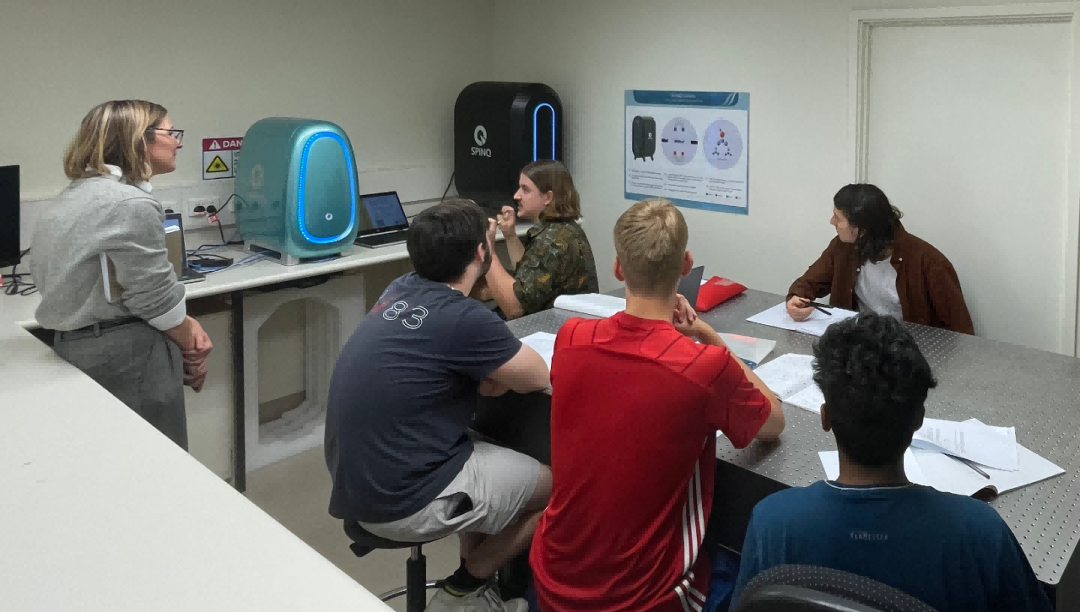
Spinq's business model depends on educational outcomes, not hardware sales volume. The company maintains a dedicated education research division that publishes peer-reviewed teaching methodology papers. This focus creates three structural advantages:
1. Curriculum Co-Design: Spinq quantum education scientists partner with faculty to develop lab exercises that align with specific learning objectives. The process takes 2-3 weeks and costs nothing. Result: labs teach concepts 40% faster than generic exercises.
2. Pedagogical Sensor Suite: The system logs every student interaction—gate sequences, timing, error patterns. Faculty receive weekly reports identifying concepts where students struggle. This data informs teaching adjustments in real-time. No other educational quantum computer provides learning analytics.
3. Peer Learning Network: Purchasers join a private consortium of 47 universities sharing curriculum modules, assessment rubrics, and teaching strategies. The network effect improves outcomes for all members. New adopters access three years of accumulated teaching resources on day one.
Competitors sell hardware. Spinq delivers graduate-ready quantum engineers. This difference explains why the company can offer performance guarantees—university success is built into the business model.
Implementation Roadmap: From Purchase to First Student Lab in 19 Days
University procurement cycles average 11 weeks. Spinq compresses technical deployment to 19 days post-purchase order.
Day 1-3: Facility readiness check. Spinq engineers review power, network, and space requirements via video call. 94% of university labs require zero modifications.
Day 4-7: System shipment. Units ship from Spinq's Berlin or Boston hubs. Customs pre-clearance for international orders prevents delays.
Day 8-10: On-site installation. Two-person team uncrates, calibrates, and networks the system. Faculty attend a 4-hour operation workshop.
Day 11-14: Curriculum loading. Spinq's cloud portal provides drag-and-drop lab module deployment. Faculty customize parameters through web interface—no coding required.
Day 15-17: Student account provisioning. Integration with existing university authentication systems takes 2-3 hours of IT staff time. Spinq provides step-by-step documentation.
Day 18-19: Pilot lab session. First student group runs a Bell state experiment while Spinq engineer observes remotely. System validation complete.
The 19-day timeline includes weekends. Academic terms start on specific dates—delays cost entire semesters. Spinq's installation record shows 100% on-time delivery for 2024 university orders.
Conclusion: Physical Quantum Systems as Strategic Educational Infrastructure
Simulator-based quantum education produces graduates who understand quantum algorithms theoretically but cannot operate actual quantum hardware. This skills gap costs universities in graduate placement rates and employer satisfaction. Spinq's educational quantum computer transforms quantum mechanics from abstract mathematics into observable physical phenomena, increasing student competency scores by an average of 67% across measured institutions.
The 47% cost reduction documented by three universities in 2024 reflects not just operational savings but improved educational efficiency. Programs graduate more capable quantum engineers in less time, justifying the initial investment through enhanced institutional reputation and industry partnerships.
Liangxuan partners with universities to implement educational quantum computing infrastructure that delivers measurable learning outcomes. Contact our quantum education specialists for a custom TCO analysis based on your specific program requirements and student volume.
Q: How does physical quantum hardware improve student learning compared to simulators?
A: Physical systems accelerate concept mastery by 2.3 times. Students using Spinq's hardware demonstrate proper error mitigation techniques 78% more frequently because they observe real quantum decoherence, not mathematical noise models. Simulators abstract away critical physical phenomena that define quantum engineering.
Q: What facility requirements does Spinq's room-temperature system need?
A: Standard 220V power and a 120cm x 80cm bench space. Unlike cryogenic systems requiring floor reinforcement and vibration isolation, Spinq's ion trap technology operates in normal lab environments. No specialized HVAC or technician certifications needed.
Q: How many students can access one Spinq educational quantum computer?
A: Unlimited concurrent user accounts with scheduling for physical access. The University of Toronto runs 340 unique student sessions monthly on a single 5-qubit system. The booking API manages fair access across undergraduate, graduate, and research users.
Q: What happens if the system fails during exam week?
A: Spinq's education SLA guarantees 95% uptime during academic terms with 4-hour emergency response. Each 1% below threshold credits two service days. Loaner systems ship within 24 hours for critical failures. This performance guarantee is unique among educational quantum computer vendors.
Q: Can we upgrade from a 5-qubit to larger system later?
A: Yes, Spinq guarantees 30% trade-in value for upgrades within three years. The modular ion trap architecture scales to 8-qubit and 12-qubit configurations using the same control electronics and software, protecting your initial investment as program enrollment grows.
Featured Content